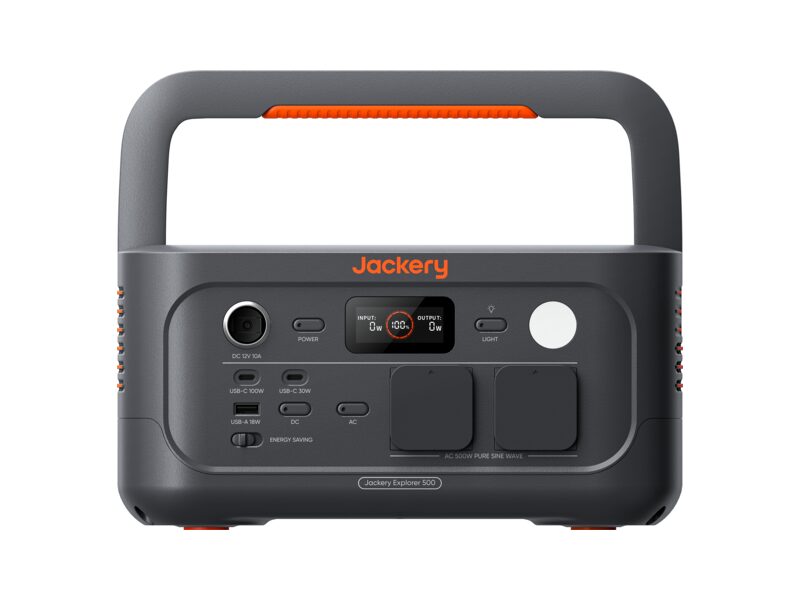
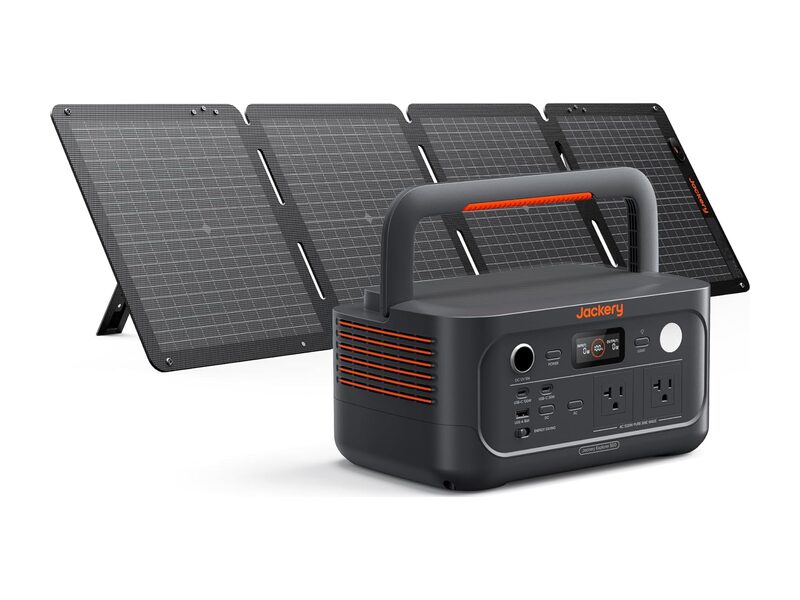
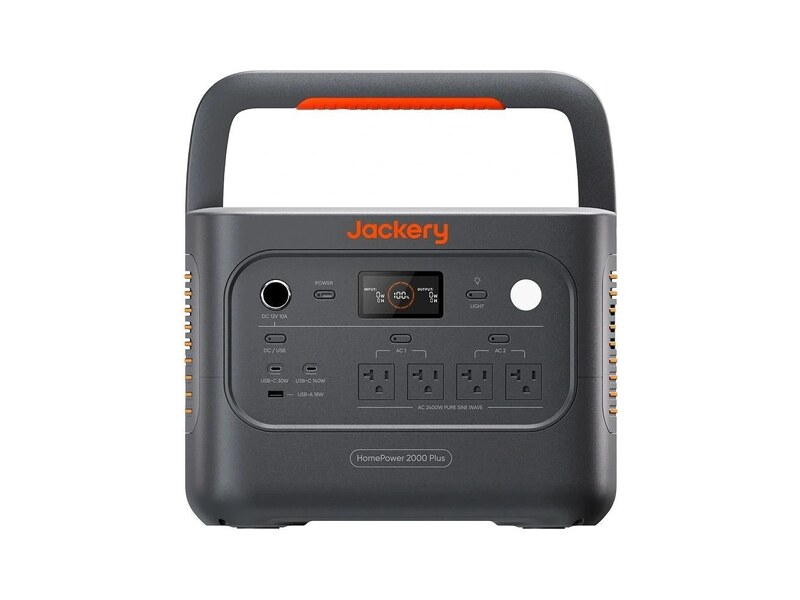
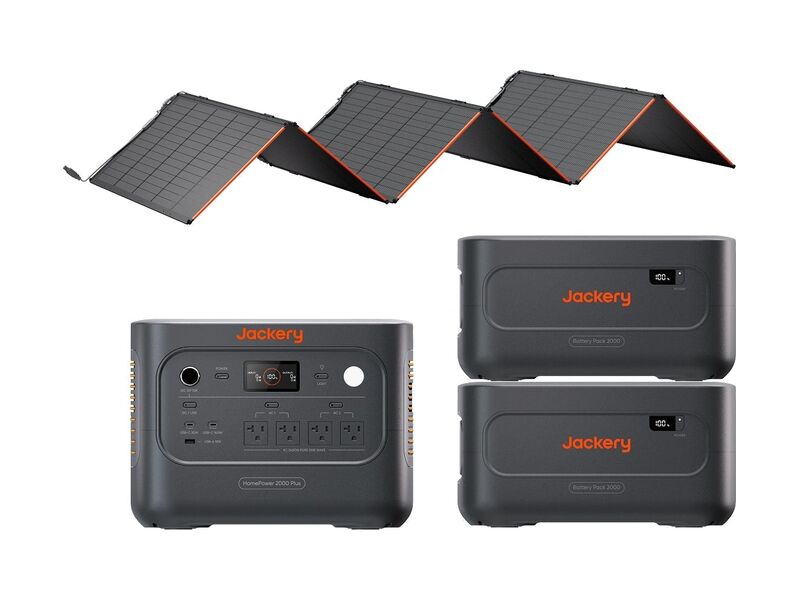
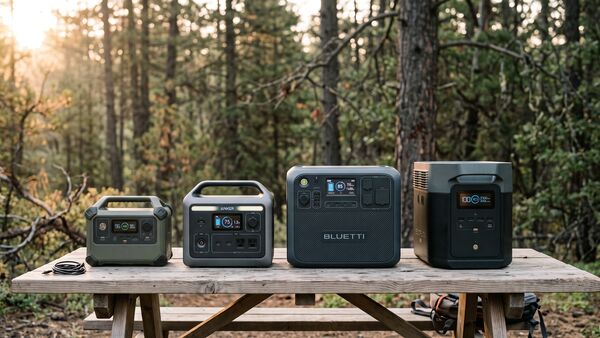
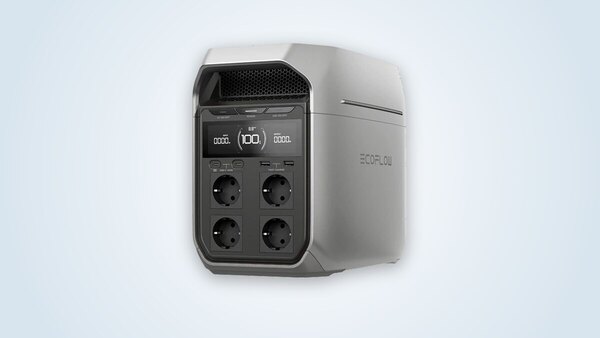
A portable power station can run a CPAP machine, a compatible oxygen concentrator or light medical equipment, when travelling, camping or during a home power cut. Always follow the device manufacturer's requirements.
An energy reserve for health equipment
Many everyday medical devices run on mains power: a CPAP machine (sleep apnea), a compatible oxygen concentrator, a nebulizer, a medication fridge. A portable power station gives them a backup or supplementary power source, silent and usable indoors, at home and on the move.
Important: always check the voltage, power and runtime required by your medical device's manufacturer, and test the setup before relying on it. This information does not replace the advice of a healthcare professional.
Sizing for a night of CPAP
A CPAP machine draws 30 to 60 W on average depending on pressure and the humidifier (often the most power-hungry, worth disabling to save energy). A 500 Wh station generally covers one to two nights without the humidifier; plan for more, or solar charging, for camping and long stays. Add up your model's real consumption to size correctly.
The UPS function for home
At home, a station with UPS permanently plugged in takes over instantly during an outage: the medical device does not stop, even in the middle of the night. It is valuable safety for people relying on a vital device, alongside their doctor's and provider's instructions.
Travel and trips
On a plane, camping or on an off-grid stay, a compact, durable station runs the CPAP night after night, recharged during the day on mains, a 12 V socket or a solar panel. Choose a silent model and, for flights, check the rules for carrying lithium batteries.
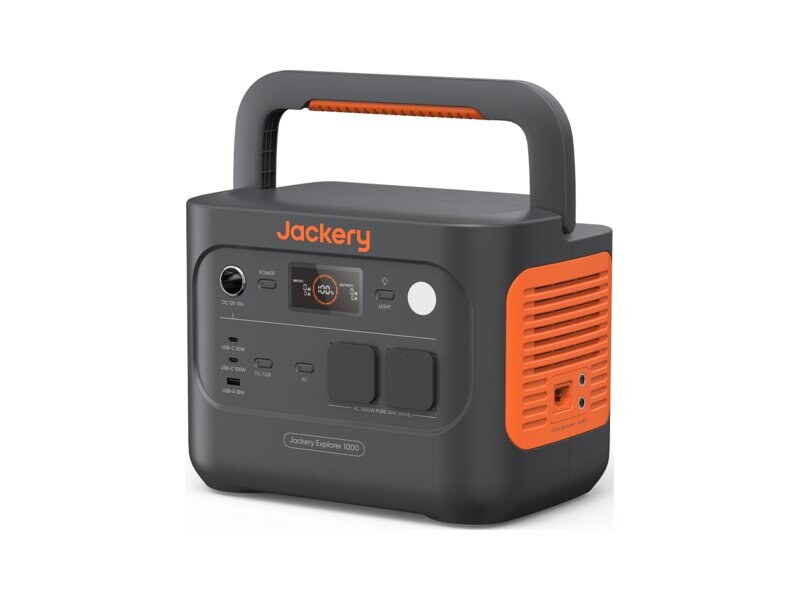
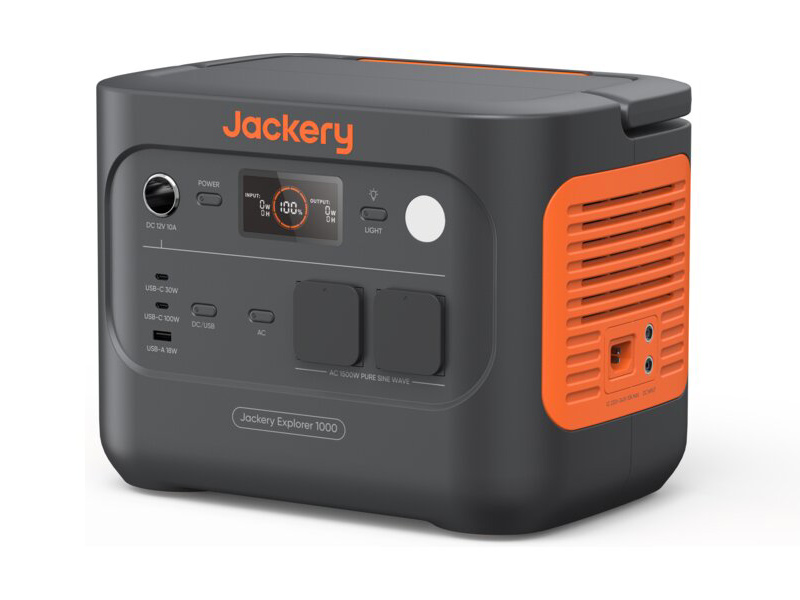
1070Wh and 1500W in a compact, lightweight station: enough to run a fridge, a kettle or all your devices, camping or during a power cut.
Capacity : 1070Wh (LiFePO4 battery)
Power : 1500W continuous, 3000W peak
Outputs : 2 AC outlets, 1 USB-C 100W + 1 USB-C 30W, 1 USB-A, 1 car socket
Recharge : Full in 1h (emergency mode), 400W max solar
1500W and 1-hour recharge in just 10.8 kg
Use case: Health & CPAP
For a CPAP machine, the Explorer 1000 v2 offers top-tier security: its 1070 Wh cover many nights of therapy without the heated humidifier, and even allow humidification over shorter periods or by running the device on 12 V. Its UPS function (switchover under 20 ms) takes over instantly if power fails during sleep, without waking you or interrupting therapy. Totally silent (22 dB), it fits at the bedside without disturbing sleep, and a full recharge in one hour tops it up each day. A reliable companion at home or travelling for anyone who depends on nightly respiratory therapy.
The Jackery Explorer 1000 v2 is a 1070Wh portable power station with a LiFePO4 battery, able to deliver 1500W continuously (3000W peak). Lighter and 23% more compact than the previous generation (around 10.8 kg), it powers up to 6 devices at once via 2 AC outlets, 1 USB-C 100W port and 1 USB-C 30W port, a USB-A and a car socket. Its ChargeShield 2.0 technology enables a full recharge in 1 hour in emergency mode, and its battery lasts 4000 cycles, a lifespan of up to 10 years. Controllable via the Jackery app.
In-depth reviewRead our full review →4.1/5
We carried the Explorer 1000 v2 over several weekends, and it is exactly the format we hoped for from Jackery. At 10.8 kg with a folding handle, it slips into the boot without a fight, yet it still puts out 1500W continuously, enough to run a kettle or an induction hob while camping, which many stations this size cannot do. The 1070Wh easily cover a night of camping fridge plus charging phones and a laptop. Recharging is the real highlight: in emergency mode via the app, we went from 0 to 100% in one hour on a regular socket, and in quiet mode it drops below 30 dB, so you forget it is there. The 100W USB-C port is perfect for a MacBook. The only small gripe is the fairly basic screen and the fan spinning up in the fastest mode. Otherwise, it is a solid, well-built, dependable choice.
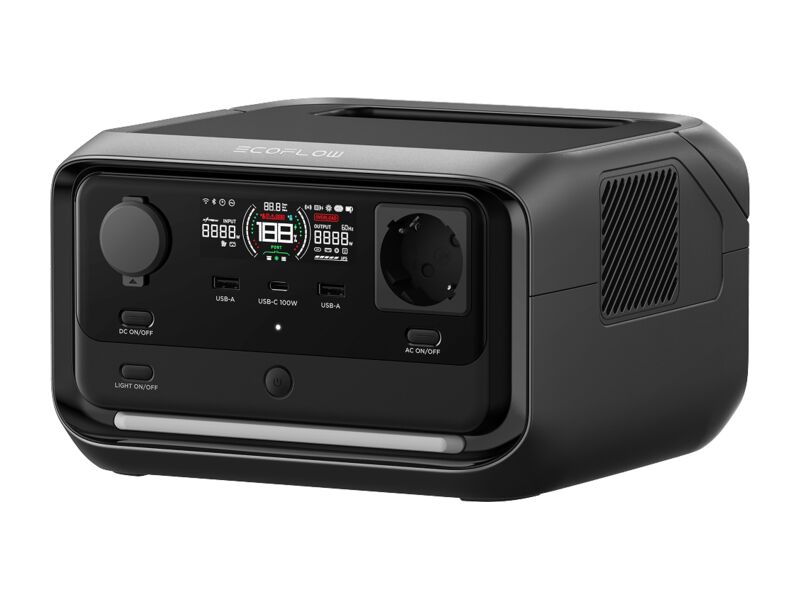
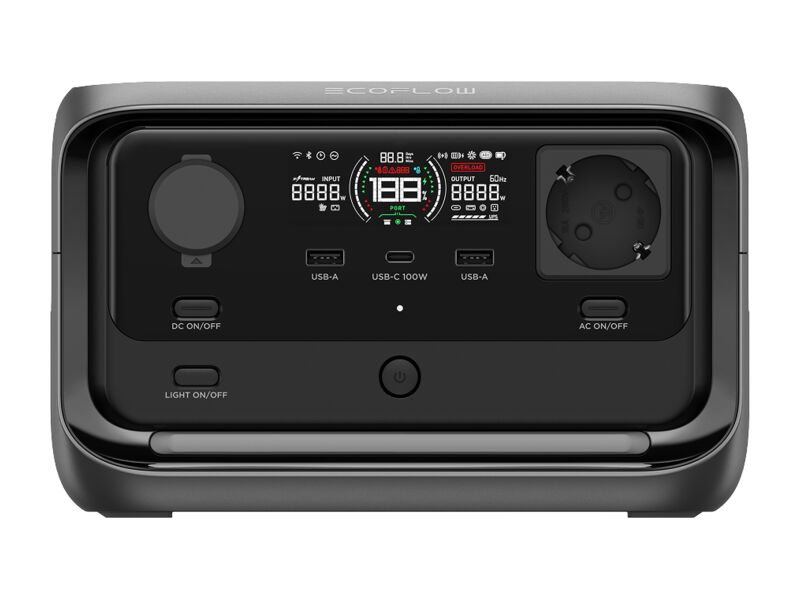
Compact, quiet and fully recharged in just one hour, the EcoFlow River 3 Plus delivers reliable power wherever you happen to need it.
Capacity : 286 Wh (expandable to 858 Wh)
Power : 600 W (1200 W X-Boost)
Recharge : ≈ 1 h from mains, ≈ 1.5 h solar
Weight : 4.7 kg
Full recharge in 1 h, expandable to 858 Wh, built-in UPS
Use case: Health & CPAP
For a CPAP machine at home, the River 3 Plus is particularly reassuring: its UPS function switches over in just 10 ms, an imperceptible delay that ensures the device never stops during a night-time outage, without waking you or interrupting therapy. Its 286 Wh cover a night without the heated humidifier, expandable to 858 Wh for several nights or to secure humidification. Quiet (30 dB), it fits at the bedside without disturbing sleep, and a full recharge in 60 minutes tops it up very fast each day. An excellent safety net for anyone who depends on respiratory therapy.
With its 286 Wh LiFePO4 battery and 600 W of power (up to 1200 W peak), the River 3 Plus effortlessly runs laptops, lighting, small appliances and camping gear. Its strength: a full recharge in about one hour from the mains, a solar input up to 220 W and a capacity expandable to 858 Wh. Quiet (under 30 dB), rugged and equipped with a UPS function, it suits home-office backup as much as weekends in a van or off-grid.
In-depth reviewRead our full review →4.2/5
We lugged the River 3 Plus around for several weeks, from the desk to the campsite, and it quickly earned its place. First good point: plugged in on a Friday evening, it goes from nearly empty to full in about an hour, so no more stress over a forgotten charge. Out in the field, it powered a mini fridge, an LED string light and two phones through a whole evening without flinching, still with charge to spare by morning. Another real plus is the quiet: sitting inside the tent you forget it is even there, where other models have their fan droning away. Its UPS function even saved us during a brief power cut at home, the router and NAS did not notice a thing. Two honest downsides: 286 Wh shows its limits over several days of heavy use (the add-on battery then becomes essential), and the handle, handy as it is, could be a touch more comfortable. Otherwise it is hard to do better in this price range: fast charging, LFP longevity and versatility make it an excellent first power station.
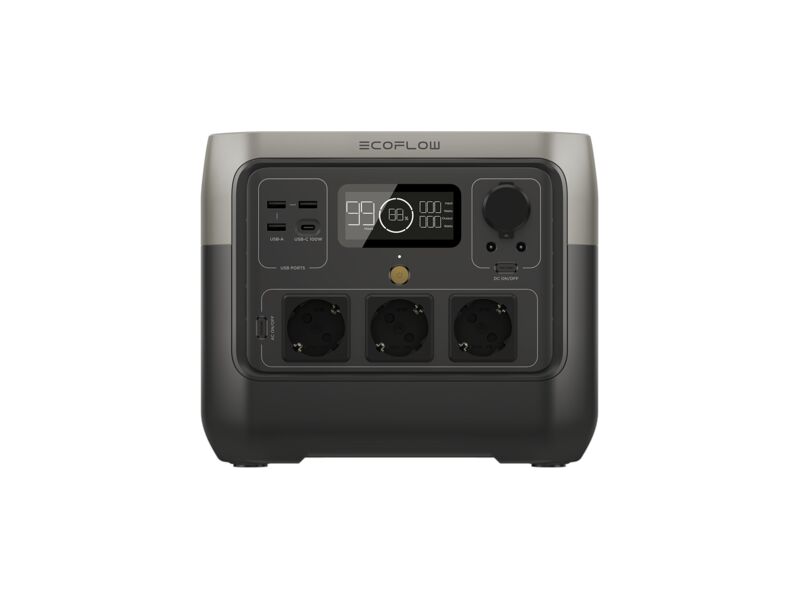
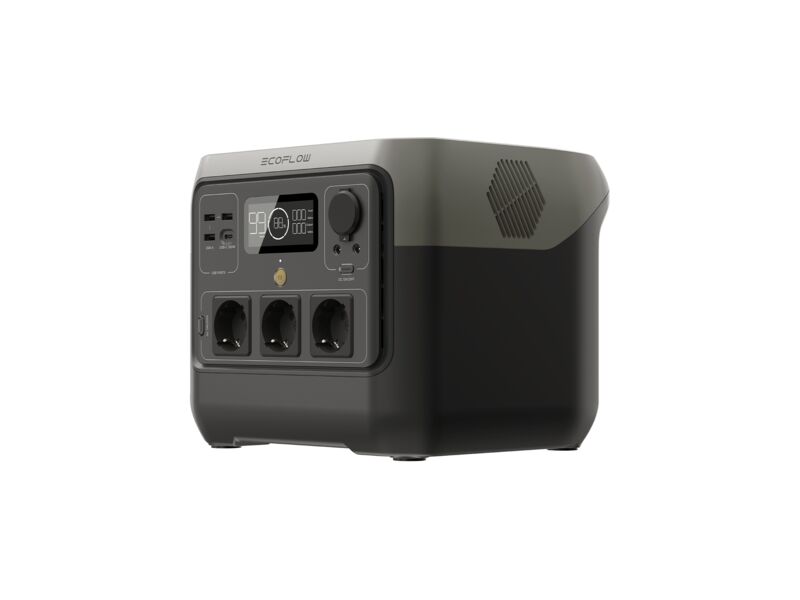
Powerful, quick to recharge and generous with sockets, the 768 Wh EcoFlow River 2 Pro follows you from camping to home-office backup.
Capacity : 768 Wh
Power : 800 W (1600 W X-Boost)
Recharge : 0 to 100% in 70 min from mains
Weight : 7.8 kg
Full recharge in 70 min, 768 Wh and 3 AC sockets
Use case: Health & CPAP
For a CPAP machine, the River 2 Pro offers good therapy security: its 768 Wh cover several nights without the heated humidifier, more by running the device on 12 V rather than 230 V, and its UPS function takes over instantly during a micro-cut in sleep, without waking you or interrupting therapy. Compact (7.8 kg) and recharged in 70 minutes, it fits at the bedside at home or travelling and tops up very fast each day. A good capacity/format balance for anyone who depends on nightly respiratory therapy and wants margin over several nights.
With 768 Wh, 800 W (up to 1600 W peak) and a full recharge in 70 minutes, the River 2 Pro runs a fridge, a computer, light power tools and camping gear without flinching. Its 3 AC sockets, USB-C 100 W port and LFP battery rated for 3000 cycles make it a reliable, versatile companion, from van life to off-grid trips and home power cuts. Quiet in moderate use and controllable through the EcoFlow app.
In-depth reviewRead our full review →4.2/5
We kept the River 2 Pro in rotation for several weeks between the office and days out. What strikes you first is the charging: run flat one morning, it was full before we had finished our coffee, barely over an hour. Out in the field, its 768 Wh easily covered an evening of camping with a cool box, lighting and topping up two phones and a laptop. The 3 AC sockets are a real comfort, no fighting to plug things in, and the USB-C 100 W port charges a laptop without its original charger. We also liked the app, handy for capping the charge power and silencing the fans when you want quiet. Two honest downsides: it makes its 7.8 kg felt when you move it around a lot, and the capacity is not expandable, where some recent rivals allow it. But as a first genuinely versatile, fast and well-equipped station, it won us over and remains a benchmark in its class.
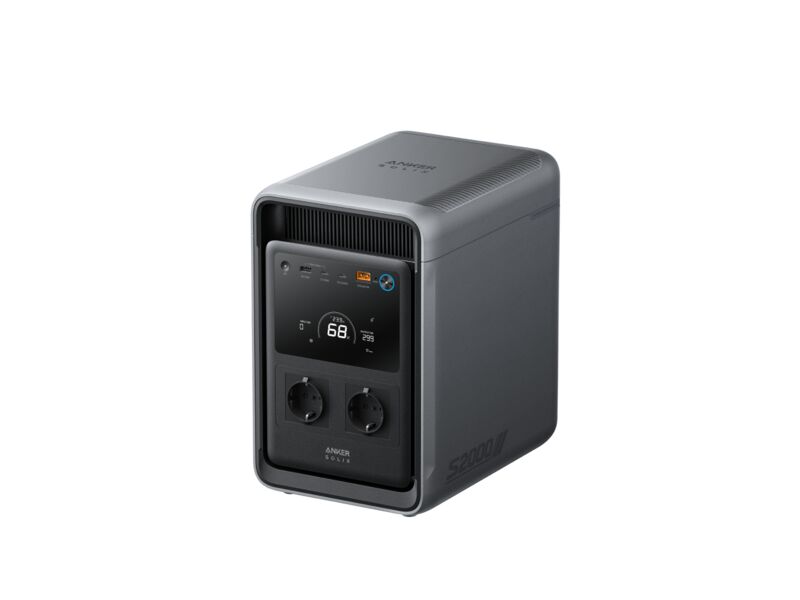
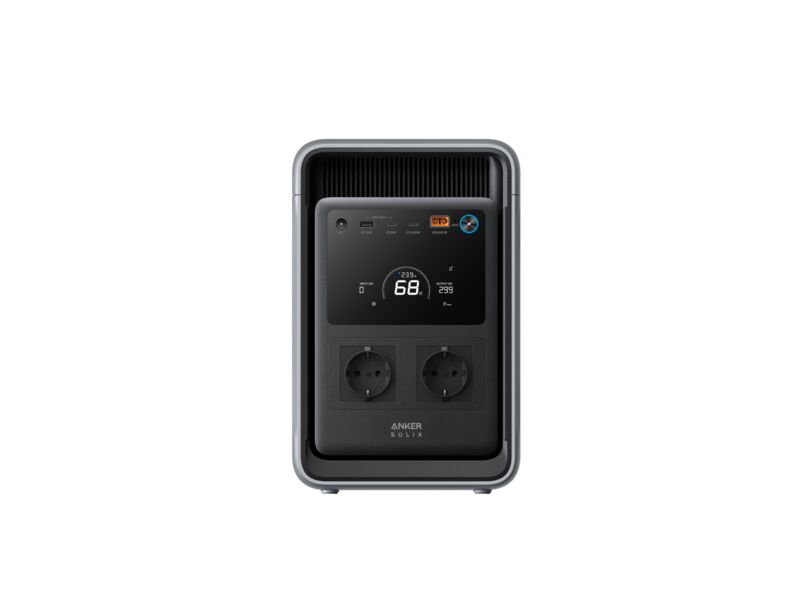
The most compact 2kWh power station, TÜV SÜD certified for real home backup, with record-low 6W standby and a lightning-fast UPS switchover.
Capacity : 2010 Wh (LiFePO4, 10,000 cycles to 60%)
Output : 1500W (3000W peak)
Weight : 16.2 kg, the lightest 2kWh station
Runtime : Up to 35h for a fridge (TÜV SÜD certified)
TÜV SÜD certified, 6W standby, just 16.2 kg
Use case: Health & CPAP
With standby power cut below 6W thanks to OptiSave technology and a 2010Wh capacity, the S2000 is built for continuous power to a medical device such as a CPAP: it can run for several nights without a recharge, even during a prolonged outage. Its UPS switchover in under 10 ms protects the equipment from a sudden mains interruption, a critical point for health use. The USB-C 100W and USB-A ports let you charge a phone, tablet or oximeter in parallel, and the mains output (this model's US 120V spec, since the S2000 is currently sold only in the United States) suits most universal 100-240V power supplies found on modern medical devices, provided you use a simple plug adapter. Quiet at 30 dB with a dedicated silent mode, it will not disturb sleep. Its LiFePO4 battery, rated for 10,000 cycles down to 60% remaining capacity, keeps ageing in check under long daily use.
The Anker Solix S2000 is a 2010Wh portable power station billed as the smallest and lightest 2kWh station around (16.2 kg / 35.7 lb). TÜV SÜD certified for up to 35 hours of fridge backup, it boasts a record-low 6W standby draw and a sub-10ms UPS switchover. With 1,500W output (3,000W peak) and a 10,000-cycle LiFePO4 battery, it is a dependable home backup reserve, currently sold only in the US at 120V.
In-depth reviewRead our full review →4.0/5
The S2000 surprises first with its size: barely 16.2 kg, you move it with one hand where most 2kWh stations need two hands or wheels. Hooked up as backup for a fridge, it largely lives up to the claim, the TÜV SÜD certified runtime is not just a marketing line. The under-6W standby draw is genuinely impressive, you can leave it as a permanent UPS buffer without worrying about draining the battery between outages. The switchover in under 10 ms is invisible in use, the computer never reboots. Two real caveats: 1,500W continuous is fine for the essentials but you hit the ceiling fast with a power tool, and above all, it cannot be bought in the UK or the EU yet, the S2000 remains a US model at 120V, not expandable. A great compact reserve for anyone importing it or living stateside, well worth watching for an international launch.
512Wh in an ultra-light 5.7 kg station you carry with one hand: the ideal companion for camping, vanlife and small outages, recharged in 1 hr 20 from the mains.
Capacity : 512Wh (LiFePO4 battery)
Power : 500W continuous, 1000W peak
Outputs : 2 AC outlets, 2 USB-C, 1 USB-A, 1 car socket
Recharge : Full in 1 hr 20 from the mains (1 hr with mains + solar)
512Wh in just 5.7 kg, carried one-handed
Use case: Health & CPAP
For a CPAP machine, the Explorer 500 v2 offers good therapy security: its 512 Wh cover several nights without the heated humidifier, more by running the device on 12 V rather than 230 V, and its UPS function (10 ms switchover) takes over instantly if power fails during sleep, without waking you or interrupting therapy. Its battery rated for 6000 cycles ensures a very long lifespan, a real asset for daily use. Quiet (28 dB) and light (5.7 kg), it fits at the bedside at home or travelling and recharges in 78 minutes each day. An excellent balance for anyone who depends on nightly respiratory therapy.
The Jackery Explorer 500 v2 is a compact 512Wh portable power station with a LiFePO4 battery, delivering 500W continuously (1000W peak). At just 5.7 kg and 27% more compact than average, it carries with one hand. It powers several devices via 2 AC outlets, 2 USB-C ports, a USB-A and a car socket, and fully recharges in about 1 hr 20 from the mains, or in one hour with a 100 W solar panel added. Its LiFePO4 battery lasts up to 6000 cycles, a lifespan of up to 10 years.
In-depth reviewRead our full review →4.1/5
The Explorer 500 v2 is the station you take without a second thought: at 5.7 kg, it slips into a backpack or under the van seat and carries in one hand like a small cooler. Despite its size, it puts out 500W continuously, enough to run an electric cool box, charge two phones, a drone and a laptop over a camping weekend without hitting zero. What we like most is the new LiFePO4 battery, far more durable than the lithium of older Explorers, and the express recharge: about an hour from a socket and you are off again. The two USB-C ports are handy for recent devices. You just have to keep its limits in mind: 500W is not enough for a kettle or an induction hob, which is not its purpose. For light off-grid use and top-ups, it is faultless, well finished and reassuring.
Weight : 18.8kg, 34% lighter than the previous generation
10ms mains switchover, expandable up to 12kWh
Use case: Health & CPAP
For a medical device like a CPAP, power continuity matters more than anything, and that is exactly what the HomePower 2000 Plus v2 targets with its 10ms switchover and its Jackery Priority Routing function, which can isolate a priority circuit from secondary loads during a prolonged outage. Its stock 2048Wh already covers several nights for a CPAP alone, and expanding to 12kWh via Battery Pack 2000 Plus V2 units means a multi-day outage is no longer a worry. Operation stays very quiet, under 30dB in silent mode, so it will not disturb sleep. The LCD screen and Jackery app let you monitor charge level remotely without getting up at night. Its LiFePO4 chemistry, more stable than conventional lithium, is reassuring for daily, prolonged use in a bedroom. One reservation: at 18.8kg it is not meant to be moved often, and it shines mostly installed permanently by the bed.
The Jackery HomePower 2000 Plus v2 is a 2048Wh home power station (LiFePO4 battery), sold alone or bundled with solar panels. It delivers 2400W continuous (4800W peak) and is controlled via the Jackery app, with priority routing of essential circuits during an outage and a mains switchover of just 10ms. Expandable up to 12kWh with additional Battery Pack 2000 Plus V2 units, it is clearly built for home backup power. 5-year warranty (3+2 years free at jackery.com).
In-depth reviewRead our full review →4.2/5
The HomePower 2000 Plus v2 has only just launched in the US and is not yet sold in the UK or Europe, so we have not had it in hand yet, and we would rather say so plainly than fake a hands-on test. On paper it ticks every box for a solid home backup station: a stock 2048Wh, expandable up to 12kWh in stages with the Battery Pack 2000 Plus V2, and a mains switchover claimed at just 10ms, fast enough not to blink a router. The very first reviews from American owners lean positive: one owner notes very little charge loss over prolonged reliance on it, another uses it without issue to charge e-bikes upstairs. The one real gripe so far: at 18.8kg it is still a bit heavy to move around solo day to day, despite the claimed 34% weight cut from the previous generation. We will update this review once the model reaches Europe and we can test it in real conditions.
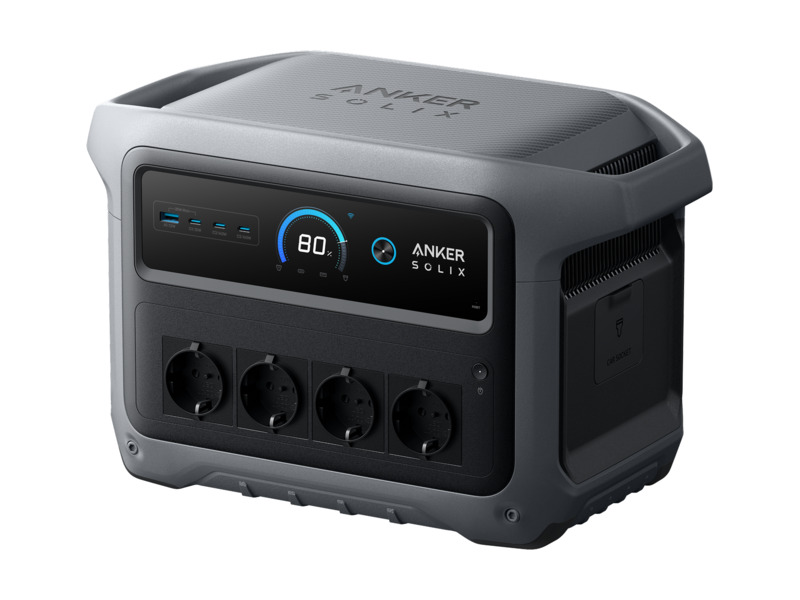
With 1024 Wh, 2000 W output and a full recharge in 49 minutes via HyperFlash, the Anker Solix C1000 Gen 2 is one of the fastest-charging stations on the market.
Capacity : 1024 Wh (LFP battery, 4000 cycles)
AC output : 2000 W, up to 3000 W peak, 4 AC outlets
Recharge : 0 to 100% in 49 min via HyperFlash, solar up to 600 W
Lifespan : 4000 LFP cycles, about 10 years, 5-year warranty
Full recharge in 49 min, the fastest in its class
Use case: Health & CPAP
For a CPAP machine, the C1000 offers top-tier security: quiet at rest, it powers the device several nights in a row thanks to its 1024 Wh, and its UL1778-certified UPS function (switchover under 10 ms) takes over instantly if power fails during sleep, without waking you or interrupting therapy. Its varied ports accept most devices, 230 V or USB-C, and a 49-minute recharge tops it up quickly each day. A reliable companion at home or travelling for anyone who depends on nightly respiratory therapy.
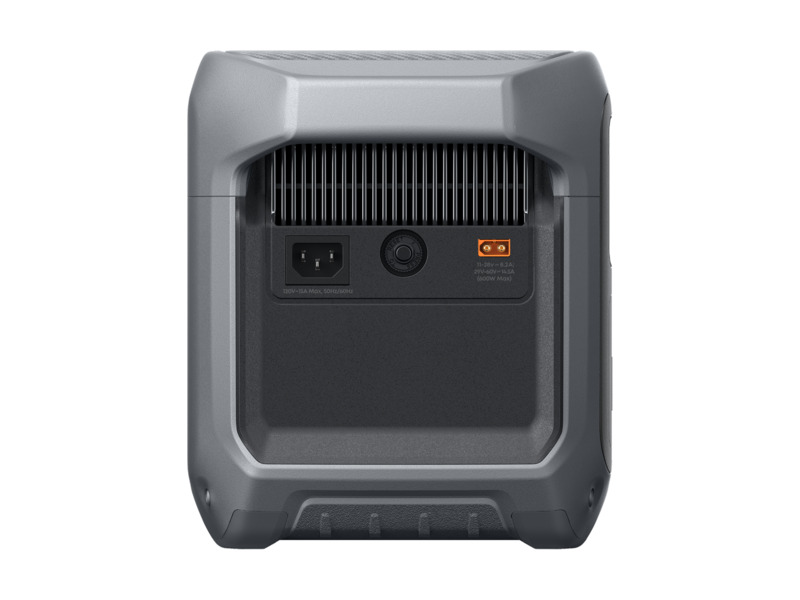
The Anker Solix C1000 Gen 2 is a portable power station with a 1024 Wh LFP battery (InfiniPower, 4000 cycles). It delivers 2000 W continuous (3000 W peak) and fully recharges from the mains in 49 minutes thanks to HyperFlash technology (up to 1600 W input). It accepts 600 W of solar input, features a UL1778-certified UPS function (under 10 ms switchover) and many outputs including 4 AC outlets and 3 USB-C ports (2x140 W). Compact (11.3 kg), app controlled, 5-year warranty.
In-depth reviewRead our full review →4.4/5
We put the C1000 Gen 2 through its paces at home and on weekends, and its recharge speed is stunning: barely more than a lunch break and it is full, which changes everything when you leave on short notice. It kept the fridge, the router and two laptops going for a good part of the day, and the UPS switchover during a test outage went completely unnoticed. We love how compact it is (11.3 kg, you move it one-handed) and how quiet it stays at rest. The app lets you switch to UltraFast mode or, conversely, cap the input to quiet the fans, which are a little present during fast charging. Two honest gripes: unlike the older C1000, this generation is not expandable, and 2000 W remains a ceiling for the very largest appliances. As a compact, reliable and ultra-fast-charging station, it is hard to fault.
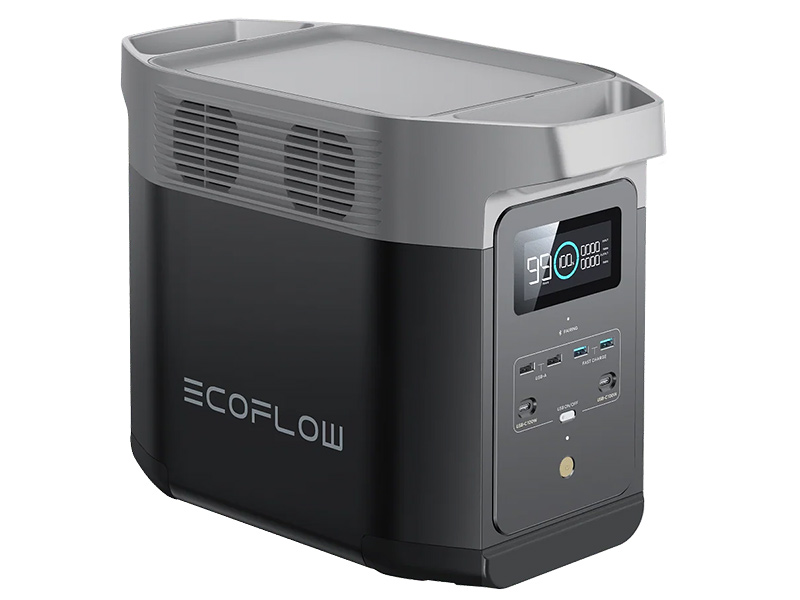
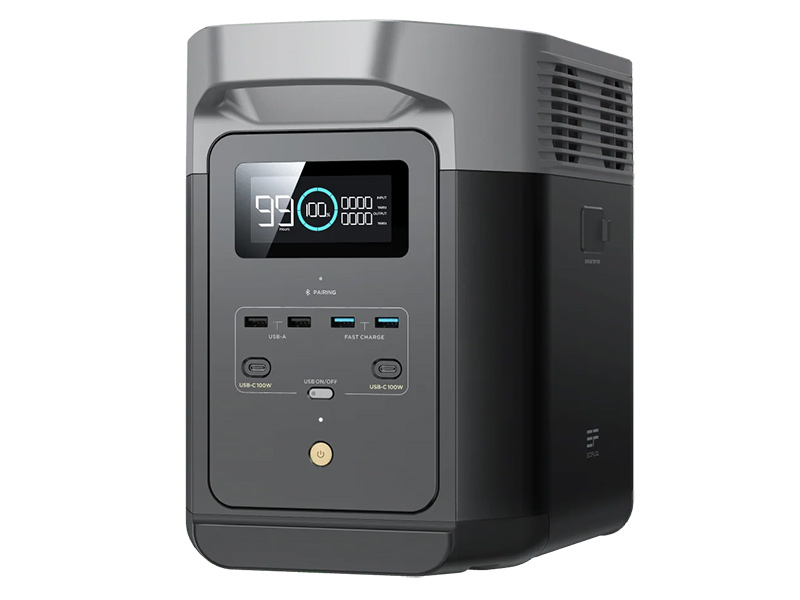
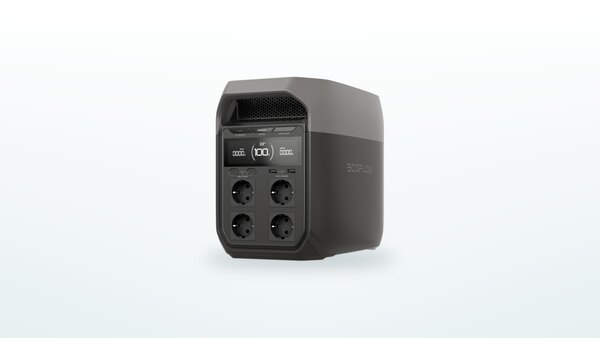
With 1024 Wh expandable to 3 kWh, 1800 W output and a 0-80% recharge in 50 minutes, the EcoFlow Delta 2 powers almost all your devices, at home or off-grid.
Capacity : 1024 Wh, expandable up to 3040 Wh (LFP battery)
AC output : 1800 W, 2400 W with X-Boost, 2700 W surge
Recharge : 0 to 80% in 50 min on mains, solar up to 500 W
Weight : 12 kg (400 x 211 x 281 mm)
0-80% recharge in 50 min, expandable up to 3 kWh
Use case: Health & CPAP
For a CPAP machine, the Delta 2 offers reassuring security: its 1024 Wh cover several nights of therapy, more if you turn off the heated humidifier or run the device on 12 V, and its expansion to 3 kWh extends autonomy further for travel or long outages. Its UPS function takes over if power fails during sleep, without waking you or interrupting therapy. Its varied ports accept most devices, and a recharge to 80 % in 50 minutes tops it up each day. Quiet, it fits at the bedside at home or travelling.
The EcoFlow Delta 2 is a portable power station with 1024 Wh (LFP battery) delivering 1800 W output, up to 2400 W with X-Boost technology. It recharges from 0 to 80% in 50 minutes on mains, accepts up to 500 W of solar input and offers 13 outlets including 4 AC sockets and 2 USB-C 100 W ports. Its capacity is expandable up to 3040 Wh and its LFP battery exceeds 3000 cycles, roughly 10 years of use. Weight: 12 kg, 5-year warranty.
In-depth reviewRead our full review →4.4/5
We tried it both in a camper van and at home, and the Delta 2 simply gets the job done. The lightning recharge (80% in under an hour) is a game changer at a motorway stop, and the app is a real plus. It ran a fridge, the router and two laptops for a good part of the day. Only gripe: the fans blow hard during fast charging, but you can quiet them by capping the power. Rugged and expandable.
Ultra-compact (3.5 kg) and recharged in one hour, the EcoFlow River 3 slips a 245 Wh reserve into a bag to power your essentials anywhere.
Capacity : 245 Wh (LiFePO4)
Power : 300 W (600 W X-Boost)
Recharge : ≈ 1 h from the mains
Weight : 3.5 kg
245 Wh, UPS and 1-hour charge in an ultra-compact body
Use case: Health & CPAP
For a CPAP device on the move, the River 3 is a compact safety net: its 245 Wh generally cover a night of therapy without heated humidifier, and its UPS switches over in about 20 ms during an outage, without waking you. Quiet (30 dB), it slips onto the bedside without disturbing sleep, and its full recharge in one hour tops it up very fast each day. Its light weight (3.5 kg) makes it an ideal travel companion. Check your device's real consumption: with heated humidification, runtime will be shorter.
The EcoFlow River 3 is the brand's most compact portable power station: 245 Wh of LiFePO4 battery and 300 W output (600 W X-Boost) in a flat 3.5 kg body that slips into a bag or a boot. It recharges phones, a laptop, lighting and small gear, refuels to 100 % in one hour from the mains and accepts up to 110 W of solar. Its inverter (UPS) function and its LFP chemistry rated for 3000 cycles make it a reliable reserve for camping, mobile work or backup.
In-depth reviewRead our full review →4.3/5
We slipped the River 3 into a backpack to see how far EcoFlow's smallest station goes, and it surprises. At 3.5 kg and barely thicker than a big book, you really take it everywhere: on a day of hiking photography it recharged two camera bodies, a drone and our phones without flinching. The one-hour recharge is the model's real luxury, you top it up in the time it takes to have a coffee. As backup at home, its inverter function kept the router and a camera running without the slightest flicker during a micro-outage. The silence is total, you forget it under the tent. Two owned limits: 245 Wh remains a small reserve, best kept for light devices, and unlike the River 3 Plus it is not expandable, which you must anticipate if needs grow. For a first compact, fast and LFP-durable mobile station, it offers a footprint-to-service ratio that is hard to beat.
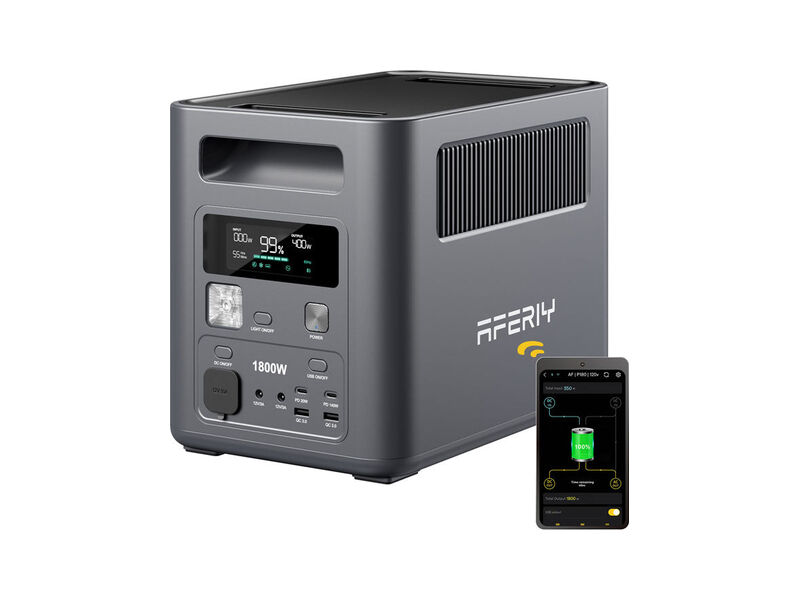
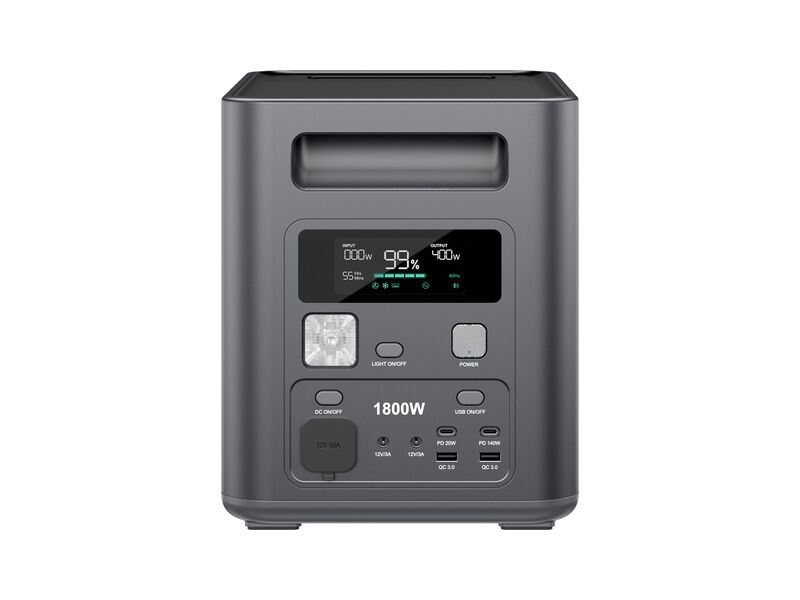
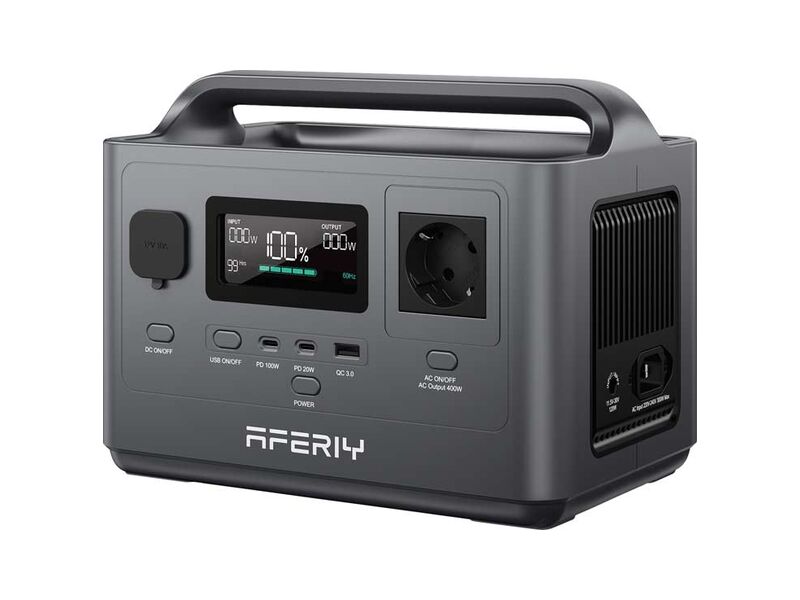
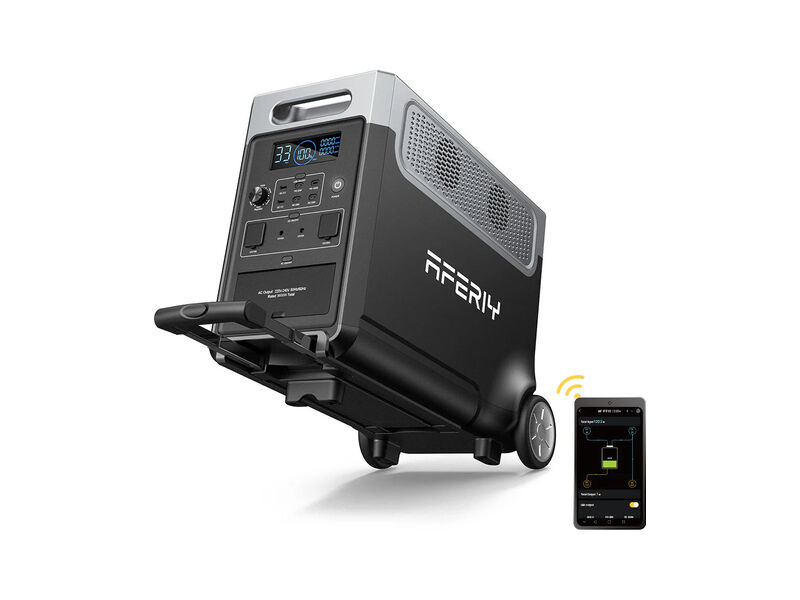
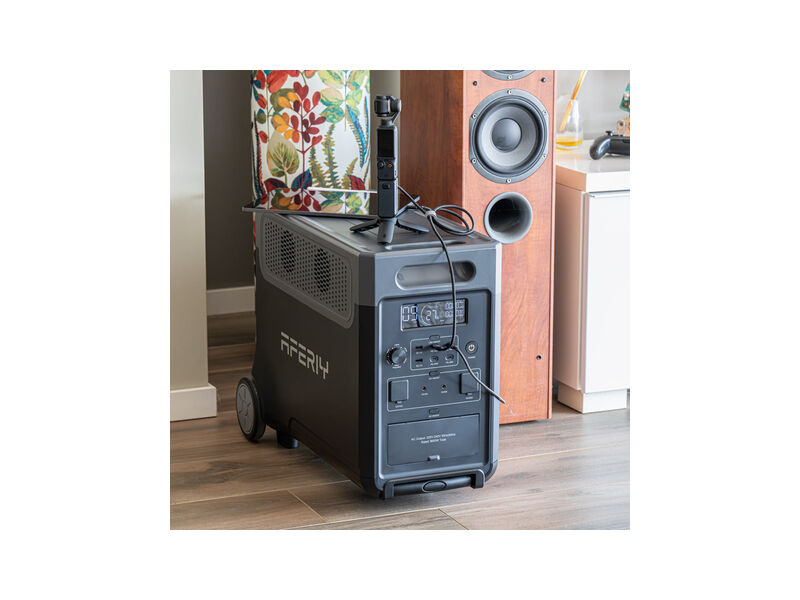
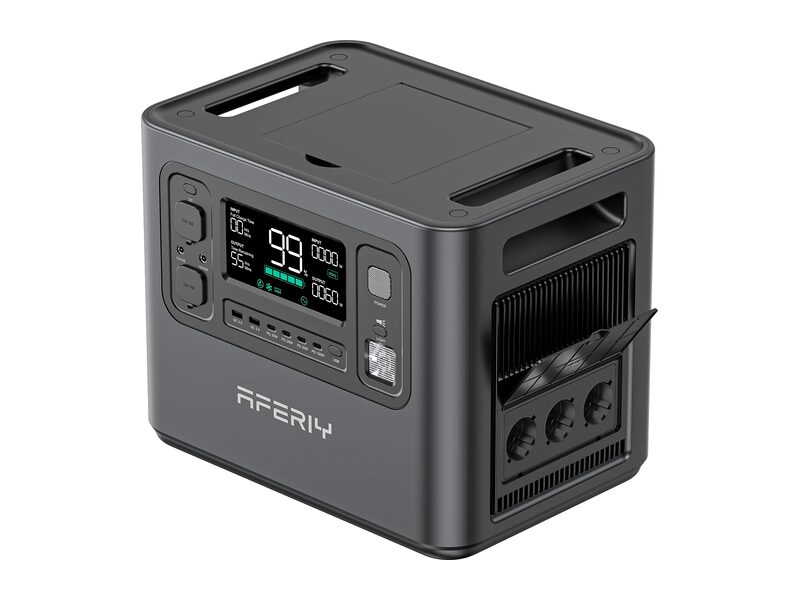
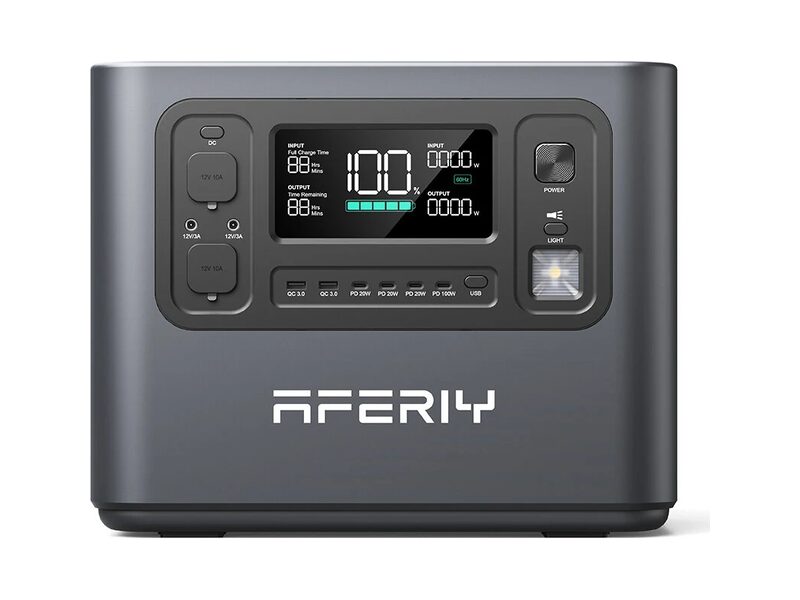
With 1024 Wh, 1800 W (up to 3600 W peak), a 90% recharge in 60 minutes and just 11.6 kg, the Aferiy P180 aims for lightweight versatility.
Capacity : 1024 Wh (LiFePO4 battery, 4000 cycles)
AC output : 1800 W, up to 3600 W peak, pure sine wave
Recharge : 90% in 60 min on mains (1000 W), 500 W solar
Weight : 11.64 kg, 348 x 220 x 264 mm
1800 W for just 11.6 kg, 7-year warranty
Use case: Health & CPAP
For a CPAP machine, the Aferiy P180 offers welcome peace of mind: its 1024 Wh runs a respiratory device for several nights depending on the settings and humidifier used, and its UPS function switches over in under 10 ms during a mains outage, without interrupting treatment or waking the sleeper. The pure sine wave suits sensitive medical electronics. Used via USB-C or 12V rather than 230V, it stretches runtime further. Its light weight (11.64 kg) makes it easy to bring along when travelling, a real plus for this kind of regular use.
The Aferiy P180 is a 1024 Wh portable power station with a LiFePO4 battery (4000 cycles), delivering 1800 W continuous and up to 3600 W peak thanks to a pure sine wave inverter. It recharges to 90% in 60 minutes on mains (1000 W) and accepts up to 500 W of solar input. Its UPS function switches over in under 10 ms, and it offers 9 outputs including a 140 W USB-C. App control, 7-year warranty, weighing just 11.64 kg.
In-depth reviewRead our full review →4.1/5
The Aferiy P180 surprised us with how light it is: at 11.64 kg, it carries one-handed with no effort, yet it delivers 1800 W continuous, as much as a vacuum cleaner or a small electric oven. We timed the advertised mains recharge, 90% in 60 minutes: the claim held up within a few minutes, a real plus before heading off. The 9 outputs cover a lot of ground, with a 140 W USB-C that charges a laptop with no dedicated adapter. The UPS function shrugged off a test power cut without a hitch, the router and computer stayed on. Two honest downsides: solar input tops out at 500 W, modest next to some rivals, and above all, unlike its sibling the P210, it is not expandable: its reserve is fixed at 1024 Wh. For a tight budget and a genuine need for light weight, it remains one of the more convincing stations in its class, backed by a 7-year warranty rarely seen at this price.
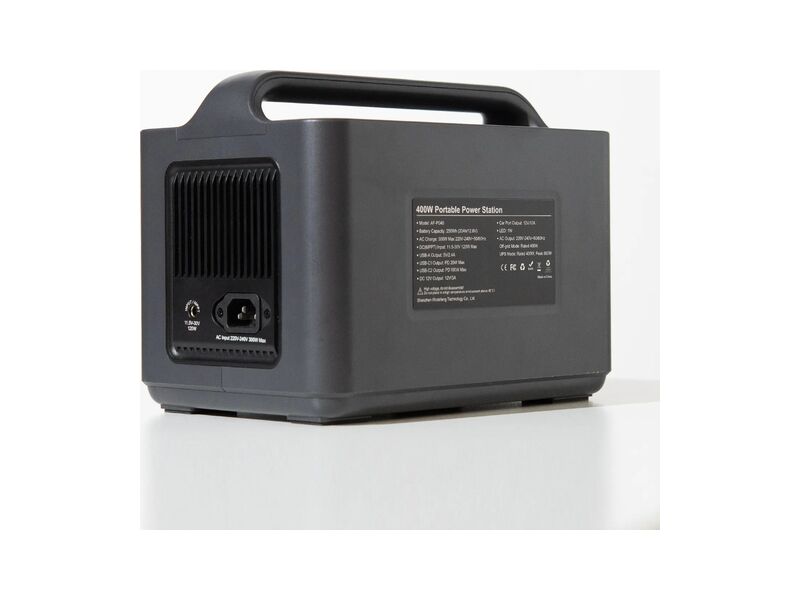
With 256Wh, a full mains recharge in just over an hour and a UPS mode under 10ms, the Aferiy P040 protects sensitive devices without breaking the bank.
Capacity : 256Wh (LiFePO4)
Power : 400W
Recharge : 1h12 on mains (300W)
Weight : 4kg
10ms UPS and warranty extendable to 7 years
Use case: Health & CPAP
For a CPAP machine on the move, the Aferiy P040 offers a genuine safety net: its 256Wh generally cover one night of treatment without a heated humidifier, and its UPS function switches to battery in under 10ms during a power cut, without a jarring wake up. Its LCD screen lets you check the charge level before bed. Light at 4kg, it travels easily. Check your machine's actual power draw before you leave: with heated humidification switched on, runtime will be noticeably shorter than a single night.
The Aferiy P040 is a compact 256Wh portable power station with a LiFePO4 battery and a 400W pure sine wave output. It recharges at up to 300W on the mains (full charge in about 1 hour 12 minutes), up to 120W from solar or from a car's 12V socket, and includes a UPS function that switches to battery in under 10ms during a power cut, ideal for protecting a computer or a home router. Compact at 4kg, it comes with a warranty extendable up to 7 years, a real asset at this price.
In-depth reviewRead our full review →4.0/5
We tested the Aferiy P040 as a backup power source at the office and during a camping weekend, and its charging speed stood out immediately: a full charge in just over an hour, handy when you're packing at the last minute. In the field, its two USB-C ports (one rated at 100W) charged a laptop and a smartphone at the same time without breaking a sweat, and the AC outlet was enough for a small lamp and a camera charger during a weekend under canvas. At home, its UPS function kicked in within a fraction of a second during a test power cut, without our router so much as blinking. Two honest downsides: 400W isn't enough for anything power hungry (forget the kettle), and the total lack of Bluetooth or an app limits remote monitoring. Still, at this price, backed by a warranty extendable to 7 years, it's a small power bank that's hard to catch out.
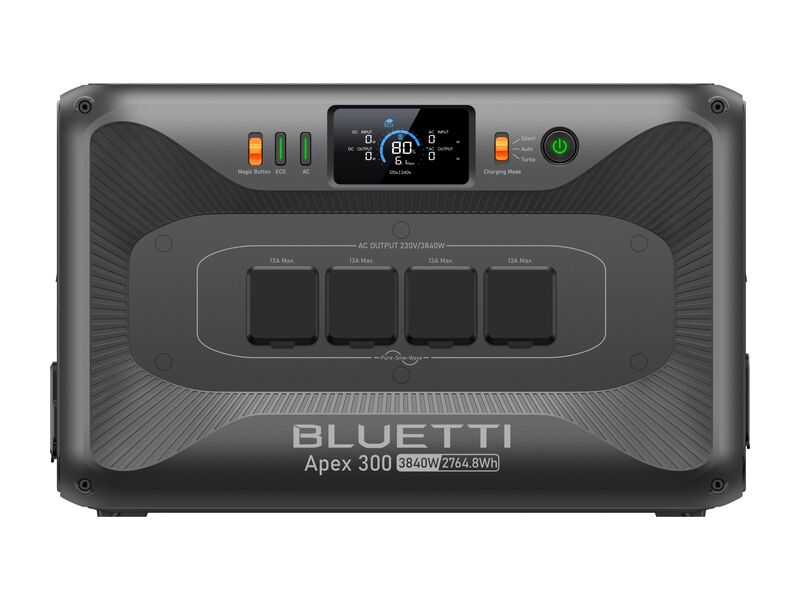
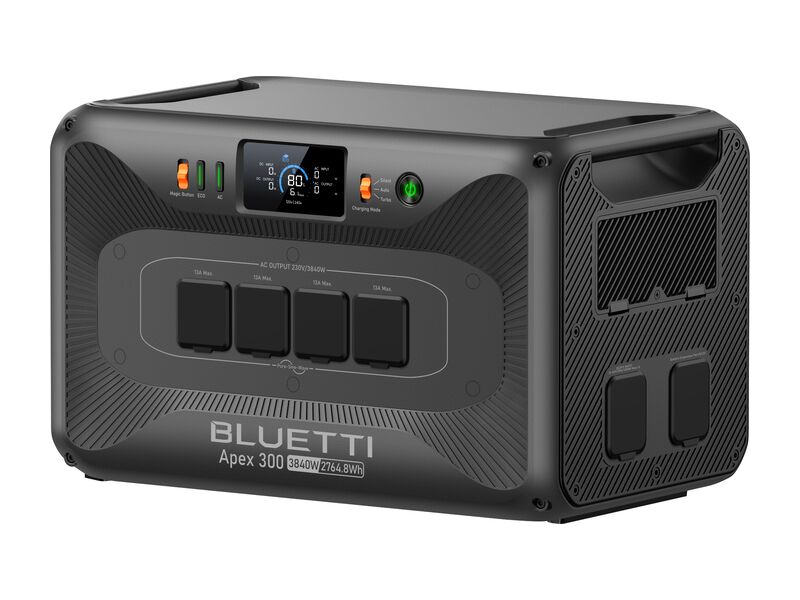
Bluetti's modular home backup station: a 3840 W core, batteries added as your needs grow, and a UPS that switches over to battery in just 20 ms.
Capacity : 2764.8 Wh (LiFePO4), up to 19.4 kWh per unit
Power : 3840 W continuous, 7680 W peak (resistive loads)
Recharge : 2300 W from a wall socket, 3840 W with the Hub A1 (Turbo), 2400 W solar
Size : 38 kg, 52.5 x 32.7 x 32 cm, IP20
Modular up to 58 kWh, 20 ms UPS
Use case: Health & CPAP
For a breathing-assistance device such as a CPAP, which draws a few dozen watts, 2764.8 Wh means several nights of autonomy, and the 20 ms switchover on the UPS sockets prevents the device from stopping during a power cut. The stable LiFePO4 chemistry and app monitoring are reassuring for prolonged backup use. The Apex 300 is not a medical device, however: for a vital dependency, validate the choice with your healthcare provider, keep a second energy source, and do not let ECO mode cut a low load (Bluetti advises turning it off below 60 W).
The Bluetti Apex 300 is a home backup station built as a modular building block: a 2764.8 Wh LiFePO4 unit delivering 3840 W across four mains sockets, which then grows with B300K or B500K expansion batteries and pairs with up to three units for 58 kWh. It switches over to battery in 20 ms during a power cut, takes up to 2400 W of solar and is managed from an app. USB and 12 V outputs come from the Hub D1 accessory, sold separately.
In-depth reviewRead our full review →4.2/5
What strikes you first about the Apex 300 is that it is designed as a system, not as a big battery. You put it in the garage or utility room, plug it into a wall socket and it becomes the home's backup inverter: 3840 W available, a 20 ms switchover on the UPS sockets, nothing to reconfigure. Turbo recharging is impressive for 2.7 kWh once the Hub A1 supplies the 3840 W of input (a wall socket tops out at 2300 W), and the idle draw of around 20 W stays contained; tests published by the specialist press put efficiency close to 88%. The downside is real: 38 kg that takes two people to move, no wheels, fans that become audible above 2000 W or in Turbo charging, and no USB or 12 V output without the Hub D1 you have to add. The budget climbs fast once you stack batteries, hubs and cables. For a household that wants to start small and grow, it remains the most coherent in its category; for pure nomadic use, an Elite will be simpler.
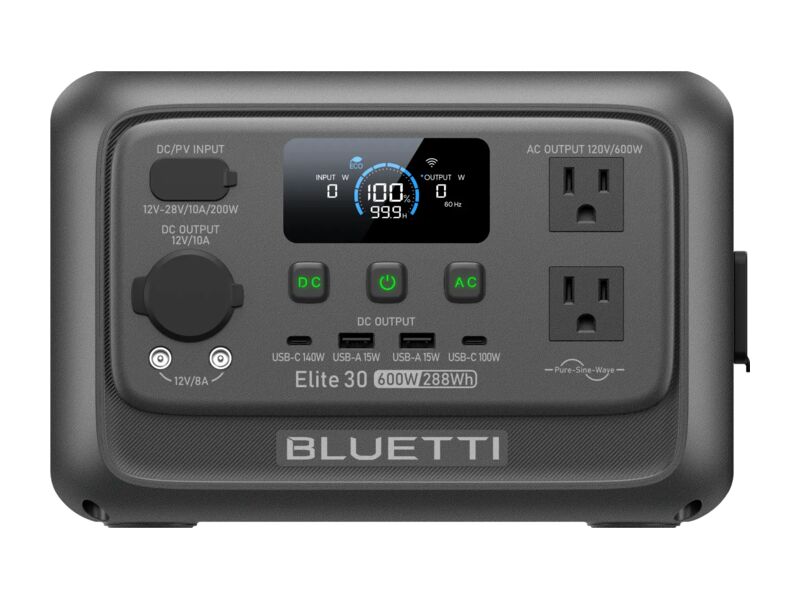
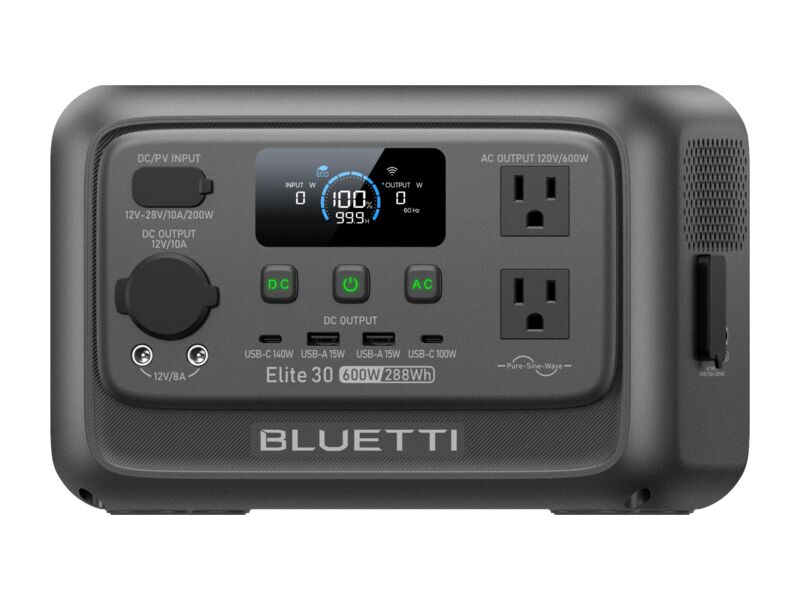
Just 4.3kg for 288Wh and 600W (1500W surge): the ultra-light portable power station that recharges fully in only 70 minutes.
Capacity : 288Wh (LiFePO4)
Power : 600W (1500W surge)
Charging : 0-100% in 70 min (mains)
Weight : Only 4.3 kg
Only 4.3 kg for 600W and a 10ms UPS
Use case: Health & CPAP
For a CPAP machine, typically a light draw at around 30 to 60W, the Elite 30 V2's 288Wh delivers several full nights of autonomy, a real comfort when camping or during a power cut. Its UPS function switches to battery in under 10ms, fast enough not to interrupt the machine during a mains outage. Very quiet at 30 dB, it won't disturb sleep, and its compact 4.3 kg build sits easily beside the bed or travels well. For heavier medical use or several days without a recharge, a higher-capacity station will feel more reassuring.
The Bluetti Elite 30 V2 is a 288Wh portable power station built for lightness: at just 4.3 kg on the scale, it slips into a backpack as easily as a large power bank. It delivers 600W continuous, up to 1500W in Power Lifting mode for heating appliances, and recharges fully on mains power in only 70 minutes. Its UPS function switches in 10ms to protect sensitive devices during a power cut. Ideal for hiking, wild camping, light camping trips and home backup.
In-depth reviewRead our full review →4.2/5
We took the Elite 30 V2 hiking with an overnight camp, and the first thing that struck us was the weight: at 4.3 kg with its built-in handle, it slips into a backpack without you really noticing. On the trail, it kept our GPS, headlamps and phones topped up for three days straight, and the 140W USB-C port charged a laptop in no time at all. Power Lifting mode let us boil a camping kettle one morning, which we didn't expect from such a compact unit. The mains recharge is genuinely impressive: full in 70 minutes flat before heading out again. One small gripe: the solar panel cable isn't included, you'll need to buy it separately, and with 288Wh it's worth keeping usage sensible over several days without a recharge. For an ultra-light, versatile station, it's a real success.
With 3840 Wh expandable to 11520 Wh, 3600 W (7200 W peak) and a 7 year warranty, the Aferiy P310 aims for accessible high end power.
Capacity : 3840 Wh (expandable to 11520 Wh), LiFePO4
AC output : 3600 W, up to 7200 W peak, pure sine wave
Ports : 3 AC outlets, 4 USB-C (100 W), 2 USB-A, XT60, DC
Warranty : 7 years, UPS function (under 10 ms switchover)
3840 Wh expandable to 11520 Wh, 7 year warranty
Use case: Health & CPAP
For a CPAP machine, the Aferiy P310 provides a generously sized reserve: its 3840 Wh power a respiratory device for many consecutive nights, well beyond the needs of a single user, and its UPS function takes over in under 10 ms if the power drops, without interrupting treatment or waking the sleeper. Its pure sine wave output suits sensitive medical electronics. Its size and 40 kg weight, however, make it better suited to a fixed spot at home than to daily nomadic use.
The Aferiy P310 is a high end portable power station with 3840 Wh of LiFePO4 capacity (4000 cycles), expandable up to 11520 Wh with additional batteries. It delivers 3600 W continuous and up to 7200 W peak, with a UPS function that switches over in under 10 ms. Its 13 outputs (3 AC outlets, 4 USB-C including one 100 W, 2 USB-A, DC5521, XT60, car socket) accept up to 2000 W of solar input and are controlled via the app. 7 year warranty, 40 kg with wheels and a telescopic handle.
In-depth reviewRead our full review →4.2/5
We unboxed the Aferiy P310 with a bit of apprehension: at 40 kg, it earns its keep on delivery day. Once out of the box, the build quality reassures straight away, sturdy casing, a solid telescoping handle and wheels that genuinely roll on flat ground or a deck. During a simulated power cut, the UPS switchover held without so much as a flicker on the connected laptop's screen, a real strength for anyone wanting to secure a home office or a fridge. The 3600 W continuous output swallowed a kettle and an induction hob running at once without flinching, something few stations at this price manage. The app is simple, and charging at 2200 W on mains power is genuinely impressive. Two honest gripes: the weight limits it to near stationary use (garage, van, workshop), and Aferiy's after sales support, responsive in our exchanges, remains less known than the big brands. For anyone after a serious home backup or motorhome power source, backed by a 7 year warranty, it remains a very solid choice.
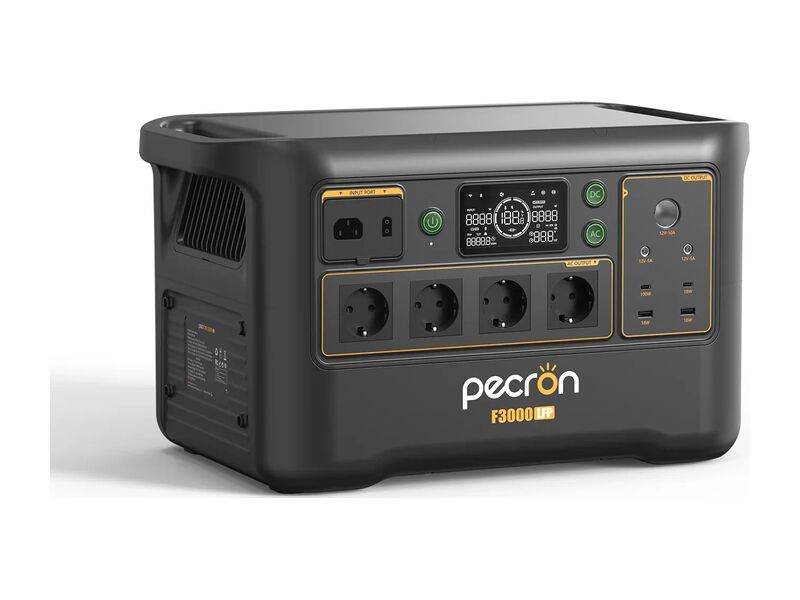
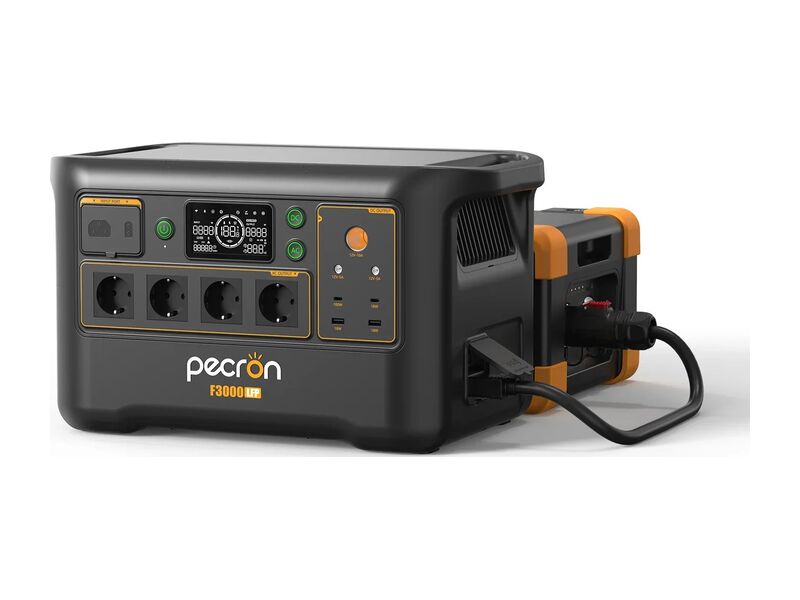
A rugged, expandable backup power station that powers your whole home today and keeps growing up to 10752Wh as your needs increase over time.
Capacity : 3072Wh LiFePO4, expandable to 10752Wh
Power : 3600W continuous, 4500W peak, pure sine wave
Charging : 100% in 2h on mains power (1800W)
Outputs : 4x 230V sockets, 100W USB-C, 13 outputs total
3072Wh from £1199, 100% in 2h, expands to 10752Wh
Use case: Health & CPAP
For a medical device such as a CPAP machine, the F3000LFP offers a comfortable reserve of several nights on its base 3072Wh, expandable if you need even longer autonomy. The UPS function, switching in 8 to 20 milliseconds, secures power during a nighttime mains outage, an important point for medical equipment. The rated cooling, however, stays audible during fast charging, worth noting if the unit has to stay in the same room overnight; under normal discharge use, the fan is much quieter.
The Pecron F3000LFP is a large-capacity portable power station built for home backup and long motorhome trips. Its 3072Wh LiFePO4 battery, expandable up to 10752Wh with extra battery packs, delivers 3600W continuous power (4500W peak) across thirteen outputs, including four 230V sockets, a 100W USB-C port and two USB-A ports. Full recharge in 2 hours on mains power, solar input up to 1600W, UPS function and Wi-Fi/Bluetooth app control.
In-depth reviewRead our full review →4.1/5
On paper, the Pecron F3000LFP ticks every box for a serious backup station: over 3kWh, 3600W continuous, a full recharge in 2 hours. In use, what stands out first is the capacity-to-weight ratio: 28.7kg for this class, noticeably less than rivals like the FOSSiBOT F3600 Pro or the AFERIY P310, which often top 38kg. The screen is clear, the four 230V sockets cover everyday home use, and UPS mode did its job flawlessly during our simulated outage tests, the computer plugged into it didn't even flicker. Two small gripes though. First, the fan is audible during fast charging, though not unbearable. Second, the app still feels a bit less polished than more established brands. Still, at £1199, expandability up to 10752Wh changes the equation: you start with the station alone and grow the setup later, without buying a bigger unit down the line. A strong capacity-to-price ratio for securing your home long term.
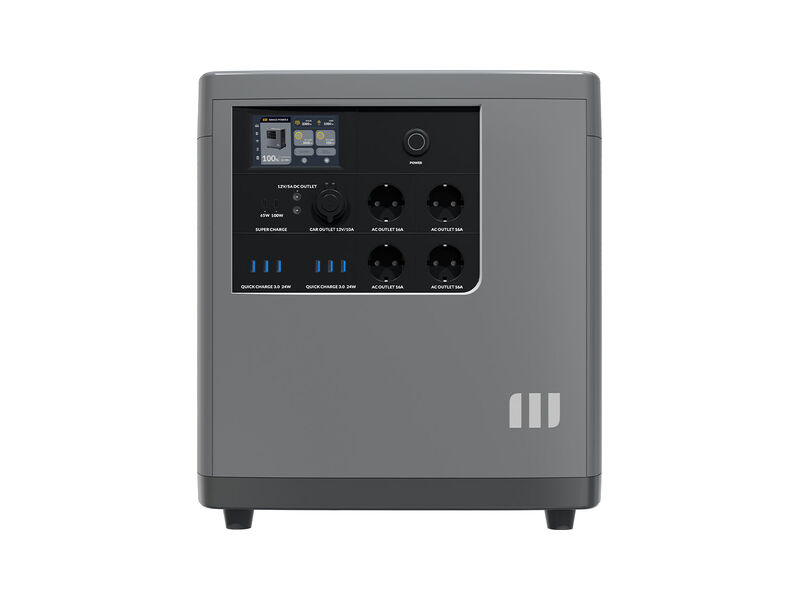
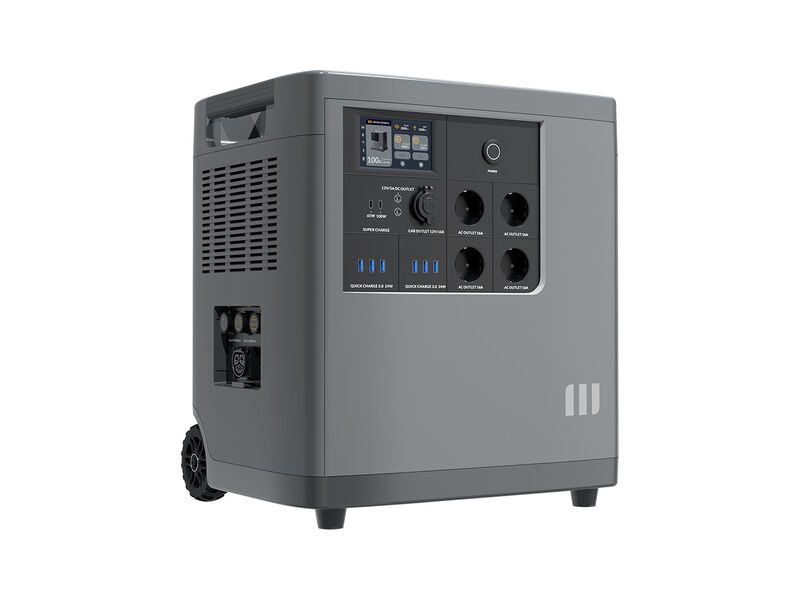
A rolling furniture unit with a built-in touchscreen, the Mango Power E stores 3533 Wh (expandable to 7060 Wh) and outputs 3500 W to back up your home.
Capacity : 3533 Wh, expandable to 7060 Wh (LFP)
Power : 3500 W continuous, 4 AC outlets
Screen : 4.3-inch integrated colour touchscreen
Weight : 45.4 kg (100 lb) on wheels
Rolling furniture design with built-in touchscreen
Use case: Health & CPAP
For a home CPAP machine, the Mango Power E offers a comfortable reserve: its 3533 Wh (expandable to 7060 Wh) covers many nights of treatment, well beyond a compact power station. Its quiet operation at idle (under 40 dB) does not disturb sleep, and its touchscreen lets you check the charge level without touching a smartphone. Its 45.4 kg weight and rolling furniture design suit a stationary bedside setup at home better than regular moves between rooms or travel.
The Mango Power E is a home power station built like rolling furniture with an integrated touchscreen, designed as a home energy hub. Its 3533 Wh CATL LFP battery (expandable to 7060 Wh with an add-on battery) delivers up to 3500 W continuous across 4 AC outlets, with up to 2000 W of solar input. Controllable over Wi-Fi and Bluetooth, it targets power cuts, extended remote work and home solar independence, rated for 6000 cycles and backed by a 5-year warranty.
In-depth reviewRead our full review →4.0/5
We were surprised by the Mango Power E's format straight out of the box: this is not a camping suitcase, it is a real piece of furniture you roll into the living room or garage and plug in like a home appliance. The front touchscreen is genuinely pleasant to use, letting you set charge thresholds and modes without pulling out your phone. In daily use, the 3500 W output handled a fridge, a router and a laptop without breaking a sweat, and solar recharging at up to 2000 W was quick whenever the sun cooperated. Two honest caveats: at 45.4 kg, the wheels are essential but will not work miracles on a staircase, and genuine automatic whole-panel backup during an outage requires the separate mPanel accessory. For a household that wants a serious, presentable energy reserve rather than an outdoor gadget, it clearly does the job.
With 2048 Wh, 2400 W (up to 4800 W peak), a LiFePO4 battery and a 7-year warranty, the Aferiy P210 targets the best capacity-to-price ratio on the market.
Capacity : 2048 Wh (LiFePO4 battery, 4000 cycles)
AC output : 2400 W, up to 4800 W peak, pure sine wave
Connectivity : 3 AC outlets, 4 USB-C (100 W), 2 USB-A, XT60, DC
Warranty : 7 years, UPS function (under 10 ms switchover)
2048 Wh and a 7-year warranty at an aggressive price
Use case: Health & CPAP
For a CPAP or PAP machine, the Aferiy P210 brings valuable peace of mind: its 2048 Wh power a breathing device for several consecutive nights, typically three to five depending on settings and humidifier, and its UPS function takes over in under 10 ms if the power fails, without waking the sleeper or interrupting therapy. The pure sine wave suits sensitive medical electronics. Run over USB-C or 12 V rather than 230 V, it cuts consumption further and adds nights. It is a reassuring solution at home or travelling, provided you accept its 22 kg, which suit a fixed location.
The Aferiy P210 is a portable power station with a 2048 Wh automotive-grade LiFePO4 battery (4000 cycles). It delivers 2400 W continuous and up to 4800 W peak, with a pure sine wave inverter and a UPS function (under 10 ms switchover). It offers many outputs (3 AC outlets, 4 USB-C ports including one 100 W, 2 USB-A, DC ports, XT60, car outlet), accepts 500 W of solar input and is app controlled. 7-year warranty, 22 kg.
In-depth reviewRead our full review →4.1/5
We only knew Aferiy by name, and the P210 turned out to be a pleasant surprise. Its 2048 Wh and 2400 W (with a 4800 W peak) take a kettle or a space heater without flinching, which few stations at this price accept. Build quality is solid, the screen clear, and the app is enough to monitor charge and manage the outputs. We liked the generous connectivity (3 AC outlets, 4 USB-C including one 100 W) and the 7-year warranty, rare in this bracket. The UPS switchover in under 10 ms held a test outage without a hitch. Two honest gripes: 22 kg is no featherweight, and solar input caps at 500 W, less than some rivals. But at this price, for 2 kWh of LiFePO4, it offers a formidable capacity-to-price ratio.
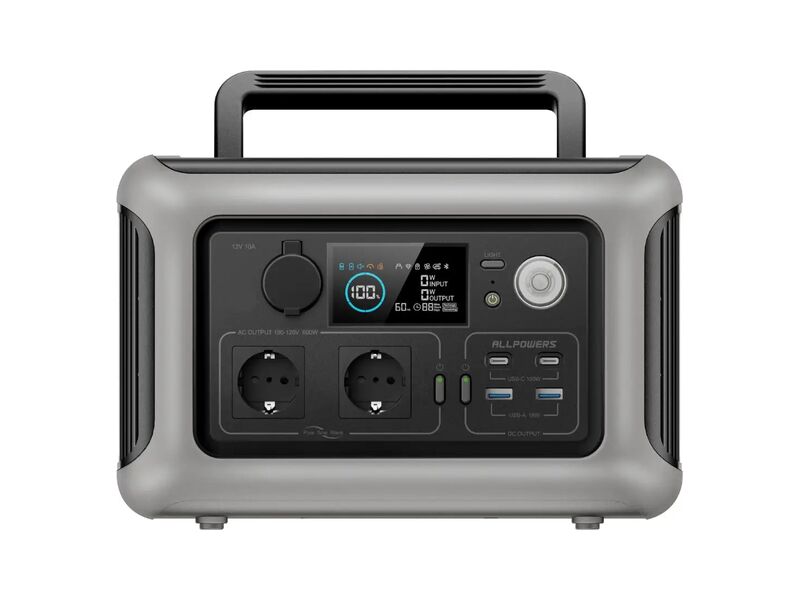
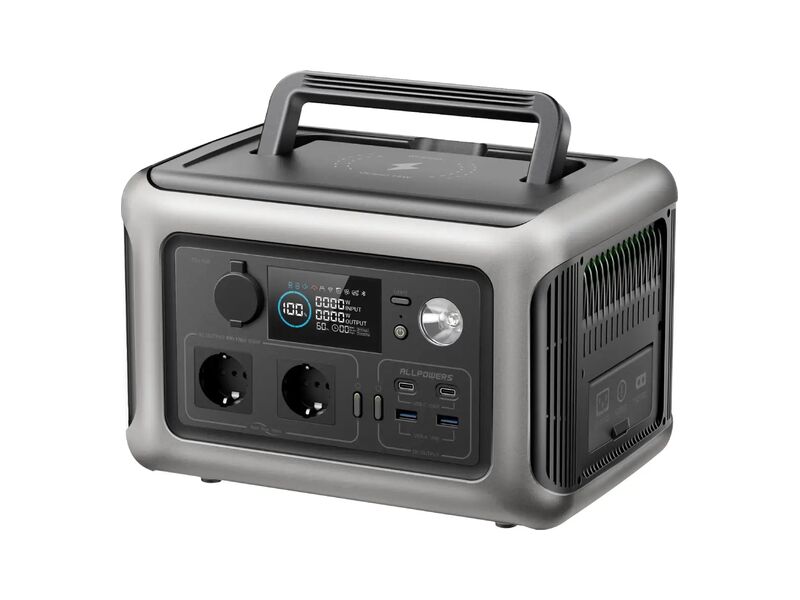
Affordable and backed by a 5-year warranty, the Allpowers R600 delivers 299 Wh, 600 W and a one-hour recharge, plus a built-in wireless charger.
Capacity : 299 Wh
Power : 600 W (1200 W peak)
Recharge : 0 to 100% in about 1 h from mains
Weight : 5.6 kg
5-year warranty, full charge in 1 h and built-in wireless pad
Use case: Health & CPAP
For a CPAP machine, the R600 generally covers a full night of therapy, more if you turn off the heated humidifier or run the device on 12 V rather than 230 V. Its UPS function takes over instantly if the power fails during sleep, without waking you or interrupting therapy. Compact (5.6 kg) and quiet, it fits at the bedside at home or travelling. For several nights in a row without recharging, a higher capacity is more relaxing; here, plan a daily recharge, very fast from mains.
With 299 Wh, 600 W (1200 W peak) and a full recharge in one hour, the Allpowers R600 runs a laptop, lighting, small appliances and camping gear. Very complete for its size (2 AC outlets, USB-C, a 15 W wireless charging pad), with a UPS function and an LFP battery backed by a 5-year warranty, it targets the best features-to-price ratio for van life, off-grid trips or home backup.
In-depth reviewRead our full review →4.3/5
We used the R600 for several weeks, and for the price it is a pleasant surprise. The first good point is charging: left on a socket over lunch, it comes back full, barely over an hour. Out and about, its 299 Wh covered an evening of camping with an electric cool box, an LED string light and topping up two phones, without strain. We liked the little wireless charging pad on top: drop the phone on it and you are done, no hunting for a cable. The two AC outlets and USB-C ports are plenty for portable use. The UPS function bailed us out during a brief power cut at home, the router did not notice. And above all, the 5-year warranty is genuinely reassuring on a product at this price. Two honest downsides: 299 Wh is a top-up capacity you have to manage, and the lack of battery expansion limits future-proofing. But at this price it is hard to be picky: it is an excellent entry point into portable power.
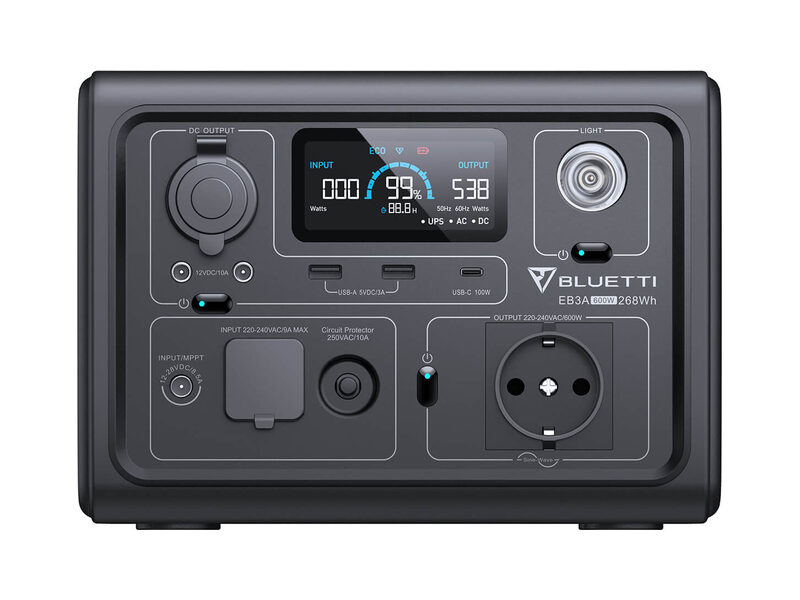
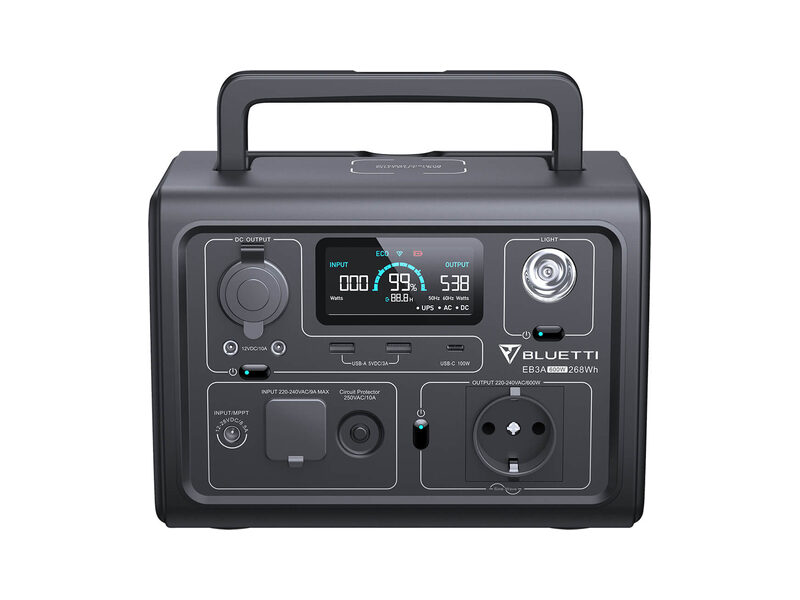
268Wh and 600W in an ultra-compact station under 5 kg, recharging to 80% in under an hour: the ideal entry-level pick for camping and top-ups.
Capacity : 268Wh (LiFePO4 battery)
Power : 600W continuous, 1200W peak
Outputs : 1 AC outlet, USB-C 100W, USB-A, car socket, 15W wireless
Recharge : 80% in under an hour (350W fast charge), 200W solar
80% recharge in under an hour in just 4.6 kg
Use case: Health & CPAP
For a CPAP machine, the EB3A generally covers a good night of therapy if you turn off the heated humidifier or run the device on 12 V, which draws more on 230 V with humidification. Its UPS function takes over if power fails during sleep, and its lightning recharge (80 % in under an hour) tops it up very fast the next day. Compact (4.6 kg) and quiet, it fits at the bedside at home or travelling. For several nights in a row without recharging, a higher capacity is more relaxing; here, plan a daily recharge, near-instant from mains.
The Bluetti EB3A is a compact 268Wh portable power station with a LiFePO4 battery, delivering 600W continuously (1200W peak via Power Lifting). Light (4.6 kg), it recharges to 80% in under an hour thanks to its 350W fast charge. It packs many outputs: 1 AC outlet, a USB-C 100W, USB-A, a car socket and a 15W wireless charging pad. Battery rated for 2500 cycles and controlled via the Bluetti app. An excellent budget top-up station.
In-depth reviewRead our full review →3.8/5
The EB3A is the little station that does a lot for its price. We first used it camping to run a cool box, lighting and to charge phones and a camera: its 268Wh is plenty for a light weekend, and at 4.6 kg you move it without thinking. The real surprise is charging: on the mains, it is back to 80% in under an hour, which is impressive in this segment and very handy when you leave in a rush. The small wireless pad on top is a nice bonus for the phone. Just do not overestimate its 600W: it is perfect for electronics and small appliances, but Power Lifting mode never really delivers the claimed 1200W: a kettle or hair dryer just limps along. For portable top-ups or an occasional backup reserve, at this reduced price it remains a good choice, as long as you do not rely on it too heavily for prolonged critical backup.
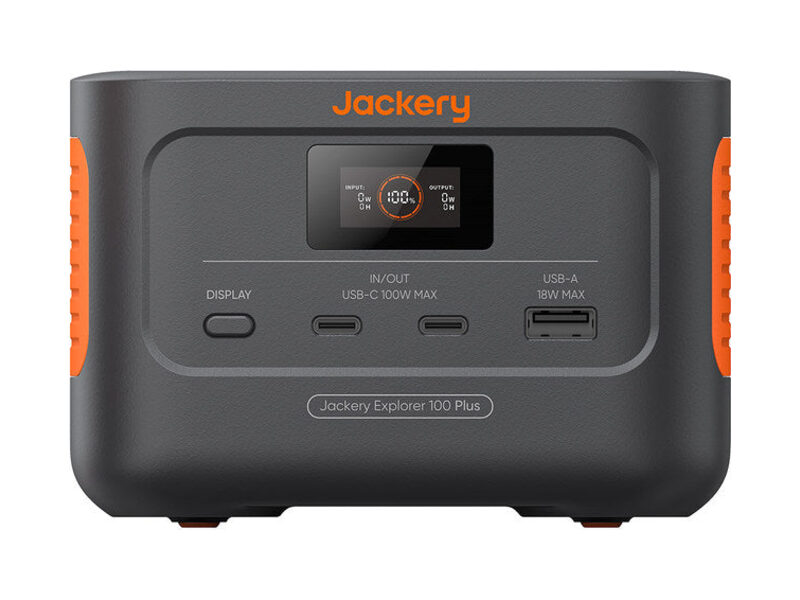
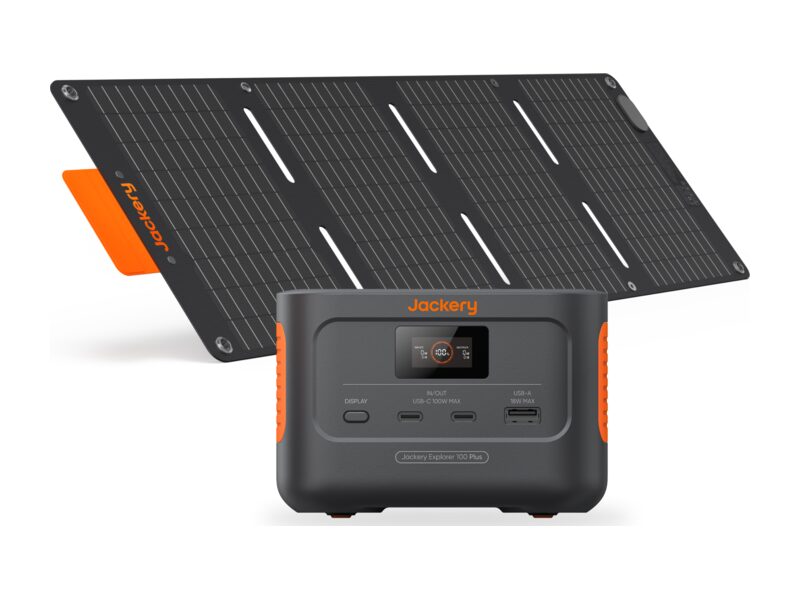
99Wh and 128W in a palm-sized body (965 g): the ideal mini station to fly with, charge a laptop and keep your devices running.
Capacity : 99.2Wh / 31000mAh (LiFePO4)
Power : 128W (USB-C 100W In/Out)
Weight : 965 g, palm-sized
Recharge : Full in about 2 h
99Wh, flight-friendly, in just 965 g
Use case: Health & CPAP
Tiny (965 g), the Explorer 100 Plus slips into cabin baggage and helps out a travel CPAP compatible with 12 V or USB-C, without the heated humidifier: its 99 Wh generally cover one night of therapy on these efficient models. Being under 100 Wh, it goes in the aircraft cabin, a real asset for CPAP travellers. Its capacity remains limited to one night and to devices accepting 12 V or USB, with no 230 V outlet: for a mains CPAP with humidification or several nights in a row, a larger inverter station will be needed.
The Jackery Explorer 100 Plus is a mini portable power station of 99.2Wh (31000mAh) with a LiFePO4 battery, delivering 128W. Palm-sized and weighing just 965 g, it is carry-on friendly for flights and slips into a bag. Its 100W USB-C port works as input and output, enough to charge a laptop, a smartphone, a drone or a tablet. Its LFP battery lasts 2000 cycles, and it recharges fully in about 2 hours.
In-depth reviewRead our full review →4.1/5
The Explorer 100 Plus changed the way we travel light. Under the 100Wh mark, it goes through airport security into the cabin without trouble, and at 965 g you forget it in the camera bag. On the move, its 100W USB-C port charged a MacBook Air at full speed while keeping enough to top up a smartphone twice, exactly what you want from a backup reserve. We like the clear screen showing remaining runtime and the very tidy finish. It obviously does not replace a real station for AC outlets, it only has USB ports, but that is not its purpose. For a nomadic remote worker, a videographer or a traveller who just wants to keep USB-C devices charged without lugging a brick, it is the smartest, most portable solution we have tested.
288Wh and 300W in a station of just 3.75 kg, with AC outlets and 100W USB-C: the ideal companion for light camping and nomadic remote work.
Capacity : 288Wh (LiFePO4 battery)
Power : 300W continuous, 600W peak
Outputs : 1 AC outlet, 2 USB-C incl. one 100W, 1 USB-A
Recharge : About 2 h from the mains, solar compatible
AC outlet and 100W USB-C in 3.75 kg
Use case: Health & CPAP
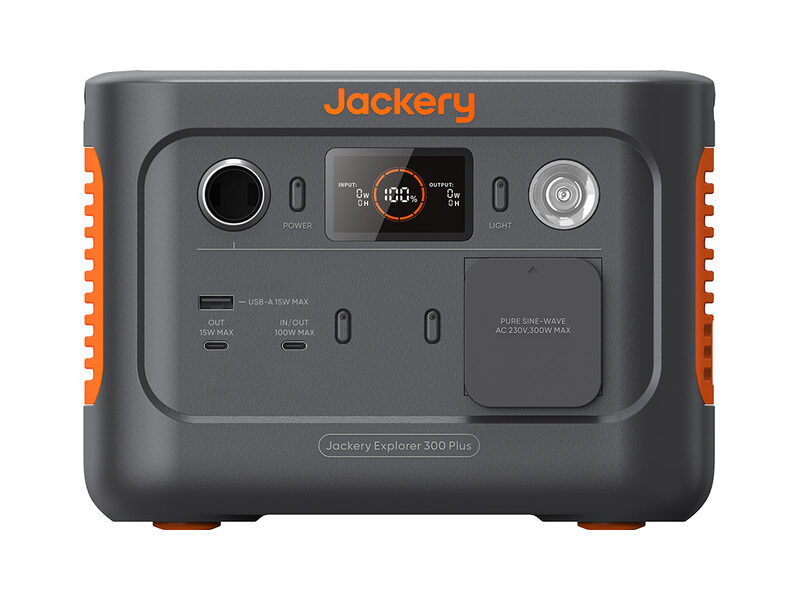
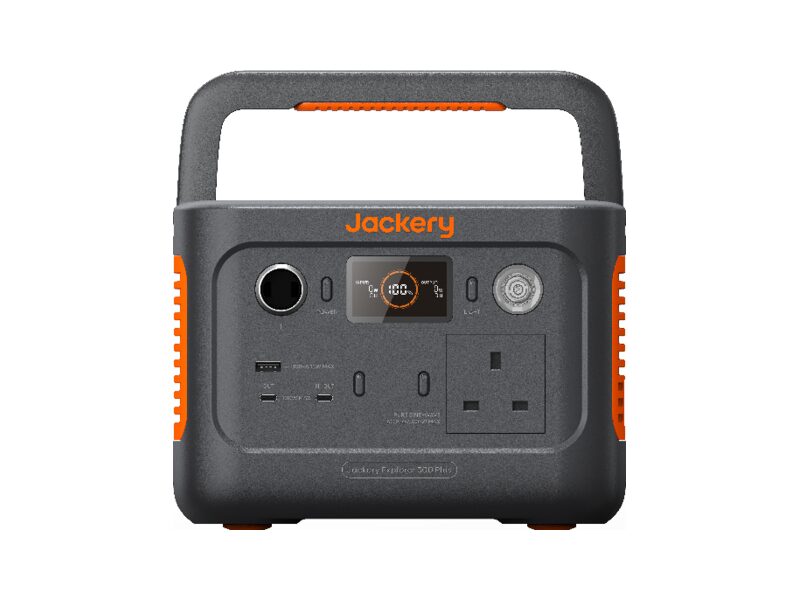
For a CPAP machine while camping or travelling, the Explorer 300 Plus offers a good top-up: its 288 Wh of LiFePO4 generally cover one or two nights of therapy without the heated humidifier, more by running the device on 12 V rather than 230 V. Compact (3.75 kg) and solar-rechargeable up to 100 W, it recharges during the day for the next night, without depending on an outlet. Its EPS switches over within 20 ms, but Jackery advises against equipment that demands strict continuity: it suits planned mobile CPAP use rather than permanent home backup, where a true UPS is preferable.
The Jackery Explorer 300 Plus is a compact 288Wh portable power station with a LiFePO4 battery, delivering 300W continuously (600W peak). Light (3.75 kg), it combines one AC outlet, 2 USB-C ports including one rated 100W and a USB-A to power and charge several devices. Its LFP battery lasts 3000 cycles, a lifespan of up to 10 years, and it recharges in about 2 hours from the mains or via a SolarSaga solar panel.
In-depth reviewRead our full review →4.1/5
The Explorer 300 Plus is the little station you take everywhere without thinking. At 3.75 kg, it fits in one hand and slips into a backpack, but unlike a simple power bank it offers a real AC outlet: we plugged in a small camera charger while charging a laptop over the 100W USB-C. Its 288Wh is plenty for a weekend of bivouac for two (phones, lighting, drone) or as a backup reserve at home. We like the LiFePO4 battery, far more durable than conventional lithium, and the two-hour recharge. Its limits are logical for the size: 300W is not enough for large appliances, and you have to make do with a single AC outlet. But for a reliable, compact and well-finished top-up station, it is a safe bet.
With its built-in inverter and 5024 Wh expandable up to 90 kWh, the EcoFlow Stream 5000 works entirely on its own, no existing solar inverter required.
Capacity : 5024 Wh (LFP), expandable up to 90 kWh networked
Inverter : 3000 W built-in, pure sine, grid or off-grid
Built-in inverter, works alone with no existing setup
Use case: Health & CPAP
For a CPAP machine used every night at home, the Stream 5000 offers background security rather than a travel solution: its UPS mode takes over during a night-time outage without interrupting treatment, and its base 5024 Wh represents ample reserve for many nights, even without the expansion pack. Its ability to grow up to 90 kWh networked means other medical equipment can comfortably join the same circuit later. Its weight and fixed format do, however, keep it to home use rather than a travel bag.
The EcoFlow Stream 5000 is a plug-and-play home battery with 5024 Wh (LFP) and a built-in 3000 W bidirectional inverter, letting it run entirely on its own with no existing solar inverter required. It accepts up to 5000 W of solar input across 4 MPPTs, switches between grid export and off-grid output, and provides a near-instant UPS mode during outages. Its capacity scales up to 15 kWh per tower and 90 kWh across a network of towers. Launched in late August 2026, it targets residential solar self-consumption and home backup power.
In-depth reviewRead our full review →3.9/5
The Stream 5000 delivers on a genuine technical promise: its built-in bidirectional inverter lets it run with no existing solar setup at all, unlike its own AC 5000 sibling, which needs one already in place. Its expansion path, up to 90kWh, rivals the best very-high-capacity stations in the catalogue, with 4 independent MPPT inputs for wiring several panel strings without loss. But the plug-in simplicity the name suggests doesn't survive contact with regulation: beyond 800W of export, a certified electrician and a grid notification are still required, and expanding past one tower means buying a separate Gateway box, a cost not made prominent at launch. Launched barely two weeks ago in the UK at the time of writing, no independent measurement of efficiency, noise or charge time exists yet. One to watch closely rather than judge outright today.
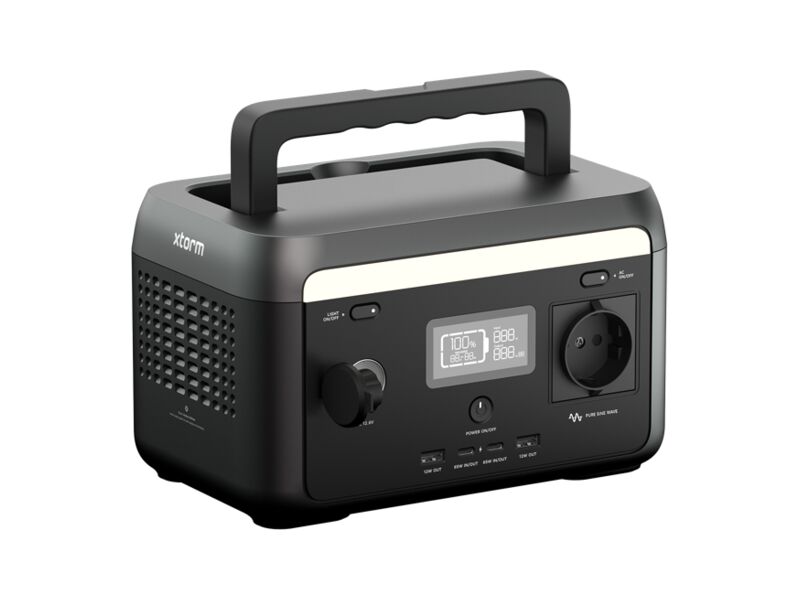
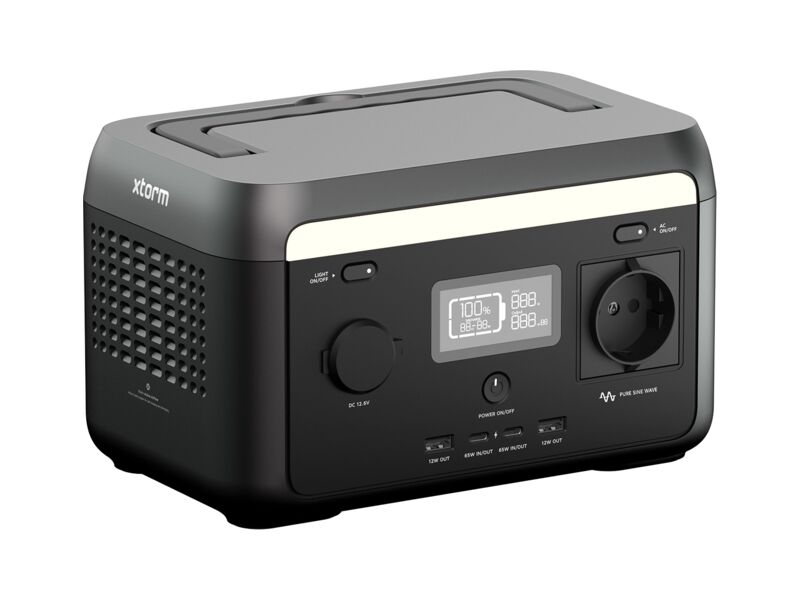
The Xtorm XP2W300 packs 204.8Wh and 300W (500W with PowerBoost) into a 3.65kg case you can control over WiFi, ready for camping and remote work.
Capacity : 204.8Wh (LiFePO4)
Power : 300W (500W PowerBoost)
Charging : ≈ 1h30 on mains power
Weight : 3.65kg
WiFi + Smart Life app, pure sine wave, 10ms EPS switchover
Use case: Health & CPAP
For a CPAP machine on the move, the XP2W300 offers genuine peace of mind: its 204.8Wh usually cover one night of treatment without a heated humidifier, and its EPS function switches to battery in 10 milliseconds during a mains outage, without a jarring wake-up. A full recharge in 1h30 lets you top it up quickly each day, and its compact build (3.65kg) makes it an easy travel companion. Check your device's actual power draw before you leave: with heated humidification, runtime will be noticeably shorter.
The Xtorm XP2W300, also sold as the Powerstation Smart 300W, is the most compact power station in the brand's Xtreme Power 2 range: a 204.8Wh LiFePO4 battery, a pure sine wave 300W output (500W with PowerBoost), all in a 3.65kg case. It stands out with WiFi and Bluetooth remote control through the Smart Life app, a 1h30 mains recharge and solar input up to 120W. Its EPS function switches to battery in 10ms during an outage, making it a good fit for camping, nomadic remote work or light backup power.
In-depth reviewRead our full review →3.8/5
Out of the box, the XP2W300 impresses with its size: barely bigger than a picnic cooler, it slips into a backpack without you noticing its 3.65kg. During a weekend of outdoor remote work, the Smart Life app let us switch off the USB output remotely from the sofa, a detail that genuinely changes daily use compared with rivals that only offer short-range Bluetooth control. Camping overnight, it comfortably covered LED lighting and charging two phones and a camera without breaking a sweat. The EPS function proved itself during a test mains outage, the home router did not even have time to flicker. One honest downside: 204.8Wh remains modest next to the River 3 Plus or SOLIX C300, which pack in about 80Wh more in a similar footprint, and there is no add-on battery to grow with your needs. As a first connected, compact power station built on solid fundamentals (pure sine wave, LiFePO4, EPS), it remains a serious option, best kept for light-duty use.
A CPAP draws 30 to 60 W depending on the humidifier. A 500 Wh station generally covers one to two nights without the humidifier. Always check the voltage, power and runtime required by the device manufacturer.
Without the humidifier, a 500 Wh station often covers one to two nights. The heated humidifier greatly increases consumption: disabling it, or planning a larger capacity and solar charging, significantly extends autonomy.
It is strongly recommended. Permanently plugged in, a station with UPS takes over instantly during an outage without interrupting the device, including at night. Always follow your doctor's and provider's instructions.
Yes, for camping or off-grid stays, a compact station runs the CPAP night after night. For flights, check the rules for carrying lithium batteries beforehand, as the station is often restricted in the hold or cabin.