Fast power banks

On a fast power bank two speeds matter and buyers usually check only one: the speed it gives out, and the speed at which it fills back up.

Output power decides how long it takes to bring a phone back to 50 per cent, typically around twenty minutes at 30 watts. But input power decides how long the bank itself takes to refill, and that is the figure people forget in the shop: a 20,000 mAh unit that only accepts 18 watts needs more than four hours on the mains, against under two if it accepts 65. The protocol matters too: USB-C Power Delivery is the universal standard, while some brands' proprietary protocols only reach full speed with their own phones. We measure both directions, and the heat that comes with high power.

No product matches these criteria.

Our selection

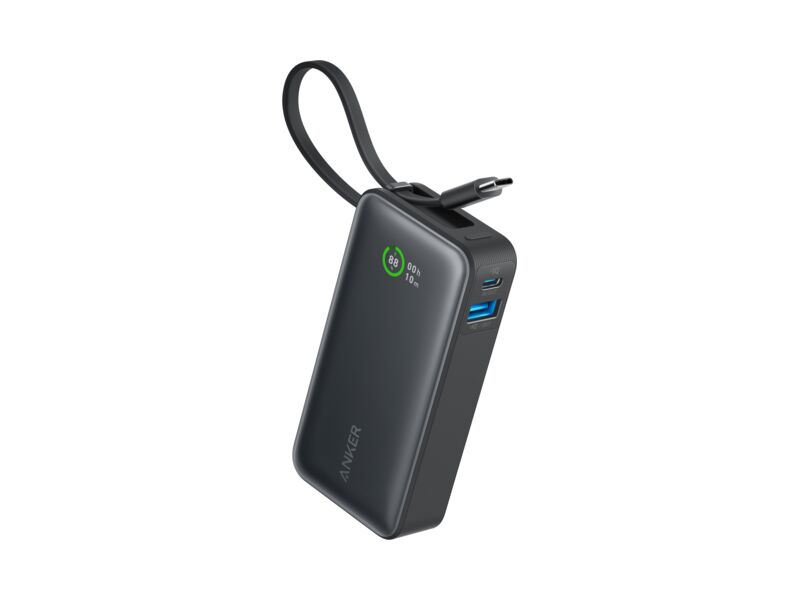
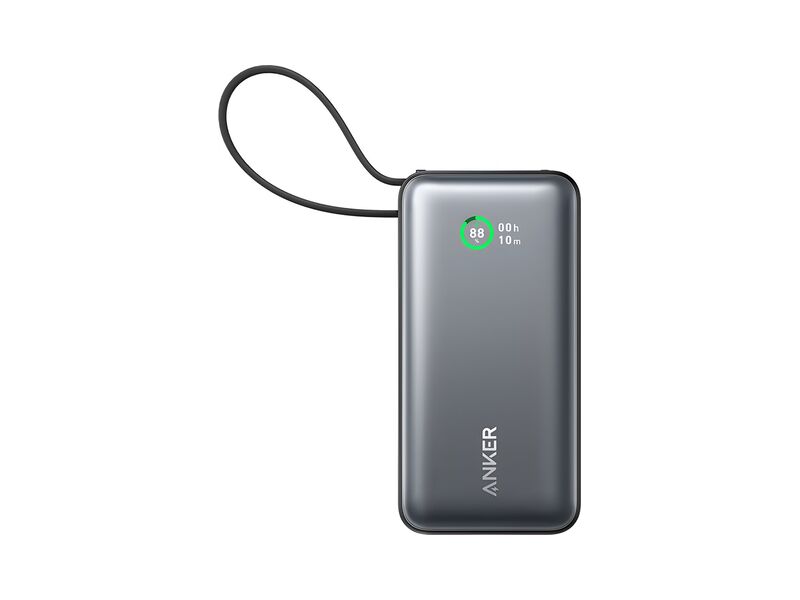
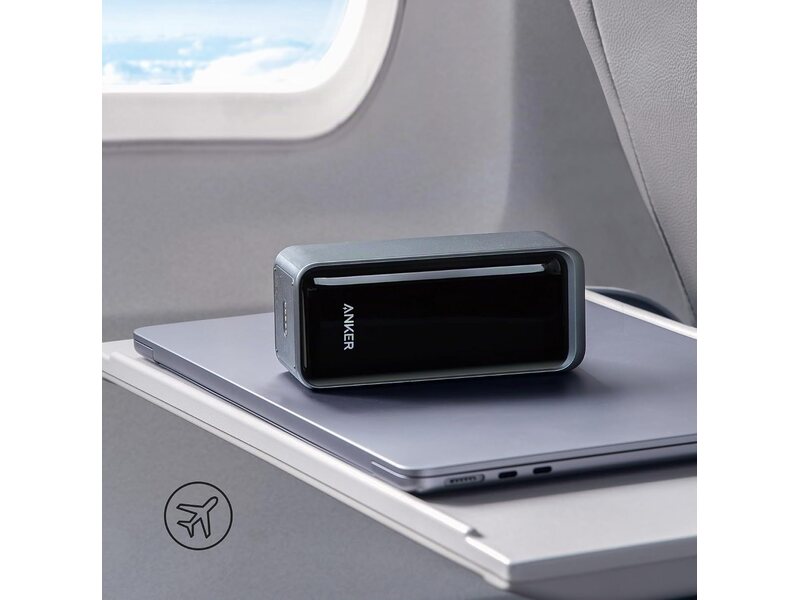
Anker Nano 30W

See price and availability (47)Allowed in cabin (flights)

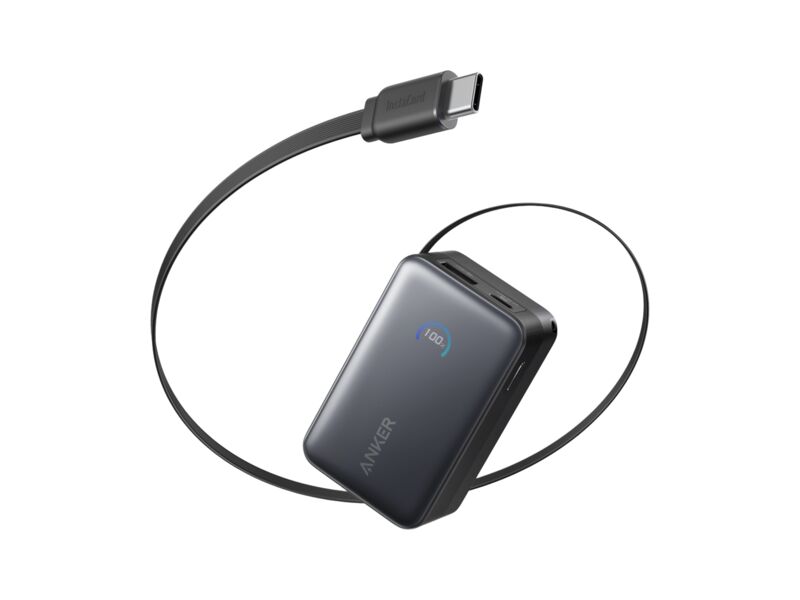
Compact with its built-in USB-C cable, a display and 30 W fast charging, the 10,000 mAh Anker Nano 30W recharges everything, anywhere.

  • Capacity: 10,000 mAh (37 Wh)
  • Power: 30 W (USB-C PD)
  • Ports: Built-in USB-C cable + USB-C + USB-A
  • Weight: 215 g
  • Built-in USB-C cable, 30 W and a colour display
The Anker Nano 30W is a pocket-sized 10,000 mAh power bank with a USB-C cable built right in, so there is no separate cable to carry. It delivers up to 30 W over USB-C Power Delivery to fast-charge a smartphone, a tablet, earbuds or even a light laptop. A colour display shows the remaining charge, and two extra ports (USB-C and USB-A) complement the built-in cable. Compact (215 g), bi-directional and made from recycled plastic, it is ideal for daily use and travel.
The Anker Nano 30W quickly won us over with how practical it is. The built-in USB-C cable is a genuine game-changer: no more digging for a cable at the bottom of the bag, it is always there, and it doubles as a loop to grab the battery. Day to day, the 30 W charge a smartphone quickly, you get half an iPhone's battery back in half an hour, and a tablet keeps up fine. The colour display is a real plus: you know exactly how much is left, no guessing with LEDs. With 10,000 mAh, you recharge a modern phone almost twice, plenty for a busy day or a light weekend. The pocket format and 215 g make it easy to take anywhere. Two honest reservations: the built-in cable, handy as it is, cannot be replaced if it wears out, and 30 W is a little tight to charge a large laptop at full speed. But for a smartphone and small devices, with this convenience and display, it is one of the most accomplished power banks in its class.
View product page

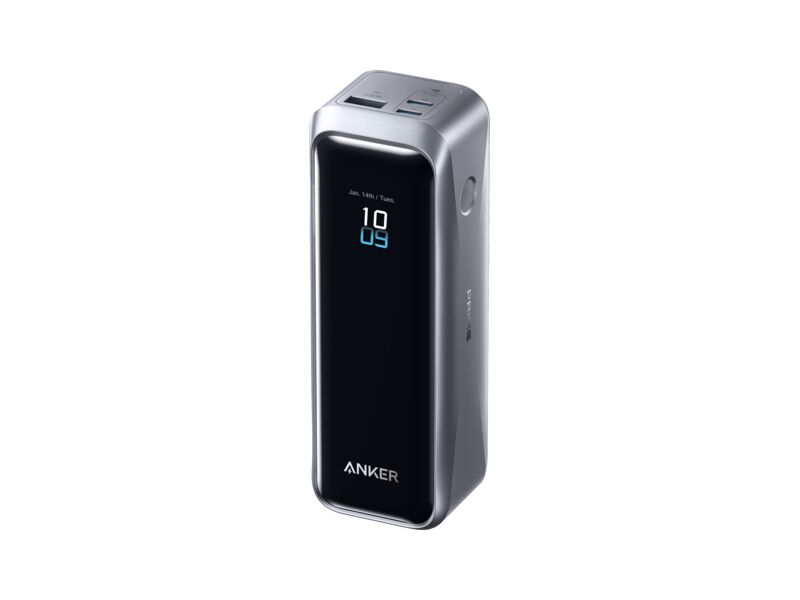
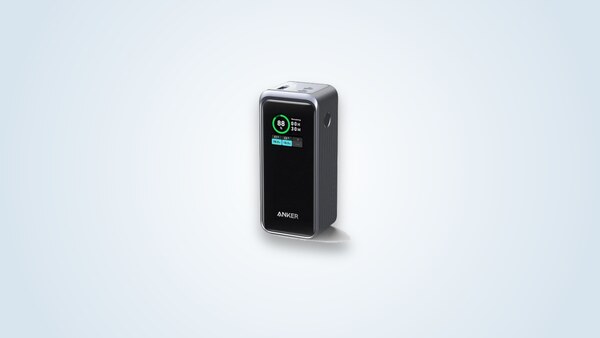
Anker Prime 20000 (200W)

See price and availability (33)Allowed in cabin (flights)

Two 100 W USB-C ports, 200 W in total and a smart display: the Anker Prime 20000 recharges two laptops at once, at full speed.

  • Capacity: 20,000 mAh (72 Wh)
  • Power: 200 W (2x USB-C 100 W)
  • Ports: 2 USB-C + 1 USB-A
  • Recharge: 100% in 1 hr 15 (100 W input)
  • 200 W, two laptops at once, display, flight-ready
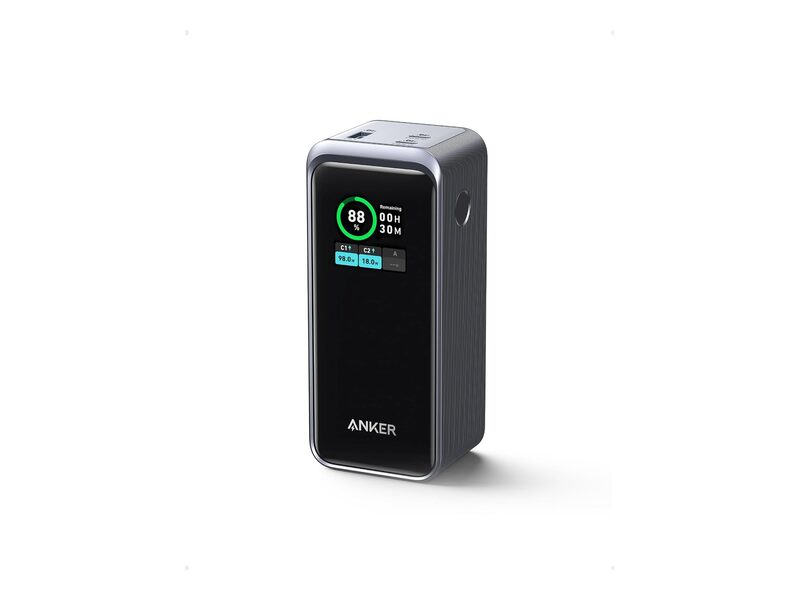
The Anker Prime 20000 (200W) is a premium power bank that can recharge two laptops at once. Its two USB-C ports each deliver up to 100 W, for 200 W in total, alongside a USB-A port. A smart LCD display shows the remaining level, the input and output power and the charging time. With 20,000 mAh (72 Wh), it recharges a smartphone about four times, refills itself in 1 hr 15 and stays cabin-friendly. The reference for demanding mobile work.
The Anker Prime 200 W impressed us from the very first trip. It is the battery you grab without thinking when you head off to work away from an outlet: it charges the phone, the tablet and above all the laptop, often all at once. The 100 W per USB-C port genuinely changes things, a MacBook regains half its charge in about forty minutes, exactly like on mains power. Plugging in two laptops at once without watching the output collapse is honestly impressive. The display is the second big strength: clear and precise, it shows watts in and out, the remaining percentage and the estimated time, so you never charge blind again. Its 20,000 mAh easily last a heavy multi-device day, and it refills itself very quickly, a full charge in a little over an hour with a good charger. Compatibility with the Anker Prime charging base is a real plus on a desk. Two honest reservations: at around 630 g, this is not a pocket battery, it lives in the bag, and its price places it firmly in the premium tier. A built-in cable would also have been welcome. But for raw power and handling two laptops, it is hard to fault.
View product page
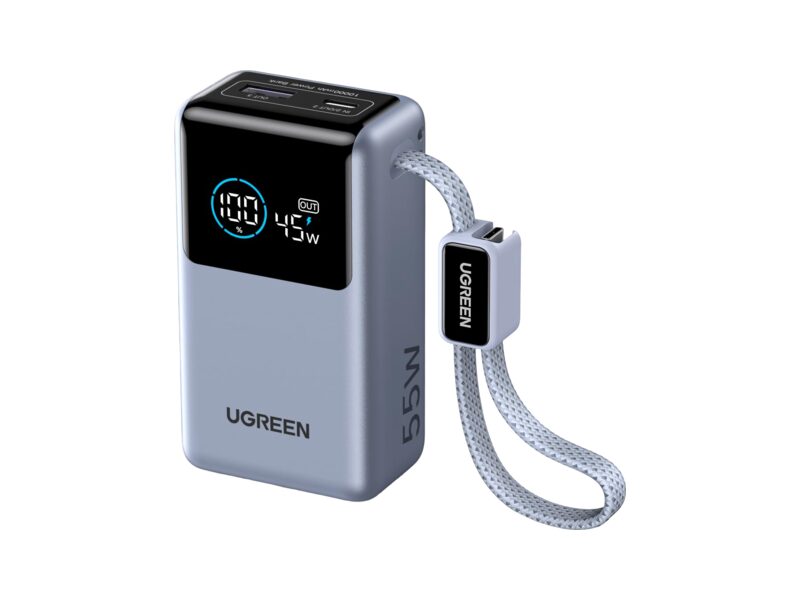
Nexode 55W Ugreen 10000mAh 55W power bank with built-in cable
Promo

Ugreen Nexode 55W

69.99€ 59.99€ (13)Allowed in cabin (flights)

The small power bank that charges hard: 10000mAh, 55W, a built-in USB-C cable with strap and a digital display, smaller than an iPhone.

  • Capacity: 10,000 mAh (37 Wh)
  • Power: 55W (Xiaomi), PD 45W
  • Outputs: Built-in USB-C cable + USB-C + USB-A
  • Weight: 249 g, digital display
  • 55W, built-in cable and display, 249 g
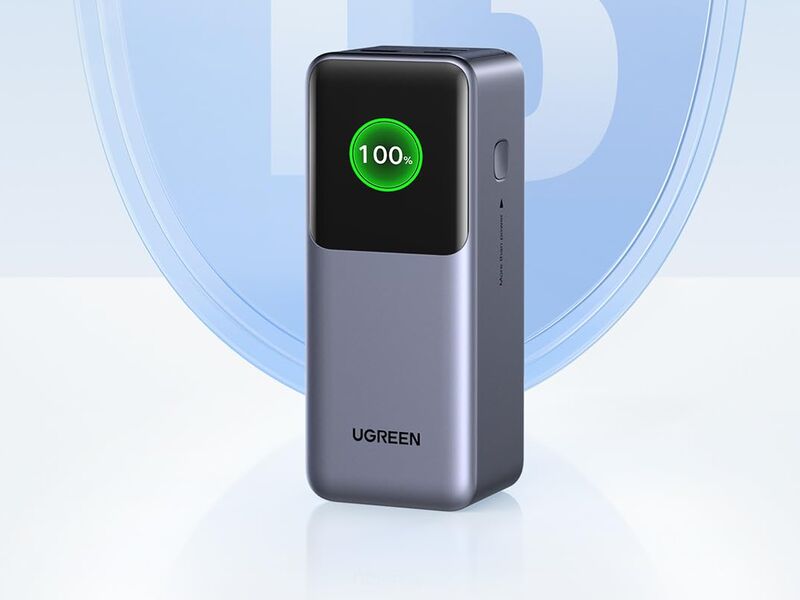
The Ugreen Nexode 55W is a compact 10,000 mAh power bank built for power: up to 55W to charge an iPhone 17 Pro Max to 66% in 30 minutes. Smaller than an iPhone 17 Pro Max at 249 g, it packs a built-in USB-C cable (with strap), a USB-C port and a USB-A port to power three devices at once, plus a digital display showing level and power in real time. Under 100 Wh, it is allowed in the aircraft cabin: the ideal premium pocket reserve.
We adopted the Ugreen Nexode 55W as our everyday battery, and its format wins you over at once: it fits in a jeans pocket, weighs barely 249 g, and yet charges faster than many bigger models. The built-in USB-C cable saves carrying a cable, and its little strap is handy for clipping it to a bag. In practice, you get back two thirds of an iPhone in half an hour, excellent for this size. The digital display is pleasant: you see at a glance the percentage left and the power going out, no more charging blind. The three outputs help out when you travel as a pair. Two honest caveats: with 10,000 mAh you get about one and a half iPhone charges, so for long days you will want something bigger, and its price is high for this capacity, you pay for the power, the display and the built-in cable. But for a small, fast, complete and well-made battery, the Nexode 55W is a success that never leaves the pocket.
View product page
Rapid 25K EcoFlow Rapid 25000mAh 170W power bank
Promo

EcoFlow Rapid 25K

See price and availability (6)Allowed in cabin (flights)

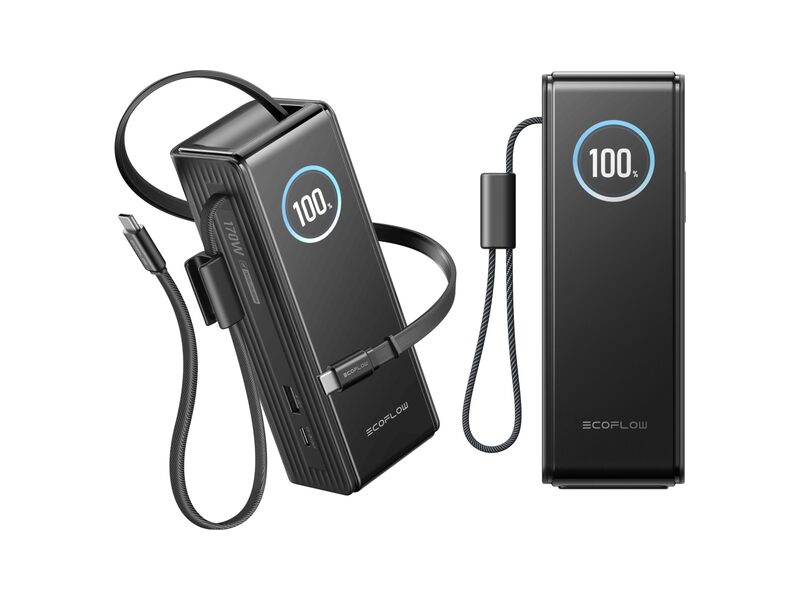
25,000 mAh, 170W and two built-in retractable USB-C cables: the power bank that recharges a MacBook twice and your phone five times, with no cable to carry.

  • Capacity: 25,000 mAh (cabin approved)
  • Output: 170W (2 ports), 100W on 1 port
  • Cables: 2 built-in retractable USB-C cables
  • Recharge: 0 to 50% in 26 min, TFT screen
  • 170W, 2 built-in cables, screen
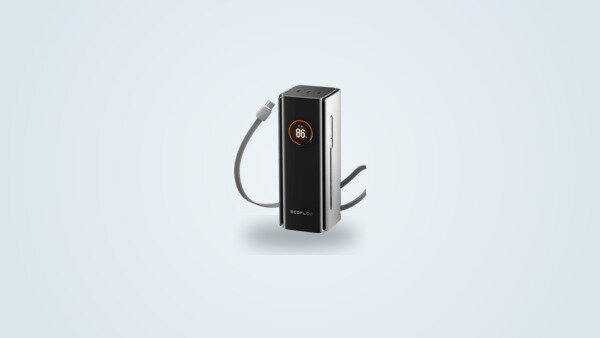
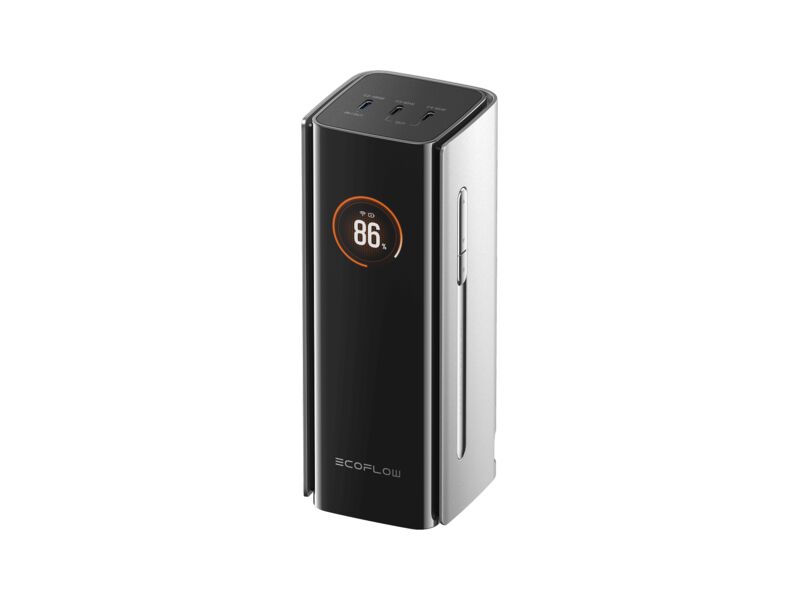
The EcoFlow Rapid 25K is an all-in-one power bank designed for travel and remote work. Its 25,000 mAh (allowed in the aircraft cabin) recharge a MacBook twice or a phone four to five times, enough to last one to two days away from an outlet. It delivers up to 170W across two ports (100W on a single port), charges up to four devices at once, and has two built-in retractable cables (a 67 cm USB-C and a 26 cm USB-C lanyard), so no need to carry extras. A clear TFT screen shows the charge level, and it recharges itself to 50% in 26 minutes.
The Rapid 25K won us over with its all-in-one nature: you slip it into the bag with nothing else, as it already carries two retractable cables, a 67 cm USB-C and a handy little 26 cm USB-C lanyard for earbuds or a phone. Its 25,000 mAh last one to two days of remote work, it recharged our MacBook twice and the phone several times without flagging. The 170W output (across two ports) lets you power a laptop while charging a phone alongside, which is rare at this price. The TFT screen is crisp and gives the remaining level at a glance. A nice surprise on recharging too: 50% back in 26 minutes, you get it going again quickly. Two caveats: at 170W it drains fast and warms up a little, like any battery of this power, and a single port caps at 100W (you need two ports to reach 170W). But for a complete travel bank, cable-self-sufficient and able to recharge a laptop, it offers excellent value.
View product page
Rapid Pro 27K EcoFlow Rapid Pro 27650mAh 300W power bank
Promo

EcoFlow Rapid Pro 27K

£169.99 £164.99 (6)Allowed in cabin (flights)

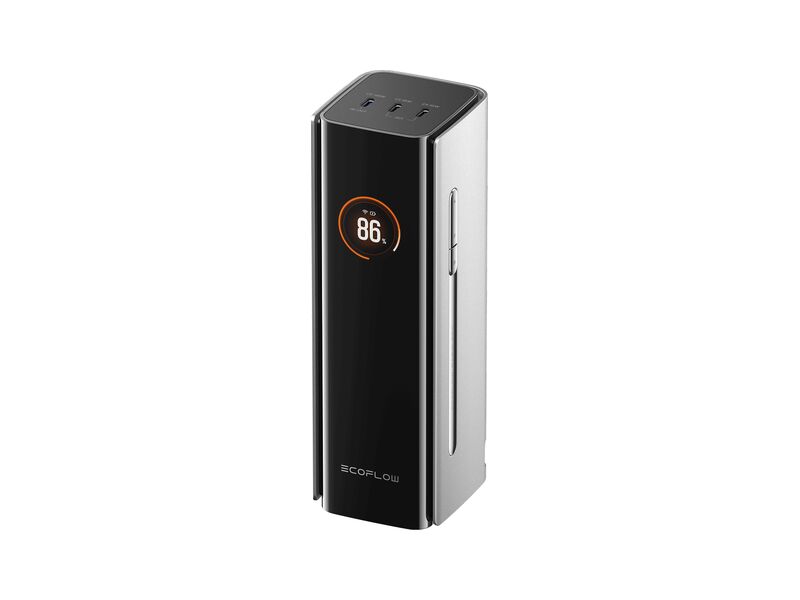
27,650 mAh, 300W and a built-in 140W USB-C cable: the power bank that charges a laptop and three more devices at once, with a screen and app to boot.

  • Capacity: 27,650 mAh (99.54 Wh)
  • Output: 300W total, USB-C 140W max
  • Ports: 4 USB-C ports, 1 built-in 140W cable
  • Screen: LCD, EcoFlow app, cabin approved
  • 300W, built-in 140W cable, screen
The EcoFlow Rapid Pro 27K is a premium power bank built for travel and remote work. With 27,650 mAh (99.54 Wh, allowed in the aircraft cabin) and 300W of output across four ports, it charges up to four devices at once, including a laptop over USB-C 140W. Its 60 cm 140W USB-C cable is built in, so no need to carry extras, and an LCD screen shows the charge level. Interchangeable magnetic cases, app control and express charging (80% in 20 minutes with the Rapid Pro 320W station) round out a power bank as powerful as it is practical.
The Rapid Pro 27K has become our go-to travel bank, and it owes that mainly to its built-in 140W USB-C cable: no more digging through the bag, you pull out the 60 cm cable and charge, laptop included. The 300W output across four ports lets you plug in a MacBook, a phone and a tablet at the same time without slowing down, real convenience on the move. Its 27,650 mAh (99.54 Wh) stays under the aircraft cabin limit, making it an ideal flight companion, and the LCD screen gives the remaining percentage at a glance, no guessing. Recharged on the Rapid Pro 320W station, it reaches 80% in about twenty minutes, spectacular. The interchangeable magnetic cases are a fun touch to personalise the look. Two honest caveats: at full power it warms up and drains fast (300W is huge for a power bank), and the price sits above classic power banks. But for anyone wanting a single battery able to recharge everything, laptop included, it is an excellent choice.
View product page

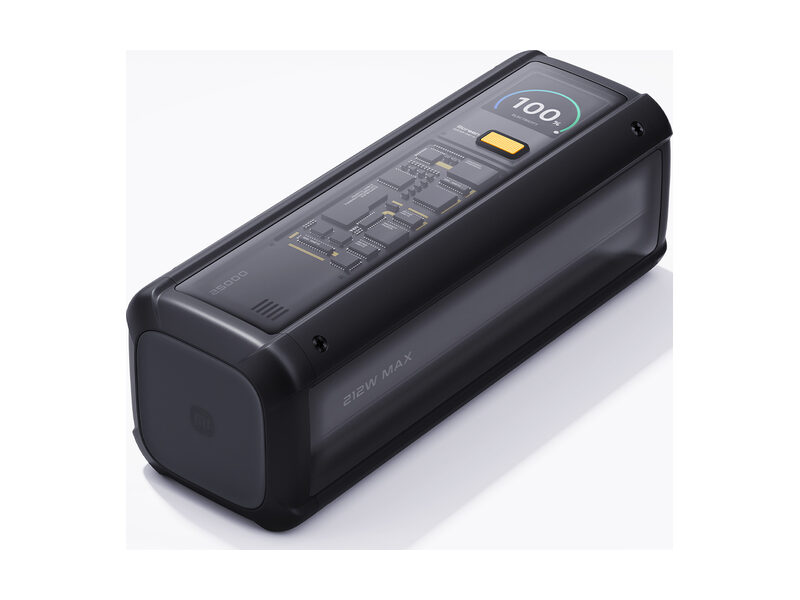
Xiaomi 212W HyperCharge 25000

See price and availability (5)Allowed in cabin (flights)

Up to 140 W on a single port and 212 W total: the Xiaomi 212W HyperCharge recharges a laptop as fast as a wall socket, with 25000 mAh.

  • Capacity: 25000 mAh (90.8 Wh)
  • Power: 212 W total, 140 W on one port
  • Ports: 2 USB-C + 1 USB-A
  • Recharge: Up to 100 W input
  • 140 W on one port to charge a laptop
The Xiaomi 212W HyperCharge Power Bank 25000mAh is a high-end power bank built for power. Its main USB-C port reaches 140 W over PD 3.1, enough to charge a laptop at full speed, and the multi-port output peaks at 212 W across three ports. Its 25000 mAh (90.8 Wh) recharge a smartphone four to five times, and it refuels itself at up to 100 W. Under 100 Wh, it remains cabin-legal.
The Xiaomi 212W HyperCharge is the battery I grab when I head out to work a full day with no guarantee of finding a socket. The 140 W USB-C port charges my laptop as fast as its original charger, which is stunning for a battery, and there is still room to power the phone and earbuds on the other ports. With 25000 mAh, I easily cover a full day of mobile work. I also like that it refuels quickly (up to 100 W), so you do not leave it plugged in all night. A pleasant surprise: despite its large capacity, it stays under 100 Wh and travels in the cabin. The trade-offs are owned: it is heavy (about 628 g) and its cylindrical shape takes up room, clearly not a pocket battery. But as a serious energy reserve for a laptop, it is hard to fault.
View product page

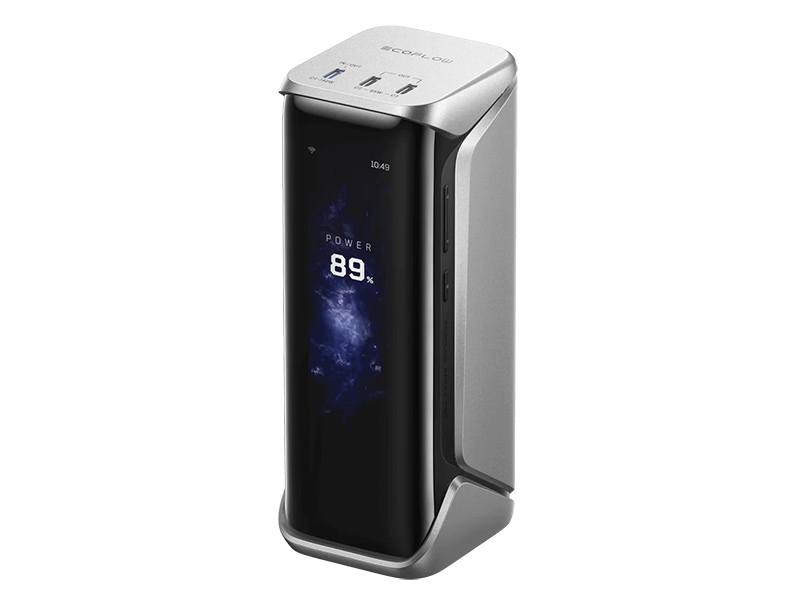
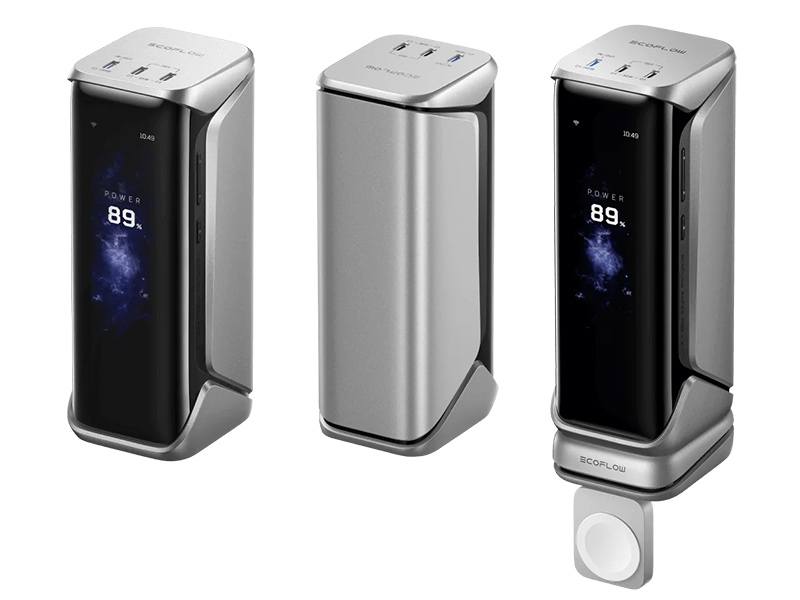
EcoFlow Rapid Pro X

£249.99 (2)Allowed in cabin (flights)

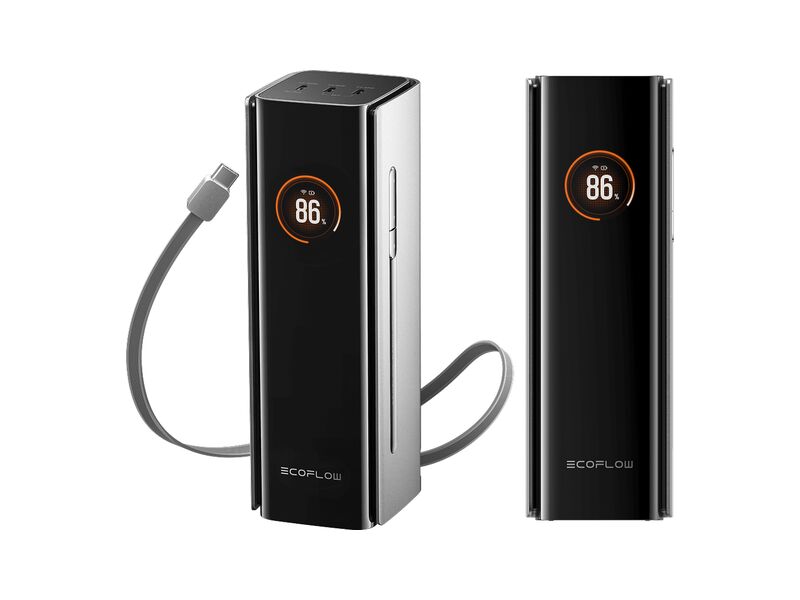
27,650mAh, 300W and a lightning-fast recharge: the Rapid Pro X powers your laptop and phone at once, and travels with you in the cabin.

  • Capacity: 27,650 mAh (99.54 Wh)
  • Power: 300 W total, up to 140 W per port
  • Recharge: 0 to 80% in 40 min (140 W USB-C)
  • Outputs: 4 USB-C ports, incl. retractable cable
  • Premium travel bank: LCD screen, app and X-Guard safety
Built for demanding travellers, the EcoFlow Rapid Pro X is a premium power bank that recharges a laptop at full speed, powers several devices at once, and slips into a bag with ease. Its built-in retractable USB-C cable, LCD screen and companion app make it a complete travel partner, cabin-approved thanks to a capacity just under the 100 Wh limit. Ideal for mobile remote work, content creators and long journeys.
After carrying the Rapid Pro X across several trips, one thing is clear: this is a power bank built first for laptops. Plugged into the 140 W port, my MacBook charged almost as fast as with its wall charger, while also topping up my phone and earbuds at the same time. The LCD screen is a real everyday plus: you see remaining charge and the power drawn by each port at a glance, and the built-in retractable cable saves rummaging through the bag. When travelling, its capacity just under 100 Wh let me keep it in carry-on with no questions at boarding. Recharging is impressive, especially with the 320 W station: a coffee break and it is ready again. Two honest downsides: it is expensive and fairly heavy for a power bank (around 700 g, you feel it in the bag), and the screen scratches easily if left loose without a case. Otherwise, for mobile remote work or a creator kit, it is one of the most complete and fastest power banks I have used.
View product page
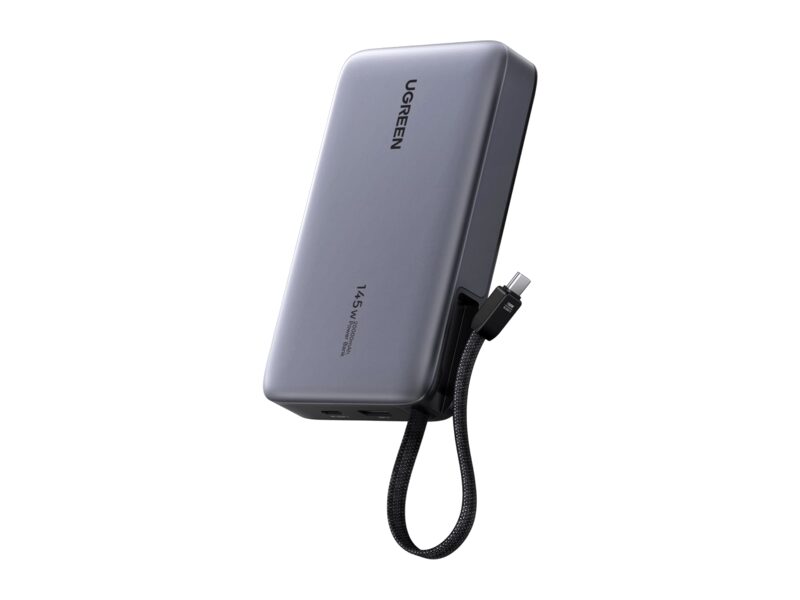
Nexode 20000 145W Ugreen 20000 mAh power bank with built-in cable
Promo

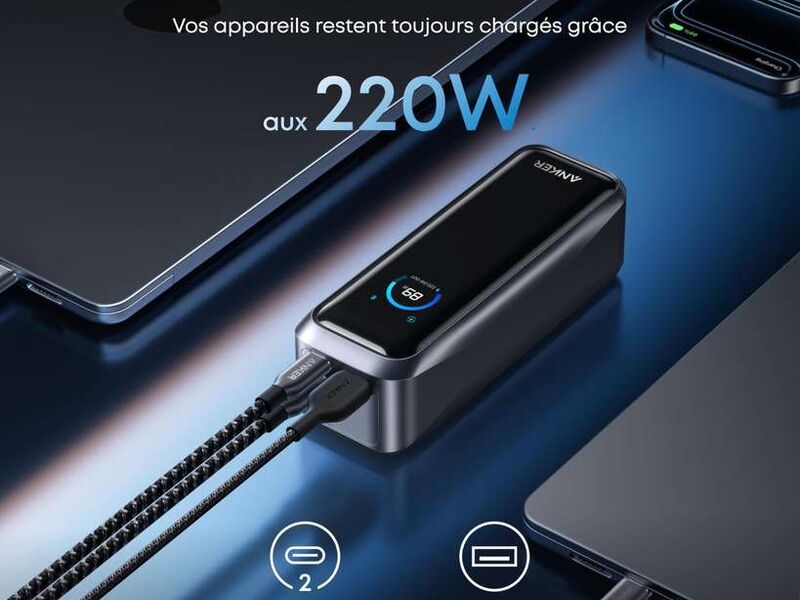
Ugreen Nexode 20000 145W

89.99€ 69.99€ Allowed in cabin (flights)

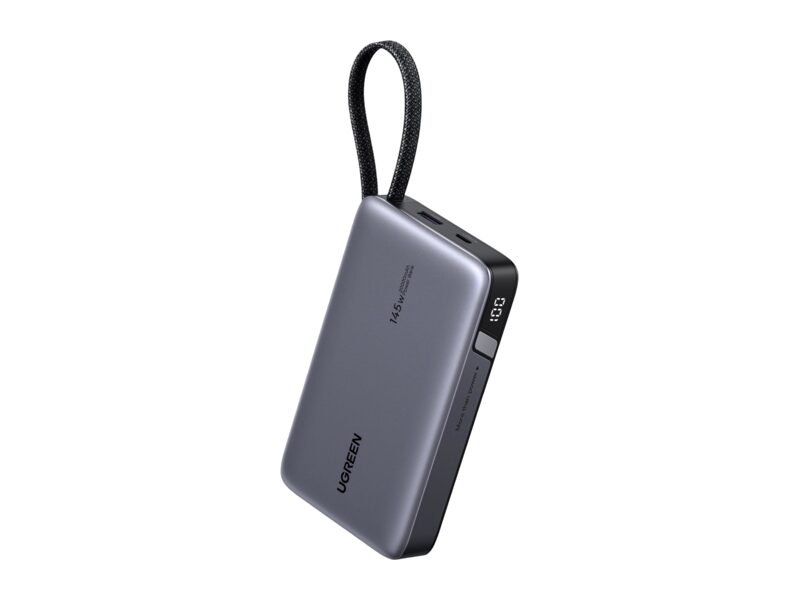
Its USB-C cable is already built in, and it handles 100W: enough to recharge a MacBook with nothing else in the bag, backed by 20000 mAh and a display that tells you everything.

  • Capacity: 20,000 mAh (72 Wh)
  • Power: 145W total, PD 3.0
  • Outputs: 100W built-in USB-C cable + 45W USB-C + USB-A
  • Recharging: 80W, 0 to 100% in 90 minutes
  • 100W built-in cable: nothing left to carry
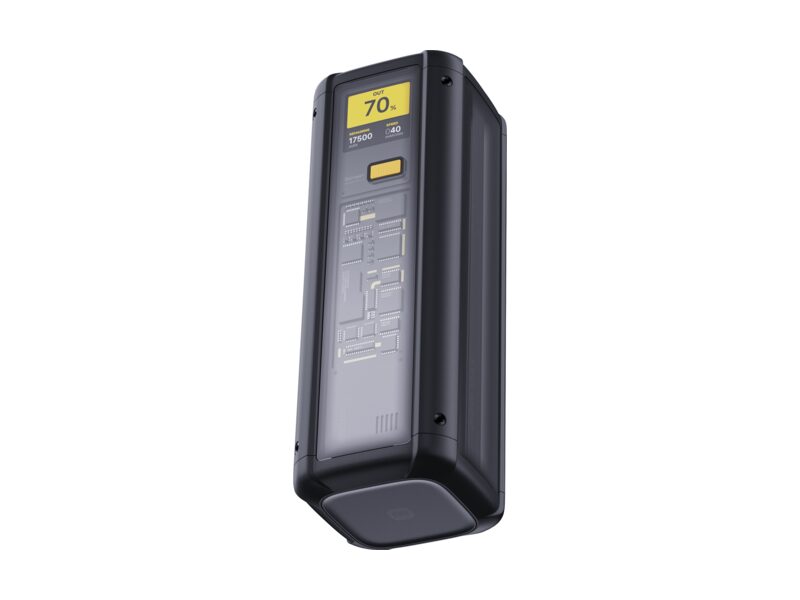
The Ugreen Nexode 20000 145W solves the problem every power bank creates: the cable left at home. This one is built into the casing, doubles as a wrist strap, and delivers up to 100W over USB-C, enough to charge a laptop. Alongside it sit a second 45W USB-C port and a USB-A port, so three devices can draw power at once within the 145W ceiling. Its 20000 mAh (72 Wh) refill an iPhone 17 Pro 3.7 times and travel in the cabin without paperwork. It recharges itself in 90 minutes at 80W, and its display shows level, voltage and power in real time.
The built-in cable changes more than you would expect. Across a week of testing we never once had to dig through a bag for a USB-C cable: it is right there, braided, held against the casing, and it doubles as a strap for grabbing the pack one-handed. More importantly, it is not a token cable capped at 20W like the ones on most rivals: it reaches 100W, so it genuinely charges a laptop. A 16-inch MacBook Pro takes back a little over 40% in half an hour, which is more than enough to rescue the end of a working day. The display is as useful here as on the other Nexode models: charge left, live power draw, you always know where you stand. And recharging the pack itself at 80W takes an hour and a half, against three to four hours on comparable capacities. Two honest reservations. First the weight: 450 g makes this a bag power bank, not a pocket one, and the thick body is noticeable in a jacket. Second, the headline 145W is a total, not a per-port figure: plug in three devices and each gets appreciably less, with the built-in cable dropping below 100W. Even so, at this price it is one of the very few power banks that charges a laptop without you having to think about the cable.
View product page

← Back to Power Banks

Related questions

The commonly accepted threshold is 18 watts, against 5 to 10 watts for standard charging. In practice 30 watts takes a smartphone to 50 per cent in half an hour, 45 watts feeds a tablet and 65 watts a laptop. Beyond 100 watts you are into mobile workstation territory.

Three causes dominate. First the cable: a USB-C cord without an E-Marker chip is capped at 60 watts. Then the protocol: the pack and the phone must speak the same language, Power Delivery or Quick Charge. Finally heat: above 35 °C the phone deliberately throttles power to protect its cells.

It is the universal power negotiation protocol on USB-C. Instead of the fixed 5 volts of classic USB, the two devices agree on 5, 9, 15 or 20 volts and a matching current. That dialogue is what allows 10 to 100 watts over the same cable, and it is now standard on all recent equipment.

It speeds ageing slightly, but far less than heat or deep discharges. Modern devices only apply full power between 0 and 60 per cent anyway, then slow down of their own accord. In normal use the difference in lifespan stays marginal over three or four years.

Yes, and this is the most common mistake. Above 60 watts the cable must be rated for 100 watts (5 A) and contain an E-Marker chip that declares its capability. An entry-level cord bundled with an old device will cap the power without a single error message, which explains a lot of disappointment.
Compare