
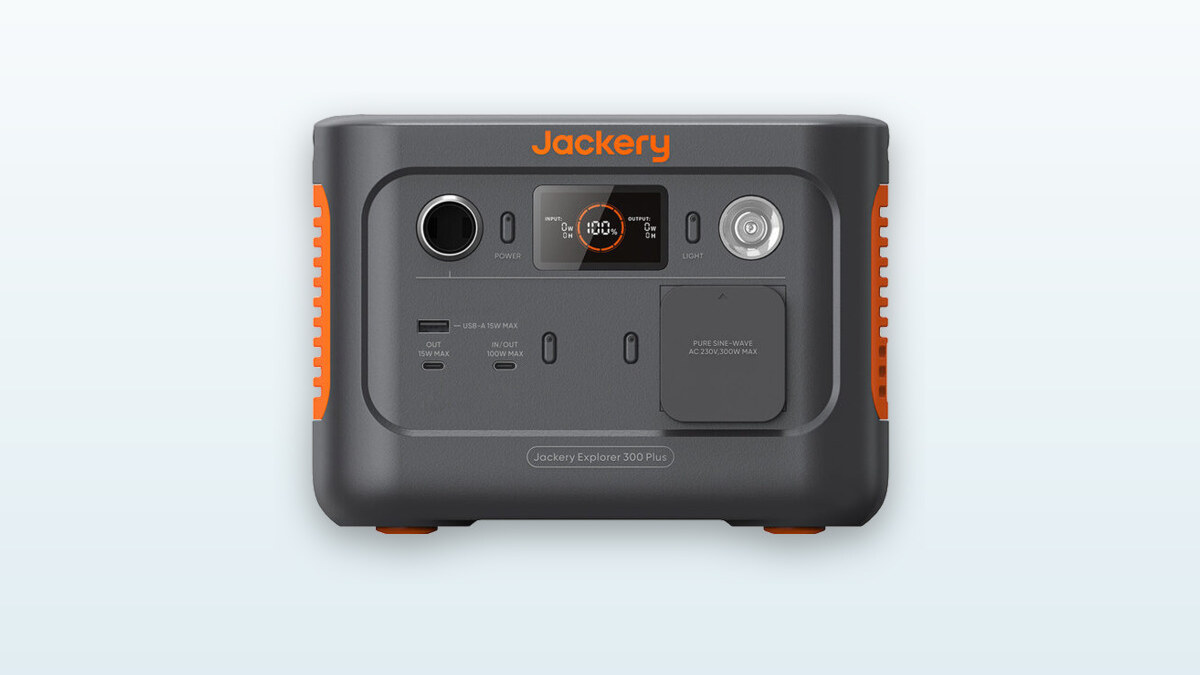
On paper: a well-equipped little station
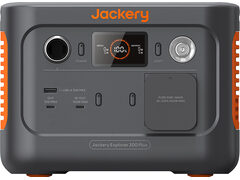
With 288 Wh of capacity, a LiFePO4 chemistry and 300 W of continuous power (600 W peak), the Explorer 300 Plus targets light camping, van life and occasional remote work. It stands out with a genuine AC outlet in a format of just 3.75 kg, two USB-C ports including one rated 100 W, and a 5-year warranty, notably longer than most competitors in its category.
The most important point: a now-discontinued model
Jackery has officially discontinued the Explorer 300 Plus. The manufacturer's own product pages state this explicitly in several places: the model is marked as unavailable, with a link pointing to its successor, the Explorer 300 v2. The product can still be found in residual stock at some retailers, but it is no longer a reference actively supported by the manufacturer. This review remains useful for anyone who already owns one or finds one in stock at a good price, but anyone starting from scratch should first look at the model that replaced it.
Mains charging: faster than advertised
A full mains charge is advertised at 2 hours. In practice, it is closer to 1h50, a favourable gap well corroborated across multiple measurements. Charging through the 100 W USB-C port takes about 4 hours, and charging from the vehicle's cigarette lighter socket about 5h30.
The bundled solar panel is slower than it looks
The station is sold with or without the small SolarSaga 40 Mini panel, rated at 40 W. Its actual power output sits closer to 30 W, and a full charge commonly takes 9 to 10 hours of good sun, far more than the few hours a quick read of the spec sheet might suggest. A more powerful panel (100 W or more) cuts this time down considerably. The station also accepts older pin-connector SolarSaga panels through the included DC-to-USB-C adapter, and more broadly any panel fitted with a USB-C PD port or a compatible MC4 adapter.
Actual capacity delivered
The capacity actually delivered falls between 78 and 88 % of the rated figure depending on the load applied, or roughly 225 to 255 Wh out of the nominal 288 Wh. Under a sustained 300 W mains load, observed runtime reaches about 46 minutes, which corresponds to an output close to 80 % under these specific conditions.
Noise and heat: kept well in check
The fan stays quiet during USB or DC use, and only kicks in noticeably once the AC output draws around 100 W. No rigorously controlled measurement (calibrated sound metre, fixed distance and load) is available for this model, but the figures in circulation generally fall between 30 and 40 dB, consistent with the manufacturer's claim. On the thermal side, output temperature stays under control: about 43 °C recorded after 30 minutes under a continuous 300 W load, a solid level of thermal control.
3000 or 1500 cycles? A figure that varies
The advertised charge-cycle count is not consistent: the most recent documentation and most current spec sheets state 3000 cycles at 80 % capacity, but a figure of 1500 cycles for that same threshold also appears, including at the product's launch in late 2023. Neither value can be confirmed with certainty here: for reference, both fall within a credible range for a LiFePO4 chemistry at this level of the market.
The 20 ms UPS function: an unconfirmed claim on this model
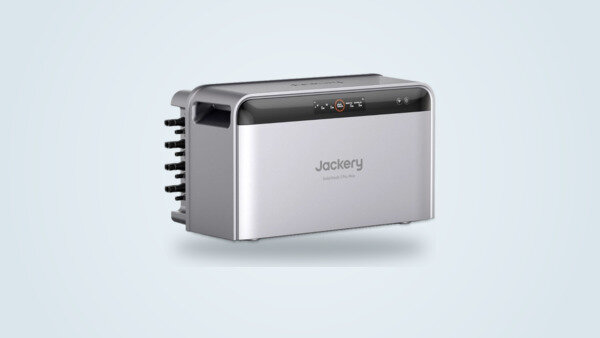
The manufacturer advertises a backup power function (UPS/EPS) with a 20 ms switchover time in the event of a mains outage during charging. This figure remains a manufacturer claim, with no independent confirmation available for this specific model. On a larger model from the same brand, instrumented testing with a power analyzer and an oscilloscope measured this switchover time at 8.7 ms, better than the manufacturer's usual claim: a favourable sign for this technology at this manufacturer, though it does not stand as direct proof for the Explorer 300 Plus.
Connectivity: a few limits worth knowing
The station has only a single AC outlet, a real point of friction for anyone wanting to power two mains-powered devices at once: a power strip quickly becomes necessary. The USB-C solar connector, while convenient, is described as fragile under repeated handling. Finally, the companion app caused connection issues in at least one case, refusing to pair correctly.
Who it suits, who it does not
It suits anyone who already owns one, finds one in stock at a good price, or is specifically looking for a very light little station with an AC outlet and a long warranty.
It does not suit anyone starting a new purchase with no stock constraints: the model that replaces it, the Explorer 300 v2, will generally be the more relevant choice today.