
What the claimed 256Wh are really worth
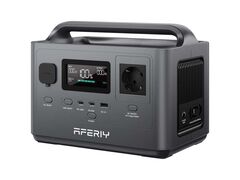
The P040 runs a 4S LiFePO4 pack, each cell rated at 20Ah under 3.2V, for a nominal voltage of 12.8V (range 10.5 to 14.4V), giving a nominal capacity of 256Wh. Against the unit's 4kg, that works out to an energy density of around 64Wh/kg, among the best in this price segment.
That nominal capacity is never fully available at the output, though. On a full charge, the 100W USB-C port is enough to fully charge a compact laptop three times over, or a phone about a dozen times, which works out to roughly 190 to 220Wh actually usable. The gap with the 256Wh nominal figure comes from conversion losses and from the safety reserve the battery management system always keeps in hand, a phenomenon common to this whole family of products that no spec sheet ever shows as such.
This brand has already shown, on a far more powerful model in its range, real efficiency noticeably below its own claims. Worth staying cautious on the P040 until an independent measurement specific to this exact model confirms a precise figure, without directly carrying that finding, which concerns a much more powerful unit, over to the P040 itself.
One of the fastest recharges in its category
Recharging is where the Aferiy P040 scores the most points. On the mains it accepts up to 300W and claims a full charge, 0 to 100%, in 1 hour 12 minutes. Part of that charge goes noticeably faster: the first 80% fills up in about 45 minutes, with the tail end slowing down as current is reduced to protect the cells, a standard constant current then constant voltage charging pattern rather than a contradiction between two figures.
It also accepts up to 120W of solar input (MPPT range 11.5 to 30V, DC5521 connector, MC4 cable included), for a full charge in around two and a half hours in good sun, and recharges from a car's 12V socket at 8A. Mains and solar can combine for an even faster top up when leaving in a hurry.
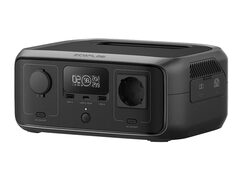
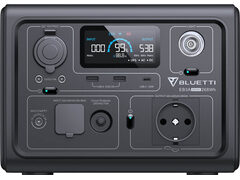
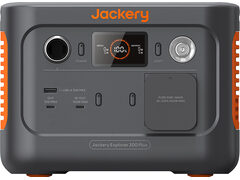
Against its direct rivals of similar capacity, it ranks second for full recharge speed: the EcoFlow River 3 does slightly better, while the Bluetti EB3A and the Jackery Explorer 300 Plus trail well behind.
The UPS function: fast on paper, worth testing yourself
Beyond simple recharging, the Aferiy P040 includes a UPS (uninterruptible power supply) function claimed to switch to battery in under 10 milliseconds during a mains outage, one of the fastest switchover times claimed for this compact format. In theory, enough to protect a desktop computer, a home router or a CPAP machine from a jarring reboot.
On one unit, the initial switchover was silent and within the claimed time, fan off in standby. That same unit, however, a few hours later, ran on battery without ever drawing mains power again despite staying plugged in, until it ran completely flat within hours: an isolated case by all appearances rather than a widespread design flaw, but a genuine reason for caution.
Solar and 12V: charging versatility
The P040 combines three charging sources, mains, solar and a car socket, a real asset for nomadic use. The solar input accepts up to 120W through a DC5521 connector (MC4 cable included), over a range of 11.5 to 30V: enough to plug in a 100 to 120W folding panel with no extra adapter. Camping or off grid, a full charge in good sun takes around two and a half hours.
In a car, charging from the 12V socket (8A) tops up the reserve on the move. The 12V/10A DC output, for its part, powers typical roadside or camp accessories (a small car fridge, LED lighting, an electric pump) directly, without going through the inverter, so generally with better efficiency than through the mains outlet.
Ports: complete for the format, but not smart
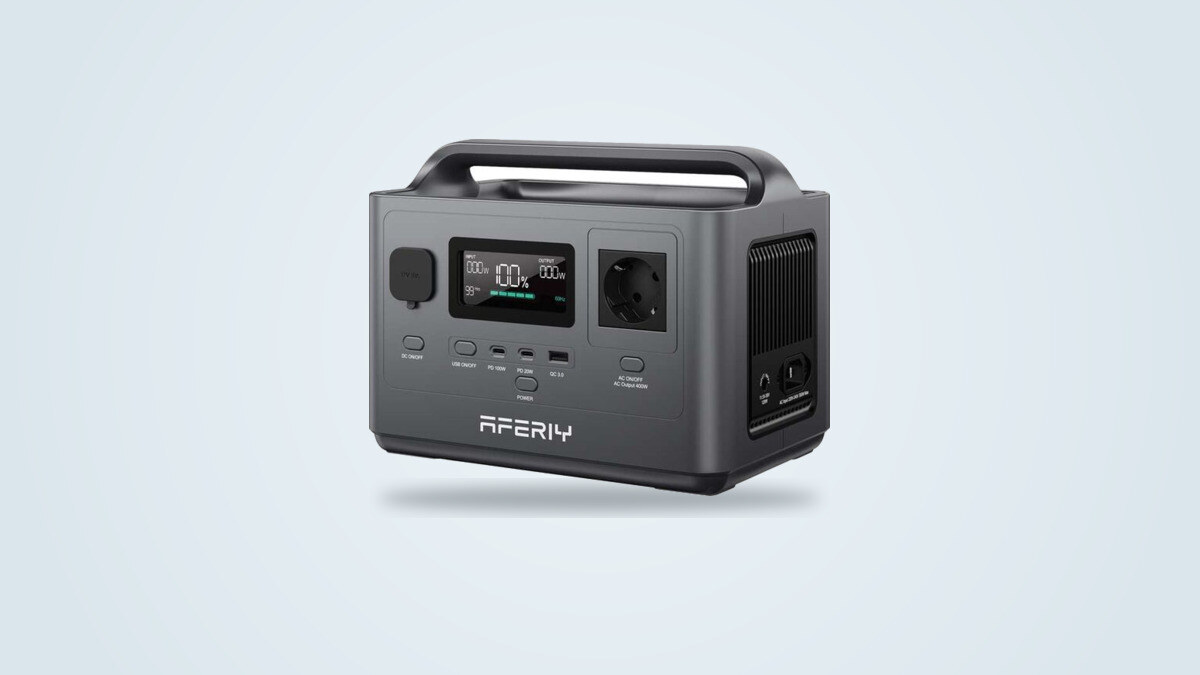
For a 259 x 174 x 201mm case, the Aferiy P040 offers five simultaneous outputs on its UK version: one mains outlet, two USB-C Power Delivery ports (20W and 100W, the latter enough for a laptop), one USB-A Quick Charge 3.0 port (18W) and a 12V/10A DC output. A built in LED light rounds out the set for occasional night time use. The US version doubles up on the mains outlet (two 120V outputs instead of one), a real plus for running two AC devices at once.
Monitoring, on the other hand, stays entirely local: no Bluetooth, no WiFi, no mobile app, only the built in LCD screen showing the charge percentage and the incoming and outgoing power. For anyone used to a remote monitoring app on other stations, that is a real step back, even if the screen stays readable and enough for checking things in person.
On one unit, the built in LED light stayed faulty with no response from support, an isolated point but worth keeping in mind when choosing between buying direct and using a retailer with more responsive local after sales support.
400W, 800W peak: power that keeps its word against direct rivals
The rating label fixed under the P040's casing confirms a 400W continuous, 800W peak output, a figure also repeated on the product pages of the main online retailers, with no contradiction. No independent measurement has confirmed whether that 400W holds over a long stretch or under a difficult load (the inrush current of a compressor, for example), but nothing found suggests a gap between the claim and reality either, unlike some other stations in the same category.
| Criterion | Aferiy P040 | EcoFlow River 3 | Bluetti EB3A | Jackery Explorer 300 Plus |
|---|---|---|---|---|
| Capacity | 256Wh | 245Wh | 268Wh | 288Wh |
| Power | 400W (800W peak) | 300W (600W X-Boost) | 600W (1200W peak) | 300W (600W peak) |
| Full mains recharge | 1h 12min | ≈ 1h | ≈ 1h30 | ≈ 2h |
| Warranty | up to 7 years (2 + 5) | 5 years | 2 years | 5 years |
| Observed price | ≈ £190 | ≈ £230 | ≈ £220 | ≈ £250 |
Against its direct rivals, the P040 holds a middling position on raw power, but wins clearly on price and on its claimed warranty length.
Build, brand reliability and warranty
The manufacturer, Shenzhen Aferiy Technology, claims a base warranty of 2 years, extendable for free up to 7 years through online product registration, a rare argument at this price point where the norm sits closer to 2 to 5 years. A genuine catch at the source: the printed manual supplied with the unit only lists a 24 month warranty, with no mention of the extension pushed elsewhere. Best to confirm the exact terms of that extension with the seller in writing before treating it as the deciding factor in the purchase.
On the build side, the LiFePO4 battery is rated for 3500 cycles before dropping to 80% of its original capacity, in line with the rest of the category. A battery management system with six layers of protection (overvoltage, over discharge, overcurrent, overheating, low temperature, short circuit) covers the usual failure modes, and the unit carries the CE, FCC, RoHS and UN38.3 certifications expected for legal use and travel. Its discharge operating range is claimed as -10 °C to 40 °C.
The brand is still young on western markets, with the P040 itself launched in late 2025, and a still limited volume of customer reviews on some storefronts. After sales service does not always satisfy everyone: return delays that can run long, and, more rarely, a repaired unit sent back instead of a new one on other models in the range, to weigh against a responsiveness praised in most cases. No recall or safety incident could be found for the P040 itself.
Who the P040 suits, and who it does not
Camping and wild camping: its 256Wh cover LED lighting, charging several phones, a tablet and a camera over an evening or a full night, and the 100W USB-C port tops up a laptop at full speed.
Nomadic remote work: between a coffee shop and a coworking space, it powers a laptop and a small router for several hours, with the UPS function as a safety net for micro outages, once tested personally.
Road trips and the outdoors: at 4kg, it fits in a boot or under a seat, recharges from the car socket between stops, and powers a drone, camera and phones thanks to its five outputs.
Photo and video: a credible backup power source for recharging camera batteries, a drone or flash batteries between sequences.
Light medical equipment such as CPAP: generally enough for one night of treatment without a heated humidifier, worth checking case by case against the machine's actual power draw, and keeping in mind the reservation raised above about the UPS function.
An occasional power cut at home: it protects essential devices (router, lighting, small electronics) through a short outage, not an extended backup for several rooms.
The most compact model in the Aferiy range
Within the Aferiy range, the P040 holds the most compact and lightest spot: the P010, despite its lower number, offers double the capacity (512Wh) for double the power (800W) and weighs 6.25kg, far more than the P040's 4kg. The higher tier models in the range target a different job altogether, extended home backup or powering much hungrier appliances, with capacities running from several hundred to several thousand watt hours.
That entry level format has a direct effect on who it suits: the P040 is aimed at anyone wanting an easy to carry and store backup reserve, not at anyone looking to replace a home backup installation. On a far more powerful model from the same brand, already reviewed on this site, real efficiency below the claims and a warranty extension less automatic than advertised were also identified: two points of caution that appear to concern the brand as a whole, rather than a single isolated model.