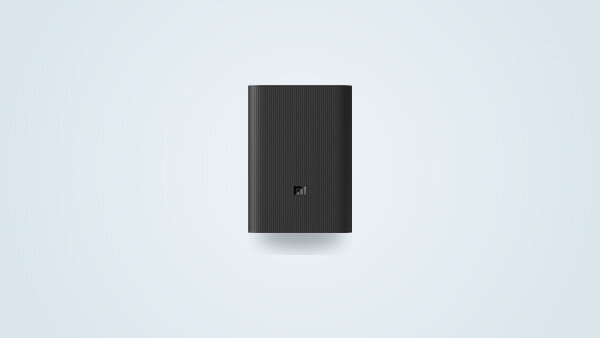
Compact power banks

A pocket power bank comes down to one trade-off: what it genuinely gives back to your phone, set against the room it takes in a pocket.

Below 10,000 mAh the selling point is no longer capacity but discretion. A battery you carry every day because it fits in a jacket pocket is worth far more than a large reserve left at home. The figure to watch is the capacity actually returned: expect 65 to 70 per cent of the rated value after voltage conversion, so roughly 6,500 usable mAh from a 10,000 unit. That is about one and a half full charges for a recent smartphone. The second criterion is power: 20 watts is enough to charge a phone quickly, beyond that it is comfort. We also measure heat build-up, more noticeable on a small case than on a large one.

No product matches these criteria.

Our selection

Anker Nano A1653

See price and availability (57)Allowed in cabin (flights)

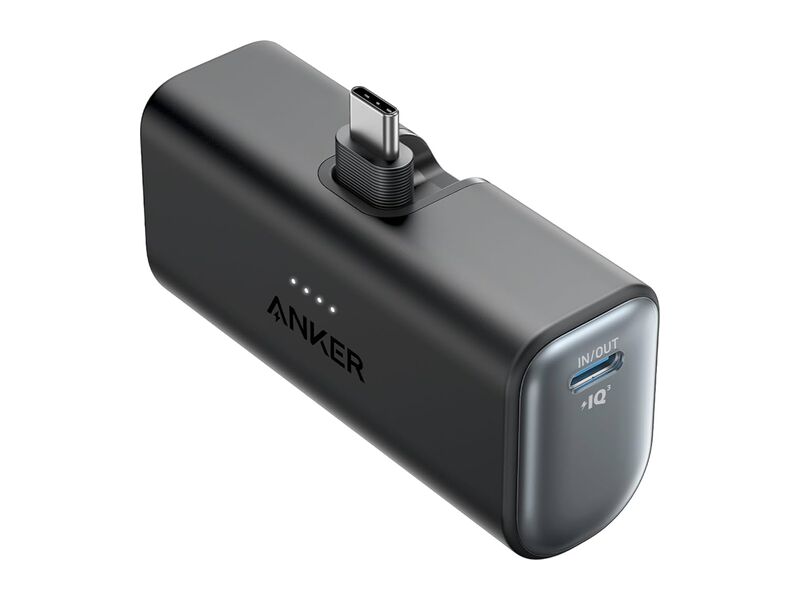
A pocket 5000 mAh power bank that plugs straight into the phone thanks to its built-in foldable USB-C connector, 22.5 W and barely 100 g.

  • Capacity: 5000 mAh
  • Power: 22.5 W max (USB-C)
  • Connectivity: Built-in USB-C plug + USB-C port
  • Weight: 100 g
  • Built-in USB-C plug, 22.5 W and 100 g, plugs into the phone
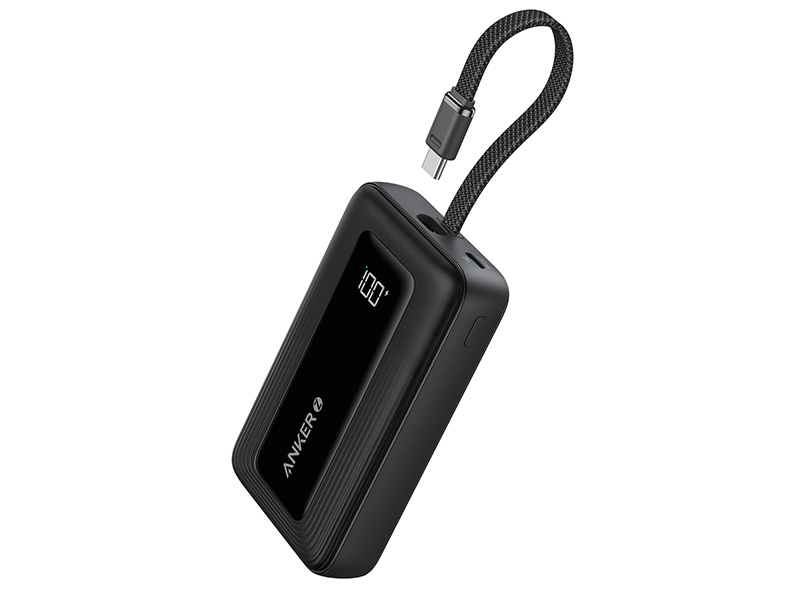
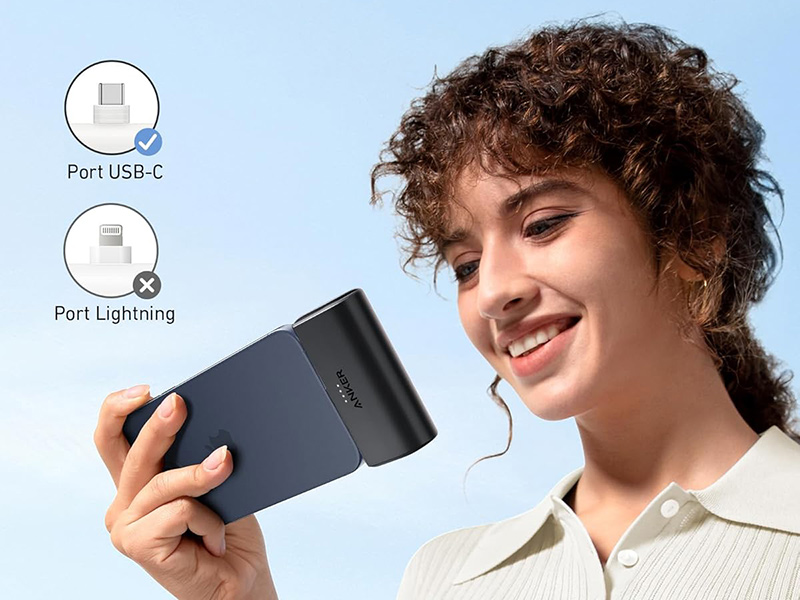
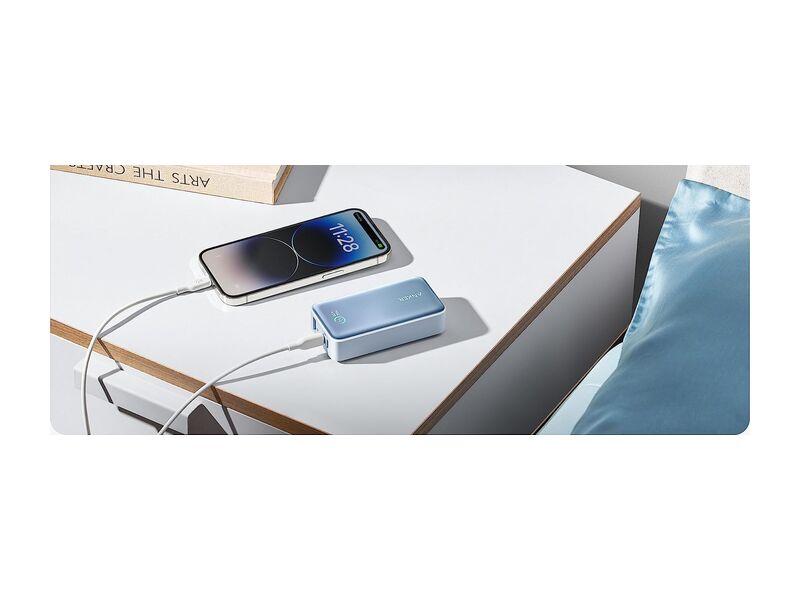
The Anker Nano (reference A1653) is a mini power bank of 5000 mAh built for on-the-go top-ups. Its foldable USB-C connector flips out and plugs directly into the phone, with no cable, while an extra USB-C port lets you charge a second device or recharge the battery itself. It delivers up to 22.5 W, enough to quickly give a smartphone a good charge. At 100 g in an ultra-compact cube shape, it slips into any pocket, with four charge LEDs and a shell largely made from recycled plastics.
We took to this Anker Nano A1653 for one simple reason: it fits in a pocket and plugs straight into the phone, with no cable to carry. The foldable USB-C connector is genuinely clever, you flip it out, clip it onto an iPhone or Android phone, and charging starts. At 100 g on the scale, you forget it in a jacket pocket, and the 5000 mAh are enough to give most phones a full charge, plenty to see out a day with peace of mind. The 22.5 W do the job: twenty minutes plugged in and you get a good chunk of battery back. The extra USB-C port is handy for charging a second device or for recharging the battery itself. The matte finish is understated and pleasant, and the four LEDs clearly show the remaining level. Two honest reservations: 5000 mAh is a single recharge, no more, and the little cube shape sticks out a bit when the plug is attached to the phone. But for an ultra-light, always-ready, cable-free top-up, the Nano A1653 is an excellent everyday companion.
View product page

Anker Zolo 10000 (30W)

See price and availability (55)Allowed in cabin (flights)

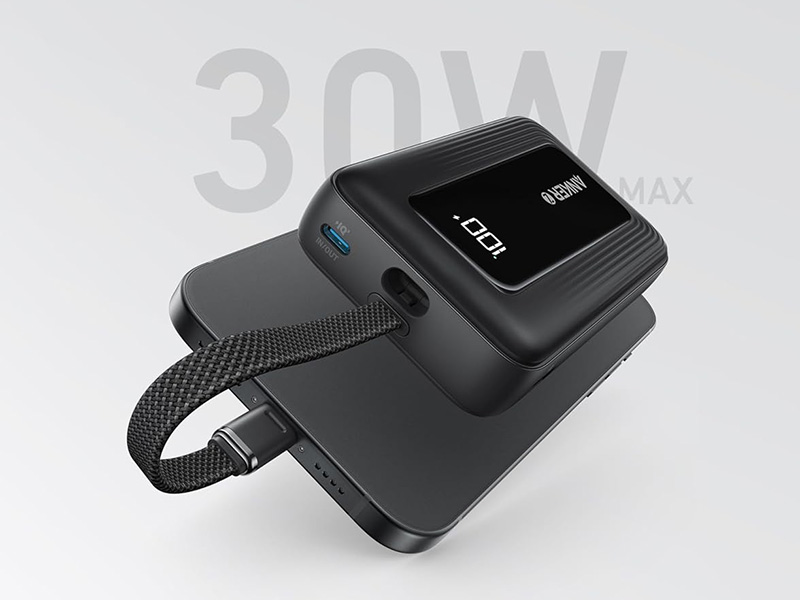
A 10,000 mAh pocket pack with its USB-C cable already attached: 30 W fast charging and three devices powered at once, with no cord to carry.

  • Capacity: 10,000 mAh (37 Wh)
  • Power: 30 W max (USB-C Power Delivery)
  • Ports: Built-in USB-C cable + USB-C + USB-A
  • Format: Compact, fits in a pocket
  • Built-in 30 W cable and 3 devices at once
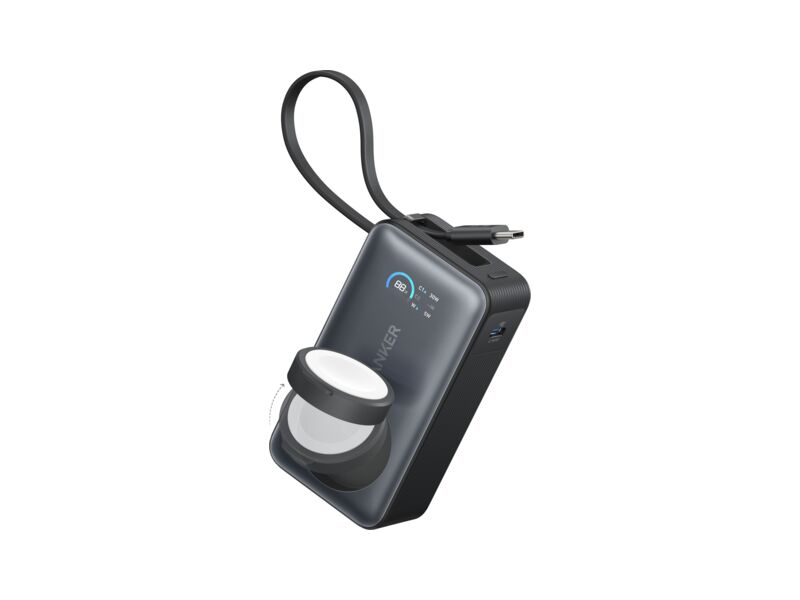
The Anker Zolo 10,000 mAh plays the card of effective simplicity. Its USB-C cable is built into the casing, which settles the forgotten-cord question for good, and delivers up to 30 W: enough to take an iPhone from about 20 to 60% in half an hour. An extra USB-C port and a USB-A port let you feed three devices at once, phone, earbuds and watch for example. With 10,000 mAh (37 Wh) in a format that fits a jeans pocket, it targets those who want a day's reserve without the bulk.
This little Zolo spent a month in the inner pocket of a backpack, and it does exactly what is asked of it. The built-in USB-C cable is the main argument, and it delivers day to day: you take out the pack, plug in, done, with no rummaging for a cord. The loop formed by the cable also serves to hang it, a practical detail. The 30 W available is clearly felt against entry-level packs limited to 18 W: an iPhone 15 gets back over half its charge in about thirty minutes, plenty for a lunch break or a commute. Being able to add earbuds on the USB-A and a watch on the second USB-C is welcome at the end of the day when everything is flat. Its 10,000 mAh give about two phone charges, an honest reserve for a busy day or a light weekend, without the weight of a 20,000 model. Two caveats: recharging the pack itself caps at 20 W, so allow a few hours for a full cycle, and the lack of a display means relying on LEDs to gauge the remaining level. At this price, the equation stays very favourable.
View product page

Zendure SuperMini 10000mAh

See price and availability (11)Allowed in cabin (flights)

10000mAh in your pocket: the Zendure SuperMini is the size of a credit card yet offers 18W USB-C PD fast charging. One of the most compact power banks on the market.

  • Capacity: 10000mAh
  • Fast charge: 18W (USB-C PD + USB-A)
  • Cells: High-density 21700
  • Format: Credit-card size
  • 10000mAh ultra-compact with 18W fast charging
The Zendure SuperMini is a remarkably compact 10000mAh power bank, barely larger than a credit card. It delivers 18W fast charging via its USB-C PD and USB-A ports, able to charge an iPhone to 50% in 30 minutes. It uses high-density 21700 cells, 50% denser than conventional cells, which explains its slimness. Its X-Charge mode also charges low-power devices (smartwatches, earbuds). Ideal for daily and travel use thanks to its ultra-portable format.
The Zendure SuperMini made a name for itself by proving you could fit 10000mAh in a case barely bigger than a credit card. In use, that is exactly where its appeal lies: it slips into a jeans pocket or a small pouch without you feeling it, unlike the usual bulky bricks. Its 18W USB-C PD fast charging is enough to charge a smartphone to 50% in half an hour, and the USB-A port powers a second device. We also like the X-Charge mode, designed for small devices like smartwatches or earbuds, which many power banks fail to charge (auto cut-off). Its fluted metal finish is neat and gives a quality feel. The limits come from its format: 18W stays modest against recent power banks climbing to 30W or more, and 10000mAh is enough for about two phone charges, no more. But for a truly portable backup battery, the SuperMini remains a benchmark for compactness.
View product page

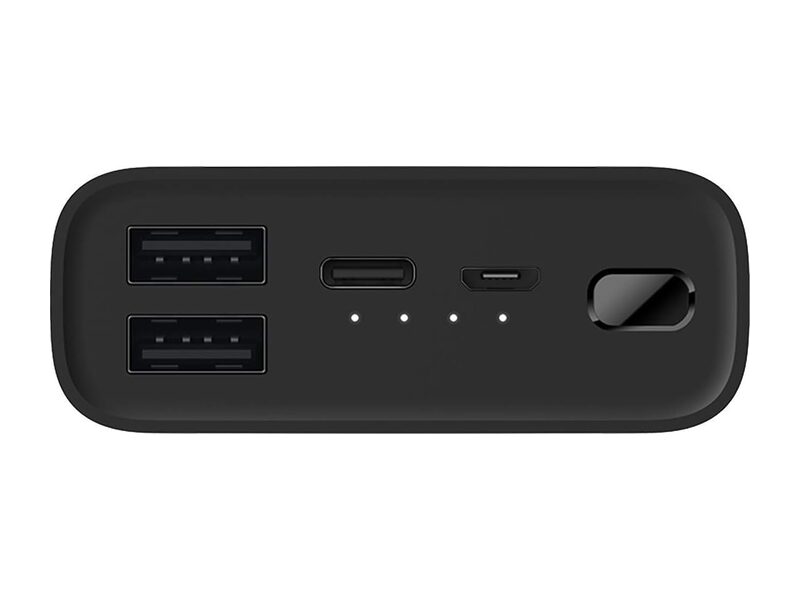
Xiaomi Mi Power Bank 3

See price and availability (9)Allowed in cabin (flights)

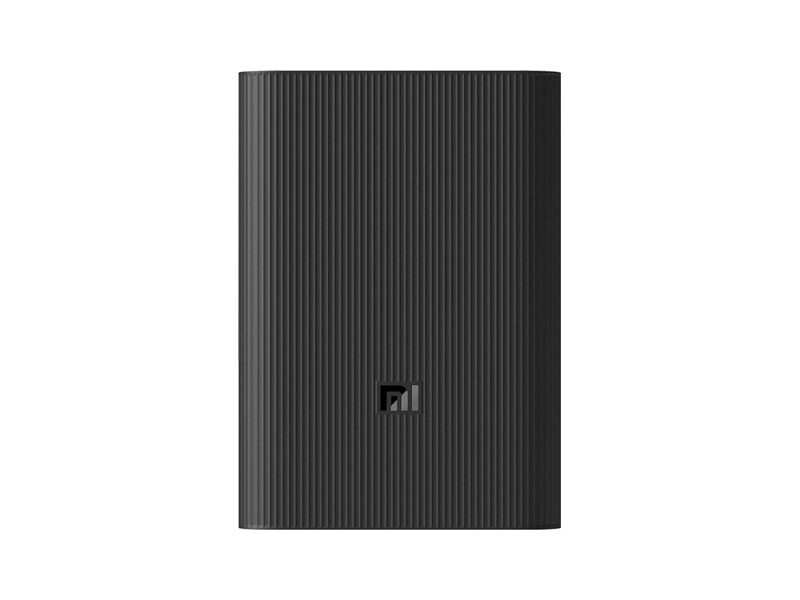
10000mAh and 22.5W fast charging in an ultra-compact body under 20 euros: the Xiaomi Mi Power Bank 3 is the best-value top-up power bank.

  • Capacity: 10000mAh
  • Power: 22.5W max (fast charging)
  • Ports: 2 USB-A + 1 USB-C (bidirectional)
  • Design: Ultra-compact, about 200 g
  • 22.5W and 3 ports in a mini body, at a low price
The Xiaomi Mi Power Bank 3 (Ultra Compact) is a 10000mAh power bank in a small body, designed for everyday top-ups. It delivers up to 22.5W fast charging and has 3 ports (2 USB-A and 1 bidirectional USB-C), enough to charge two devices at once. Its USB-C port also recharges it. Compact, sturdy with a tidy finish and offered at a low price, it charges a smartphone about twice. One of the most popular power banks on the market.
The Xiaomi Mi Power Bank 3 is a bit of the default power bank, the one you recommend without a second thought for everyday use. Under 20 euros, it offers 10000mAh in a pocketable body, and its 22.5W fast charging tops up a smartphone far faster than old entry-level banks. We like its 3 ports, which let you plug in two devices at once, and the bidirectional USB-C port that also recharges it. The body is well finished for the price. In real use, it fills a smartphone about twice, enough for a weekend. The downsides are minor: no precise display, and power suited to phones and small devices, not laptops. But for reliable, affordable top-ups, it is hard to do better.
View product page

Nitecore NB10000

See price and availability (9)Allowed in cabin (flights)

Ultralight (150 g) and clad in carbon fibre, the Nitecore NB10000 offers 10,000 mAh that shrug off water and knocks, ideal for hiking.

  • Capacity: 10,000 mAh
  • Power: USB-C 20 W, USB-A 18 W
  • Weight: 150 g
  • Durability: Carbon fibre, IPX-5, 1.5 m drop
  • 150 g carbon fibre, rugged, water-resistant and flight-ready
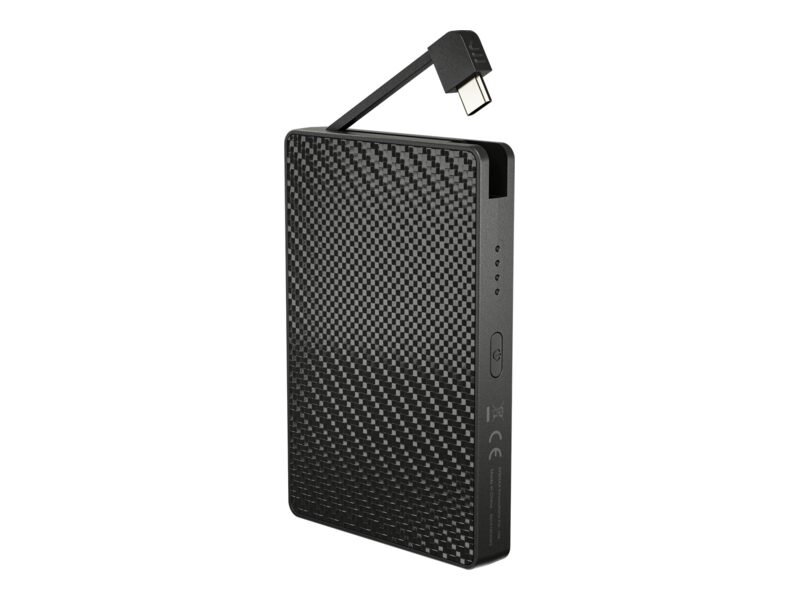
At just 150 g for 10,000 mAh, the Nitecore NB10000 is one of the lightest power banks on the market. Its carbon fibre body makes it ultra-rugged (1.5 m drop, IPX-5 water resistance) without adding weight. It offers a USB-C 20 W port and a USB-A 18 W port usable at the same time, plus a low-power mode for small devices. Ultra-thin (10.6 mm) and flight-ready, it is built for hiking, trail running, bikepacking and light travel.
We took the Nitecore NB10000 hiking and travelling, and its knockout argument is the weight: 150 g, you literally forget it in the bag. For anyone counting grams on a trek or bikepacking trip, it is a real game-changer, especially as the 10,000 mAh capacity is plenty to last several days with a phone. The carbon fibre body inspires confidence: after a few knocks and a downpour, it looks brand new, and the woven finish is gorgeous. When charging, the 20 W over USB-C top up a smartphone at a good pace, and being able to plug in two devices at once is handy. The low-power mode is clever for charging a watch or earbuds without the battery cutting out. Two honest reservations: the power stays moderate (not enough to charge a big laptop at full speed), and the ultra-thin format, very pleasant, makes it a little slippery. But for a light, tough, reliable outdoor power bank, the NB10000 remains a hard-to-beat benchmark.
View product page

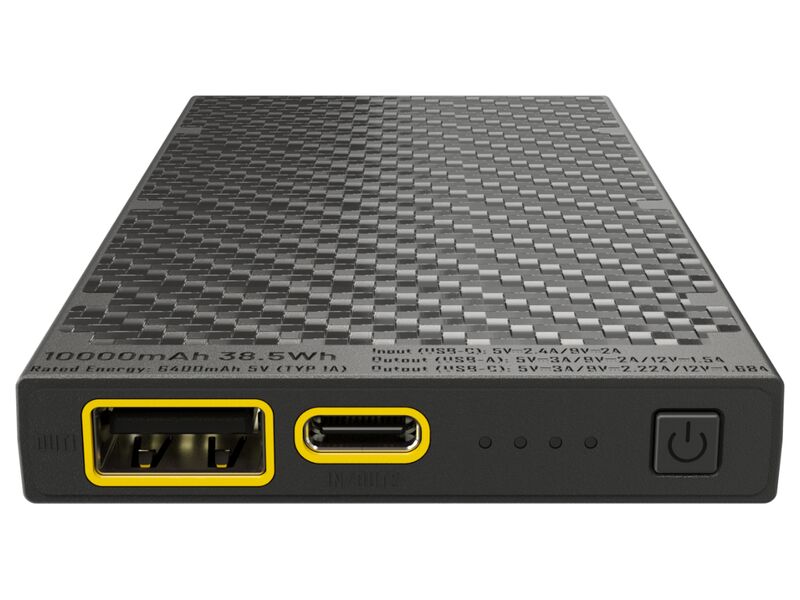
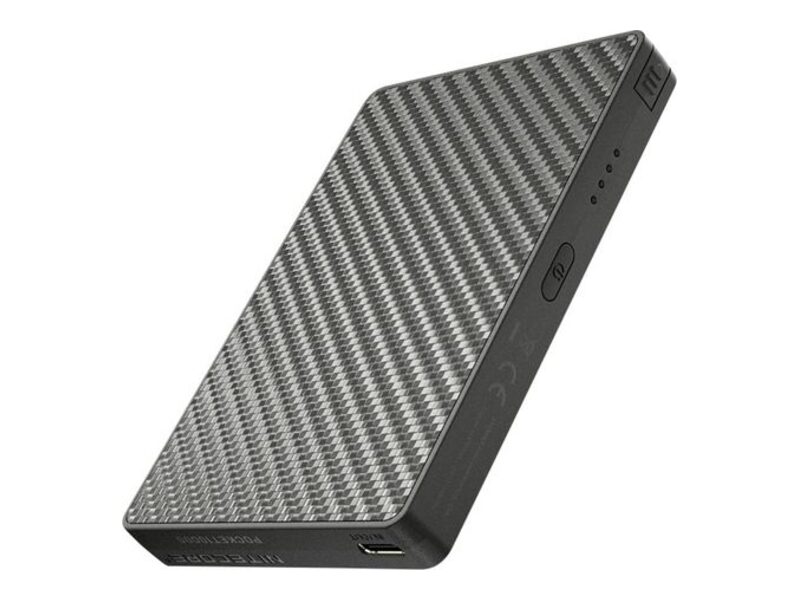
Nitecore Pocket 10000

49.95€ (8)Allowed in cabin (flights)

10,000 mAh and a built-in USB-C cable in 12.5 mm of thickness: the carbon-fiber Nitecore Pocket 10000 slips in anywhere, for just 160 g.

  • Capacity: 10,000 mAh (38.5 Wh)
  • Output: USB-C 22.5 W + built-in cable 20 W
  • Form: 12.5 mm thick, 160 g
  • Toughness: IP65, carbon fiber
  • Built-in USB-C cable, ultra-slim, flight-ready
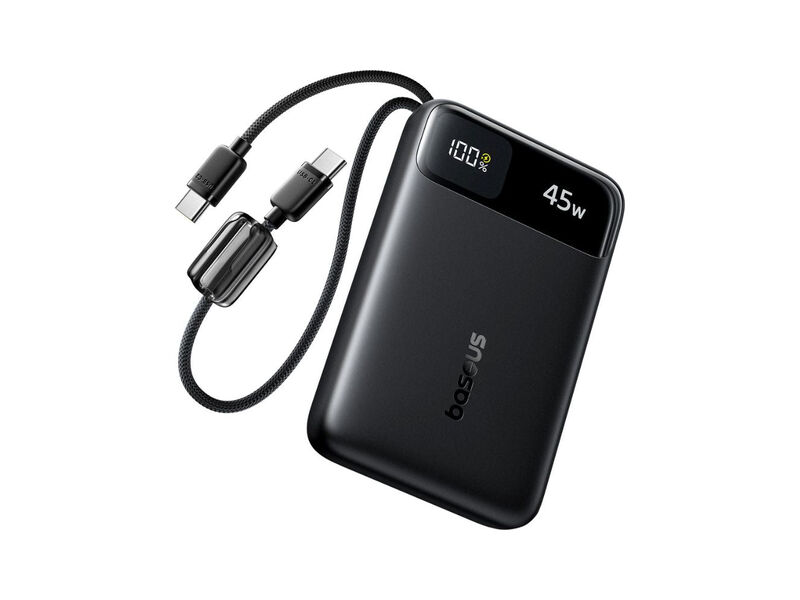
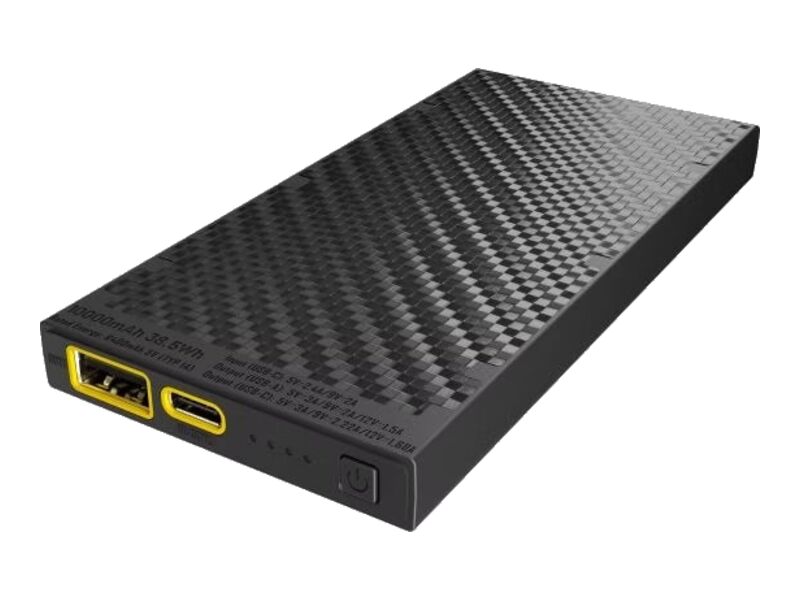
The Nitecore Pocket 10000 is a slim, light 10,000 mAh power bank built for travel and everyday use. Its woven carbon-fiber shell is just 12.5 mm thick for 160 g, and packs a built-in USB-C cable alongside a USB-C port. You can charge two devices at once, up to 22.5 W, and recharge the bank while powering a device thanks to pass-through. IP65 rated, it resists dust and splashes. A low-current mode nurses earbuds and watches, and four LEDs show the remaining level.
The Pocket 10000 pulls off a neat feat: fitting 10,000 mAh and a built-in USB-C cable into a 12.5 mm body barely bigger than a card, for 160 g. The woven carbon fiber is gorgeous and reassuring, and the idea of a cable tucked into the edge is excellent: no more hunting for a cord, you unfold it and plug in. The 22.5 W is enough to recharge a smartphone at a good pace, and you can power two devices at once through the cable and the USB-C port. The IP65 rating reassures in the rain, and the low-current mode is perfect for earbuds. Two honest reservations: the power stays tuned for smartphones and tablets, not for charging a laptop at full speed, and the price can climb depending on the seller, so it pays to compare. But for a slim, elegant and genuinely well-thought-out pocket bank, it is among the best.
View product page

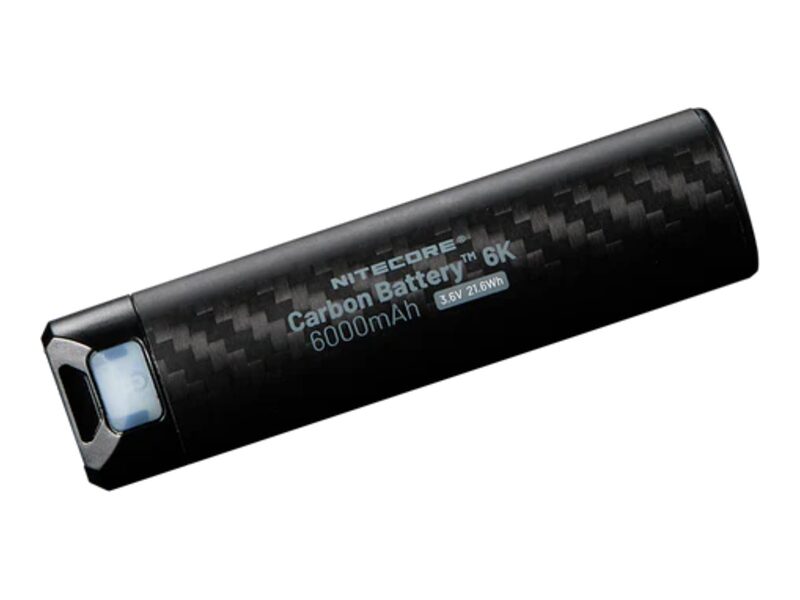
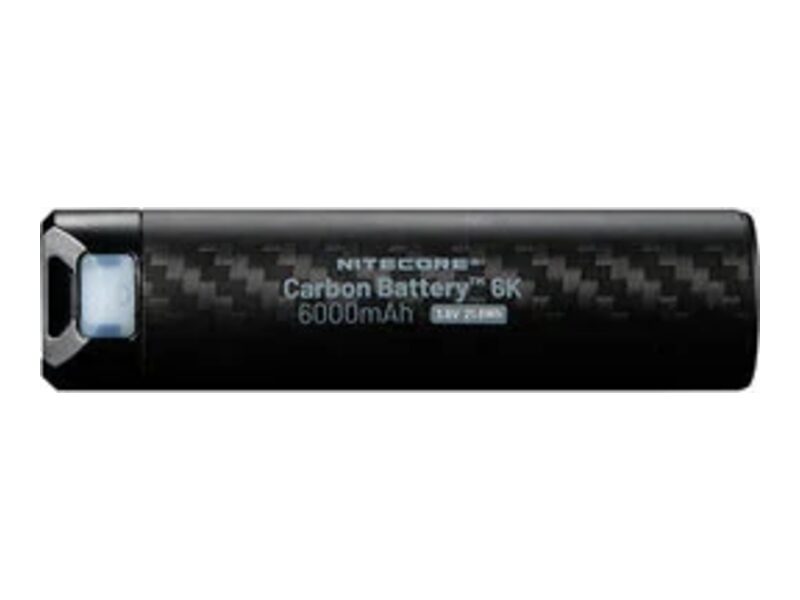
Nitecore Carbon 6K

34.79€ (6)Allowed in cabin (flights)

88 g, IP68 and a carbon-fiber shell: the Nitecore Carbon 6K is an ultra-portable 6000 mAh power bank that also extends Nitecore 6K headlamps.

  • Capacity: 6000 mAh (21.6 Wh)
  • Output: USB-C 10 W (5V/2A)
  • Weight: 88 g (carbon fiber)
  • Water resistance: IP68 (2 m submersible)
  • Ultralight, waterproof, 6K headlamp extender
The Nitecore Carbon 6K is an ultralight 6000 mAh power bank built for the outdoors and everyday carry. Its carbon-fiber shell keeps it to 88 g while making it tough, with an IP68 rating (submersible to 2 m). It recharges a smartphone, a watch or earbuds over its USB-C port (10 W), and also acts as a backup battery to extend the runtime of Nitecore 6K-series headlamps. A rear red safety light and a record energy density round off this concentrate of portability.
The Carbon 6K is a product apart: it is not the most powerful power bank, but it is one of the lightest and toughest we have handled. At 88 g for 6000 mAh, in a woven carbon-fiber shell, it disappears at the bottom of a trail pack or a pocket. The IP68 rating, which allows submersion to 2 meters, makes it at home in the rain, on a kayak or in a cave. We like its dual function: on top of topping up a phone or a watch over USB-C, it extends the runtime of Nitecore 6K headlamps on long night outings. Two honest reservations: the 10 W output is modest, this is a backup battery rather than a fast charger, and like any cell of this type, the usable capacity is below the advertised 6000 mAh (real-world useful energy is closer to 3500-4000 mAh at 5 V). But for pure lightness and toughness, it is hard to beat.
View product page

Xiaomi Ultra Slim 5000

Allowed in cabin (flights)

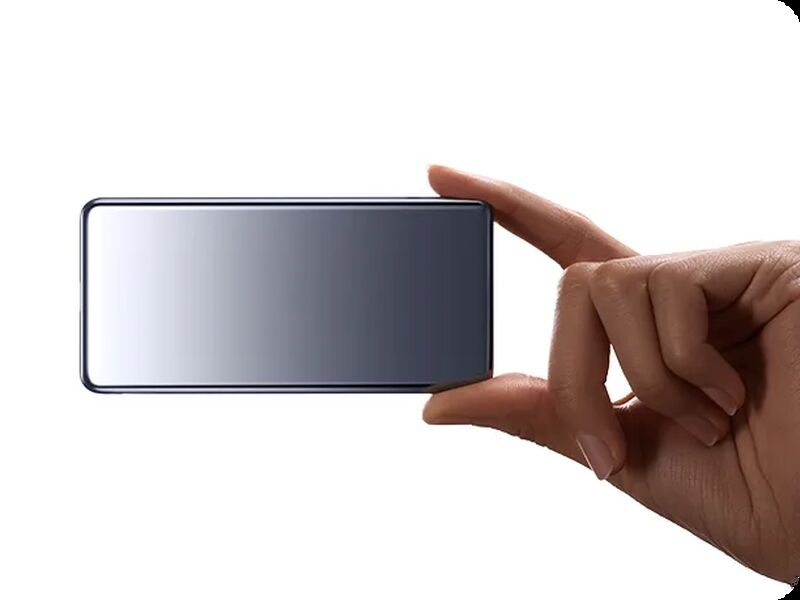
Ten millimetres thick and 93 grams: a power bank the size of a bank card that slips into a back pocket without you feeling it.

  • Capacity: 5,000 mAh (19.4 Wh)
  • Format: 113 x 53 x 10 mm, 93 g
  • Power: 20W max, bidirectional USB-C
  • Recharging: 18W, about 1 h 45
  • 10 mm thick, the footprint of a bank card
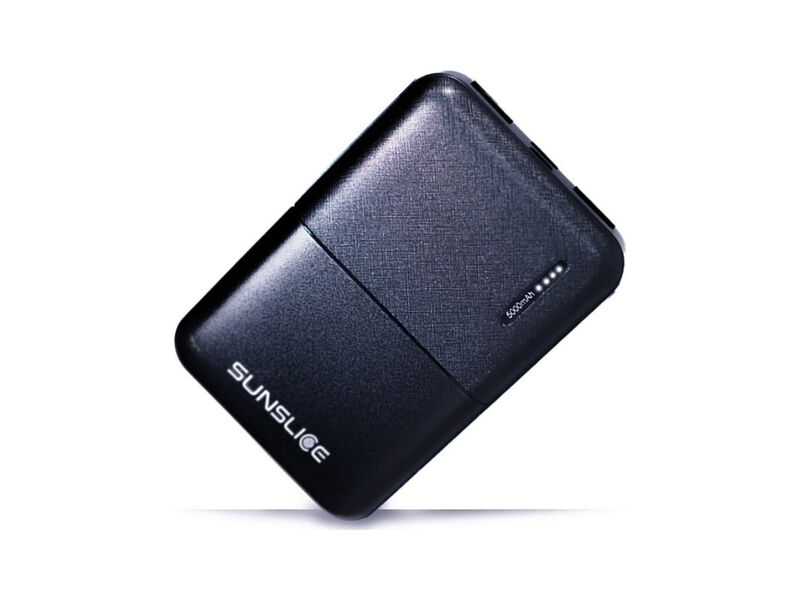
The Xiaomi Ultra Slim 5000 pushes back against ever-bigger power banks: 113 x 53 mm, 10 mm thick and 93 g, barely more than a smartphone lying flat. Its single USB-C port is bidirectional and delivers up to 20W, enough to bring an iPhone back to half charge in about half an hour. Its 5000 mAh (19.4 Wh) are not aimed at a weekend off-grid but at a day's insurance: one full phone charge, without ever weighing down a pocket. The USB-C cable is included and it refills itself in 105 minutes at 18W.
You have to hold it to understand the point. At 10 mm and 93 g, the Ultra Slim slides into a shirt pocket, into a backpack sleeve, even into a slightly generous card holder, where a 10,000 mAh pack forces you to open the bag. It is an object you carry without thinking about it, and that is exactly the use it targets. The 20W USB-C port does the job on a phone: half an hour brings an iPhone back to roughly half charge, which comfortably covers the end of an evening or a journey. The port is bidirectional, so one cable both empties and refills it, and that cable is in the box, which is no longer a given. The limits are deliberate and worth knowing before buying. Its 5000 mAh give one phone charge, one, not two: this is not a travel battery, it is a safety net for the day. The single port rules out charging two devices at once, and with no display you rely on four indicator lights. Finally, 20W is modest next to the 45 or 65W of thicker models. But none of those models disappears into a pocket, and that is the whole point.
View product page

← Back to Power Banks

Related questions

5,000 mAh is enough to bring a modern smartphone back up by around 80 per cent, which covers a normal day out. If you shoot video, browse heavily or tether, aim for 10,000 mAh instead, which gives almost two usable charges while staying under 200 grams.

A 5,000 mAh unit delivers roughly 3,500 mAh once conversion losses are taken out. That is a full charge for an iPhone 15 (3,349 mAh), but only 75 per cent for a Pro Max (4,441 mAh). To guarantee a full charge whatever the phone, step up to 10,000 mAh.

Reckon on 100 to 130 grams for a 5,000 mAh and 180 to 230 grams for a 10,000 mAh. Energy density tops out around 250 Wh per kilo on lithium-polymer cells, so a model that is markedly lighter for the same capacity is almost always quoting an optimistic figure.

Yes, and this is where it matters most. A compact pack empties quickly, so the speed at which it transfers its energy decides whether you recover 40 per cent in fifteen minutes or in forty-five. A 20 to 30 watt USB-C PD port is the right level in this format.

If you travel light, yes: the folding mains plug removes both the wall charger and the input cable from your bag. In exchange these models are thicker and often capped at 5,000 or 10,000 mAh. Check that the plug also works as a direct charger for your devices, not all of them do.
Compare