
How to Care for Your E-Bike or E-Scooter Battery
Charging habits, winter storage, fire safety and battery lifespan: our practical guide to looking after your e-bike or e-scooter battery, keeping more range for longer and avoiding costly surprises.
Choosing well, using well, maintaining well: our practical guides answer the real questions, without needless jargon.
How do you pick the right capacity? How much power do you need to charge a laptop? Can you take your power bank on a plane? How do you extend its lifespan? Our guides answer all these concrete questions, step by step and without needless jargon. Designed both for the beginner and the demanding user, they explain what needs explaining (mAh, Wh, USB-C Power Delivery, charge cycles) and get straight to the point. It is the ideal section to turn hesitation into an informed buying decision, with, in the end, the gear truly suited to your needs. · 18 articles
Charging habits, winter storage, fire safety and battery lifespan: our practical guide to looking after your e-bike or e-scooter battery, keeping more range for longer and avoiding costly surprises.
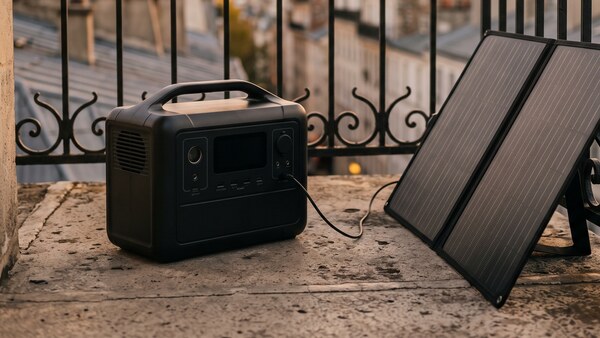
A dedicated balcony battery costs anywhere from £600 to well over £1,500. If a power station has been sitting in a cupboard since your last camping trip, reusing it to store balcony solar is tempting. It's also entirely doable, on one condition: don't try to wire it into the home's electrical circuit the way a dedicated kit would. Here's what genuinely works, and why.
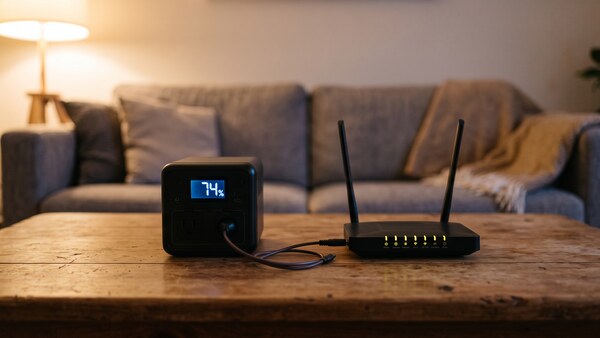
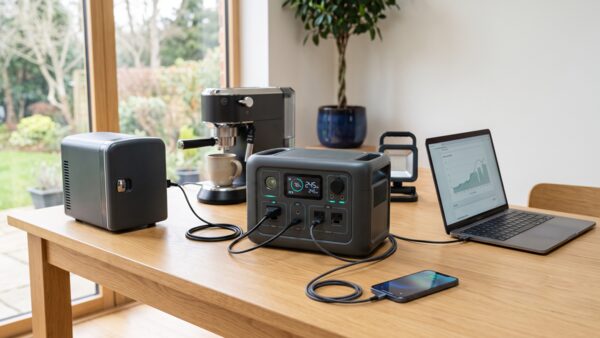
During a power cut, the router is rarely the appliance anyone worries about, and that is exactly the problem: it gets plugged into whatever station is at hand, on whatever socket is closest, and half the possible runtime is lost without anyone noticing. A router barely draws any power. What matters here isn't the size of the station, it's how you plug it in.
PD, PPS, Quick Charge: these acronyms look alike but are not quite the same thing. Here is how to make sense of them, so you can charge your devices at full speed, with the right charger and cable, without damaging anything.
A flat AA, a tired power bank, an e-scooter battery at the end of its life, or worse, a swollen one: here is where to drop them off, how to do it safely, and the habits worth building before you get rid of one.
Plugging a generator straight into a wall outlet during a power cut is the most dangerous mistake in the whole category: it can electrocute a utility worker streets away. Here is the only safe method, built around a transfer switch, and everything you must never do instead.
A dirty solar panel loses output without it being visible to the eye, and a panel that underperforms for no obvious reason often hides a problem that's simple to diagnose. Here's how to clean a solar panel without damaging it, and how to test it with a multimeter to check it's living up to its specs.
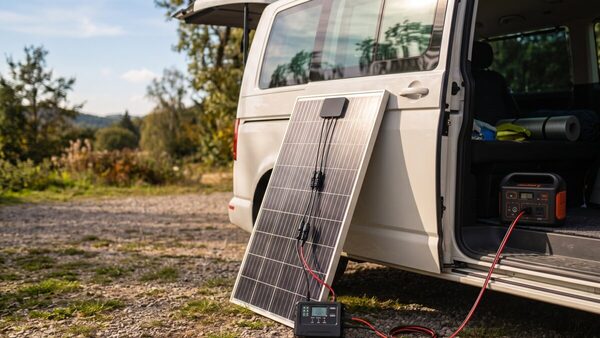
A panel to mount, MC4 cables to connect, a charge controller to wire to a battery: installing a portable or balcony solar kit is nowhere near as daunting as it sounds, as long as you follow the right connection order. Here's the complete method, fuse by fuse.
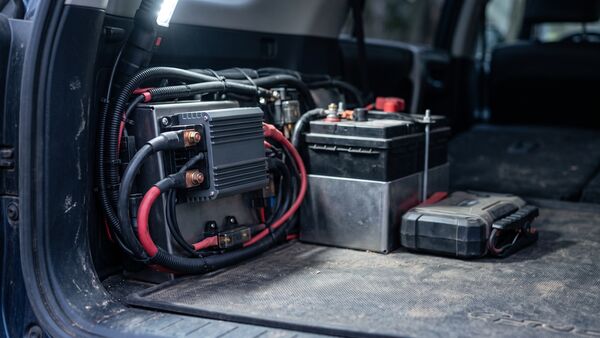
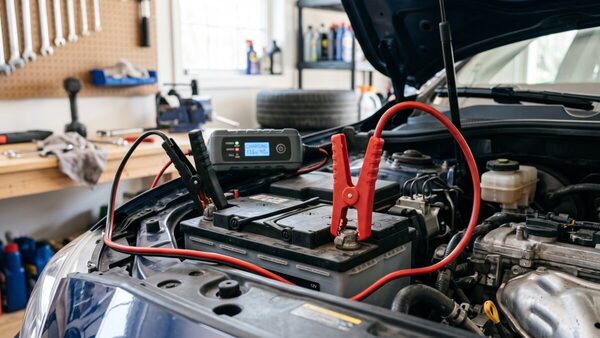
A flat battery on a cold morning, a warning light on the dash: battery failure remains the single most common car breakdown. The good news is that charging, testing and disconnecting one safely just takes the right method, which we break down here, clamp by clamp.
A power cut is rarely a disaster in itself. What turns it into one is facing it with no light, no plan, and making within three hours the one improvised fix that sends somebody to hospital. Here is what to do before, during and after, what you must never attempt, and how to size a backup power supply properly.
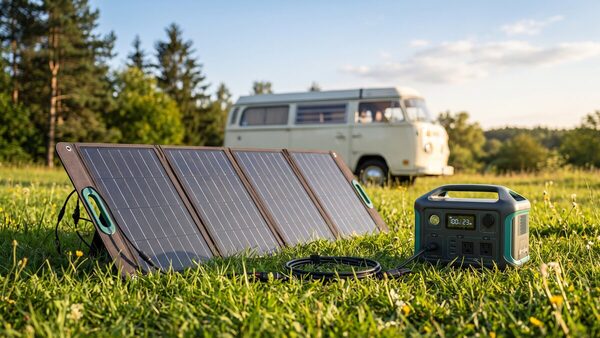
You plan the route, the stops, sometimes the bookings, and you set off with the electrical setup you had last summer. That is where it falls apart: the same campervan lasts a week unplugged in Andalusia in July, and two days in Scotland in January. Here is how to size your power system around your destination and your departure month, backed by real irradiation figures.
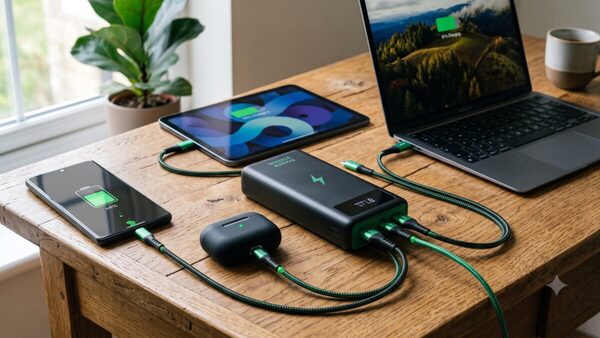
How many times will a 20,000 mAh power bank actually recharge a smartphone, a Nintendo Switch, or a laptop? Here is the detailed, device-by-device math, no marketing spin included.
A portable power station is not chosen by watt-hours. It is chosen by what you intend to plug into it. Here is the full list of appliances people genuinely run, from a phone charger to a pellet stove, with running watts, startup surge and the runtime you can realistically expect.
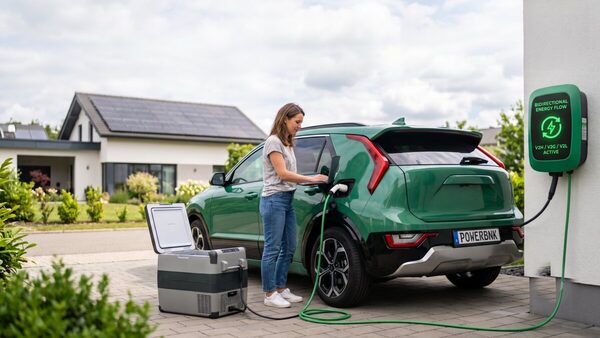
Your electric car can now feed its energy back to your home, the grid or your devices. V2G, V2H, V2L: we explain everything about bidirectional charging, how to benefit from it today, and why it is a revolution for portable power.
Power bank, laptop, spare batteries: what can you really take on a plane, and where? Between watt-hour thresholds and the ban in the hold, we sum up everything you need to clear security with peace of mind and never get your battery confiscated.
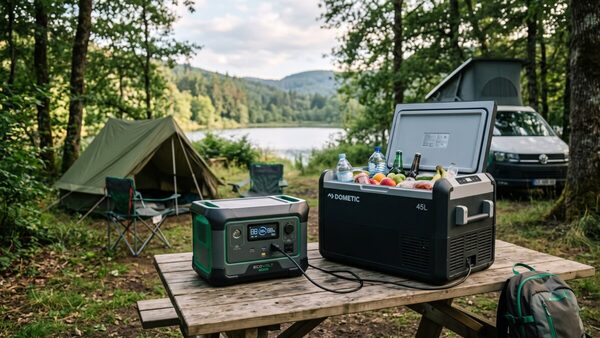
A camping fridge can stay cold for a night, a weekend or several days: it all comes down to the power station feeding it. Capacity in Wh, 12 V output, solar top-up: here is our field-tested method to calculate the real runtime and pick the portable battery truly suited to your cooler.
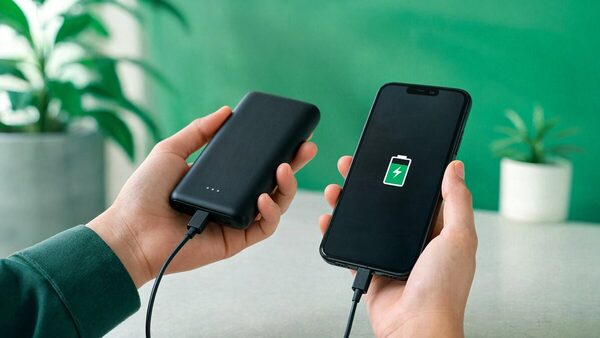
A power bank looks simple, right up until you have to pick one. Capacity, power, MagSafe, fast charging, airline rules: the criteria pile up fast. Portable energy has been our job for more than ten years, so here, jargon-free, is the method we use to find the power bank that truly fits your needs.
To be self-sufficient in electricity on the road, two schools compete: the portable power station, silent and clean, and the generator, enduring but noisy. Which one should you choose for your motorhome or van? We weigh the pros and cons, use by use.