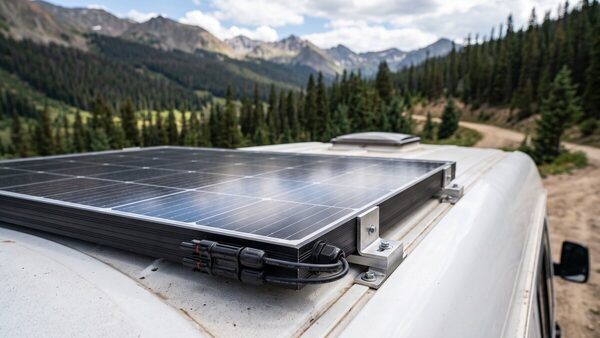
Solar panels for campervans and fixed roofs
Our selection
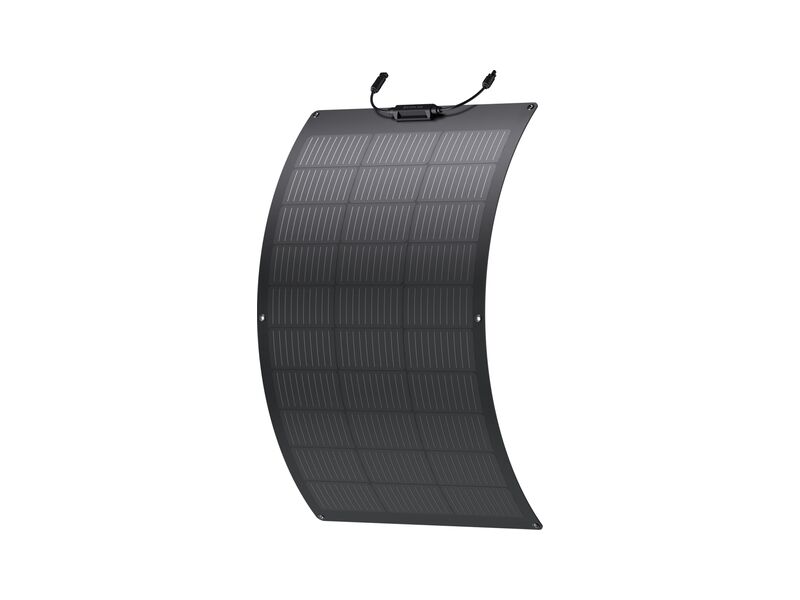
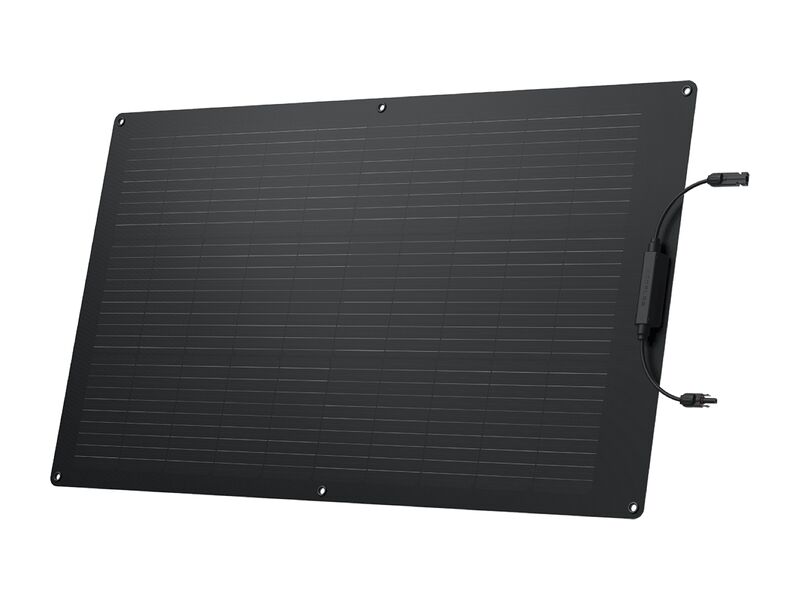
EcoFlow 100W flexible solar panel
£139.00 £109.00
(14)
Ultra-light (2.3 kg) and flexible up to 258°, it hugs the roof of a van, a boat or a motorhome: the discreet solar panel that disappears once fitted.
- Power: 100W, flexible panel
- Weight: 2.3 kg (ultra-light)
- Flexibility: Curve up to 258°
- Durability: IP68 rating, universal compatibility
- Flexible 258°, 2.3 kg, hugs surfaces
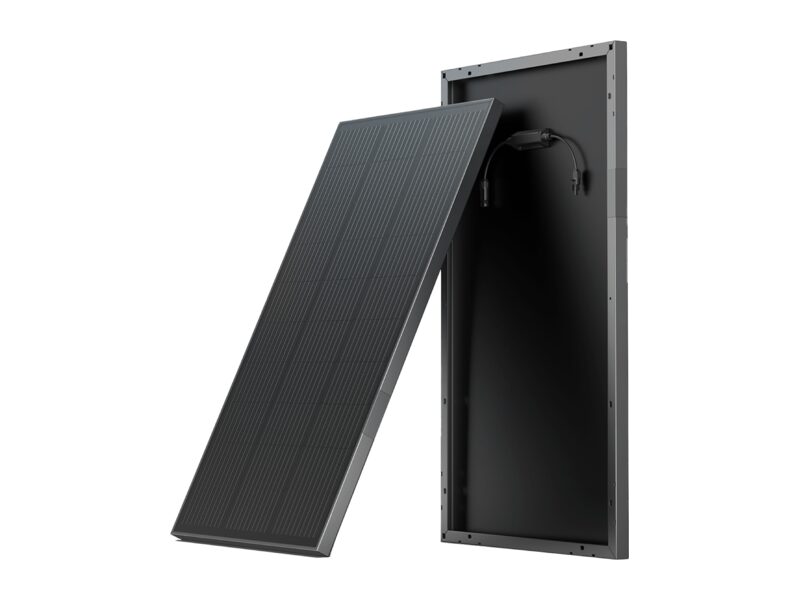
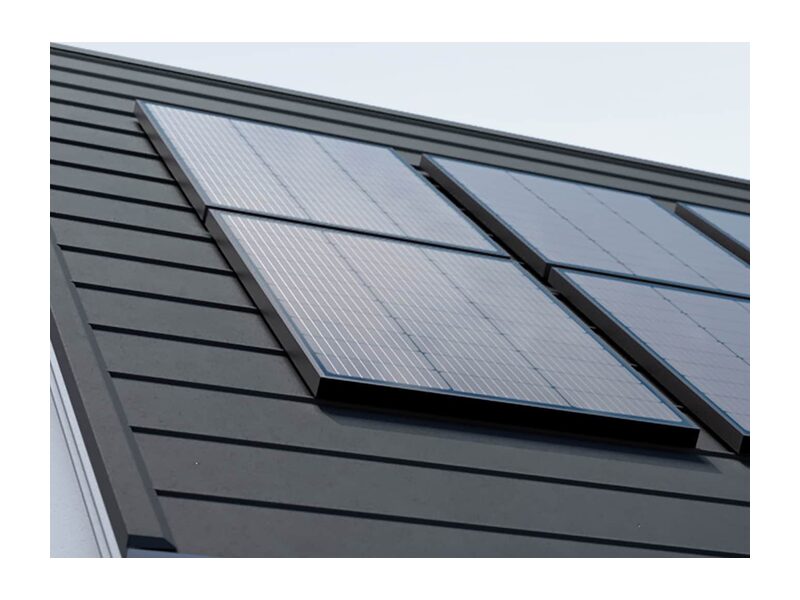
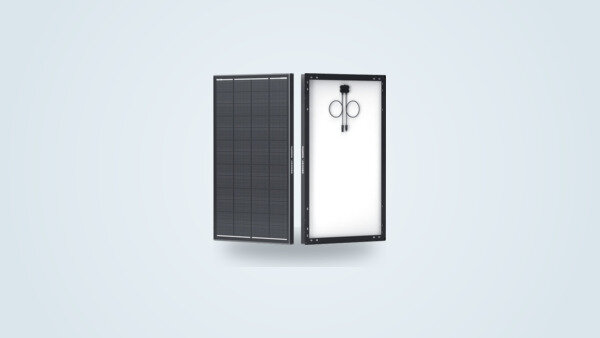
EcoFlow Rigid solar panel 100W (x2)
£159.00 £139.00
(10)
Two 100 W rigid panels to mount once and forget: 23% efficiency, IP68 tempered glass and mounting feet supplied to equip a van or a roof.
- Power: 2 x 100 W (200 W total)
- Efficiency: 23% (monocrystalline cells)
- Output: 17.1 V / 5.9 A, MC4 connectors
- Durability: IP68, tempered glass, high winds
- 2-pack of IP68 rigid panels, mounting feet included
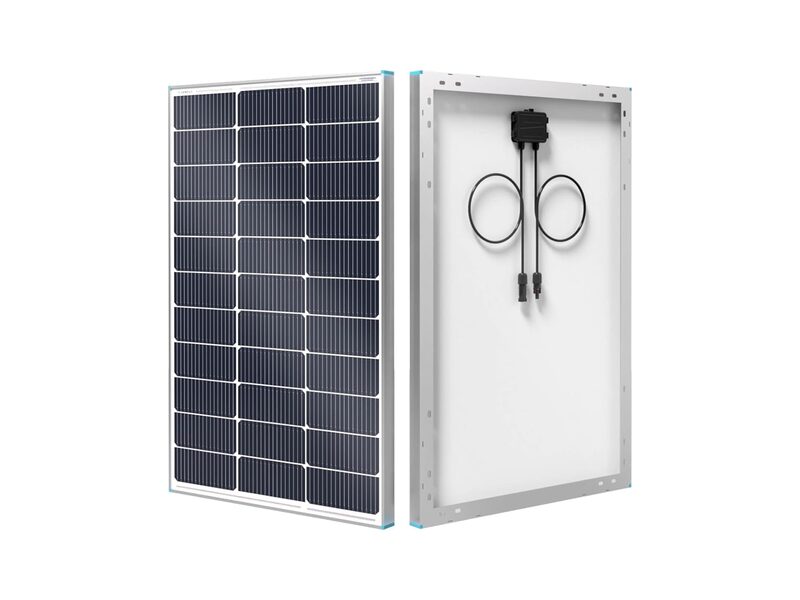
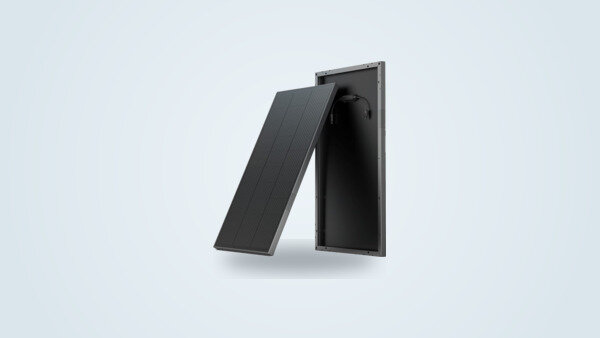
Renogy 100W Rigid Panel
£89.99 £56.61
(6)
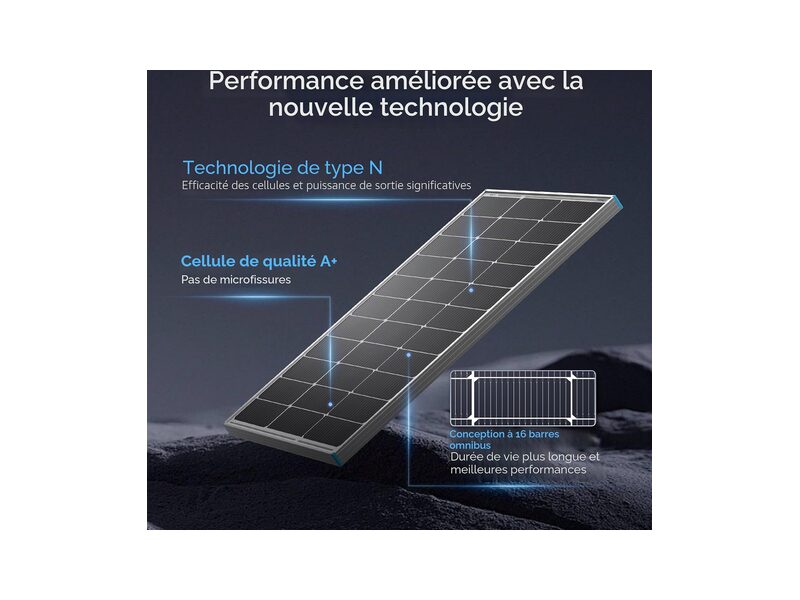
100W monocrystalline with N-type cells at 25% cell efficiency and a rugged aluminium frame: the Renogy rigid panel is the reliable base of any fixed solar setup.
- Power: 100W (N-type 16BB monocrystalline)
- Efficiency: 20% (module), cells up to 25%
- Frame: Anodised aluminium, tempered glass
- Format: Rigid, about 5.9 kg, 86.5 x 57.8 cm
- N-type cells, 20% module efficiency, rugged frame
EcoFlow Rigid Solar Panel 400W (x2)
See price and availability (4)
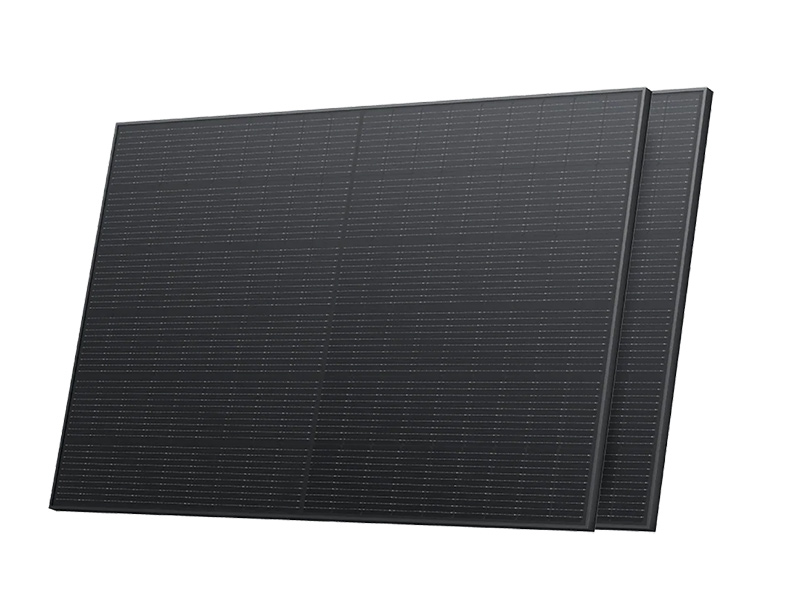
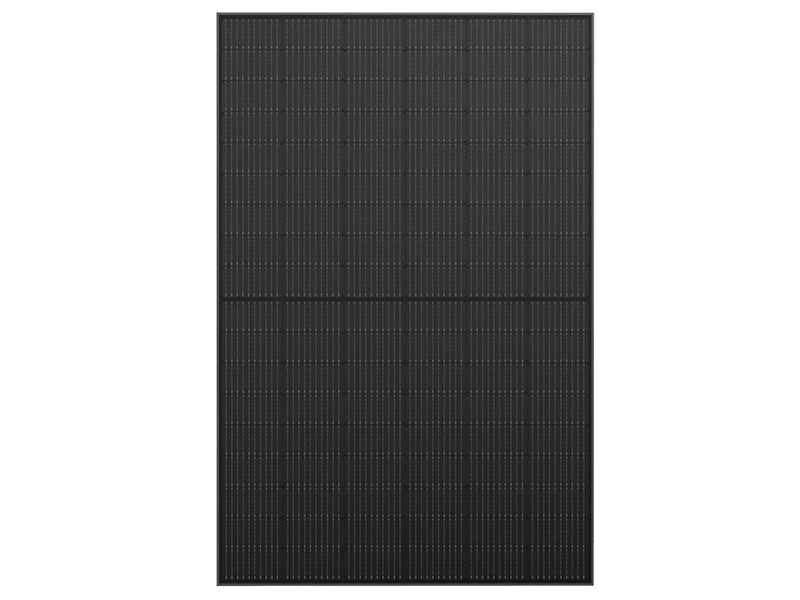
Fit two EcoFlow 400W rigid solar panels at home or on your RV: 23% efficiency, IP68 rating and long-lasting weather resistance built to last.
- Power: 400W per panel (x2 included)
- Efficiency: 23%, monocrystalline cells
- Waterproofing: IP68
- Weight: 21.8 kg per panel
- 23% efficiency, IP68 rated, withstands 209 km/h winds
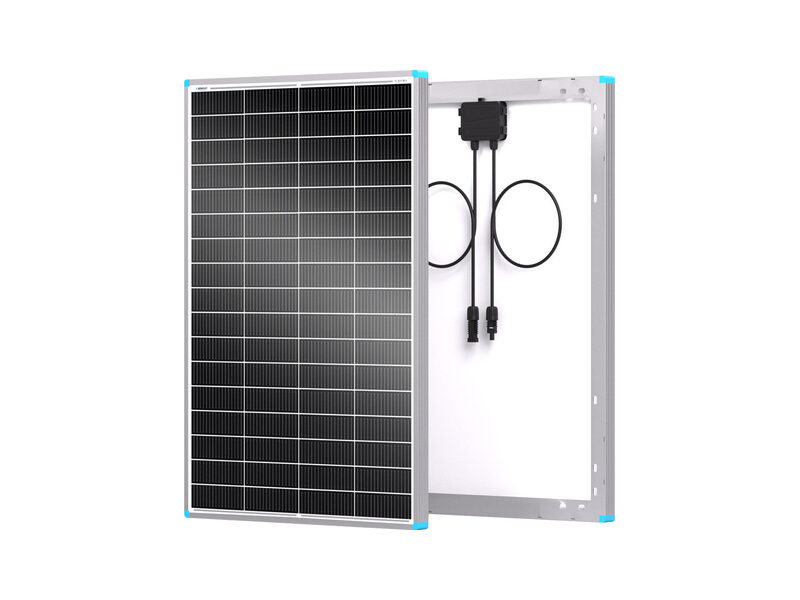
Renogy ShadowFlux 200W
See price and availability (3)
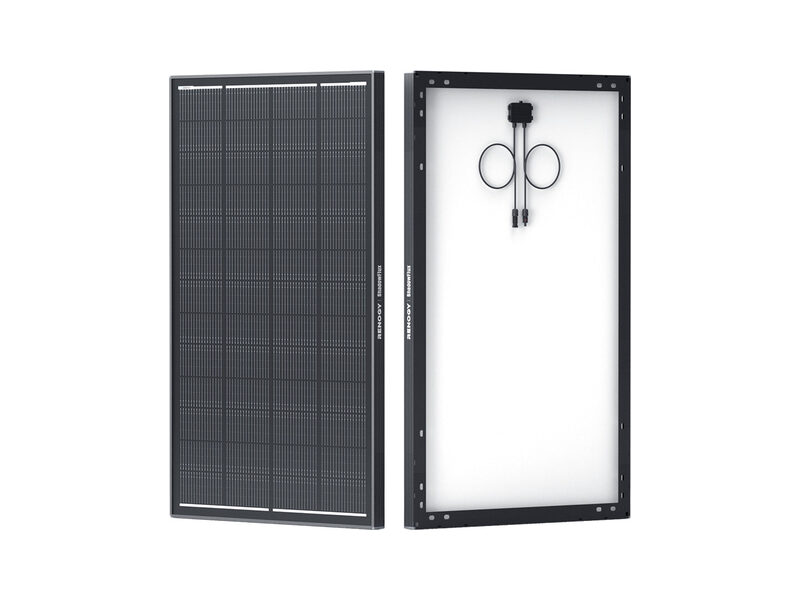
A roof vent, an aerial, a branch: on a campervan roof, partial shade is expensive. This panel is built to keep producing when part of its surface is covered.
- Power: 200 W, N-type cells (25% efficiency)
- Anti-shading: 28 bypass diodes, up to 85% more output in shade
- Module efficiency: 20.7%
- Format: 1262 x 764 x 30 mm, 10.81 kg
- Keeps producing when part of the panel is covered
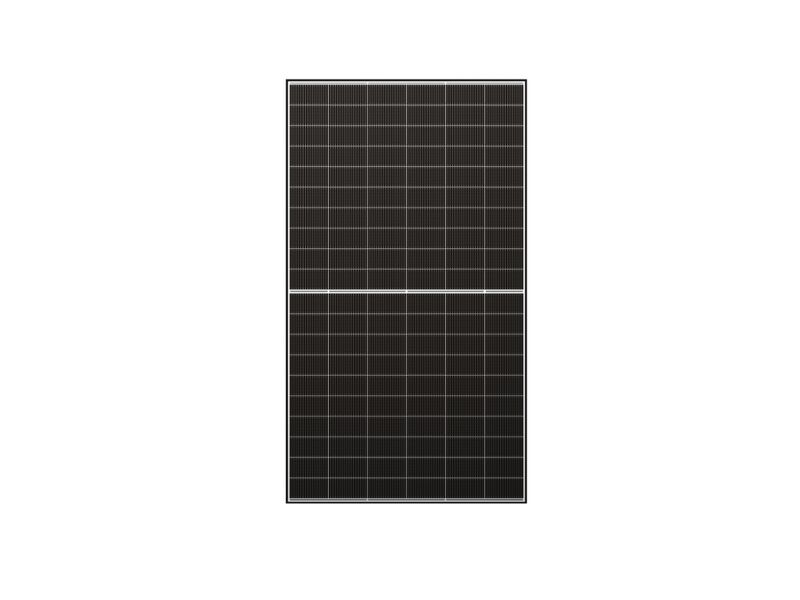
Renogy 16BB 175W Panel
See price and availability (3)
The same watts on less roof. N-type cells at 25% efficiency and 16 busbars, in a shorter format than the average 175 W panel.
- Power: 175 W at 12 V, N-type cells (25% efficiency)
- Module efficiency: 20.6%
- Footprint: 1110 x 764 x 30 mm, 7 to 10% less than typical 175 W panels
- Weight: 9.6 kg
- The best watts-per-centimetre-of-roof ratio in our selection
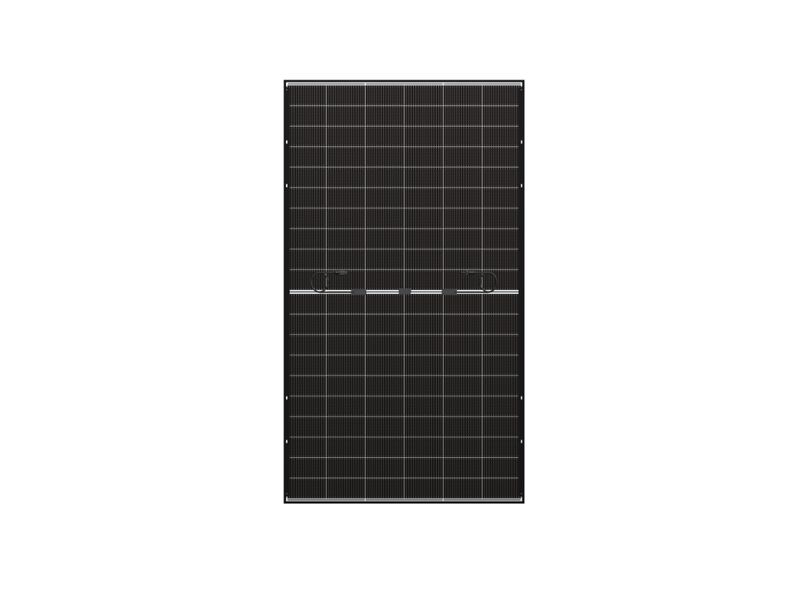
Zendure 500W Bifacial Solar Panels
£400.00 £360.00
(2)
Two 500W dual-glass bifacial panels that catch light on both faces: up to 1300 Wp combined, 22.5% efficiency and genuine all-weather toughness.
- Power: 2 x 500W bifacial (up to 1300 Wp)
- Efficiency: Up to 22.5%, dual-glass
- Toughness: Wind 2400 Pa, snow 5400 Pa, IP68
- Capture: Both sides, excellent in low light
- High-efficiency bifacial for balcony and roof
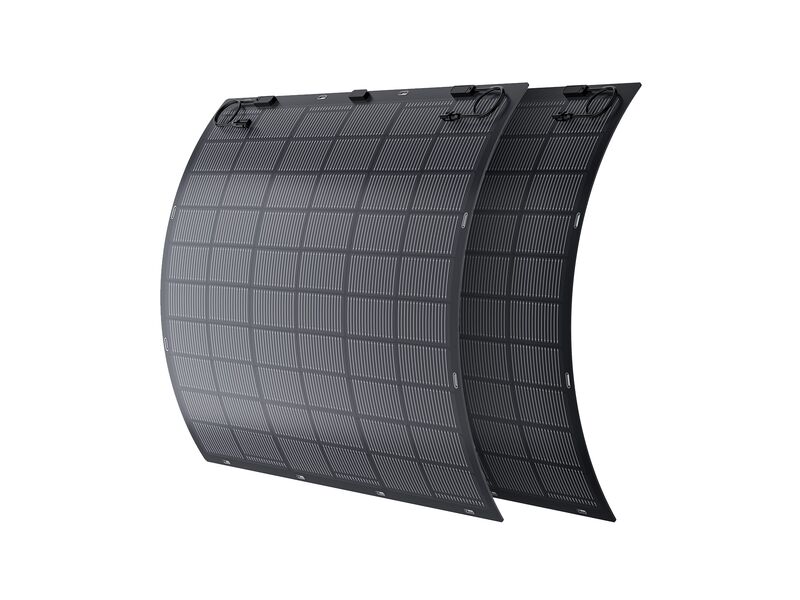
Zendure 420W Flexible Solar Panels
£400.00 £309.00
(2)
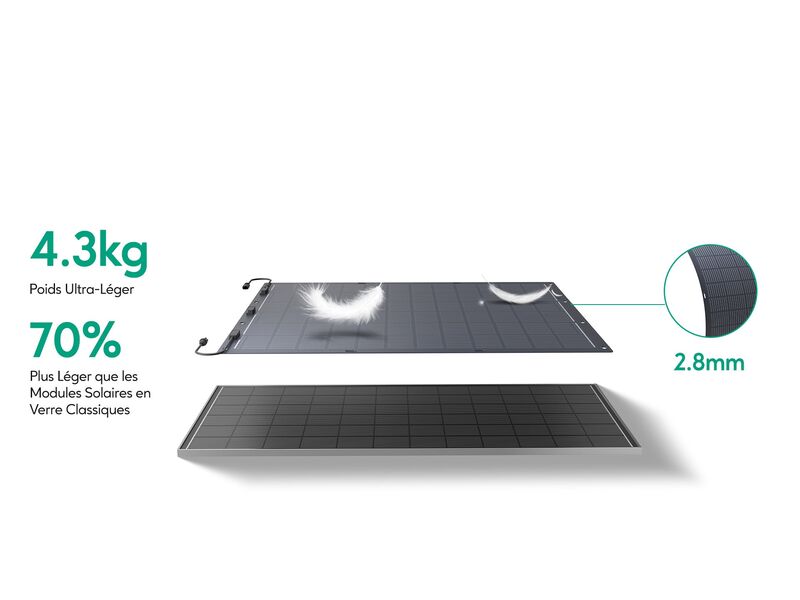
Two 210W flexible solar panels that hug the curves of a balcony or roof: 23% efficiency, bendable to 220°, IP68 and just 4.3 kg each.
- Power: 420W (2 x 210W monocrystalline)
- Efficiency: Up to 23%
- Flexibility: Bendable up to 220°
- Weight: 4.3 kg per panel, IP68
- Light flexible panels, 12-year warranty
Related questions
A rigid panel produces 10 to 15 per cent more for the same rating, lasts 25 years against 5 to 10 for a folding one, and costs less per watt. Folding only makes sense if you have to store it, carry it on foot or reorient it often. On a van roof or a garden shed, rigid always wins.
Across most of Europe the year-round optimum is around 30 to 35° facing south. If winter is the priority, go to 55 or 60°: the sun sits low and cold-season output matters more. A 10° deviation from the optimum only costs 2 to 3 per cent of production.
Between 1.4 and 1.8 kWh in summer in southern Europe, and 0.4 to 0.6 kWh in December. The annual average sits around 1.1 to 1.3 kWh a day, so roughly 400 to 480 kWh a year. Those figures assume a south-facing orientation and no shading at all, not even partial.
Manufacturers generally guarantee 80 to 85 per cent of initial output after 25 years, and real service life often exceeds 30. Annual degradation runs at 0.4 to 0.7 per cent. What fails first is almost never the cell, but the junction box or the connectors exposed to the weather.
In series voltages add up and current stays the same: that is the right choice with an MPPT controller and long cables, because line losses drop. In parallel it is the currents that add, which protects against partial shading since a shaded panel does not drag the other down. Never mix panels of different ratings in series.