
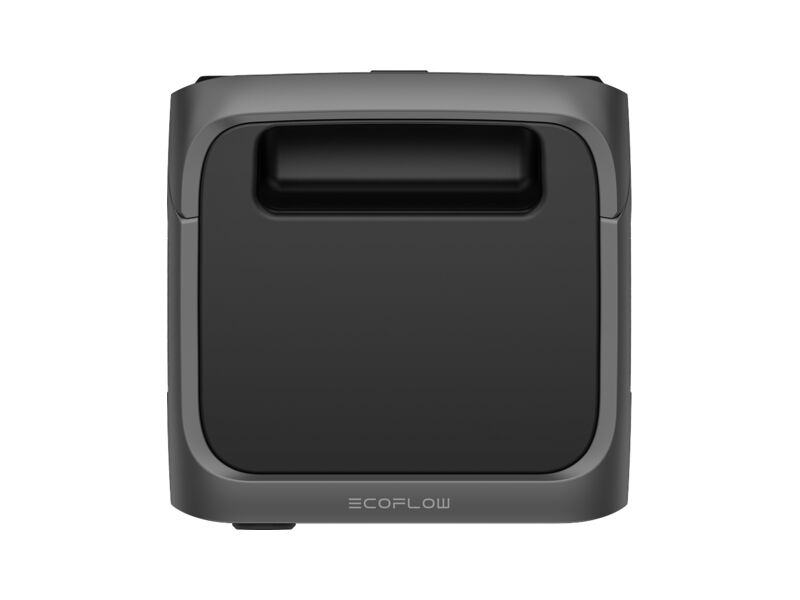
EcoFlow River 3 Plus
(14 reviews)
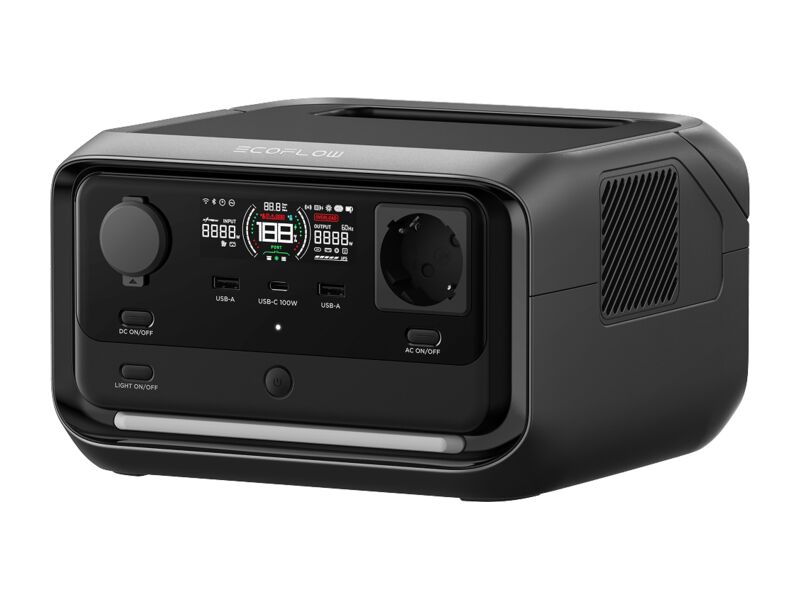
Compact, quiet and fully recharged in just one hour, the EcoFlow River 3 Plus delivers reliable power wherever you happen to need it.
- Capacity: 286 Wh (expandable to 858 Wh)
- Power: 600 W (1200 W X-Boost)
- Recharge: ≈ 1 h from mains, ≈ 1.5 h solar
- Weight: 4.7 kg
- Full recharge in 1 h, expandable to 858 Wh, built-in UPS
Detailed overview: EcoFlow River 3 Plus portable power station
The EcoFlow River 3 Plus stands out as one of the most compelling portable power stations in the compact, sub-£300 category. With its 286 Wh LiFePO4 battery and a 600 W output (up to 1200 W peak thanks to X-Boost technology), it powers the vast majority of everyday portable devices: laptops, lighting, a drone, a camping fridge, small appliances or photo gear.
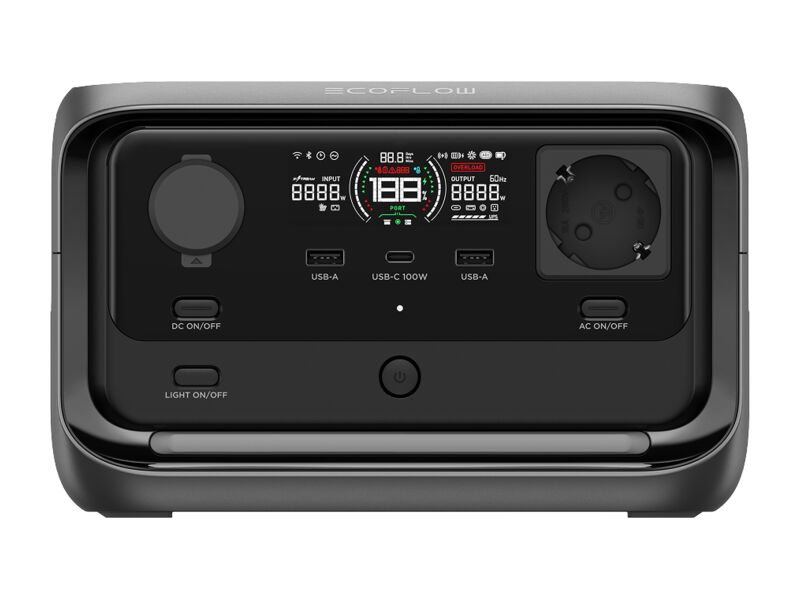
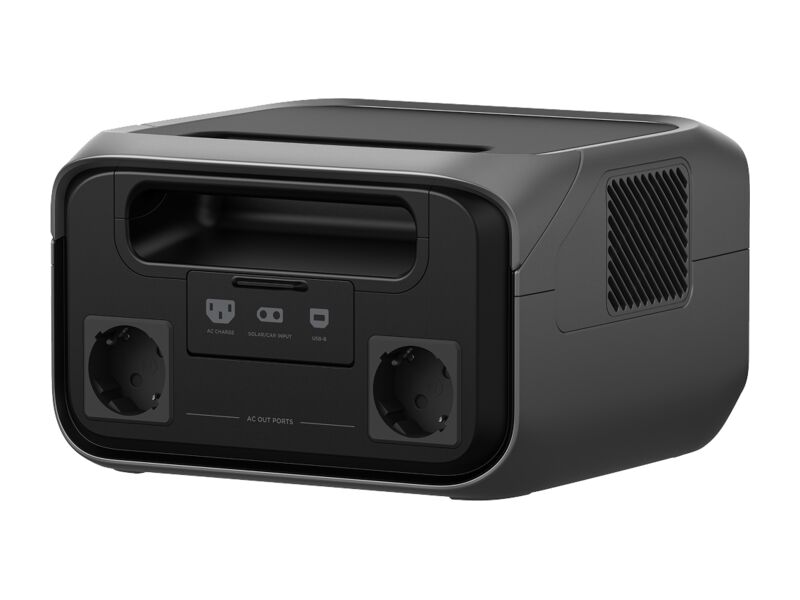
Its main strength is versatility. On the connectivity side, it combines 3 AC outlets, 1 USB-C 100 W port, 2 USB-A ports and a 12 V car socket, enough to charge around ten devices at once. Charging is one of its highlights: expect roughly 1 hour for a full charge from the mains thanks to X-Stream fast charging, and about 1.5 hours via a solar panel (input up to 220 W), ideal for van life, camping or off-grid trips.
Built to last, the River 3 Plus uses an LFP chemistry rated for 3000 charge cycles, around 10 years of regular use before dropping to 80 % of its capacity. It also features a UPS function that switches over in under 10 ms during an outage, perfect for protecting a router, a NAS or a desktop computer. IP54 battery protection, a fire-retardant shell and resistance to a 1.5 m drop make it a rugged companion.
Another major selling point: its capacity is expandable up to 858 Wh via an add-on battery, letting the unit grow with your needs. Finally, running at under 30 dB, it stays out of the way, even inside a tent. Controlled from the EcoFlow app (Wi-Fi and Bluetooth), it blends runtime, fast charging and longevity in a package that weighs barely 4.7 kg.
Full specifications
Detailed characteristics (EAN: 4895251627917)
Battery and capacity
| Rated capacity?Total stored energy in watt-hours. The higher the figure, the longer the runtime. | 286 Wh |
|---|---|
| Delivered energy, measured?Energy that actually leaves the battery and reaches the devices. Always below the stored energy, as conversion costs heat. Taken from our in-depth review. | 231 Wh |
| Max capacity (with extensions)?Total capacity reachable by adding extra batteries. | 858 Wh |
| Expandable capacity?Whether capacity can be increased with add-on batteries. | Yes |
| Removable battery?The main battery can be removed or replaced by the user. | No |
| Battery chemistry?LiFePO4 (LFP) lasts far longer and is safer than NMC. | LFP (LiFePO4) |
| Charge cycles?Number of full charges before capacity drops to the stated threshold. | 3000 cycles (80 %) |
AC output
| Continuous AC power?Power the unit can sustain continuously on its 230 V outlets. | 600 W |
|---|---|
| Surge power?Brief peak tolerated when starting motor or compressor devices. | 1200 W |
| Boost-mode power?Extended power via a proprietary mode (X-Boost, AmpUp…) by lowering voltage. | 1200 W |
| Inverter type?A pure sine wave is essential for sensitive electronics and motors. | Pure sine wave |
| AC voltage / frequency?Voltage and frequency of the AC output (230 V / 50 Hz in Europe). | 230 V / 50 Hz |
| Number of 230 V AC outlets?Number of mains outlets available on the unit. | 3 |
| RV / TT-30 outlet?Dedicated 30 A outlet for North-American style RVs. | No |
Recharging
| Max AC charging power?Maximum power drawn from a wall socket; higher means faster charging. | 360 W |
|---|---|
| AC charge 0-100%?Stated time for a full charge on mains power. | 60 min |
| Max solar input?Maximum solar power accepted at the input (PV panels). | 220 W |
| Accepted solar voltage?Panel voltage range compatible with the solar input. | 11 to 55 V |
| Max solar current?Maximum current accepted on the solar input. | 13 A |
| MPPT controllers?Number of independent MPPT solar inputs (yield optimisation). | 1 |
| Vehicle charging (12/24 V)?Can be charged from a vehicle's cigarette-lighter socket. | Yes |
| Pass-through charging?The unit can power devices while charging (pass-through). | Yes |
Ports and connectors
| USB-C ports?Number of USB-C ports and the fastest port's power (laptops, phones). | 1 × 100 W |
|---|---|
| USB-A ports?Number of USB-A ports and maximum power (small devices). | 2 × 12 W |
| 12 V output (car socket)?12 V cigarette-lighter output and its power (coolers, pumps…). | Yes (126 W) |
Portability
| Weight?Net weight of the unit, battery included. | 4.7 kg |
|---|---|
| Dimensions (L × W × H)?Overall size of the unit in millimetres. | 234 × 232 × 146 mm |
| Form factor?Portable (hand-carried), transportable (heavy), or wheeled. | Portable |
| Wheels?Built-in wheels for moving the unit. | No |
| Telescopic handle?Retractable handle like a wheeled suitcase. | No |
Safety and environment
| Certifications?Standards and approvals obtained (CE, RoHS, UN38.3, UL…). | CE, RoHS, UN38.3 |
|---|---|
| Discharge temperature?Temperature range in which the unit can deliver power. | -10 to 45 °C |
| Charge temperature?Temperature range in which the unit can be recharged. | 0 to 45 °C |
Backup / UPS
| UPS / EPS mode?Automatic switch to battery on a mains outage (backup). | Yes |
|---|---|
| Switchover time (rated)?Delay before switching to battery; under 20 ms suits a PC or router. | 10 ms |
Noise and thermal
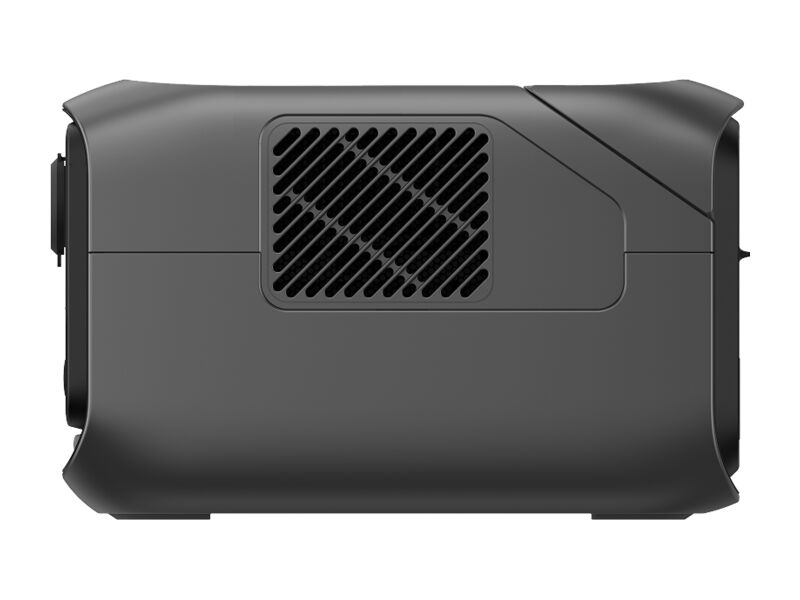
| Noise level (rated)?Manufacturer-stated noise; a quiet room is around 30 dB. | 30 dB(A) |
|---|---|
| Quiet mode?Setting that limits fan noise, often by capping charge power. | No |
| Self-heating battery?Battery pre-heating to allow charging in cold weather. | No |
Display and connectivity
| Display?Type of screen showing power, runtime and alerts. | LCD |
|---|---|
| Bluetooth?Bluetooth link for nearby control. | Yes |
| Wi-Fi?Wi-Fi connection for remote control and monitoring. | Yes |
| Mobile app?iOS / Android app to control the unit. | Yes |
| Local control (no cloud)?Control possible over Bluetooth without an account or internet. | Yes |
| Solar connector?Connector type of the solar input (XT60, Anderson, MC4…). | XT60i |
Availability and warranty
| Market launch?Date the model first became available on the European market. Useful to place its generation: technology moves fast in this segment, and a device several years old may be at the end of its commercial life. | March 2025 |
|---|---|
| Warranty?Length of the manufacturer's warranty. | 5 years |
User manual / Instructions for use
⚡ How long will this power station run a device?
With 286 Wh, the EcoFlow River 3 Plus external battery runs a fridge (50 W) for ~4h50 or an LED TV (90 W) for ~2h40.
| Home | Runtime |
|---|---|
| Mini fridge (45 W) | ~5h25 |
| Freezer (60 W) | ~4h05 |
| American fridge (150 W) | ~1h35 |
| Dehumidifier (300 W) | ~50 min |
| Outdoor & workshop | Runtime |
|---|---|
| LED lighting (10 W) | ~24h |
| Nebulizer (100 W) | ~2h25 |
| E-bike (charging) (150 W) | ~1h35 |
| Games console (200 W) | ~1h15 |
Rough estimate: real consumption varies, and very power-hungry appliances (heating elements) must stay below the output power.
What is this power station best for?
-
Camping & Tent Ideal
Compact (4.7 kg) and expandable, the River 3 Plus adapts to the camper: its base 286 Wh cover lighting, charging phones and tablets, a fan and topping up a cooler for a night or two, and adding an extra battery raises autonomy to 858 Wh for longer stays. Its 600 W (1200 W X-Boost) allow a small kettle, and its quiet operation (30 dB) preserves the calm of the camp. Rechargeable in 60 minutes from mains and up to 220 W from solar, it tops up at camp in good weather. LiFePO4 chemistry (3000 cycles) lasts years of seasons.
-
Remote work Ideal
For a mobile work session, the River 3 Plus powers and protects the essentials: its UPS function, with an ultra-fast 10 ms switchover, shields a computer and router during micro-cuts at a home office, and its 600 W run a laptop, an external monitor and a router. Its 286 Wh provide several hours of connectivity, expandable to 858 Wh to cover a full day or several, and its 100 W USB-C recharges a second device along the way. Compact (4.7 kg) and quiet (30 dB), it travels without a second thought and recharges in 60 minutes between meetings.
-
Health & CPAP Ideal
For a CPAP machine at home, the River 3 Plus is particularly reassuring: its UPS function switches over in just 10 ms, an imperceptible delay that ensures the device never stops during a night-time outage, without waking you or interrupting therapy. Its 286 Wh cover a night without the heated humidifier, expandable to 858 Wh for several nights or to secure humidification. Quiet (30 dB), it fits at the bedside without disturbing sleep, and a full recharge in 60 minutes tops it up very fast each day. An excellent safety net for anyone who depends on respiratory therapy.
-
Photo & Video Suitable
On a photo or video outing, the River 3 Plus makes a compact, handy backup station: its 286 Wh recharge a good set of mirrorless batteries, drone packs and mics between sequences, and its fast recharge (60 minutes) tops it up quickly. Its 600 W output runs a fill LED panel or a fast charger, and its expansion to 858 Wh covers a busier shooting day. At 4.7 kg and 30 dB, it disappears into the camera bag and follows a light crew unnoticed, including on sensitive sound takes.
-
Road trip & Car Suitable
On a road trip, the River 3 Plus recharges fast and slips in anywhere: light (4.7 kg), it keeps a cooler cold at stops, recharges cameras, drones, a laptop and phones, and powers a light in the evening, without draining the vehicle’s battery. A full recharge in 60 minutes lets you set off charged after a short halt, and its expansion to 858 Wh brings margin for nights in the car. Quiet (30 dB), it goes unnoticed in the cabin. For long successive nights off-grid, a solar panel up to 220 W extends its autonomy.
-
Boating Suitable
Aboard during an evening at anchor, the River 3 Plus brings a compact energy reserve: its 286 Wh and UPS function power navigation electronics, lighting and device charging without drawing on the boat’s circuit, and its expansion to 858 Wh lets it last longer. Its LiFePO4 chemistry, safer and more stable than conventional lithium, reassures in a confined space, and its quiet operation (30 dB) preserves the calm aboard. Compact (4.7 kg), it tucks easily into a locker or cabin and recharges at the dock in 60 minutes or from solar up to 220 W.
-
Home & Power cuts Backup only
As a stopgap during an outage, the River 3 Plus takes over instantly thanks to its ultra-fast UPS function (10 ms switchover): it keeps the internet box, router and a light running without interruption, enough to stay connected and lit. Its 286 Wh cover short cuts, expandable to 858 Wh to last longer. It is an ideal backup for frequent micro-cuts, best reserved for essential devices; it does not replace a higher-capacity station to cover a whole home over several hours or days.
Our team's recommendations based on the model's capacity, output power and weight.
Compatible solar panels
A selection of photovoltaic panels that suit this station's solar input (up to 55V / 220W), best match first.


Comparison
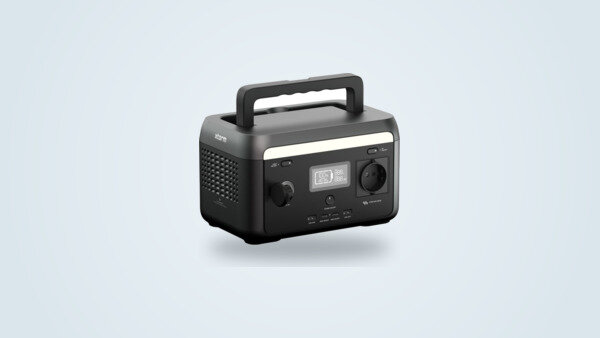
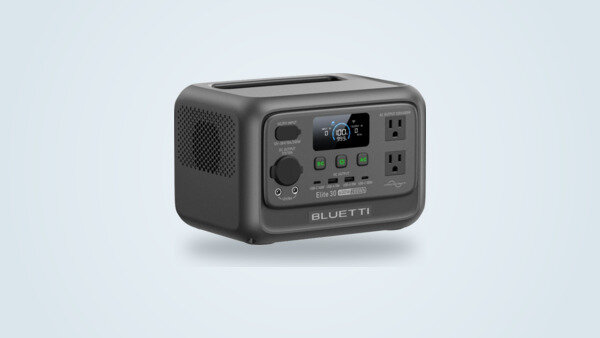
Under £257, the EcoFlow River 3 Plus goes head to head with several sought-after compact power stations, notably through searches such as "River 3 Plus vs Bluetti EB3A" or "River 3 Plus vs Jackery 300 Plus". Here is how it stacks up against three of its most compared alternatives: the Bluetti EB3A, its most direct rival on power, the Jackery Explorer 300 Plus, prized for its light weight, and the Anker SOLIX C300, a recent competitor with the same capacity.
| Criterion | EcoFlow River 3 Plus | Bluetti EB3A | Jackery Explorer 300 Plus | Anker SOLIX C300 |
|---|---|---|---|---|
| Capacity | 286 Wh (expandable to 858 Wh) | 268 Wh | 288 Wh | 288 Wh |
| Continuous / peak power | 600 W / 1200 W | 600 W / 1200 W | 300 W / 600 W | 300 W / 600 W |
| Battery chemistry | LFP (LiFePO4) | LFP (LiFePO4) | LFP (LiFePO4) | LFP (LiFePO4) |
| Mains recharge 0-100 % | ≈ 1 h | ≈ 1 h 30 | ≈ 2 h | ≈ 2 h |
| Weight | 4.7 kg | ≈ 4.6 kg | ≈ 3.75 kg | ≈ 4.1 kg |
| Observed price | ≈ £219 | ≈ £221 | ≈ £256 | ≈ £239 |
In short, the EcoFlow River 3 Plus remains the most versatile option: it combines the 600 W and 1-hour recharge of the Bluetti EB3A with a capacity expandable to 858 Wh and a UPS function that not all its rivals match. The Jackery Explorer 300 Plus wins on weight and the Bluetti EB3A is a little cheaper, but both cap out at 300 W of power or a slower recharge. For anyone wanting a fast, expandable and long-lasting first station, the River 3 Plus offers the best overall balance.
Related video
Video: Ecoflow River 3 Plus test and review - every household should have one! - Published on 05/07/2025
Our tester's review: Christophe Delpuech
We lugged the River 3 Plus around for several weeks, from the desk to the campsite, and it quickly earned its place. First good point: plugged in on a Friday evening, it goes from nearly empty to full in about an hour, so no more stress over a forgotten charge. Out in the field, it powered a mini fridge, an LED string light and two phones through a whole evening without flinching, still with charge to spare by morning. Another real plus is the quiet: sitting inside the tent you forget it is even there, where other models have their fan droning away. Its UPS function even saved us during a brief power cut at home, the router and NAS did not notice a thing. Two honest downsides: 286 Wh shows its limits over several days of heavy use (the add-on battery then becomes essential), and the handle, handy as it is, could be a touch more comfortable. Otherwise it is hard to do better in this price range: fast charging, LFP longevity and versatility make it an excellent first power station.
In-depth review EcoFlow River 3 Plus: our full review 4.2/5 Read our full review → Capacity and efficiency 4.2 Delivered power 3.9 Recharging 4.2 Ports and control 4.5 Build and endurance 4.4 Noise 4.4Frequently asked questions: EcoFlow River 3 Plus portable power station
With 286 Wh and 600 W of power (up to 1200 W with X-Boost), it runs a laptop, lighting, a router, a small fridge, a drone or photo gear. It can recharge a smartphone around twenty times.
About 1 hour for a full charge from a wall outlet thanks to X-Stream fast charging. With solar, expect around 1.5 hours in good conditions with an input of up to 220 W.
Yes, it is one of its key uses. Compact (4.7 kg), quiet (under 30 dB) and solar-rechargeable, it is ideal for van life and off-grid trips. For several days of autonomy, the add-on battery is recommended.
Yes. Its 286 Wh capacity is expandable up to 858 Wh with an add-on battery, so you can adapt it to bigger needs without changing station.
Yes, it includes a UPS function that switches to battery in under 10 ms during a power cut. It protects a router, a NAS or a desktop computer against micro-outages.
Need help choosing?

Other products in the "Compact power stations" category
Aferiy P040
£162.12 (11)
With 256Wh, a full mains recharge in just over an hour and a UPS mode under 10ms, the Aferiy P040 protects sensitive devices without breaking the bank.
Allpowers R600
See price (7)
Affordable and backed by a 5-year warranty, the Allpowers R600 delivers 299 Wh, 600 W and a one-hour recharge, plus a built-in wireless charger.
Allpowers S200
See price (6)
154Wh and 200W in an ultra-compact, book-sized station with built-in wireless charging: the mini power station that goes everywhere without weighing you down.
Allpowers S300 Plus
See price (5)
Compact and clever, the Allpowers S300 Plus (288 Wh) combines USB-C 100 W, a wireless charger, an LED torch and app control.
Published on 07/07/2026, updated on 14/08/2026