
Insights & deep dives

We take the time to explain: technologies, myths and the big questions of portable energy.

Some topics deserve a closer look. In our insights, we take the time to dig in: the real differences between Li-ion and LiFePO4, how charge cycles work, the memory-effect myth, the future of portable solar and sodium-ion. These deeper features are not there to sell you something right now, but to give you the keys to understand what is really behind your devices. This is also where, article after article, we build the expertise that makes all the difference when it is time to choose. · 10 articles

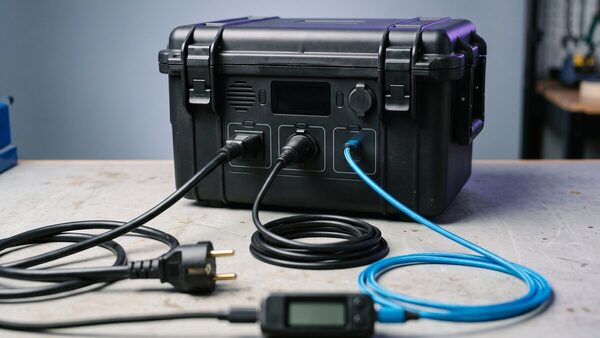
Portable power station discharging, with cables plugged into its various outputs Insights

Restored capacity: the lessons of 46 measurements

A power station never gives back every watt-hour it advertises. What is far less widely known is that the missing figure is not fixed: the same unit can return 860 Wh or 937 Wh depending on the socket you pick, and 1,573 Wh or 1,725 Wh depending on the load you ask of it. We went back through the 46 measurements published in our reviews to show what that changes in practice, and why an efficiency percentage quoted on its own tells you almost nothing.

Julien De Jurquet Published on August 28, 2026 by Julien
Smartphone showing a connected battery control app next to a portable power station Insights

Connected batteries: what data do their apps really collect?

EcoFlow, Anker, Bluetti, Jackery, Ugreen or DJI Power: their companion apps control our batteries over Bluetooth, WiFi and sometimes the cloud. Here is what data they actually collect, what EU data protection law says, and the settings that let you take back control.

Hanne Lindberg Published on August 28, 2026 by Hanne
Bluetti portable power station on a picnic table at dusk, display showing 78 per cent charge, in front of a camper van under string lights Insights

Power station Wh: the real capacity

1000 Wh on the spec sheet, but never 1000 Wh you can actually use once the station is plugged in: normal, or misleading spec? This deep dive explains where the energy goes and how to read a spec sheet without getting fooled.

Julien De Jurquet Published on July 28, 2026 by Julien
Portable power station and solar panel set up outdoors for a survivalist or prepper energy setup Insights

Energy independence for an SHTF scenario

Extended power outages, natural disasters, solar storms or long supply disruptions: whatever scenario worries you, electricity is usually the first thing to go and the last thing to come back. Here is a serious, scenario-by-scenario guide to never depending on a single power source.

Guillaume Hoarau Published on July 27, 2026 by Guillaume
Portable power station and solar panel deployed outdoors, representing energy self-reliance for an off-grid homestead Insights

Off-Grid Homestead Energy: the complete power guide

An off-grid homestead or bug-out location only works if the energy supply is properly designed. Lighting, communications, food preservation, gear recharging: here is how to plan your electrical setup from technology choices to system sizing, no shortcuts.

Guillaume Hoarau Published on July 27, 2026 by Guillaume
Comparison of lithium-ion and lithium iron phosphate LiFePO4 battery chemistries Insights

Li-ion vs LiFePO4

They are often confused, yet they do not share the same lifespan, weight or safety. Conventional lithium-ion or lithium iron phosphate (LiFePO4): this feature breaks down, jargon-free, what really sets them apart, and helps you know which one powers (or should power) your devices.

Julien De Jurquet Published on July 10, 2026 by Julien
Understanding the real mAh capacity of a power bank Insights

What are mAh really worth?

20,000 mAh on the label, but barely two smartphone charges: normal, or a scam? The capacity advertised on a power bank and the energy you actually get back are two different things. This feature explains why, how to read the real figures, and above all how to spot inflated capacities.

Yoni Marchal-Laporte Published on July 4, 2026 by Yoni
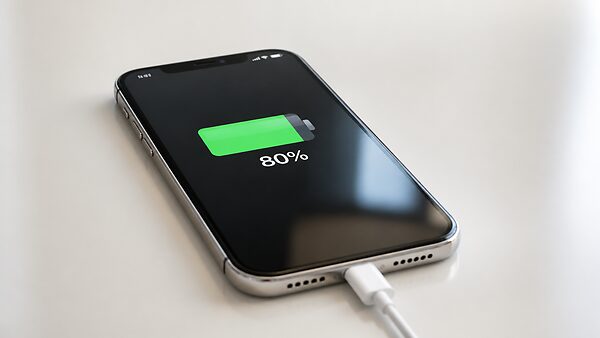
Smartphone screen showing a battery charge level around 80 percent Insights

Charging 20 to 80 %: myth or truth?

It is the advice everyone repeats: never charge your battery to 100 %, stay between 20 and 80 %. Sensible reflex or urban legend that complicates your life for nothing? We dug into the chemistry behind the rule to sort what really matters from what is just overkill.

Yoni Marchal-Laporte Published on July 16, 2026 by Yoni
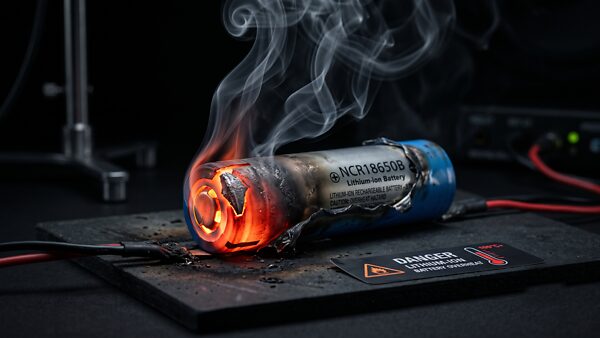
Overheating lithium battery cell illustrating the phenomenon of thermal runaway Insights

Why a lithium battery catches fire

A phone that swells, a scooter that bursts into flames, a plane that bans power banks from the hold: behind these images lies one and the same phenomenon, thermal runaway. We explain simply what happens inside a lithium cell that ignites, what triggers it, and above all how to avoid it day to day.

Julien De Jurquet Published on July 16, 2026 by Julien
Portable solar charging of a power station with a photovoltaic panel Insights

Solar charging: the reality

Recharging your devices, or even a whole power station, from the sun: the dream of self-sufficiency is appealing. But between the power printed on a panel and what it actually produces, the gap can be surprising. As a solar engineer, I will tell you straight what solar charging allows, and what you should not expect from it.

Julien De Jurquet Published on July 6, 2026 by Julien