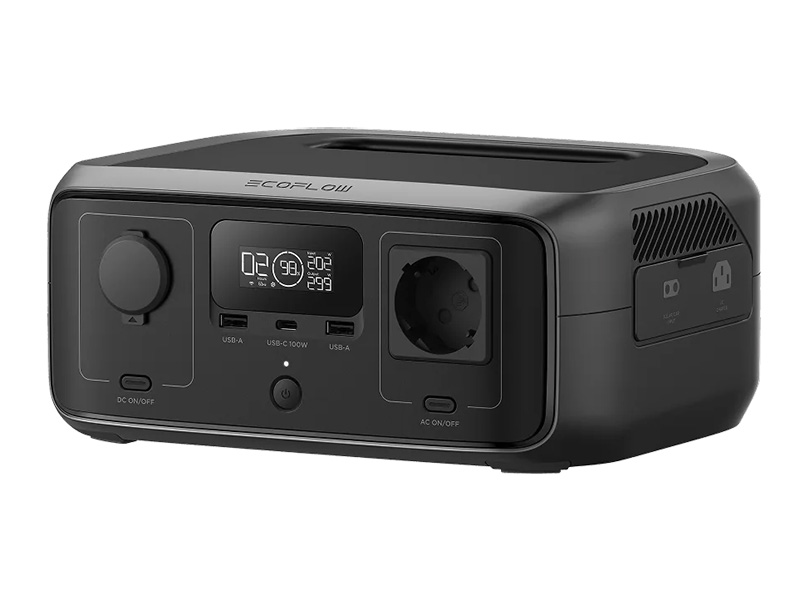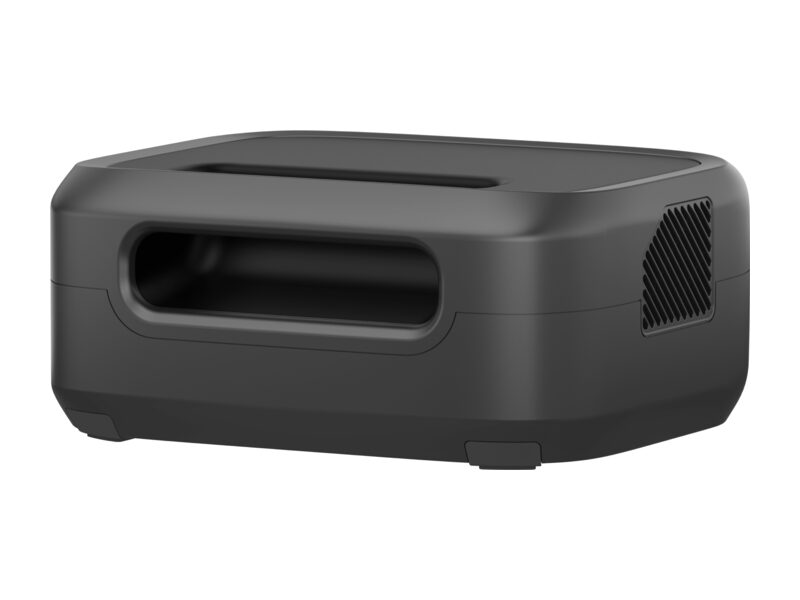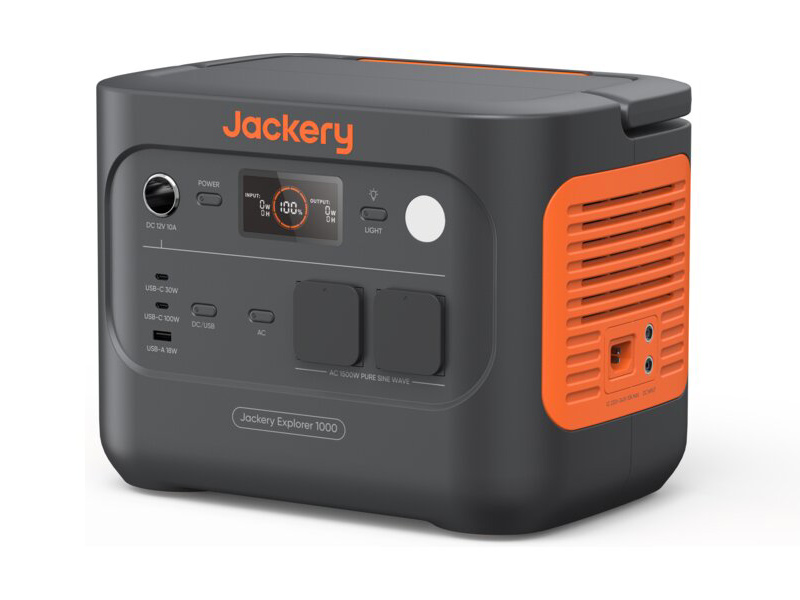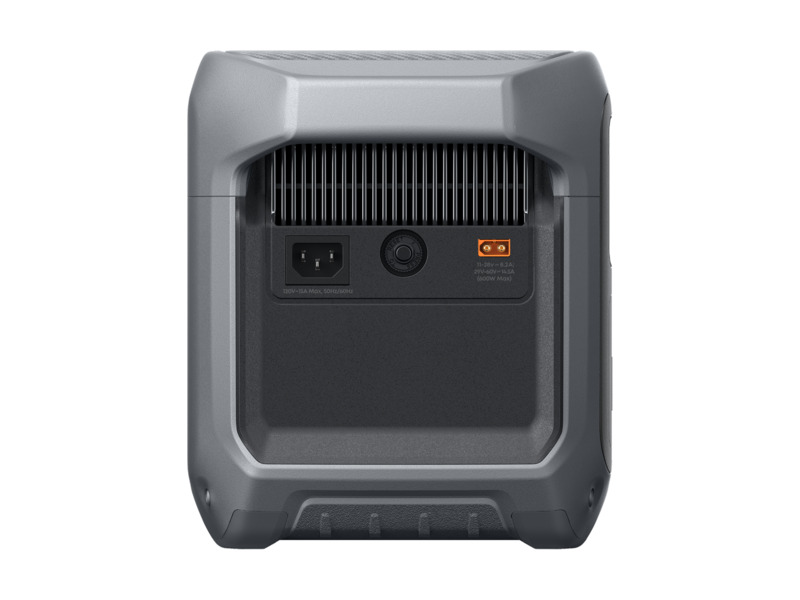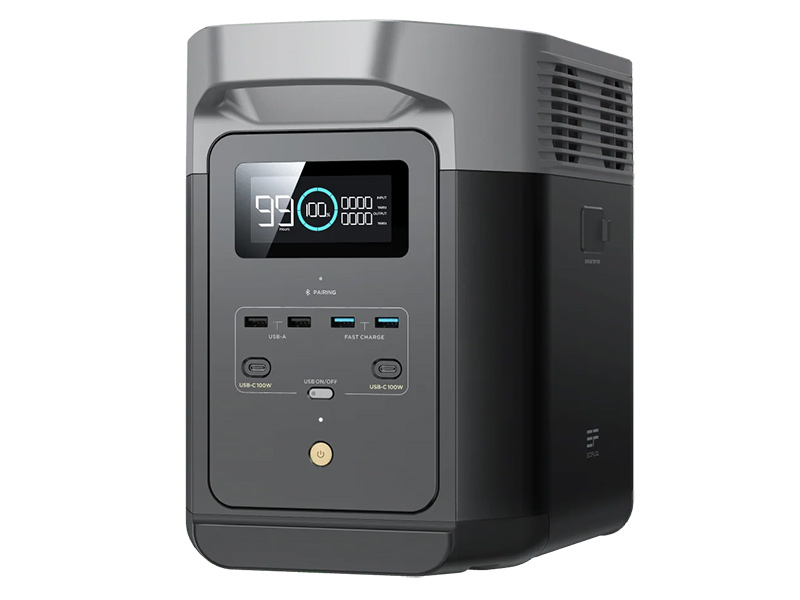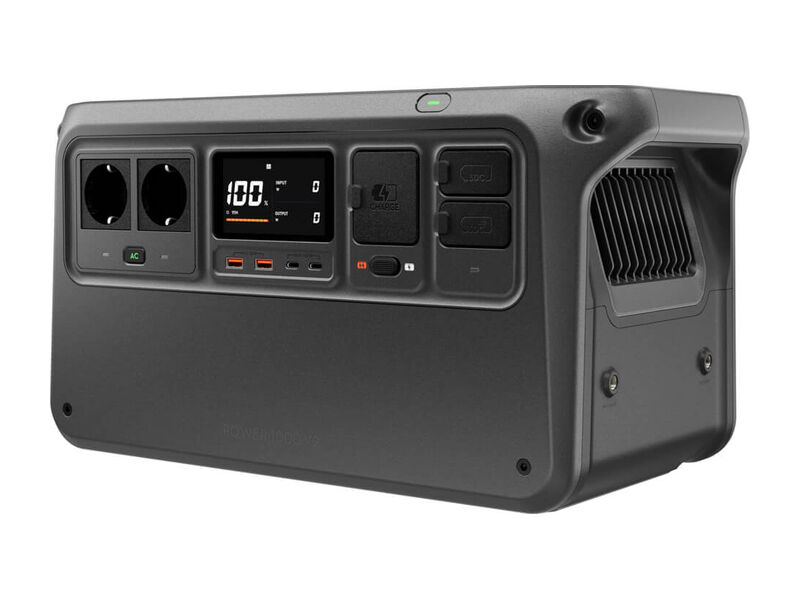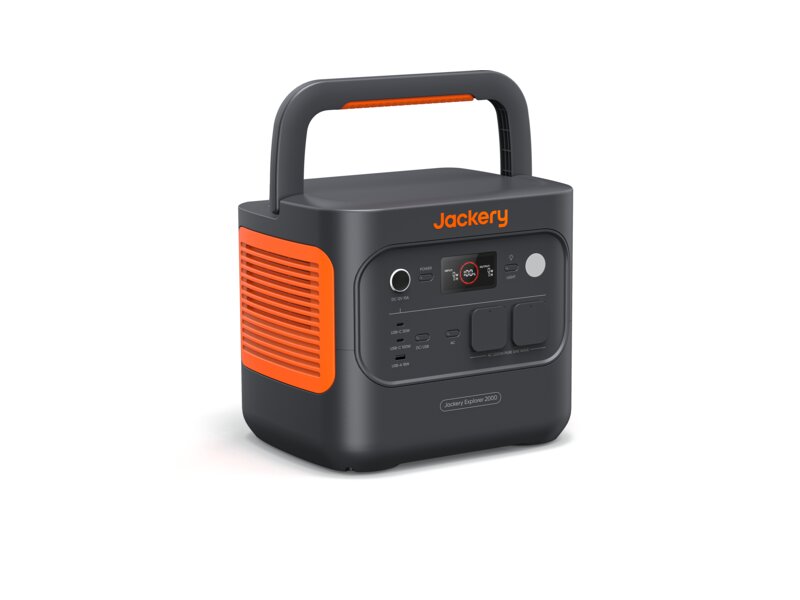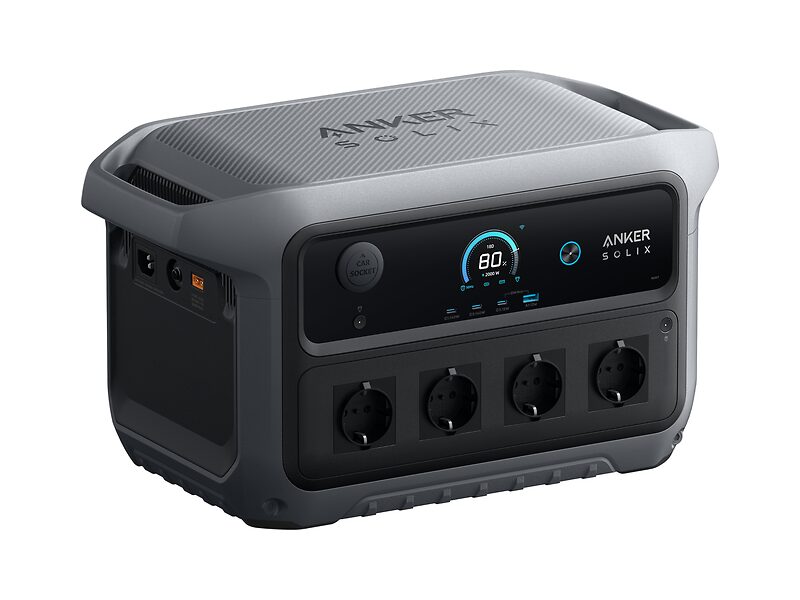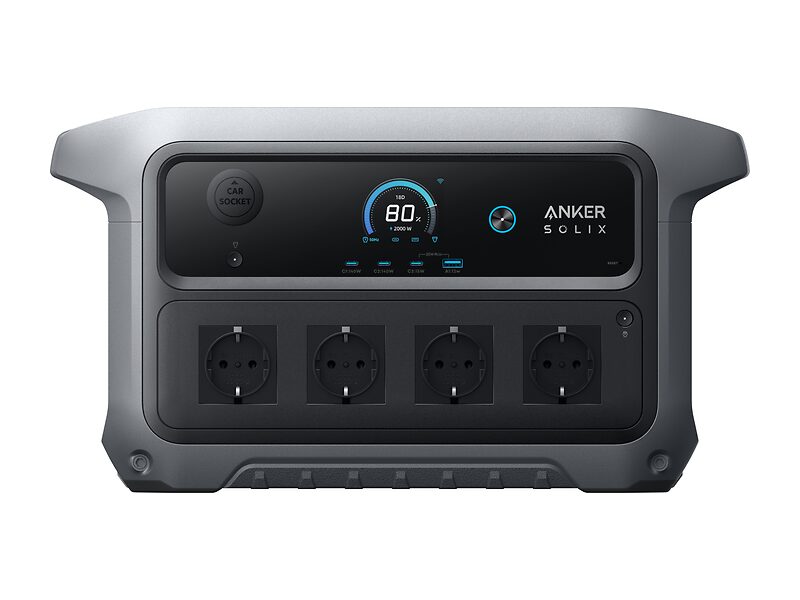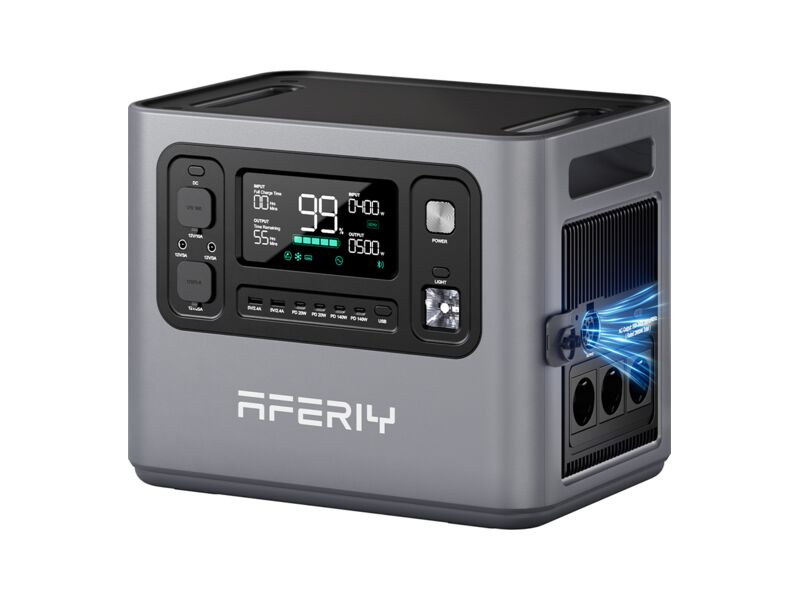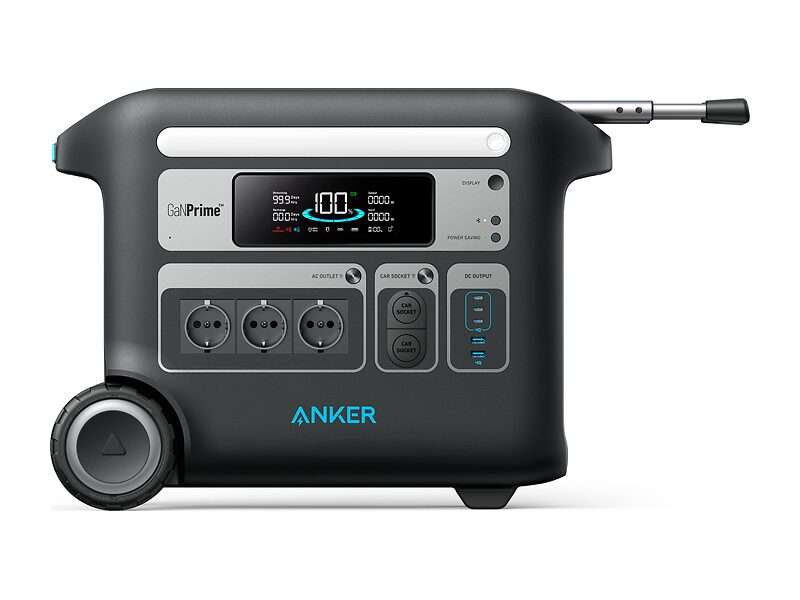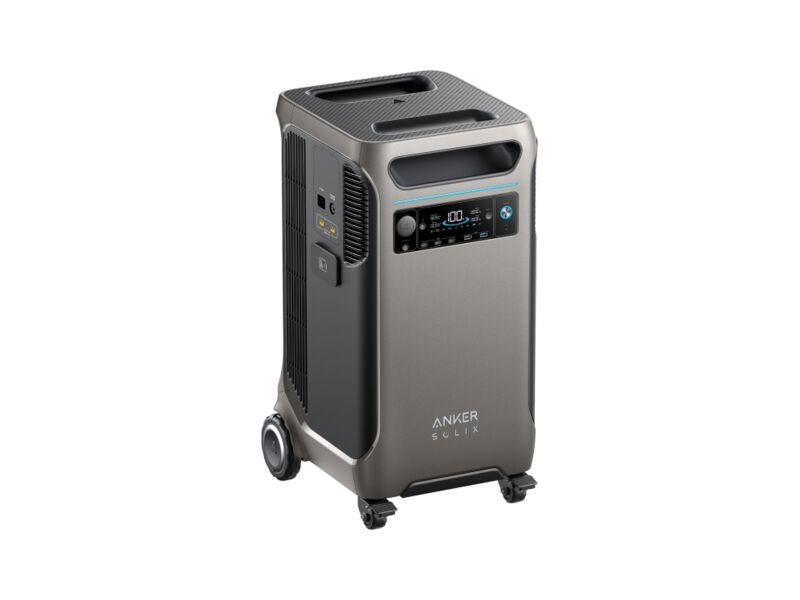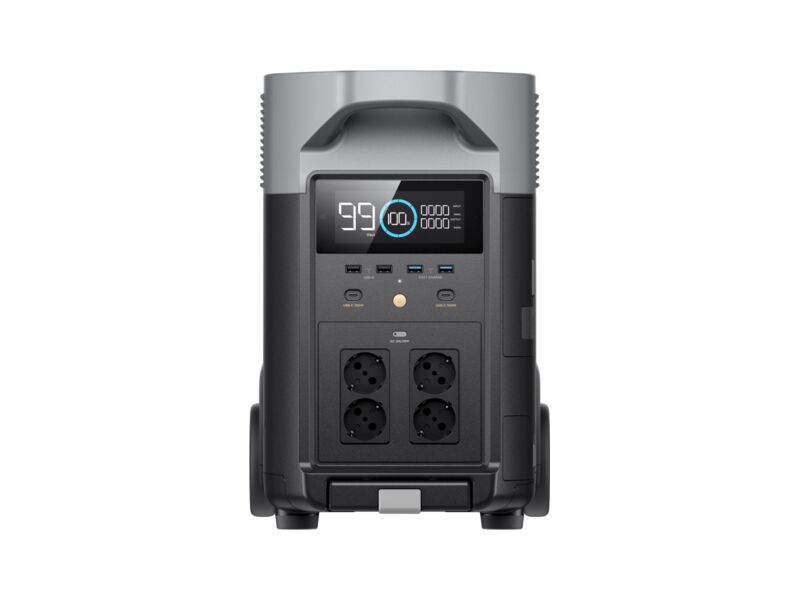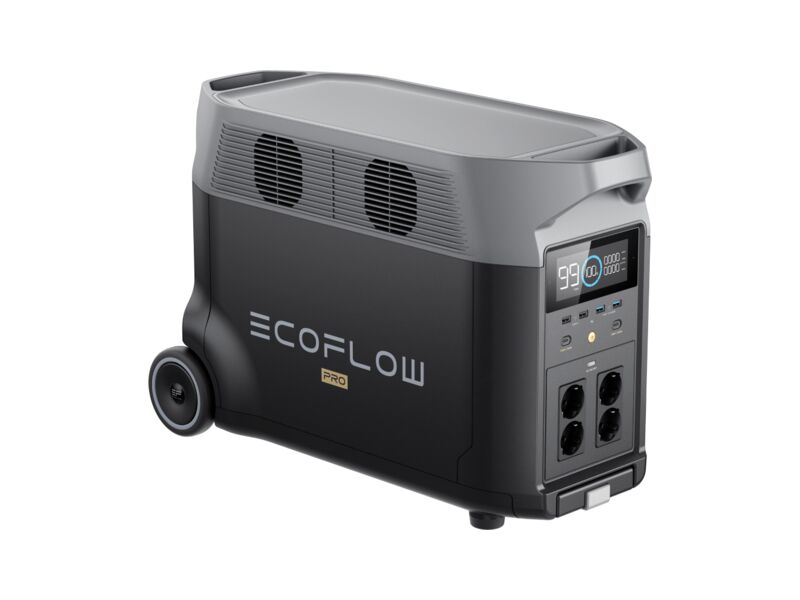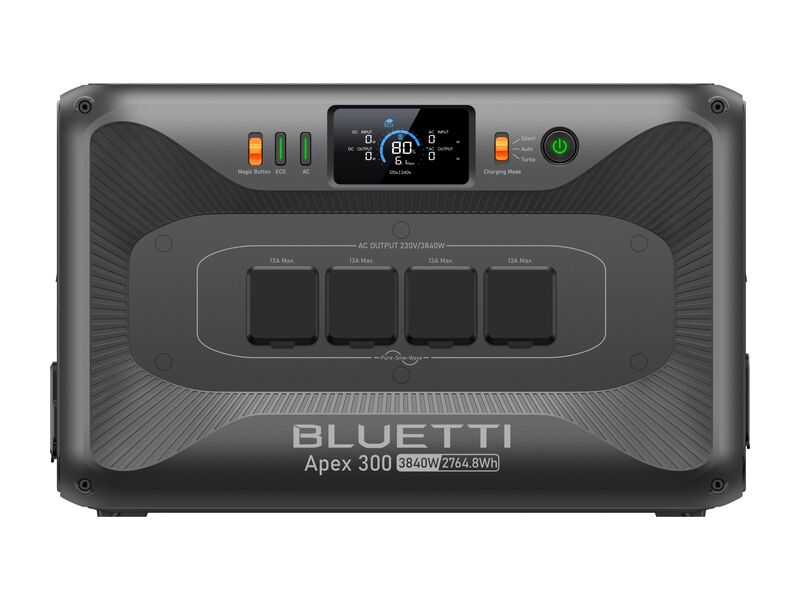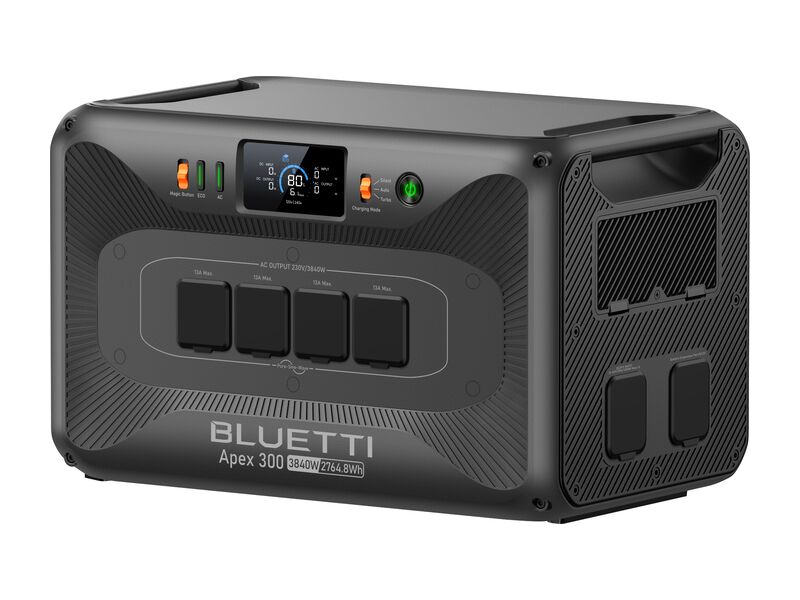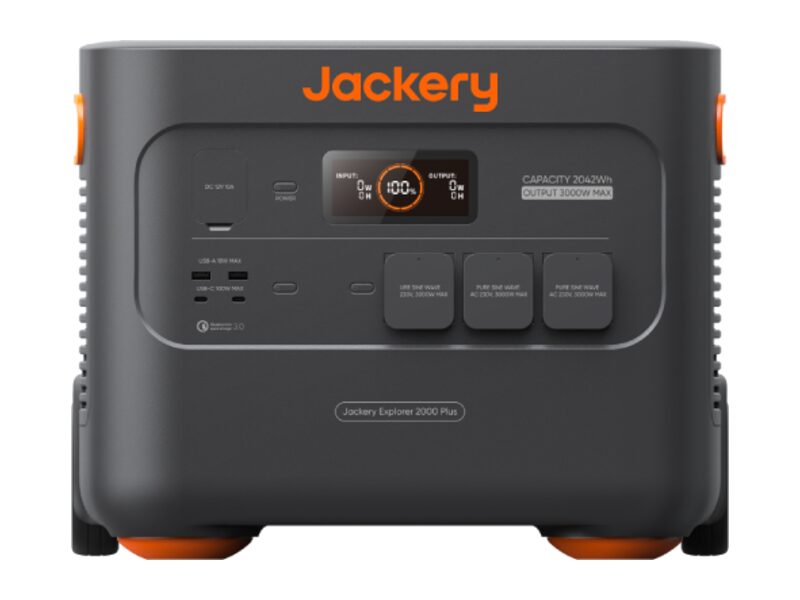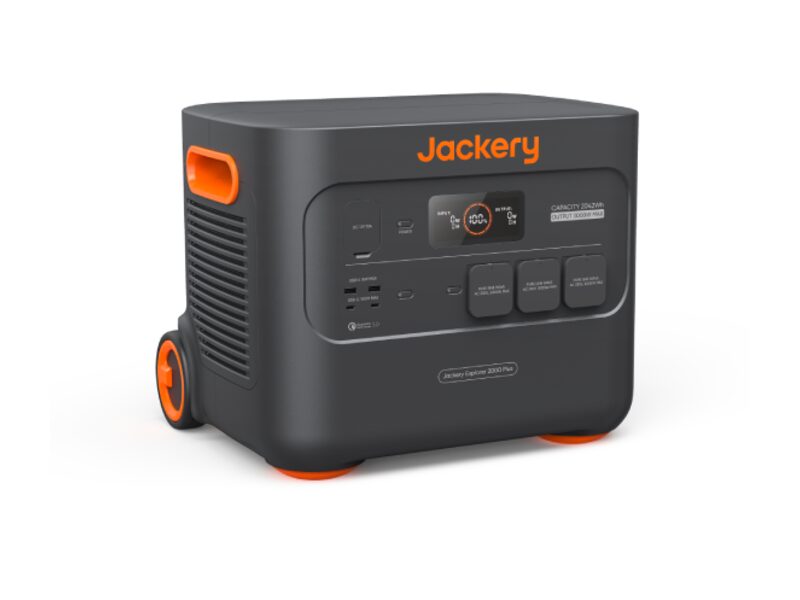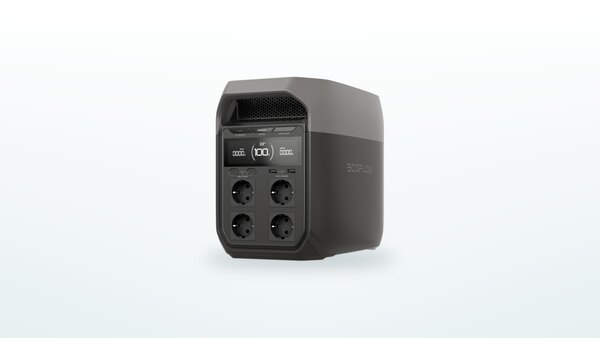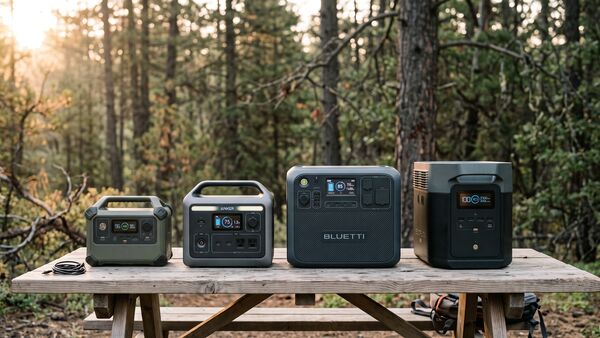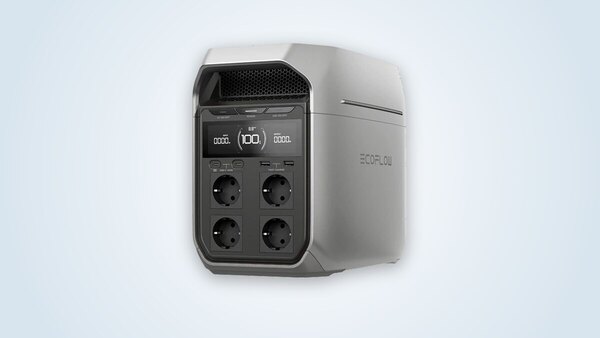
We are pleased to present the best portable power stations in 2026, sorted by capacity to help you choose.
When pocket USB power banks no longer offer enough capacity or power, the power station (or portable energy station) takes over. These portable batteries store electricity to power your devices in both 12V and 230V, silently and with no emissions. While camping, in a van, on a 4x4 trip, on a remote site, on a boat, in a motorhome or even at home during an outage, they can get you out of many situations. To make things easy, we have sorted our selection by capacity (in Wh): it is the most meaningful buying criterion, from the compact, lightweight model for travel to the very high-capacity and expandable stations able to run part of your home. If you need unlimited runtime with fuel, take a look at our portable generators instead.
Up to 500 Wh: light and easy to carry, these compact stations are perfect for travel, remote work, a weekend camping trip or emergencies. They easily recharge phones, tablets, laptops and small appliances while fitting in a bag. Here are the best ones by our standards.
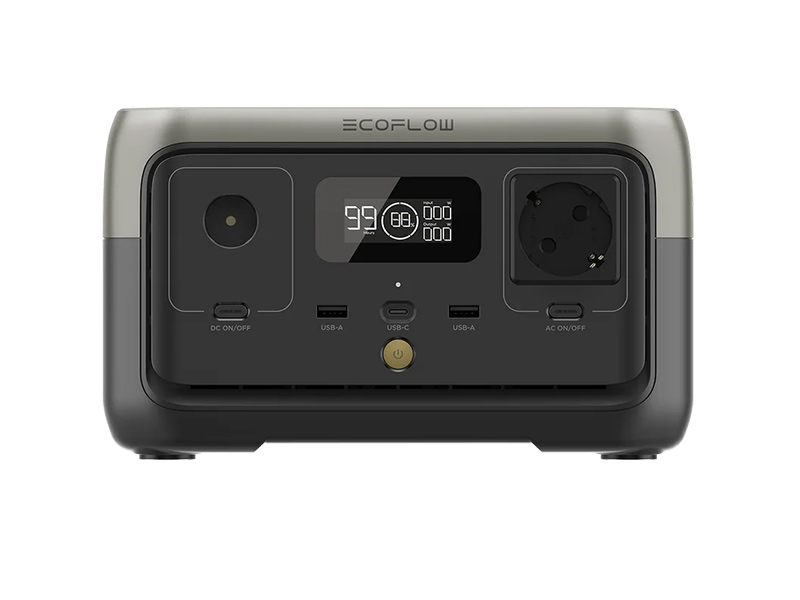
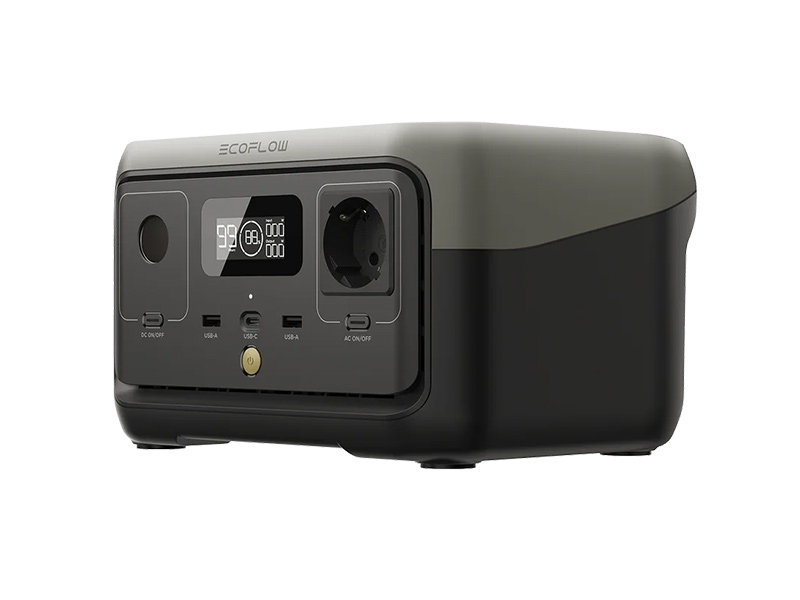
The fastest charging portable power station in its class: fully recharged in one hour, the River 2 follows you from campsite to home backup.
Capacity: 256 Wh, LFP (LiFePO4) battery
Power: 300 W, up to 600 W with X-Boost
Recharge: 0 to 100% in 60 min from the wall
Weight: 3.5 kg
Lightning recharge, 3000+ cycles and 5-year warranty
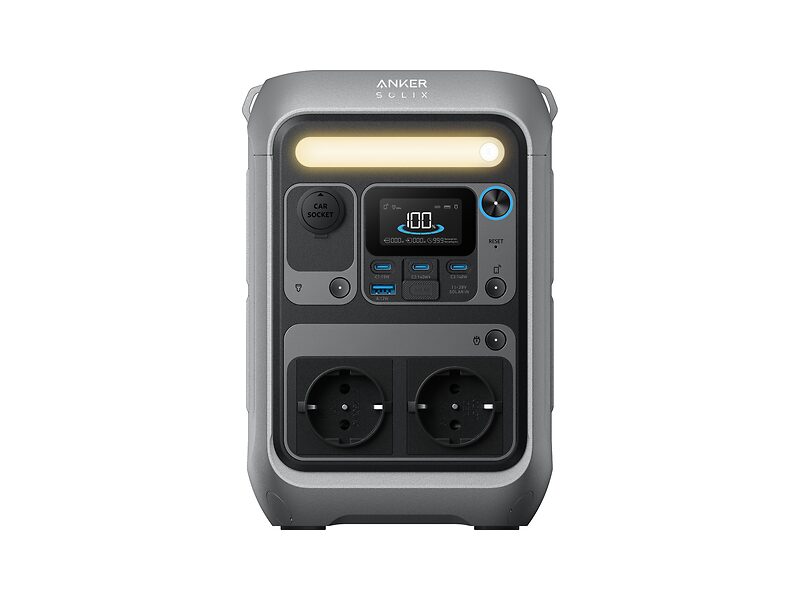
Compact and lightweight, the EcoFlow River 2 is the portable power station of choice for keeping your devices running far from the grid. Its LiFePO4 battery fully recharges in one hour from the wall, a record in its class, and withstands over 3000 cycles. Camping, van life or a power outage, it powers smartphones, laptops, lighting and small appliances, all controlled from the EcoFlow app.
After several weeks with the River 2, the first thing that stands out is how fast it recharges: plug it in while you pack your bag and it is full before you even leave. On a camping weekend it easily handled two smartphones, an LED lamp and a few laptop top-ups, with room to spare. Controlling it from the app is handy for capping the charge speed and protecting the battery, and the screen shows remaining runtime at a glance. We also liked charging on the move via the car socket, which tops it up during drives. Two honest downsides: the fan is audible when you draw a lot of power or during fast charging, and 256 Wh drains quickly as soon as you plug in a hungry device such as a kettle or a heater. Nothing to worry about at this price. For nomadic backup power or a light home safety net, it is an excellent entry point, reliable and long lasting thanks to its LFP battery.
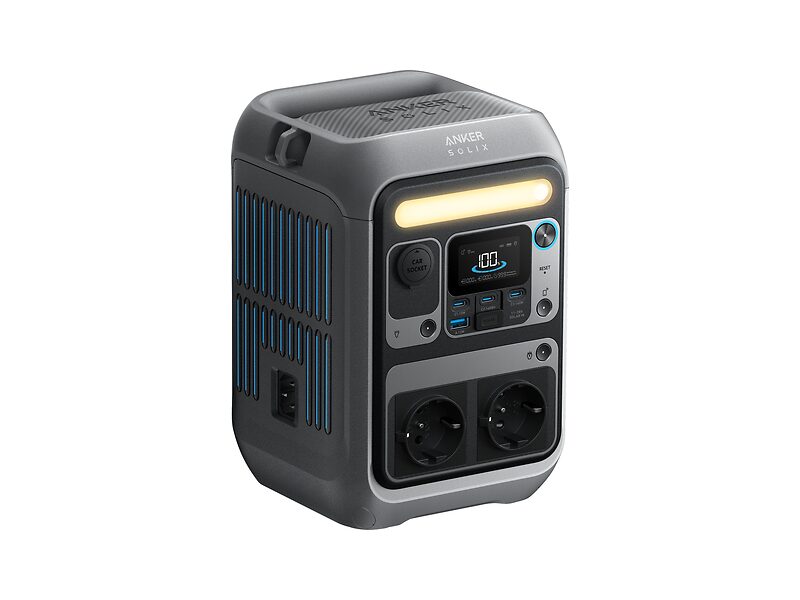
288Wh, two mains sockets and a 140W USB-C port in an ultra-compact, quiet body (25 dB): the small station that even recharges a laptop.
Capacity: 288 Wh (LiFePO4)
Output: 300W (600W SurgePad), 2 sockets
USB-C: 140W bidirectional (laptop charging)
Comfort: Built-in light, 25 dB, 0-80% in 50 min
288Wh, USB-C 140W, ultra-quiet
The Anker Solix C300 is a compact 288Wh portable power station, designed for light camping, remote work and emergencies. Despite its small size, it offers two 300W mains sockets (up to 600W with SurgePad) and a bidirectional 140W USB-C port able to charge a laptop and recharge fast. Its LiFePO4 battery is durable, it has a handy built-in light, and it runs ultra-quiet (25 dB at 1 metre). It recharges to 80% in 50 minutes from the mains. A complete, versatile pocket station.
The Solix C300 surprised us with everything it fits into such a compact format: two real mains sockets, a 140W USB-C port that charges a laptop at full speed, and even a handy light for camping or a power cut. The 300W output (600W in SurgePad) is enough for most small appliances, and we especially like its quiet, at 25 dB you forget it completely on a bedside table or desk. The recharge is fast for the category, 80% in fifty minutes from the mains, and the 140W USB-C port also serves to recharge it quickly. The retractable handle and small footprint make it a true pocket station you take without thinking. Two honest caveats: 288Wh is a backup capacity, perfect for USB devices, a mini fridge or an evening, but not to last several days, and the solar input caps at 100W. For a compact, complete and quiet station, it is a success at excellent value.
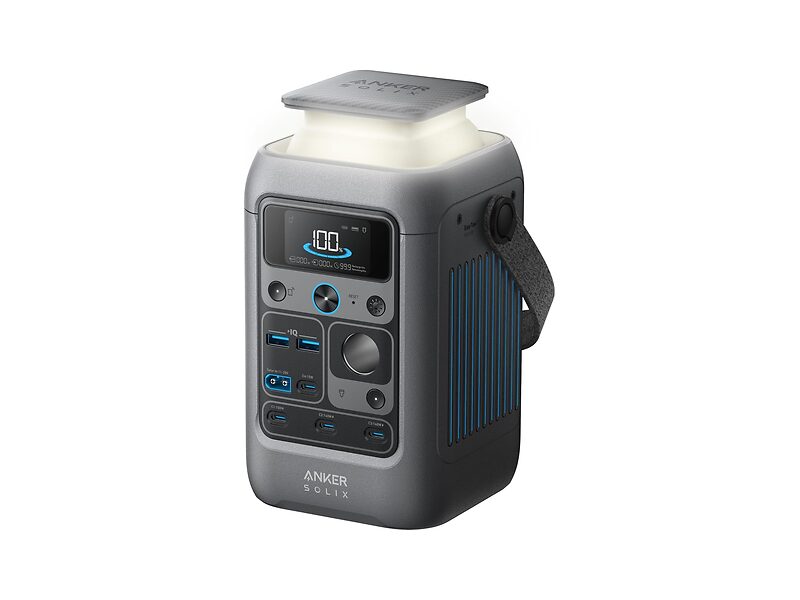
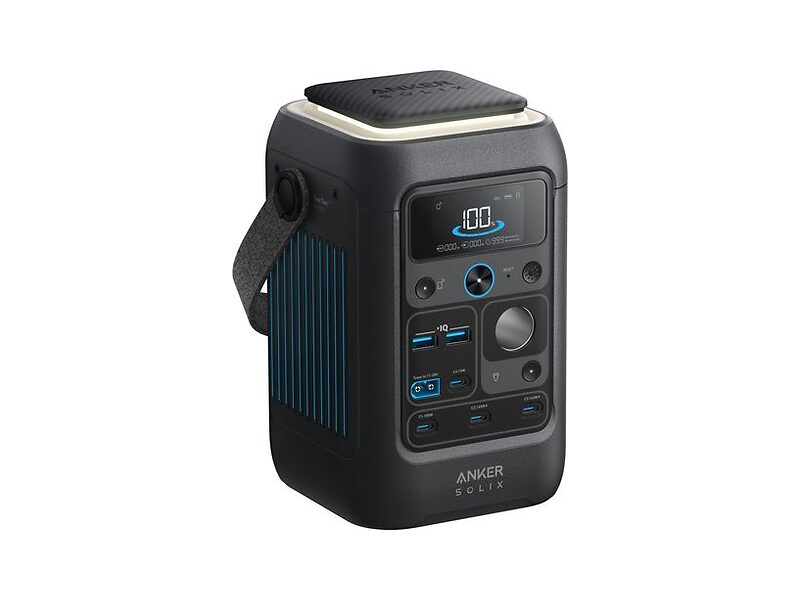
288Wh, 100% USB-C with four 140W ports: the pocket station that charges four devices, laptop included, with no inverter and no losses. Light and portable.
Capacity: 288 Wh / 90,000 mAh (LiFePO4)
Output: 100% USB-C, four 140W ports
Ports: USB-C 140W, USB-A, 12V output
Comfort: Built-in light, strap, solar charging
288Wh 100% USB-C, four 140W ports
The Anker Solix C300X DC is a compact 288Wh (90,000 mAh) portable power station that goes all-in on direct current and USB-C. With no AC inverter, it avoids conversion losses and powers your devices for longer through four 140W USB-C ports (several bidirectional), a USB-A port and a 12V output. Enough to charge up to four devices at once, laptop included. Its LiFePO4 battery is durable, it has a built-in light and a carry strap, and it recharges on solar. The versatile portable energy companion for camping and outdoor work.
The C300X DC takes the opposite approach to classic small stations: here, no mains socket, everything goes through USB-C, and it is remarkably effective. You plug the phone, tablet and laptop straight into its 140W ports, with no inverter, which avoids losses and extends real-world runtime. With four 140W USB-C ports, you charge a MacBook at full speed while powering three other devices, real comfort in remote work or a van. Its 288Wh in a compact format slip easily into a bag thanks to the supplied strap, and the built-in light comes in handy while camping or during an outage. Solar charging lets you stay self-sufficient for several days. Two honest caveats: the absence of a mains socket restricts it to USB and 12V devices, you cannot plug in a small 230V appliance, and 288Wh is a backup capacity. But to charge your portable devices fast and loss-free, in a light and versatile format, it is an excellent choice.
A modular station that charges wirelessly: 858Wh, a built-in Qi2 15W charger and a removable Rapid power bank you take on its own. Clever and versatile.
Capacity: 858 Wh (286Wh + EB600 battery)
Output: 600W (X-Boost up to 1200W)
Wireless: Qi2 15W charging + removable Rapid bank
Recharge: 0 to 100% in 1 h, UPS < 10 ms
Modular, Qi2 wireless, 858Wh
The EcoFlow River 3 Max Plus (Wireless) reinvents the portable station with a modular design and built-in wireless charging. It combines the River 3 Plus station (286Wh) with an EB600 extra battery to reach 858Wh, delivers 600W (1200W with X-Boost) and includes a Qi2 15W inductive charger plus a magnetic Rapid 5000mAh power bank, removable to travel light. Full recharge in 1 h, under-10 ms switchover and quiet operation (under 30 dB) complete a station as smart as it is versatile.
The River 3 Max Plus Wireless is one of the cleverest stations we have tested. The modular concept hits home: you keep the large capacity (858Wh) at home or camp, and detach the small magnetic Rapid 5000mAh power bank to head out with just enough to recharge your phone, wirelessly at that. The built-in Qi2 15W inductive charger is a real everyday comfort, you set the phone on it without looking for a cable. On performance, the 600W (1200W in X-Boost) power most devices, the full recharge in one hour is excellent, and the quiet (under 30 dB) makes it perfect indoors, even at night. The under-10 ms switchover secures sensitive devices during a cut. Two caveats: this premium modular concept costs a little more than a classic station of equivalent capacity, and the wireless part will mainly appeal to those living in the portable ecosystem. But for anyone wanting a versatile, quiet and genuinely modern station, it is an original success.
Compact, quiet and fully recharged in just one hour, the EcoFlow River 3 Plus delivers reliable power wherever you happen to need it.
Capacity: 286 Wh (expandable to 858 Wh)
Power: 600 W (1200 W X-Boost)
Recharge: ≈ 1 h from mains, ≈ 1.5 h solar
Weight: 4.7 kg
Full recharge in 1 h, expandable to 858 Wh, built-in UPS
With its 286 Wh LiFePO4 battery and 600 W of power (up to 1200 W peak), the River 3 Plus effortlessly runs laptops, lighting, small appliances and camping gear. Its strength: a full recharge in about one hour from the mains, a solar input up to 220 W and a capacity expandable to 858 Wh. Quiet (under 30 dB), rugged and equipped with a UPS function, it suits home-office backup as much as weekends in a van or off-grid.
We lugged the River 3 Plus around for several weeks, from the desk to the campsite, and it quickly earned its place. First good point: plugged in on a Friday evening, it goes from nearly empty to full in about an hour, so no more stress over a forgotten charge. Out in the field, it powered a mini fridge, an LED string light and two phones through a whole evening without flinching, still with charge to spare by morning. Another real plus is the quiet: sitting inside the tent you forget it is even there, where other models have their fan droning away. Its UPS function even saved us during a brief power cut at home, the router and NAS did not notice a thing. Two honest downsides: 286 Wh shows its limits over several days of heavy use (the add-on battery then becomes essential), and the handle, handy as it is, could be a touch more comfortable. Otherwise it is hard to do better in this price range: fast charging, LFP longevity and versatility make it an excellent first power station.
Compact but tough: the Vtoman FlashSpeed 600 delivers 600W (1200W peak) with an expandable LiFePO4 battery, to power up to 9 devices when camping or as backup.
Power: 600W (1200W peak)
Capacity: 499Wh LiFePO4 (expandable)
Outputs: 9 outputs (2 AC, USB-C 100W, USB-A, 12V)
Recharge: 0 to 80% in 1 hour
Compact, expandable LiFePO4 and fast charging
The Vtoman FlashSpeed 600 is a compact 499Wh portable power station, able to deliver 600W continuous and 1200W peak. Its LiFePO4 battery offers over 3000 cycles and up to 10 years of life, and its capacity is expandable with an add-on battery (up to about 2047Wh). It offers up to 9 outputs (2 AC outlets, USB-C 100W, USB-A QC3.0, 12V output), fast charging (0 to 80% in 1 hour) and a solar input. Ideal for camping, campers, fishing or power cuts.
The Vtoman FlashSpeed 600 is one of those compact stations that tick many boxes on a contained budget. We took it on a camping weekend and it kept up with no trouble: charging phones, running an electric cooler, a fan and LED lighting, with margin to spare. What we like first is its LiFePO4 battery, more durable and safer than conventional lithium, with a claimed life up to 10 years. Its 600W covers most small devices, and the 1200W peak helps start slightly more demanding equipment. Fast charging is a real plus: you get 80% back in an hour from the mains, handy before setting off. The option to add an expansion battery to climb around 2000Wh is clever if needs grow. The downsides: 499Wh remain limited for large devices or multi-day runtime, and the electronics make some noise under heavy load. But for a versatile, expandable compact, it is an excellent starting point.
Off-the-charts endurance: 48000mAh of LiFePO4, 300W to charge a laptop, a control display, an LED light and a carry handle.
Capacity: 48,000 mAh (LiFePO4)
Power: 300W, USB-C 140W (PD 3.1)
Outputs: 5 USB ports, digital display
Recharge: 140W bidirectional, 3000 cycles
48000 mAh, 300W, LED light, handle
The Ugreen 300W 48000mAh is a giant power bank, halfway between a power bank and a portable power station. With 48,000 mAh of LiFePO4 cells (3000 cycles) and 300W of total power, including a 140W USB-C port, it charges a laptop at full speed and several phones for days. It has a digital display, a three-mode LED light and a carry handle, making it an ideal companion for camping, the van or power cuts. For flights, its capacity (in the 100 to 160 Wh range) requires the airline's prior approval.
We took the Ugreen 300W 48000mAh on a weekend van trip, and it is the kind of battery that changes things when you are far from a socket: it charged the whole group's phones for two days, powered a laptop for a working day, and served as a backup light in the evening thanks to its built-in LED. The handle is well thought out for carrying it, and the display lets you track precisely what is left. We really like the LiFePO4 cells: you know you keep the battery for many years without it degrading. Recharging is quick for this size, about an hour and a half at 140W. On the other hand, you have to accept the weight and bulk, you do not slip it into a pocket, and for flying, its capacity requires the airline's prior approval. The price is significant, but relative to what it offers, it stays reasonable next to a power station. For anyone after a massive, durable USB reserve that is practical outdoors, it is an excellent choice.
Affordable and backed by a 6-year warranty, the Allpowers R600 delivers 299 Wh, 600 W and a one-hour recharge, plus a built-in wireless charger.
Capacity: 299 Wh
Power: 600 W (1200 W peak)
Recharge: 0 to 100% in about 1 h from mains
Weight: 5.8 kg
6-year warranty, full charge in 1 h and built-in wireless pad
With 299 Wh, 600 W (1200 W peak) and a full recharge in one hour, the Allpowers R600 runs a laptop, lighting, small appliances and camping gear. Very complete for its size (2 AC outlets, USB-C, a 15 W wireless charging pad), with a UPS function and an LFP battery backed by a 6-year warranty, it targets the best features-to-price ratio for van life, off-grid trips or home backup.
We used the R600 for several weeks, and for the price it is a pleasant surprise. The first good point is charging: left on a socket over lunch, it comes back full, barely over an hour. Out and about, its 299 Wh covered an evening of camping with an electric cool box, an LED string light and topping up two phones, without strain. We liked the little wireless charging pad on top: drop the phone on it and you are done, no hunting for a cable. The two AC outlets and USB-C ports are plenty for portable use. The UPS function bailed us out during a brief power cut at home, the router did not notice. And above all, the 6-year warranty is genuinely reassuring on a product at this price. Two honest downsides: 299 Wh is a top-up capacity you have to manage, and the lack of battery expansion limits future-proofing. But at this price it is hard to be picky: it is an excellent entry point into portable power.
268Wh and 600W in an ultra-compact station under 5 kg, recharging to 80% in 30 minutes: the ideal entry-level pick for camping and top-ups.
Capacity: 268Wh (LiFePO4 battery)
Power: 600W continuous, 1200W peak
Outputs: 2 AC outlets, USB-C 100W, USB-A, car socket, 15W wireless
Recharge: 80% in 30 min (430W fast charge), 200W solar
80% recharge in 30 min in just 4.6 kg
The Bluetti EB3A is a compact 268Wh portable power station with a LiFePO4 battery, delivering 600W continuously (1200W peak via Power Lifting). Light (4.6 kg), it recharges to 80% in just 30 minutes thanks to its 430W fast charge. It packs many outputs: 2 AC outlets, a USB-C 100W, USB-A, a car socket and a 15W wireless charging pad. Battery rated for 2500 cycles and controlled via the Bluetti app. An excellent budget top-up station.
The EB3A is the little station that does a lot for its price. We first used it camping to run a cool box, lighting and to charge phones and a camera: its 268Wh is plenty for a light weekend, and at 4.6 kg you move it without thinking. The real surprise is charging: on the mains, it is back to 80% in a short half hour, which is impressive in this segment and very handy when you leave in a rush. The small wireless pad on top is a nice bonus for the phone. Just do not overestimate its 600W: it is perfect for electronics and small appliances, but a kettle barely gets through via Power Lifting mode and drains the runtime fast. For portable top-ups or a small backup reserve, at this price it is a very good choice, reliable and well finished.
99Wh and 128W in a palm-sized body (965 g): the ideal mini station to fly with, charge a laptop and keep your devices running.
Capacity: 99.2Wh / 31000mAh (LiFePO4)
Power: 128W (USB-C 100W In/Out)
Weight: 965 g, palm-sized
Recharge: Full in about 2 h
99Wh, flight-friendly, in just 965 g
The Jackery Explorer 100 Plus is a mini portable power station of 99.2Wh (31000mAh) with a LiFePO4 battery, delivering 128W. Palm-sized and weighing just 965 g, it is carry-on friendly for flights and slips into a bag. Its 100W USB-C port works as input and output, enough to charge a laptop, a smartphone, a drone or a tablet. Its LFP battery lasts 2000 cycles, and it recharges fully in about 2 hours.
The Explorer 100 Plus changed the way we travel light. Under the 100Wh mark, it goes through airport security into the cabin without trouble, and at 965 g you forget it in the camera bag. On the move, its 100W USB-C port charged a MacBook Air at full speed while keeping enough to top up a smartphone twice, exactly what you want from a backup reserve. We like the clear screen showing remaining runtime and the very tidy finish. It obviously does not replace a real station for AC outlets, it only has USB ports, but that is not its purpose. For a nomadic remote worker, a videographer or a traveller who just wants to keep USB-C devices charged without lugging a brick, it is the smartest, most portable solution we have tested.
Compact and clever, the Allpowers S300 Plus (288 Wh) combines USB-C 100 W, a wireless charger, an LED light and app control.
Capacity: 288 Wh
Power: 300 W (600 W peak)
Recharge: about 1 h 30 from mains
Weight: 3.4 kg
USB-C 100 W, wireless charger, LED light and Bluetooth app
Compact and light (3.4 kg), the Allpowers S300 Plus packs 288 Wh and 300 W (600 W peak) to charge a smartphone, a laptop, lighting and small gear. Very well-equipped for its format: USB-C 100 W, a wireless charging pad, an LED light and ALLPOWERS app control. Full recharge in 1.5 hours from the mains, solar and car compatible. Ideal as a first top-up portable station for camping, van life or home office.
We tested the S300 Plus for several weeks, and for a station this size it is surprisingly complete. Compact as a small shoebox and light (3.4 kg), it fits anywhere. What stands out first is the USB-C 100 W port: rare at this format, it charges a laptop at full speed, where many rivals cap at 60 W. The wireless charging pad on top and the built-in LED light are two well-thought-out extras for camping or an outage. We also liked the Bluetooth app, which lets you monitor charging and switch ports off remotely, not that common on such an affordable model. Its 288 Wh and 300 W suit small and medium devices (phones, laptops, lighting, a router, small gear), not running large appliances. Two honest downsides: the 300 W output limits its uses, and a few users report a perfectible finish on the fans. But at under 200 euros, with this level of equipment, it offers formidable value for a first portable station.
288Wh and 300W in a station of just 3.75 kg, with AC outlets and 100W USB-C: the ideal companion for light camping and nomadic remote work.
Capacity: 288Wh (LiFePO4 battery)
Power: 300W continuous, 600W peak
Outputs: 2 AC outlets, 2 USB-C 100W, 1 USB-A
Recharge: About 2 h from the mains, solar compatible
AC outlets and 100W USB-C in 3.75 kg
The Jackery Explorer 300 Plus is a compact 288Wh portable power station with a LiFePO4 battery, delivering 300W continuously (600W peak). Light (3.75 kg), it combines 2 AC outlets, 2 USB-C ports up to 100W and a USB-A to power and charge several devices. Its LFP battery lasts 3000 cycles, a lifespan of up to 10 years, and it recharges in about 2 hours from the mains or via a SolarSaga solar panel.
The Explorer 300 Plus is the little station you take everywhere without thinking. At 3.75 kg, it fits in one hand and slips into a backpack, but unlike a simple power bank it offers real AC outlets: we plugged in a small camera charger and a lamp while charging a laptop over the 100W USB-C. Its 288Wh is plenty for a weekend of bivouac for two (phones, lighting, drone) or as a backup reserve at home. We like the LiFePO4 battery, far more durable than conventional lithium, and the two-hour recharge. Its limits are logical for the size: 300W is not enough for large appliances, and there is no companion app. But for a reliable, compact and well-finished top-up station, it is a safe bet.
256Wh and 300W in an ultra-compact format: the little station that powers a laptop, cameras and small appliances camping or in remote work.
Capacity: 256 Wh
Power: 300 W (600 W peak)
Outputs: 230V socket, USB-C, USB-A, 12V
Format: Compact and light
256Wh, 300W, mains socket, portable
The Allpowers Volix P300 is a compact 256 Wh portable power station that delivers 300 W continuous (600 W peak). Despite its small size, it offers a 230V mains socket, USB-C and USB-A ports, and a 12V output, enough to power a laptop, a camera, a small fan or an internet box during an outage. Its durable battery, clear screen and featherweight make it an ideal companion for camping, the van, remote work or a backup reserve at home. Simple, light and versatile.
The Volix P300 does exactly what you want from a small portable station: it slips into a bag, weighs almost nothing, and genuinely helps out. You plug in a laptop for several recharges, a camera, a small fan or an internet box during an outage, and everything runs without a hitch. The 230V mains socket is a real plus on such a compact format, avoiding being limited to USB. The screen is clear and shows the essential info at a glance. We also like the USB-C for charging phone and tablet at good speed. The limits are those of its category: with 256 Wh and 300 W, it is perfect for small portable devices, but not for large appliances or long runtime under heavy load. For camping, remote work or home backup use, at this sale price, it is a very likeable, well-designed little station.
A 100% DC power station of 192Wh barely heavier than a water bottle (1.8 kg): 140W USB-C, long-life LiFePO4 battery, built for lightweight camping.
Capacity: 192 Wh (LiFePO4, 3000+ cycles)
Output: 220W max, 100% direct current (DC)
Ports: USB-C 140W, USB-C 100W, 2 USB-A, car port
Weight: 1.8 kg (167 x 115 x 126 mm)
192Wh pure DC in 1.8 kg, 140W USB-C
The EcoFlow Trail 200 DC is an ultra-compact 192Wh power station that goes all-in on direct current: no AC inverter, so no conversion losses, to power lamps, cameras, drones, tablets and speakers for longer. Its LiFePO4 battery lasts over 3000 cycles, it weighs just 1.8 kg and delivers up to 220W, with a 140W USB-C port able to charge a laptop. Rugged (drop and fire resistant), it is the ideal portable power source for wild camping, fishing or a day of filming.
We took the Trail 200 DC out two weekends in a row, wild camping then on a photo session, and its concept won us over: by dropping the AC inverter, EcoFlow wins on both fronts, weight (1.8 kg, it slips into a backpack) and efficiency, because powering a device over USB-C directly avoids the losses of 230V conversion. In practice, you recharge a camera body, a drone, a phone and a lamp without ever draining the battery over a day. The 140W USB-C port is the real asset, it runs a laptop or recharges the station at full speed. The build inspires confidence, drop-resistant shells, and the LiFePO4 battery promises over 3000 cycles, meaning years of use. Two honest caveats: the total absence of a mains socket restricts it to USB and 12V devices (you cannot plug in a small 230V appliance), and 192Wh is a backup capacity, not enough for a long weekend without solar recharging. But to travel light and power your portable devices, it is a success.
From 500 Wh to 1.5 kWh: this is the heart of the market, the best compromise between runtime, weight and price. These versatile stations power most everyday appliances, ideal for a van, a motorhome, a long weekend or light home backup. Discover our selection.
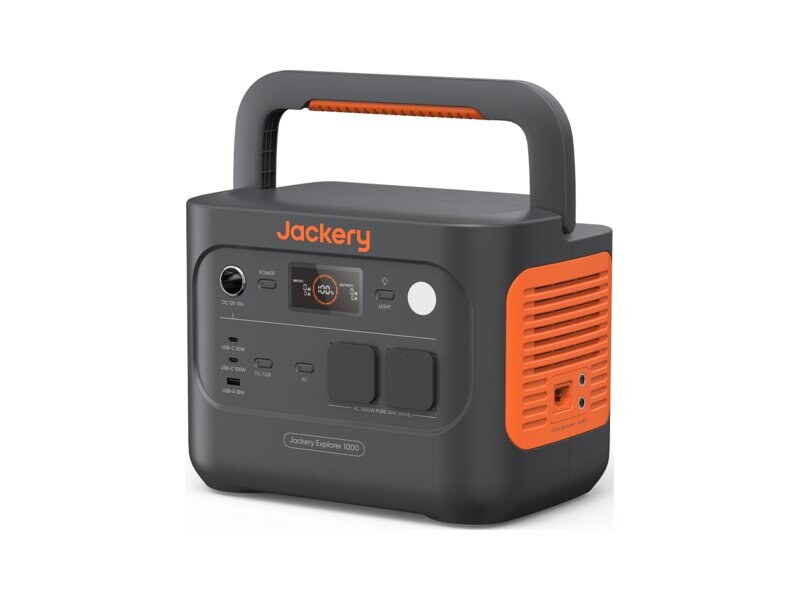
1070Wh and 1500W in a compact, lightweight station: enough to run a fridge, a kettle or all your devices, camping or during a power cut.
Capacity: 1070Wh (LiFePO4 battery)
Power: 1500W continuous, 3000W peak
Outputs: 2 AC outlets, 2 USB-C 100W, 1 USB-A, 1 car socket
Recharge: Full in 1h (emergency mode), 400W max solar
1500W and 1-hour recharge in just 10.8 kg
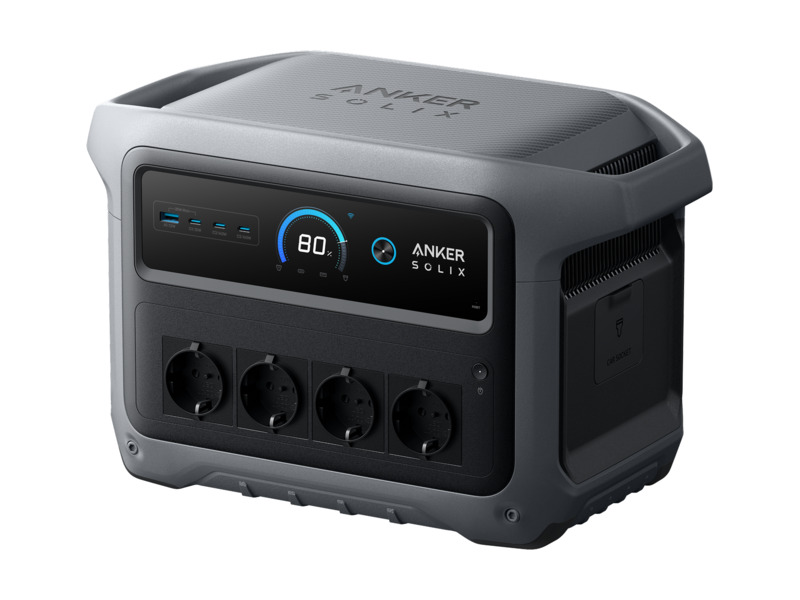
The Jackery Explorer 1000 v2 is a 1070Wh portable power station with a LiFePO4 battery, able to deliver 1500W continuously (3000W peak). Lighter and 23% more compact than the previous generation (around 10.8 kg), it powers up to 6 devices at once via 2 AC outlets, 2 USB-C 100W ports, a USB-A and a car socket. Its ChargeShield 2.0 technology enables a full recharge in 1 hour in emergency mode, and its battery lasts 4000 cycles, a lifespan of up to 10 years. Controllable via the Jackery app.
We carried the Explorer 1000 v2 over several weekends, and it is exactly the format we hoped for from Jackery. At 10.8 kg with a folding handle, it slips into the boot without a fight, yet it still puts out 1500W continuously, enough to run a kettle or an induction hob while camping, which many stations this size cannot do. The 1070Wh easily cover a night of camping fridge plus charging phones and a laptop. Recharging is the real highlight: in emergency mode via the app, we went from 0 to 100% in one hour on a regular socket, and in quiet mode it drops below 30 dB, so you forget it is there. The two 100W USB-C ports are perfect for a MacBook. The only small gripe is the fairly basic screen and the fan spinning up in the fastest mode. Otherwise, it is a solid, well-built, dependable choice.
With 1024 Wh, 2000 W output and a full recharge in 49 minutes via HyperFlash, the Anker Solix C1000 Gen 2 is one of the fastest-charging stations on the market.
Capacity: 1024 Wh (LFP battery, 4000 cycles)
AC output: 2000 W, up to 3000 W peak, 4 AC outlets
Recharge: 0 to 100% in 49 min via HyperFlash, solar up to 600 W
Lifespan: 4000 LFP cycles, about 10 years, 5-year warranty
Full recharge in 49 min, the fastest in its class
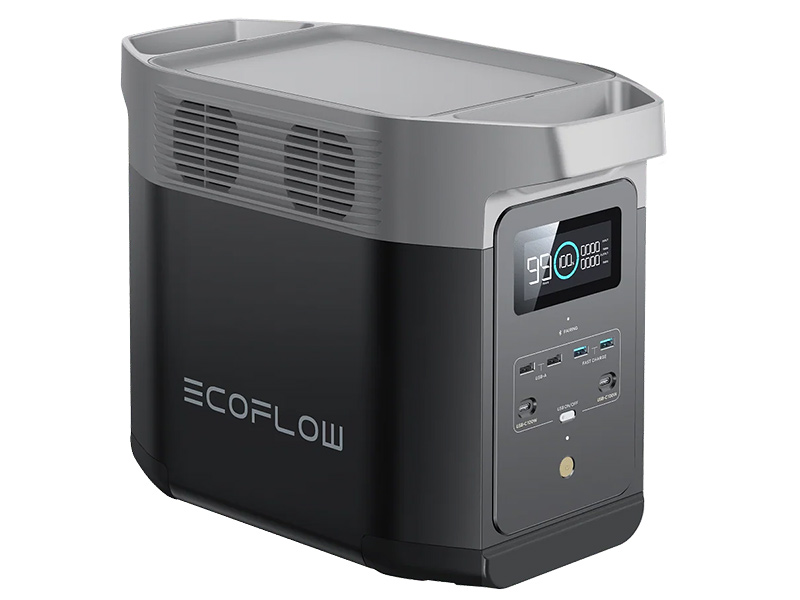
The Anker Solix C1000 Gen 2 is a portable power station with a 1024 Wh LFP battery (InfiniPower, 4000 cycles). It delivers 2000 W continuous (3000 W peak) and fully recharges from the mains in 49 minutes thanks to HyperFlash technology (up to 1600 W input). It accepts 600 W of solar input, features a UL1778-certified UPS function (under 10 ms switchover) and many outputs including 4 AC outlets and 3 USB-C ports (2x140 W). Compact (11.3 kg), app controlled, 5-year warranty.
We put the C1000 Gen 2 through its paces at home and on weekends, and its recharge speed is stunning: barely more than a lunch break and it is full, which changes everything when you leave on short notice. It kept the fridge, the router and two laptops going for a good part of the day, and the UPS switchover during a test outage went completely unnoticed. We love how compact it is (11.3 kg, you move it one-handed) and how quiet it stays at rest. The app lets you switch to UltraFast mode or, conversely, cap the input to quiet the fans, which are a little present during fast charging. Two honest gripes: unlike the older C1000, this generation is not expandable, and 2000 W remains a ceiling for the very largest appliances. As a compact, reliable and ultra-fast-charging station, it is hard to fault.
With 1024 Wh expandable to 3 kWh, 1800 W output and a 0-80% recharge in 50 minutes, the EcoFlow Delta 2 powers almost all your devices, at home or off-grid.
Capacity: 1024 Wh, expandable up to 3040 Wh (LFP battery)
AC output: 1800 W, 2400 W with X-Boost, 2700 W surge
Recharge: 0 to 80% in 50 min on mains, solar up to 500 W
Battery life: Over 3000 LFP cycles, 5-year warranty
Weight: 12 kg (400 x 211 x 281 mm)
0-80% recharge in 50 min, expandable up to 3 kWh
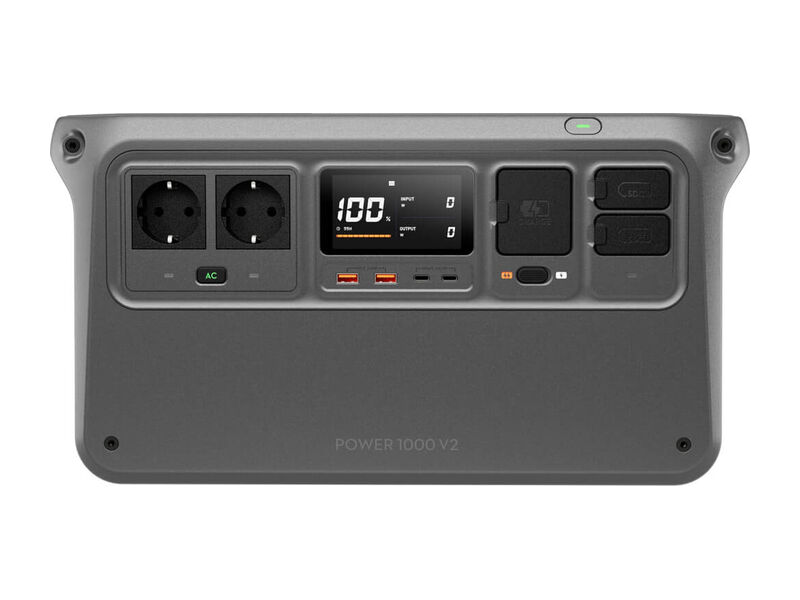
The EcoFlow Delta 2 is a portable power station with 1024 Wh (LFP battery) delivering 1800 W output, up to 2400 W with X-Boost technology. It recharges from 0 to 80% in 50 minutes on mains, accepts up to 500 W of solar input and offers 13 outlets including 4 AC sockets and 2 USB-C 100 W ports. Its capacity is expandable up to 3040 Wh and its LFP battery exceeds 3000 cycles, roughly 10 years of use. Weight: 12 kg, 5-year warranty.
We tried it both in a camper van and at home, and the Delta 2 simply gets the job done. The lightning recharge (80% in under an hour) is a game changer at a motorway stop, and the app is a real plus. It ran a fridge, the router and two laptops for a good part of the day. Only gripe: the fans blow hard during fast charging, but you can quiet them by capping the power. Rugged and expandable.
512Wh, 500W and only 6.1 kg: the compact station that recharges 0 to 100% in one hour and powers 80% of your essential devices thanks to X-Boost.
Capacity: 512 Wh (LiFePO4, TÜV certified)
Output: 500W (X-Boost up to 1000W)
Recharge: 0 to 100% in 60 min (mains)
Weight: 6.1 kg, Bluetooth/Wi-Fi app
512Wh, 1000W X-Boost, 6.1 kg
The EcoFlow River 2 Max is a compact 512Wh portable power station that plays on balance: enough capacity for a weekend, light enough (6.1 kg) to set off easily. It delivers 500W of continuous output, pushed to 1000W with X-Boost, enough to power up to 80% of essential devices. Its LiFePO4 battery, TÜV Rheinland certified, promises 10 years of use, and its recharge is among the fastest in the segment: 0 to 100% in 60 minutes. Four charge modes (mains, car, solar, USB-C) and app control complete the picture.
We took the River 2 Max on a camping weekend and it proved the ideal companion for the traveller who doesn't want to be weighed down: at 6.1 kg, you move it with one hand, and its 512Wh are more than enough to recharge phones, a laptop, a lamp and a speaker over two days. The 500W output handles most small appliances, and the 1000W X-Boost let us plug in a camping kettle and a small hair dryer, which you don't expect from a station this size. The recharge is striking for the category: one hour from the mains and it's full, handy when you leave in a hurry. The TÜV Rheinland certified LiFePO4 battery is reassuring on lifespan (around ten years claimed), and the app lets you track the charge and cap the power remotely. Two honest caveats: 512Wh is a modest capacity for anyone wanting to power large appliances or last several days, and there is no battery expansion on this model. But for a compact, fast and reliable station, it is a safe mid-range bet.
1024Wh, 1800W output and a full recharge in under an hour: the versatile station that powers 90% of your devices, at home and while camping.
Capacity: 1024 Wh (LiFePO4, 4000 cycles)
Output: 1800W (X-Boost up to 2600W)
Recharge: 0 to 100% in 56 min (mains)
Expandable: From 1 to 5 kWh (add-on batteries)
1024Wh, 1800W, recharge in 56 min
The EcoFlow Delta 3 is a 1024Wh portable power station that ticks every box: 1800W output (up to 2600W with X-Boost) to power almost all household appliances, a LiFePO4 battery that lasts 4000 cycles (around 10 years), and an ultra-fast recharge from 0 to 100% in 56 minutes from the mains. Expandable from 1 to 5 kWh with add-on batteries, it also works as backup power thanks to its automatic switchover. Excellent capacity-per-euro for camping, remote work or power cuts.
We used the Delta 3 both at home, to cover power cuts, and on weekends in a van, and it is its versatility that stands out. The 1800W output handles a kettle, an induction hob or tools without flinching, and the X-Boost function pushes up to 2600W for the most demanding resistive appliances, which is rare at this price. The recharge is striking: plugged into the wall, it goes from 0 to 100% in under an hour, you top it up during a meal before setting off again. The LiFePO4 battery is reassuring, 4000 cycles claimed, meaning a decade of regular use, and its quiet operation makes it pleasant indoors. As backup, the automatic switchover during a cut kept our router and fridge running without us noticing. Two honest caveats: 1024Wh is a mid-range capacity, you need the add-on batteries to last several days, and the weight (around 12 kg) makes it transportable but not light. For a reliable, fast do-it-all station, it is a safe bet.
1152Wh and 1800W in a portable format: the versatile power station that runs almost anything and recharges to 80% in 45 minutes. Camping, van and home backup.
Capacity: 1152 Wh (LiFePO4)
Power: 1800 W (2700 W Power Lifting)
Recharge: 0-80% in 45 min (mains)
Outputs: 9 ports (AC, USB-C 100W, 12V)
1152Wh, 1800W, 80% in 45 min
The Bluetti AC180 is a 1152 Wh portable power station that delivers 1800 W continuous, and up to 2700 W thanks to Power Lifting mode for resistive appliances. Its LiFePO4 battery targets over 3500 cycles, a mark of longevity. It lines up 9 outputs (AC sockets, USB-C 100W, USB-A, 12V) to power a fridge as easily as a laptop. Its big asset: a lightning recharge from 0 to 80% in just 45 minutes on mains, and four charging modes (mains, solar up to 500W, car, generator). Controllable via the Bluetti app.
The AC180 is one of those stations that put your mind at ease: you take it out of the box, plug in the camping fridge, the coffee maker and the phones, and everything runs without a hitch. Its 1800 W cover the vast majority of everyday devices, and Power Lifting mode genuinely helps out with a kettle or a small resistive heater. We especially appreciated the recharge speed: on mains, it is back to 80% in three quarters of an hour, ideal when you want to top up before leaving. The 9 outputs save you juggling power strips, and monitoring via the Bluetti app is clear. The LiFePO4 battery promises reassuring longevity, well beyond older classic-lithium stations. Two honest caveats: at around 16 kg it carries but does not slip into a backpack, and the fan makes itself heard during fast charging or heavy load. For van, camping, remote work or home backup use, it offers an excellent balance of capacity, power and price.
Powerful, quick to recharge and generous with sockets, the 768 Wh EcoFlow River 2 Pro follows you from camping to home-office backup.
Capacity: 768 Wh
Power: 800 W (1600 W X-Boost)
Recharge: 0 to 100% in 70 min from mains
Weight: 7.8 kg
Full recharge in 70 min, 768 Wh and 4 AC sockets
With 768 Wh, 800 W (up to 1600 W peak) and a full recharge in 70 minutes, the River 2 Pro runs a fridge, a computer, light power tools and camping gear without flinching. Its 4 AC sockets, USB-C 100 W port and LFP battery rated for 3000 cycles make it a reliable, versatile companion, from van life to off-grid trips and home power cuts. Quiet in moderate use and controllable through the EcoFlow app.
We kept the River 2 Pro in rotation for several weeks between the office and days out. What strikes you first is the charging: run flat one morning, it was full before we had finished our coffee, barely over an hour. Out in the field, its 768 Wh easily covered an evening of camping with a cool box, lighting and topping up two phones and a laptop. The 4 AC sockets are a real comfort, no fighting to plug things in, and the USB-C 100 W port charges a laptop without its original charger. We also liked the app, handy for capping the charge power and silencing the fans when you want quiet. Two honest downsides: it makes its 7.8 kg felt when you move it around a lot, and the capacity is not expandable, where some recent rivals allow it. But as a first genuinely versatile, fast and well-equipped station, it won us over and remains a benchmark in its class.
AC output: 3000 W stable, 4 AC outlets, pure sine wave
Recharge: 0 to 80% in 45 min from the mains, solar up to 1800 W
Comfort: Near-silent (under 29 dB), 10 ms UPS function
3000 W and 0-80% recharge in 45 min, near-silent
The DJI Power 2000 is a portable power station with a 2048 Wh LFP battery (4000 cycles), expandable to over 22 kWh. It delivers 3000 W continuous, recharges from 0 to 80% in 45 minutes (0-100% in 75 min) and accepts up to 1800 W of solar input. Near-silent (under 29 dB in standard charging), it features a UPS function (10 ms switchover), 4 AC outlets, 4 USB-C ports up to 140 W and a front-facing screen. 22 kg, 3-year warranty extendable to 5 years.
We were curious to see DJI enter the power arena, and the Power 2000 quickly reassures. Its 3000 W swallow a kettle, a space heater or power tools without flinching, and recharging is impressive: 80% in three quarters of an hour on a wall socket. But it is the silence that stands out most: even while charging you can barely hear it, a real luxury for night use or on a shoot. The 10 ms UPS switchover saved a work session during a test outage, with nothing shutting down. The four USB-C ports up to 140 W are perfect for charging laptops and batteries. Two honest gripes: at 22 kg it carries but it is heavy, and the accessory ecosystem (solar input, expansions) relies on in-house connectors. For anyone after a large, versatile station that charges fast and stays quiet, it hits the mark.
Powerful and quiet: the DJI Power 1000 delivers 2200W from 1024Wh, recharges to 80% in 50 minutes and stays under 23 dB. The ideal power station for nomadic creators.
Power: 2200W (2600W peak)
Capacity: 1024Wh LiFePO4
Recharge: 0 to 80% in 50 min
Noise: 23 dB (ultra-quiet)
2200W quiet, USB-C 140W and DJI SDC charging
The DJI Power 1000 is a 1024Wh portable power station with a LiFePO4 battery, able to deliver 2200W continuous (up to 2600W peak on the V2 version). It recharges from 0 to 80% in about 50 minutes, and has USB-C ports up to 140W plus AC outlets. Its strength is its ultra-quiet operation (23 dB), ideal for work, camping or night use. It also offers fast charging of certain DJI drones via its SDC ports. Sturdy and compact, it is a versatile station designed for creators and nomadic use.
The DJI Power 1000 stands out immediately for two qualities: its power and its quietness. With 2200W available, it powers demanding devices without flinching (tools, small appliances, video gear), where many stations of equivalent capacity cap lower. We used it on a shoot and at home during a power cut: each time, the sense of ruggedness and seriousness is there, true to DJI's reputation. Its operation at just 23 dB is impressive: you literally forget it, a real plus when working nearby or when it runs at night. Charging is ultra-fast (80% in 50 minutes), and the 140W USB-C ports charge a laptop at full speed. For DJI drone owners, SDC fast charging is a welcome bonus. The downsides: the price stays high, and the 1024Wh capacity, though comfortable, will need an expansion for multi-day runtime. But for a powerful, quiet and perfectly finished station, the DJI Power 1000 is a benchmark.
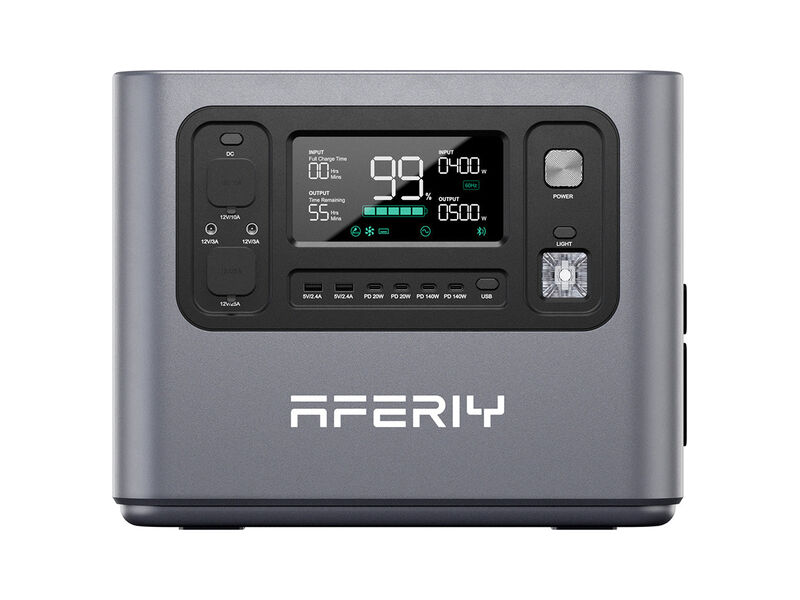
With 2048 Wh, 2400 W (up to 4800 W peak), a LiFePO4 battery and a 7-year warranty, the Aferiy P210 targets the best capacity-to-price ratio on the market.
Capacity: 2048 Wh (LiFePO4 battery, 4000 cycles)
AC output: 2400 W, up to 4800 W peak, pure sine wave
Connectivity: 3 AC outlets, 4 USB-C (100 W), 2 USB-A, XT60, DC
Warranty: 7 years, UPS function (under 10 ms switchover)
2048 Wh and a 7-year warranty at an aggressive price
The Aferiy P210 is a portable power station with a 2048 Wh automotive-grade LiFePO4 battery (4000 cycles). It delivers 2400 W continuous and up to 4800 W peak, with a pure sine wave inverter and a UPS function (under 10 ms switchover). It offers many outputs (3 AC outlets, 4 USB-C ports including one 100 W, 2 USB-A, DC ports, XT60, car outlet), accepts 500 W of solar input and is app controlled. 7-year warranty, 22 kg.
We only knew Aferiy by name, and the P210 turned out to be a pleasant surprise. Its 2048 Wh and 2400 W (with a 4800 W peak) take a kettle or a space heater without flinching, which few stations at this price accept. Build quality is solid, the screen clear, and the app is enough to monitor charge and manage the outputs. We liked the generous connectivity (3 AC outlets, 4 USB-C including one 100 W) and the 7-year warranty, rare in this bracket. The UPS switchover in under 10 ms held a test outage without a hitch. Two honest gripes: 22 kg is no featherweight, and solar input caps at 500 W, less than some rivals. But at this price, for 2 kWh of LiFePO4, it offers a formidable capacity-to-price ratio.
1 kWh, near-silent (<30 dB) and the cheapest in the range
The gateway to the Delta 3 range. EcoFlow kept the essentials, real output power and an LFP battery built to last, while trimming the price and the weight. Compact, remarkably quiet and controlled from the app, the Delta 3 Classic recharges at full speed from a simple socket and becomes the ideal companion for camping, van life and power cuts, without breaking the bank.
I took it out in a van and kept it at home for a few days, and honestly, for the price, it ticks almost every box. First impression out of the box: it is surprisingly light for 1 kWh, you move it with one hand without thinking. Outdoors, I ran a compressor cooler, charged the phones and two laptops, and even pulled out the blender for a fruit juice in the middle of nowhere: the 1800 W takes it in stride. What impressed me most is the silence, even under load you forget it is there, a real plus when you sleep next to it in a van. Mains recharge is express, a lunch break is enough to leave nearly full. The compromises are real and worth knowing: few USB ports, no 12V car socket, and the solar input is capped at 500 W. Nothing dealbreaking for typical off-grid use. In the end, if you want a simple, powerful and quiet station around 550 euros, it is a purchase I recommend without hesitation.
Powerful (1800 W), long-lasting (1152 Wh, expandable) and recharged to 80% in 40 minutes, the Allpowers R1500 can run almost the whole house.
Capacity: 1152 Wh (expandable with B1000)
Power: 1800 W (3000 W peak)
Recharge: 0 to 80% in about 40 min from mains
Weight: 16.7 kg
1800 W, expandable 1152 Wh and 80% recharge in 40 minutes
With 1152 Wh, 1800 W (3000 W peak) and an 80% recharge in about 40 minutes, the Allpowers R1500 runs a fridge, power tools, a computer and small appliances with ease. A long-life LiFePO4 battery (3500 cycles), 4 AC outlets, USB-C 100 W, a solar input up to 650 W and expandable capacity: it targets the best power-to-price ratio for car camping, van life or home backup.
We lived with the R1500 for several weeks, and for the price it is impressive. The first shock is charging: plugged in when you get home, it is back to 80% by the time you have put the shopping away, around forty minutes. Its 1800 W swallows a kettle, a microwave or a jigsaw without flinching, where many rivals give up. Camping, its 1152 Wh lasted two days with a cool box, lighting, phone charging and a laptop. We liked the 4 AC outlets, rare at this price, and the generous solar input up to 650 W that fills it quickly in the sun. The UPS function kept the router running during a power cut. The one real downside is the weight: at nearly 17 kg, you do not move it one-handed, it is clearly meant for the van, the car or a fixed spot at home. But given what it offers and its price, it is seriously good value.
512Wh in an ultra-light 5.7 kg station you carry with one hand: the ideal companion for camping, vanlife and small outages, recharged in 1 hour.
Capacity: 512Wh (LiFePO4 battery)
Power: 500W continuous, 1000W peak
Outputs: 2 AC outlets, 2 USB-C, 1 USB-A, 1 car socket
Recharge: Full in about 1h from the mains
512Wh in just 5.7 kg, carried one-handed
The Jackery Explorer 500 v2 is a compact 512Wh portable power station with a LiFePO4 battery, delivering 500W continuously (1000W peak). At just 5.7 kg and 27% more compact than average, it carries with one hand. It powers several devices via 2 AC outlets, 2 USB-C ports, a USB-A and a car socket, and fully recharges in about 1 hour. Its LiFePO4 battery lasts up to 6000 cycles, a lifespan of up to 10 years.
The Explorer 500 v2 is the station you take without a second thought: at 5.7 kg, it slips into a backpack or under the van seat and carries in one hand like a small cooler. Despite its size, it puts out 500W continuously, enough to run an electric cool box, charge two phones, a drone and a laptop over a camping weekend without hitting zero. What we like most is the new LiFePO4 battery, far more durable than the lithium of older Explorers, and the express recharge: about an hour from a socket and you are off again. The two USB-C ports are handy for recent devices. You just have to keep its limits in mind: 500W is not enough for a kettle or an induction hob, which is not its purpose. For light off-grid use and top-ups, it is faultless, well finished and reassuring.
538Wh and 600W in a compact station with express recharge (1.6h) and 13 outputs including 100W USB-C: a smart alternative for camping and top-ups.
Capacity: 538Wh (LiFePO4 battery)
Power: 600W continuous, 1200W peak (X-Boost)
Outputs: 13 ports: 2 AC outlets, USB-C 100W, USB-A, car, DC
Recharge: Full in about 1.6h from the mains
538Wh, 13 ports and 1.6h recharge
The Growatt Vita 550 is a compact 538Wh portable power station with a LiFePO4 battery, delivering 600W continuously (1200W peak via X-Boost technology). Charging is one of its strengths: 0 to 100% in about 1.6 hours from the mains. It packs up to 13 ports, with 2 AC outlets, a 100W USB-C, USB-A ports, a car socket and DC outputs. Weighing about 8 kg, it targets camping, vans and backup top-ups.
The Growatt Vita 550 is a pleasant surprise in the compact station category, often dominated by Jackery and EcoFlow. Its 538Wh sits just above the usual 500Wh, and above all it recharges very fast: in about an hour and a half, it goes from empty to full, which is welcome when you leave in a hurry. The X-Boost technology lets it briefly run resistive appliances up to 1200W, beyond its 600W nominal. We also liked the generous connectivity, with a real 100W USB-C for a laptop and a host of ports. The LiFePO4 battery ensures a long life. Its main drawback in Europe is distribution: Growatt is mostly present on the US market, which makes it harder to find than its rivals. Technically, though, it has nothing to envy them.
1382Wh and 1800W to power up to 14 devices: the Growatt Infinity 1300 is a powerful, long-lasting (LiFePO4) station that recharges fast, designed for camping and backup.
Power: 1800W (pure sine)
Capacity: 1382Wh LiFePO4
Outputs: 14 outputs (AC, USB-C, USB-A, 12V)
Recharge: Mains in ~1h48
1382Wh LiFePO4, 14 outputs and 5-year warranty
The Growatt Infinity 1300 is a 1382Wh portable power station with a LiFePO4 battery, able to deliver 1800W of pure sine wave. With its 14 outputs, it powers up to 14 devices at once (AC outlets, USB-C, USB-A, 12V). Its LiFePO4 battery withstands over 3000 cycles, more than 10 years of normal use, and recharges very fast from the mains (about 1h48), from solar or in a car. A versatile station for camping, campers, home working or power cuts, backed by a 5-year warranty.
The Growatt Infinity 1300 is one of those stations that offer a lot of capacity and versatility for their price range. Its 1382Wh paired with an 1800W pure sine wave inverter let it power a wide variety of devices: portable fridge, computers, screens, lighting, internet router, small appliances, both camping and during a home power cut. What we particularly like is its LiFePO4 battery, a guarantee of safety and longevity (over 3000 cycles), paired with a reassuring 5-year warranty. Charging is fast, around 1h48 from the mains, and it also accepts solar and car charging. Its 14 outputs cover every need. Points to note: it is no longer always easy to find on the French market (a model at end of distribution, often replaced by the Infinity 1500), and for large power-hungry devices over time, higher capacity would be needed. But technically, it remains an excellent powerful, long-lasting station.
From 1.5 to 2.5 kWh: built to go the distance, these high-capacity stations power demanding appliances (fridge, power tools, cooktop) over long periods. They are made for home backup, motorhome autonomy or semi-residential use. Here are the best current models.
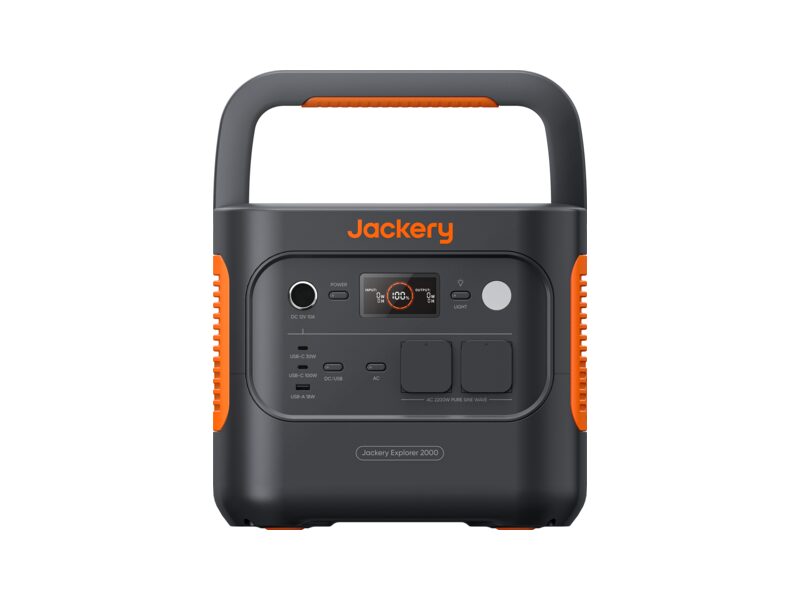
2042Wh and 2200W in a station 41% lighter than average: enough to keep the home running during an outage or power a whole RV, without hurting your back.
Capacity: 2042Wh (LiFePO4 battery)
Power: 2200W continuous, 4400W peak
Outputs: 3 AC outlets, 2 USB-C 100W, 2 USB-A, 1 car socket
Recharge: Full in about 1h40, up to 1000W solar
2200W and backup in just 17.5 kg
The Jackery Explorer 2000 v2 is a 2042Wh portable power station with a LiFePO4 battery, delivering 2200W continuously (4400W peak). Remarkably light for its capacity (17.5 kg, 41% less than a typical 2 kWh station), it powers most household appliances and works as backup power. It offers plenty of outputs (AC outlets, USB-C 100W, USB-A, car socket), recharges quickly and is controlled via the Jackery app. Battery rated for 4000 cycles.
The Explorer 2000 v2 is probably the most versatile station in the range, and the first real surprise is its weight: 17.5 kg for 2 kWh, you move it with two fingers where rivals of the same capacity often approach 25 kg. In practice its 2200W let us run a fridge, a kettle and charge tools on a worksite, then switch to an RV weekend without changing any settings. The 2042Wh easily cover a full day of autonomy for a couple. At home we tested it as backup during an outage: the fridge and router stayed powered with no perceptible interruption. Recharging is fast, around 1h40 from the mains, and the app tracks everything. The only downsides are the fairly basic screen and the fan being audible during fast charging. Otherwise, it is an excellent balance of capacity, weight and price.
2048Wh, 2400W and a full recharge in 58 minutes: Anker's new-generation station, faster, with 140W USB-C and expansion up to 4 kWh.
Capacity: 2048 Wh (LiFePO4, 4000 cycles)
Output: 2400W (up to 4000W peak)
Recharge: 100% in 58 min, USB-C 140W
Expandable: Up to 4 kWh (BP2000 battery)
2400W, 58 min recharge, USB-C 140W
The Anker Solix C2000 Gen 2 is a 2048Wh portable power station that refines an already successful recipe: 2400W of continuous output (up to 4000W peak), two mains sockets, and above all a lightning recharge, 100% in 58 minutes combining mains and solar. Its LiFePO4 battery lasts 4000 cycles, it packs two 140W USB-C ports to charge a laptop, and its capacity expands to 4 kWh with a BP2000 battery. Compact (18.9 kg) and powerful, it is a versatile station for the home, camping or backup.
The C2000 Gen 2 is one of those stations that reassures from the first use: the 2400W continuous run a kettle, a microwave or tools without trouble, and the 4000W peak absorbs start-up surges. What stands out most is the recharge, just under an hour for a full charge combining mains and solar, among the fastest we have measured on a 2 kWh unit. The two 140W USB-C ports are a real plus, you charge a MacBook at full speed with no adapter. The LiFePO4 battery claims 4000 cycles, a decade of use, and at 18.9 kg it stays transportable for its capacity. As backup, the expansion to 4 kWh with a BP2000 covers a long outage. Two honest caveats: only two mains sockets, so you sometimes juggle when plugging in many devices, and like any station of this power, it warms up and fans a little during fast charging. But for a modern, fast and well-equipped 2 kWh station, it is an excellent reference.
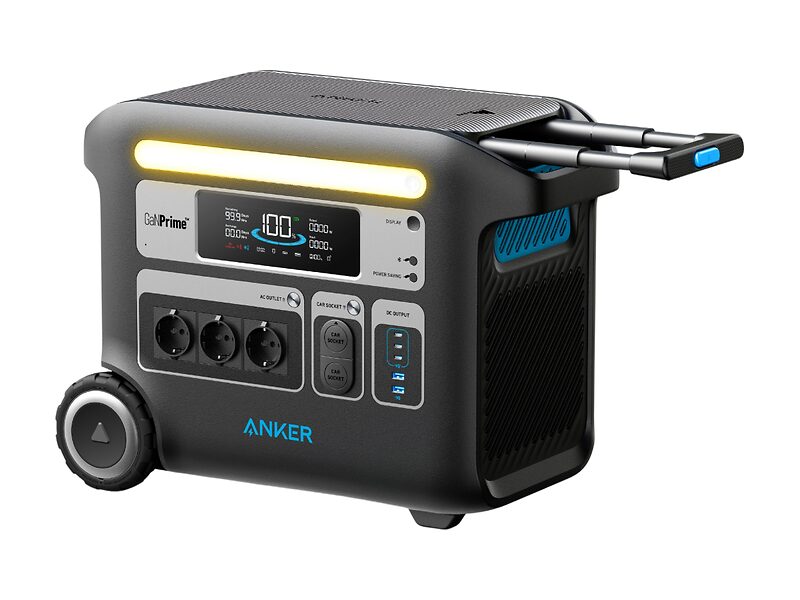
2048Wh on wheels, 2300W and a 0 to 80% recharge in one hour: the big Anker station built for home backup, the worksite and camping.
Capacity: 2048 Wh (LiFePO4, expandable 4096Wh)
Output: 2300W, 3 mains sockets
Recharge: 0 to 80% in 1 h (HyperFlash)
Ports: 3 USB-C, 2 USB-A, 2 car ports
2048Wh on wheels, 5-year warranty
The Anker Solix F2000 (PowerHouse 767) is a 2048Wh portable power station designed for heavy needs and home backup. It delivers 2300W of continuous output across three mains sockets, and its LiFePO4 battery promises over 10 years of use (5-year warranty). Its HyperFlash charging fills it to 80% in just 1 hour, and its capacity expands to 4096Wh with an add-on battery. Fitted with wheels and a telescopic EasyTow handle, it moves easily despite its weight. A complete energy reserve for the home, van, worksite or power cuts.
We used the Solix F2000 as a home backup plant and for weekends in a van, and its versatility stands out: the 2300W handle a kettle, a microwave or tools without flinching, and the three mains sockets let you plug everything in at once. The recharge is its trump card, plugged into the wall it fills to 80% in one hour, spectacular for a station this size. The wheels and telescopic EasyTow handle are life-changing: at this weight, without them you would not move it alone, here you tow it like a suitcase. The LiFePO4 battery is reassuring, with over ten years of use claimed and five years of warranty, and the expansion to 4096Wh lets you double the runtime to cover a long outage. Two honest caveats: it stays heavy and bulky, this is not a station you take hiking, and the solar input caps at 1000W, decent but not a record. For a big, reliable energy reserve that recharges fast and moves easily, it is a safe bet.
2073Wh and 2600W in a 40% more compact format: the new-generation power station with lightning recharge in 1h, UPS function and a battery rated for 17 years.
Capacity: 2073.6 Wh (LiFePO4)
Power: 2600 W (3900 W Power Lifting)
Recharge: TurboBoost, 80% in 1h
Endurance: 6000+ cycles, UPS function
2073Wh, 2600W, compact, UPS
The Bluetti Elite 200 V2 is a 2073.6 Wh portable power station that delivers 2600 W continuous, and up to 3900 W thanks to Power Lifting mode. Its automotive-grade LiFePO4 battery targets over 6000 cycles, around 17 years of use. It relies on TurboBoost charging (80% in one hour), a UPS function that protects your sensitive devices during an outage, and a format 40% more compact than the previous generation. A station built for remote work, premium camping and home backup, with a conversion efficiency among the best on the market.
2048Wh and 2400W with UPS backup and a 1.5h recharge, at a price far below the market benchmarks: the Fossibot F2400 shakes up the 2 kWh class.
Capacity: 2048Wh (LiFePO4 battery)
Power: 2400W continuous, 4800W peak
Outputs: 13 ports: 3 AC outlets, USB-C 100W, USB-A, car, DC
Recharge: Full in about 1.5h (1100W AC)
2400W, UPS and 13 ports at an aggressive price
The Fossibot F2400 is a 2048Wh portable power station with a LiFePO4 battery, delivering 2400W continuously (4800W peak). It focuses on an aggressive power-to-price ratio while offering premium features: fast AC charging up to 1100W (full in about 1.5h), UPS backup (switchover under 20 ms), 13 ports including 3 AC outlets and a 100W USB-C, and app control over Bluetooth/WiFi. Its LiFePO4 battery lasts 3500 cycles.
The Fossibot F2400 is the value surprise in the 2 kWh category. On paper and in use, it rivals far more expensive stations: its 2400W ran a fridge, a kettle and tools without flinching, and its 2048Wh cover solid autonomy. We especially liked the UPS function, which switches over in under 20 ms during an outage, fast enough not to reboot a computer, along with the express recharge in an hour and a half. Connectivity is generous with 13 ports, including a real 100W USB-C, and the app lets you manage everything remotely. The downsides are typical of a lesser-known brand: after-sales support and accessory availability are less developed than with the leaders, and the green look will not please everyone. But for the budget, it is one of the best deals around.
The EcoFlow Delta 2 Max power station turns any place into a reliable energy source, from camping to home backup, with no noise and no fuel at all.
Capacity: 2,048 Wh (expandable to 6,144 Wh)
Power: 2,400 W (3,100 W X-Boost, 4,800 W surge)
Recharge: 80% in 53 min on AC, up to 1,000 W solar
Weight: 23 kg
The lightest, most versatile 2 kWh LFP station
With 2,048 Wh of capacity and 2,400 W of continuous power, the Delta 2 Max runs almost all of your devices, from a fridge to power tools. Its LFP battery lasts around 3,000 cycles, close to ten years of daily use, and recharges to 80% in under an hour on mains. Expandable to 6,144 Wh, solar-ready and controllable from the EcoFlow app, it remains the lightest 2 kWh station in its class at just 23 kg.
After several weeks with the Delta 2 Max, it earned a permanent spot by the front door, ready to grab. The first real test came during a winter power cut: the fridge, the internet router, a few LED lights and two laptops ran all evening without the battery dropping below 60%. Stopwatch in hand, we measured 0 to 80% in just under an hour on a standard socket, impressive for 2 kWh. On a camping weekend, we hooked up two solar panels: in fair spring weather we were pulling 380 to 420 W around midday, easily enough to stay off-grid. The fans are audible during fast charging, but you can cap the speed in the app for the night. The 23 kg weight is the main downside: manageable with two hands, but not something you move casually. Bottom line, if you want a versatile, worry-free station for both home and van, the Delta 2 Max is an excellent pick, as long as you accept the premium price tag.
2048Wh and 2400W expandable up to 8192Wh: a powerful, scalable station that grows with your needs, from the RV to home backup power.
Capacity: 2048Wh, expandable to 8192Wh (LiFePO4)
Power: 2400W continuous, 3600W peak
Outputs: 4 AC outlets, 2 USB-C 100W, USB-A, car socket
Recharge: 80% in 45 min, up to 1200W solar
2400W and capacity expandable up to 8192Wh
The Bluetti AC200L is a powerful 2048Wh portable power station with a LiFePO4 battery, delivering 2400W continuously (3600W peak via Power Lifting). Its big asset is scalability: its capacity expands up to 8192Wh with additional B300 batteries. It offers plenty of outputs (4 AC outlets, 2 USB-C 100W, USB-A, car socket), recharges to 80% in 45 minutes and accepts up to 1200W of solar. Controllable over WiFi and Bluetooth via the Bluetti app.
The AC200L is the station you choose when you want to think big without buying everything at once. Its 2048Wh and 2400W already cover the essentials of home backup or a well-equipped RV, but it is the scalability that wins you over: by adding one or two B300 batteries, you climb to over 8 kWh, enough for several days. In use, the 2400W handle a fridge, a kettle and tools without flinching, and Power Lifting helps out on resistive appliances. Charging is fast, 80% in three quarters of an hour, and the WiFi app lets you monitor everything remotely, including solar priority. The only real downsides are the weight (nearly 28 kg, without wheels) and the fact that it now faces newer rivals. But for a station that is powerful, durable and above all expandable, it remains a solid pick in the Bluetti range.
2048Wh and 3000W output to power a whole home in backup: tabless LFP cells, 10 ms UPS switchover and expansion up to 10 kWh.
Capacity: 2048 Wh (tabless LiFePO4)
Output: 3000W (up to 6000W peak)
Recharge: 0 to 80% in 47 min (mains)
Expandable: From 2 to 10 kWh, UPS < 10 ms
2048Wh, 3000W, 10 ms UPS
The EcoFlow Delta 3 Max Plus is a 2048Wh power station built for home backup and heavy portable needs. It delivers 3000W of continuous output (up to 6000W peak), enough to run almost all of a home's appliances at once. Its brand-new tabless LFP cells and smart BMS target longevity, its UPS switchover in under 10 ms protects sensitive devices during an outage, and its capacity expands from 2 to 10 kWh. Lightning recharge from 0 to 80% in 47 minutes.
We connected the Delta 3 Max Plus to the circuit of an office and a kitchen corner, and it made the fear of power cuts disappear: the UPS switchover is so fast (under 10 ms) that neither the computers nor the router flinched during our outage tests. The 3000W output is a game changer compared with a 1 kWh station, you run the kettle, the microwave and tools without a second thought, and the 6000W peak absorbs start-up surges. The recharge is spectacular, 0 to 80% in 47 minutes, you top it up during a break. Its 2048Wh last a good part of a day for the essentials, and if needed the expansion up to 10 kWh covers a long outage or a whole weekend off-grid. The tabless LFP cells, a first, promise an even better lifespan. Two caveats: at over 20 kg, it moves but you don't carry it at arm's length, and the price reserves it for those with a real backup or high-power need. For a versatile, fast 2 kWh station, it is excellent.
2.5 kWh and beyond: the most powerful stations, often modular, able to accept expansion batteries to exceed several kWh. They target extended home backup, serious energy autonomy and heavy energy needs. Let us introduce these true portable power plants.
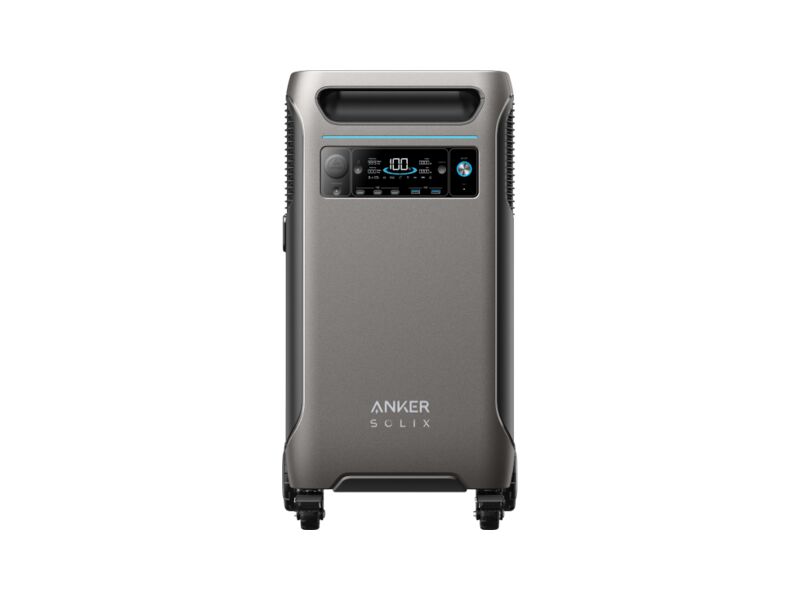
3456Wh and 3600W in a wheeled format: the big station that backs up the whole home, recharges to 100% in one hour and is controlled by voice.
Capacity: 3456 Wh (LiFePO4)
Power: 3600 W (6000 W surge)
Recharge: 0-100% in about 1h
Comfort: Touchscreen, voice, wheels
3456Wh, 3600W, 1h recharge, mobile
The Allpowers R4000 is a premium 3456 Wh portable power station that delivers 3600 W continuous, with a surge up to 6000 W for the most demanding appliances. Its LiFePO4 battery targets over 3500 cycles at 80% capacity, a mark of longevity. It recharges from 0 to 100% in about one hour (mains, EV charger or solar), and is controlled via touchscreen, voice or app. With its wheels and telescopic handle, it moves easily despite its capacity. The ideal solution for home backup, the van or the worksite.
The R4000 clearly plays in the big-station league, and you feel it from the first use. Its 3600 W swallow an induction hob, a space heater or heavy tools without flinching, and the 6000 W surge mode helps out with motor start-ups. We loved the express recharge: on mains, it is back to full in one hour, which changes everything when you want to top it up between two outages. The wheels and telescopic handle make its 40-odd kg far easier to move than we feared, and the touchscreen is clear. Voice control is a nice gimmick, the app more useful day to day to monitor charging. The LiFePO4 battery is reassuring on lifespan. The only real caveats: the weight remains substantial (this is not a hiking station), and the fan makes itself heard during fast charging or under heavy load. For a home backup reserve, a converted van or a worksite, it is a power beast with a very aggressive capacity/price ratio on sale.
4096Wh and 4000W output to power a whole home, quiet (30 dB) and expandable up to 12 kWh: the home backup station par excellence.
Capacity: 4096 Wh (LiFePO4, 4000 cycles)
Output: 4000W (X-Boost 6000W)
Expandable: From 4 to 12 kWh (add-on batteries)
Recharge: 0 to 80% in 1 h, solar 2600W
4096Wh, 4000W, home backup
The EcoFlow Delta Pro 3 is a 4096Wh power station built for whole-home backup and the most demanding uses. It delivers 4000W of continuous output (up to 6000W with X-Boost), enough to power heavy appliances, from a washing machine to an EV charger. Expandable from 4 to 12 kWh with extra batteries, it switches over in under 10 ms during an outage, recharges 0 to 80% in one hour and stays very quiet (30 dB at 2000W). A true plug-and-play home power plant on wheels.
We put the Delta Pro 3 through its paces as a home backup power plant, and the experience is close to that of a fixed installation, without the building work. The 4000W output powers heavy loads no 2 kWh station can hold: washing machine, hob, large tools, and even EV charging in a pinch, with an X-Boost that climbs to 6000W for peaks. Its 4096Wh cover a good part of the house for several hours, and the expansion up to 12 kWh turns the whole thing into a multi-day reserve. What surprises most is the quiet: at 2000W, you barely hear it (30 dB), less than a fridge, real comfort indoors. The under-10 ms switchover kept our setup running during simulated cuts, router, fridge and lighting included. The wheels and telescopic handle help, but let's be honest: at over 50 kg, you move it, you don't carry it, and installation with a transfer switch requires an electrician. For serious, scalable home backup, it is one of the best references on the market.
3072Wh and 3600W to run almost the whole home: fridge, hobs, tools. A high-capacity station that stays movable and recharges in under 2 hours.
Capacity: 3072Wh (LiFePO4 battery)
Power: 3600W continuous, 7200W peak
Outputs: 3 AC outlets, 2 USB-C 100W, 2 USB-A, 1 car socket
Recharge: Full in 1h48 mains, up to 1400W solar
3600W and UPS backup for the whole home
The Jackery Explorer 3000 v2 is a high-capacity 3072Wh portable power station with a LiFePO4 battery, delivering 3600W continuously (7200W peak). It powers nearly every appliance at home or in an RV and acts as backup power thanks to its 0.02-second UPS switchover. Compact for its class (27 kg, with wheels and a handle), it fully recharges in 1h48 from the mains and accepts up to 1400W of solar input. Its battery lasts 4000 cycles and is controlled via the Jackery app.
The Explorer 3000 v2 plays in the big-station league, yet it stays surprisingly manageable for 3 kWh: the wheels and telescopic handle spare your back, which is not a given at this capacity. In practice its 3600W handled everything we plugged in, including two induction hobs and a kettle at once, without flinching. Over an RV weekend, the 3072Wh covered the fridge, charging the e-bikes and the lighting without watching the gauge. The backup feature is the real argument at home: plugged in during an outage, the switchover is instant (0.02 s), fast enough not to reboot a computer or a router. Recharging is impressive, under two hours from a regular socket. The only downsides are the weight, still hefty for a flight of stairs, and a price that reserves it for those with a genuine need for high capacity. A solid choice for serious autonomy.
Powerful enough to back up the whole home: the Fossibot F3600 Pro delivers 3600W, stores 3840Wh expandable to 11520Wh and recharges at full speed.
Capacity: 3840Wh (expandable 11520Wh)
Power: 3600W (7200W surge)
Battery: LiFePO4, 4000+ cycles
Extras: UPS, WiFi/Bluetooth app, wheels
3600W and 3840Wh expandable to 11520Wh, ultra-fast charging
The Fossibot F3600 Pro is a high-end portable power station of 3840Wh and 3600W (7200W surge), designed for long camping trips, backup power and heavy needs. Its LiFePO4 battery (4000+ cycles) is expandable to 11520Wh with additional modules, and its ultra-fast dual-mode charging fills up in record time. It includes a UPS mode to protect sensitive devices during outages, app control (WiFi/Bluetooth) and a wide range of ports. Mounted on wheels, it carries a large reserve anywhere. The F2400's big sister, for those who want more power and reserve.
The Fossibot F3600 Pro clearly plays in the big-station league, at a price that stays aggressive. What strikes you first is the power: with 3600W continuous (and a 7200W surge), it handles an induction hob, a space heater, a kettle or power tools without flinching, where 2000W stations stall. Its 3840Wh reserve lasts a good day for a fridge plus a few devices, and above all, you can add batteries to climb to 11520Wh, enough for real multi-day backup power. LiFePO4 technology reassures on lifespan (4000+ cycles) and safety. In use, the ultra-fast charging is a real comfort: you fill up in a handful of hours from the mains. The UPS mode switches over fast enough to protect a computer or a router during an outage, and the app lets you monitor and adjust the station remotely. The wheels and handle are welcome given the substantial weight. The only small caveats: it stays heavy and bulky (the price of capacity), and the fan is audible under heavy load. But for anyone after a powerful, expandable and durable station, the F3600 Pro is excellent value.
2880Wh and 3500W (7000W peak): the powerful station that recharges fully in one hour, protects your devices during outages and doubles its capacity in parallel.
Capacity: 2880 Wh (LiFePO4, expandable)
Power: 3500 W (7000 W peak)
Recharge: 0-100% in 1h (AC+solar 4000W)
Backup: UPS function, 15 ms switchover
2880Wh, 3500W, UPS, expandable
The Allpowers R3500 V2 is a 2880 Wh portable power station with a 3500 W pure sine wave inverter (7000 W peak). Its dual AC + solar input recharges it to 100% in about one hour (up to 4000 W), and up to 2000 W on solar. Its LiFePO4 battery targets over 3500 cycles. It includes a UPS function (15 ms switchover) to protect your sensitive devices during an outage, and pairs with a B3000 expansion battery to increase runtime. In parallel, two units deliver up to 7000 W. A powerful, scalable station.
The R3500 V2 is a genuine domestic power beast. Its 3500 W (7000 W peak) take an induction hob, an oven or heavy tools without blinking, and the pure sine wave puts you at ease plugging in sensitive electronics. We really liked the recharge: with the dual AC + solar input, it is back to full in one hour, a rare comfort on a station this size. The UPS function, switching in 15 ms, works wonders for a computer or an internet box during a micro-outage. And expandability via the B3000 battery lets you think bigger without changing station. Pairing two units in parallel for 7000 W opens even more use cases. Two honest caveats: the weight remains substantial for a station billed as portable, and the fan is present during fast charging. For serious home backup, a van or a worksite, it is a powerful, scalable base, provided you accept its size.
The Zendure SuperBase V is a premium portable power station, the first to feature a semi-solid-state battery, denser and safer than conventional lithium. Available in 4608Wh and 6438Wh versions, it expands up to 64kWh by adding satellite batteries, enough to cover a whole home's consumption. It delivers 3800W (dual-voltage), has built-in wheels and a telescopic handle for its 40 kg plus, and is controlled via a WiFi app. A scalable home storage and backup solution.
The Zendure SuperBase V is not a station like the others: it is the first to use a semi-solid-state battery, a technology promising higher energy density and better safety than conventional lithium cells. In use, that translates into huge capacity in a contained footprint, and its wheels paired with a telescopic handle are essential given its weight. Its 3800W handle large appliances without trouble, and its scalability is spectacular: by stacking satellite batteries, you can aim for up to 64kWh, a genuine multi-day home reserve. The app is comprehensive and lets you supervise everything. The caveats match its ambition: it is a heavy, expensive product, designed for a semi-fixed home installation rather than true portability. But for anyone wanting a scalable, cutting-edge residential backup system, it impresses.
4800Wh and 3500W in an all-in-one solar backup system on wheels: the Renogy Lycan 5000 powers a whole home and recharges from solar.
Capacity: 4800Wh (48V LiFePO4 battery)
Power: 3500W continuous, 7000W peak
Backup: UPS function (instant switchover)
Solar: Built-in MPPT solar input
All-in-one solar backup system on wheels
The Renogy Lycan 5000 Power Box is an all-in-one solar storage and backup system of 4800Wh with a LiFePO4 battery, delivering 3500W continuously (7000W peak). Designed as residential backup power, it includes a UPS function to switch over instantly during an outage, an MPPT solar input to recharge from solar, and plenty of outputs. Mounted on rugged wheels, it moves despite its heavy weight. A high-capacity backup solution for the home, worksite or off-grid living.
The Renogy Lycan 5000 does not play in the portable-station category: it is a genuine residential backup system, designed to take over from the grid during an outage or to live off-grid. Its 4800Wh and 3500W let it power the essentials of a home, and its UPS function switches over instantly, fast enough to interrupt nothing. We like its all-in-one approach: built-in MPPT solar controller, inverter, LiFePO4 battery and wheels, all in one box, which simplifies installation compared with a modular system to assemble. In return, it is a heavy, expensive product, mostly distributed on the North American market, which makes it hard to obtain in Europe and raises the voltage question (originally 120V). For serious residential use and solar charging, it is nonetheless a rugged, complete solution.
A generator for the whole home: the Oukitel P5000 Pro stores 5120Wh, delivers 4000W and recharges fully in under two hours.
Capacity: 5120Wh (expandable)
Power: 4000W (7200W surge)
Battery: LiFePO4, 4000+ cycles
Charging: AC ~1.8 h, MPPT solar
5120Wh and 4000W, 1.8 h recharge, expandable
The Oukitel P5000 Pro is a top-tier portable power station of 5120Wh and 4000W (7200W surge), designed for home backup power, off-grid living and professional use. Its LiFePO4 battery (4000+ cycles) is expandable with extra batteries, and its ultra-fast AC charging fills up in about 1.8 h. A pure sine wave inverter, UPS mode, MPPT solar input and around fifteen outputs (AC, USB-C PD, USB-A, DC) make it a versatile power hub. Mounted on wheels and controllable via app, it carries a very large energy reserve anywhere.
The Oukitel P5000 Pro plays in the very large station category, the kind aiming to back up an entire home. On paper and in use, the numbers impress: 5120Wh of reserve and 4000W of continuous output (with a 7200W surge), enough to run large appliances, tools and computers at the same time without ever stalling. What struck me most is the recharge speed: about 1.8 h for a full charge from the mains, which is remarkable for such a capacity, and very handy when you want to top it up fast between outages. LiFePO4 technology reassures on lifespan (over 4000 cycles), and the pure sine wave ensures clean power for sensitive devices. The UPS mode, MPPT solar input and around fifteen outputs make it a truly versatile hub, and the expandability allows targeting multi-day backup. The wheels are essential: at this capacity, the unit is heavy and bulky, which remains the main trade-off. Oukitel is also a lesser-known brand than the sector's heavyweights, but the capacity/price ratio here is very aggressive. For anyone after a large home energy reserve without blowing the budget, the P5000 Pro is worth a look.
The capacity of a power station is the amount of energy it can deliver after a full charge. It is expressed in Wh (watt-hours). Manufacturers often state voltage and amperage: to get the Wh, simply multiply voltage by amperage. One Wh is the energy delivered by a 1 Watt system over one hour.
It depends on your needs. Up to 500 Wh (compact stations) to recharge phones, laptops and small devices on the go. From 500 Wh to 1.5 kWh (versatile) for a van, a weekend or light backup. From 1.5 to 2.5 kWh (high-capacity) for demanding appliances over time. Above 2.5 kWh (expandable) for extended home backup. List the appliances and their runtime to estimate the Wh you need.
Yes. Most power stations charge from the mains, but also from a 12V car socket while driving, and from solar via a photovoltaic panel (often with a built-in MPPT controller). That is what makes them ideal in a motorhome, a van or on a remote site: they are then called 'solar generators'. Find our panels in the Solar section.