
Why this battery wears differently from a power bank
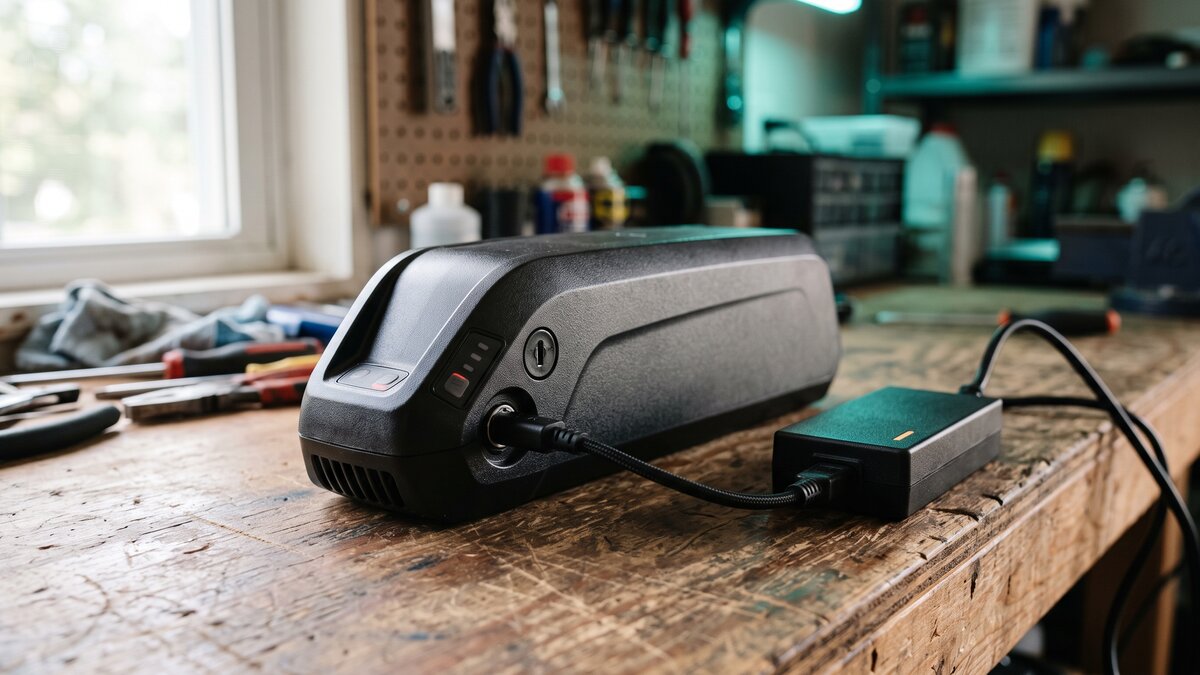
Under its plastic shell, an e-bike or e-scooter battery is a pack of lithium-ion cells (usually NMC chemistry, sometimes LiFePO4) wired in series and parallel to reach 36V or 48V, with a capacity typically between 300 and 700 Wh. A BMS (Battery Management System) constantly monitors the voltage of each cell group, cuts power on a fault, and balances the charge, the same principle used in a portable power station, but under much harsher conditions: high discharge currents (15 to 30 A at peak acceleration), constant road vibration, and exposure to rain and cold.
As a result, an e-bike or e-scooter battery tends to age faster than one that's pampered indoors, and replacing it often costs £250 to £600, close to the price of an entry-level bike. A few good habits, however, go a long way towards delaying that day and reducing the risks.
Getting daily charging right: the 20 to 80 % rule
A lithium-ion cell ages faster the more time it spends near its extremes (0 % or 100 %). For everyday use, charging between roughly 20 and 80 % preserves noticeably more cycles than a full charge every time: a cell charged to 4.20V per element (100 %) typically lasts 300 to 500 cycles, versus 600 to 1,000 cycles if charged to only around 4.10V (roughly 90 %). There's no need to obsess over it: charge to 100 % before a long ride if you need to, the key is simply not sitting there all the time.
Another simple but often overlooked habit: avoid letting the battery run completely flat before recharging, and never store it empty for more than a few days. Repeated deep discharges permanently damage the cells and can, in extreme cases, trigger a permanent BMS shutdown.
Where and how to store the battery over winter
Cold temporarily reduces a lithium battery's available capacity (the chemistry simply slows down) without damaging it, provided exposure stays reasonable. However, never charge a battery below 0 °C (32 °F): in the cold, metallic lithium tends to plate onto the negative electrode instead of properly inserting into it (lithium plating), a process that permanently reduces capacity and can create an internal short circuit. Always let the battery return to room temperature before plugging it in if it's been sitting in an unheated garage or shed.
For longer storage (several weeks to several months, typically October to March for seasonal use), three rules apply:
- Store the battery indoors, between 10 and 20 °C (50 to 68 °F), never in a garage that freezes in winter or a conservatory baking in summer sun;
- Charge it to roughly 50 to 60 % before storing, neither full nor empty: this puts the least electrochemical strain on the cells;
- Check the level every 4 to 6 weeks and top up slightly if needed, a battery should never sit at 0 % for months.
| Time without use | Recommended charge level | Check-in |
|---|---|---|
| A few days | Doesn't matter (normal use) | None |
| 2 to 4 weeks | 40 to 60 % | Once |
| All winter (several months) | 50 to 60 % | Every 4 to 6 weeks |
Safety: how to avoid thermal runaway
Fires linked to e-bike and e-scooter batteries have risen sharply in recent years: RoSPA reports almost 200 such fires and at least 10 fatalities in the UK in 2023 alone. The most common cause isn't the original battery, but a non-compliant charger or an uncertified replacement battery, often bought cheaply online.
- Only use the charger supplied by the manufacturer, or an explicitly compatible model carrying the CE or UKCA mark;
- Never charge on a flammable surface (carpet, sofa, cardboard) or near an escape route in your home;
- Avoid leaving a battery charging unattended overnight, especially in a hallway or near an exit;
- Watch for unusual heat, swelling, a strange smell or a deformed pack: stop using it immediately and have it checked.
An impact to the battery (a fall, a hard pothole) can damage cells without any visible sign at first: a fire can then start hours later, sometimes more than a day after the impact. After a hard fall, have the battery checked before charging it as normal.
Physical care: contacts, connectors and weatherproofing
A removable battery gets taken out and refitted regularly, so its metal contacts oxidise and pick up grime over time, causing poor connections and sometimes random power cuts. Clean them occasionally with a dry cloth or one lightly dampened with isopropyl alcohol, never with water. A thin layer of dielectric grease (non-conductive) on the pins protects against oxidation without any short-circuit risk, especially useful if you ride in the rain often.
Also check the condition of the seals around the battery housing and the charging port: a cracked or deformed seal lets moisture in, the leading cause of internal corrosion. After a ride in heavy rain, wipe the battery and its housing down thoroughly before charging, and never use a pressure washer, even on the rest of the bike: the pressure can force water past seals only designed to handle ordinary rain.
When should you replace your battery?
A well-maintained e-bike or e-scooter battery typically lasts 500 to 1,000 full charge cycles, roughly 3 to 6 years of regular use, before dropping below 70 to 80 % of its original capacity, the point at which replacement usually makes sense. Warning signs to watch for:
- A noticeable drop in range (20 to 30 % or more) with no change in how you ride;
- Unusually fast self-discharge while switched off;
- Increasingly frequent BMS faults or error messages;
- A visibly swollen or deformed pack (take it out of service immediately, don't attempt to charge it).
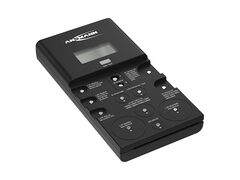
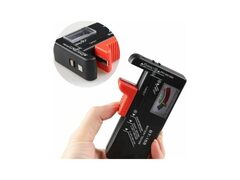
To objectively check a battery you suspect is weakening, a battery tester lets you quickly check resting or under-load voltage, a useful first step before having the pack examined by a bike shop or a specialist workshop. Never open a sealed pack yourself unless you're experienced: the voltages involved (36 to 48V, sometimes more) and the risk of a short circuit between cells make this a job for a trained professional.
Transporting and charging the battery on the go
On a train, carrying a removed e-bike or e-scooter battery generally isn't a problem (check your operator's own rules, though). Flying is a different matter: IATA rules cap spare batteries carried in the cabin at 100 Wh without airline approval (up to 160 Wh with approval, two spares maximum), a limit that almost every e-bike or e-scooter pack (300 to 700 Wh) far exceeds. In practice, these batteries simply don't fly, in the hold or in the cabin.
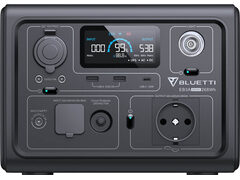
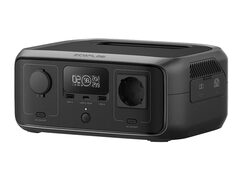
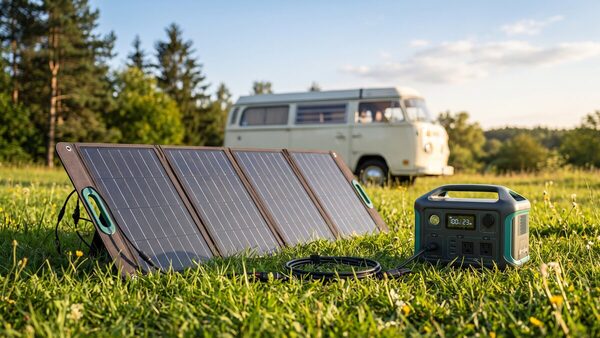
On a weekend trip or while camping, away from mains power, a pure sine wave portable power station like the EcoFlow River 3 or the Bluetti EB3A can provide a top-up charge through its AC output, as long as you stay within its rated power (most e-bike chargers draw 150 to 250 W). It's also a handy backup during a power cut, so you're not left without electric transport. It's worth keeping a compact battery tester in your toolkit too, for a quick check on the road.