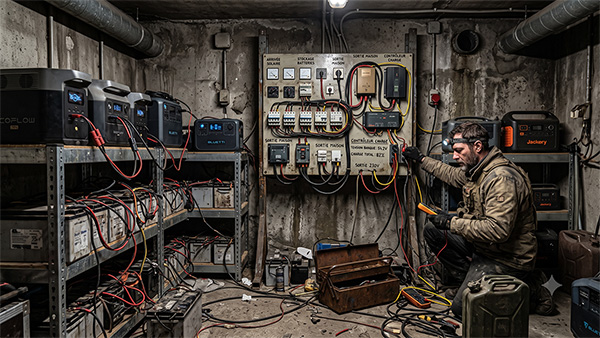

BOV vs comfort van: two very different electrical priorities
A BOV (bug-out vehicle) follows a very different brief from a van fitted out for comfort. Our guide to campervan electrics for the road trip covers a leisure goal: living on board for weeks, running a fridge, ambient lighting, entertainment. Here, the goal is the opposite: a vehicle able to start and move the second it has to, even after weeks of sitting idle, even on a freezing night, even if the battery was used hard the day before.
That distinction changes the whole electrical design logic. A comfort van optimises for endurance over time, how many days without a recharge. A BOV optimises for something else entirely, certainty of starting at the exact moment it matters. That is not a semantic detail: the two logics can actively conflict, since a van loaded with accessories is statistically more exposed to a flat battery than a soberly equipped but properly isolated vehicle.
The classic trap: draining the starter battery without noticing
The scenario is mundane and dreaded in equal measure: radios, a cooler or interior lighting run while the vehicle is parked, ignition off. The next morning, or worse, at the exact moment you need to leave, the engine will not turn over. On a basic setup, every accessory (a 12V socket, extra lighting, a winch, a cooler) is wired straight to the same battery as the starter motor. Every amp-hour drawn while parked is an amp-hour the starter will not have.
The problem goes beyond forgetting a light on. A compressor cooler, a pump, a router or a radio running continuously can drain a standard starter battery overnight, with no warning light to catch it before it is too late, since most vehicles only display battery voltage once the ignition is already on, which is too late to act. For a leisure vehicle used every other weekend, that is an inconvenience solved with a charger. For a vehicle meant to be able to leave without delay at any moment, it is the one failure that invalidates the entire preparation, bug-out bag included.
The good news: the fix is well established, standard on professional vans and emergency-response vehicles (fire services, roadside recovery), and well within reach of a careful DIY install.
The fix: dual batteries and a DC-DC charger (isolator)
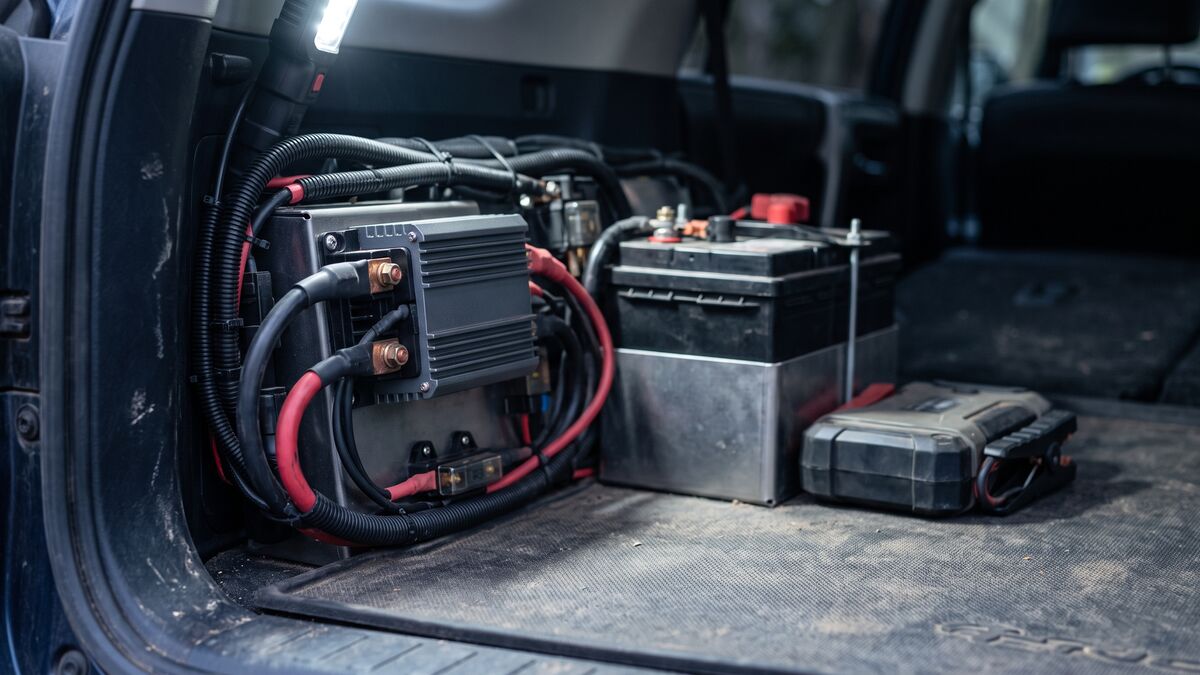
The principle is simple in its goal, a little more technical in its execution: add a second battery, called an auxiliary or leisure battery, dedicated solely to accessories, and separate it electrically from the starter battery using a DC-DC charger (also called an isolator or battery-to-battery charger). As long as everything is fine, the DC-DC charger recharges the auxiliary battery from the alternator while you drive. As soon as the starter battery's voltage drops below a safe threshold, the isolation closes: no current can flow from the auxiliary battery back to the starter battery, or the other way round. Accessories can drain the leisure battery completely; the starter battery stays untouched.
A unit like the Renogy DCC50S, already in our catalogue, illustrates the principle well: this 50A DC-DC charger also integrates an MPPT solar regulator, charging the auxiliary battery both from the alternator on the move and from a solar panel while parked, with a claimed efficiency of up to 94%. It works with a lead-acid auxiliary battery (AGM, gel) as well as a LiFePO4 lithium one, which lets the setup evolve without replacing everything.
Watch out for a common wording trap: a simple voltage-sensitive relay (VSR), cheaper, connects both batteries in parallel as soon as the alternator is running, without regulating current or accounting for chemistry differences. A true DC-DC charger actively manages the charge (voltage, current, a profile matched to the auxiliary battery's chemistry), which becomes essential as soon as the leisure battery is LiFePO4 lithium, whose charge profile differs sharply from lead-acid.
On a BOV, the auxiliary battery does not need to be oversized the way it would on a van built for weeks of comfort: 50 to 100Ah of lithium is generally enough to cover lighting, communications (radio, phones) and a small cooler for the hours or first days after leaving. What matters is not maximum capacity, but the guarantee that this battery never eats into the starter's.
The safety net you never put away: a jump starter, always on board
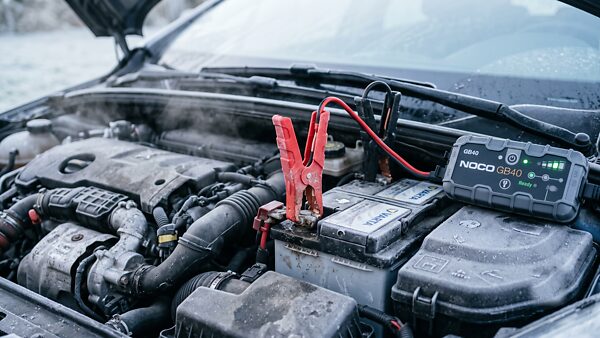
Even with a perfectly isolated dual-battery setup, a serious BOV keeps a jump starter on board at all times, charged and reachable without digging through the trunk. The reason is simple: the isolator protects the starter battery from being drained by accessories, not from a failure of the battery itself (age, extreme cold, an internal fault, or simply a light left on before the DC-DC charger was even installed). The jump starter is the last safety net, independent of any wiring in the vehicle.
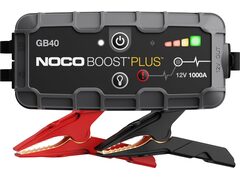
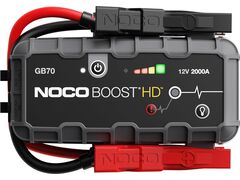
We have already compared the best models in detail in our jump starter comparison, so we will not repeat that here, beyond the rule that matters most in a BOV context: power should match your engine, not the most impressive number on the box. For a common petrol car or van, a model around 1,000A such as the Noco GB40 (petrol up to 6.0L, diesel up to 3.0L) is more than enough. For a large-capacity diesel, a 4x4 or a heavy van, aim for something like the Noco GB70 and its 2,000A, capable of restarting a diesel up to 6.0L. Both fit as easily in a glovebox as in a bug-out bag, and double as a power bank and emergency light.
Proactive maintenance: test before the failure, never after
Most owners only discover the real state of their starter battery the moment it fails to deliver the current needed, which is the worst possible time. On a vehicle built for an emergency, that logic reverses: you test beforehand, regularly, without waiting for a sign of weakness. Our full guide to charging, testing and disconnecting a car battery covers the method step by step; here we cover the essentials as they apply to a BOV.
A simple multimeter check, engine off for several hours, gives a first warning: between 12.6 and 12.8V, the battery is full; below 12.4V, it is partially discharged; below 12.0V, it needs a recharge before you can trust the vehicle. But resting voltage says nothing about the battery's real ability to deliver the starter's current spike, which is why a dedicated electronic tester matters: it assesses the battery's true state of health, not just its current charge.
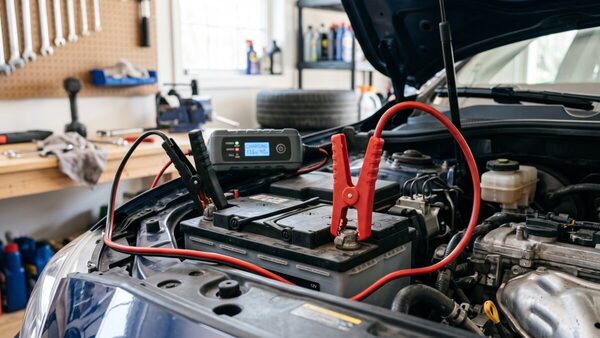
A maintainer charger such as the CTEK MXS 5.0, left permanently connected to the starter battery while the vehicle is parked, fixes this upstream: it keeps the battery fully charged at all times and includes a reconditioning mode for tired batteries. For a one-off check without tying up the vehicle for long, a standalone unit like the CTEK CS Free, with its 20Ah internal battery, can wake up a very weak battery in 10 to 15 minutes without being plugged into the mains.
Set a simple routine and stick to it: start the vehicle and drive at least 20 to 30 real minutes, not just idling, every 2 to 4 weeks so the alternator can properly recharge the battery, and test its voltage at least once a quarter. While you are at it, check the terminals for tightness and white corrosion, and if the vehicle sits unused for several weeks at a stretch, consider a manual battery disconnect switch on the starter battery to remove any residual parasitic drain. It is the same discipline expected of a backup generator: equipment that has never been run has every chance of disappointing on the day it actually matters.
What needs to stay charged and ready, permanently
The difference between a BOV and a comfort van ultimately comes down to priorities. The table below sets the two approaches side by side, criterion by criterion.
| Criterion | Bug-out vehicle (BOV) | Comfort van / motorhome |
|---|---|---|
| Priority #1 | Certainty of immediate starting | Endurance over several days or weeks |
| Starter battery | Isolated, tested, never drawn on by accessories | Sometimes shared or weakly isolated |
| Auxiliary battery | 50 to 100Ah, sized for essentials (comms, lighting, cold) | Often 100 to 300Ah, sized for comfort (fridge, entertainment, appliances) |
| Jump starter | Always on board, charged, checked | Useful, but rarely a fixed habit |
| Maintenance | Regular proactive checks, even without use | Often tied to actual vehicle use |
| Solar charging | A bonus for long-term endurance | Often central to daily comfort |
In practice, a well-prepared BOV always keeps: a starter battery tested within the last quarter, an auxiliary battery isolated by a DC-DC charger for essential accessories, a jump starter charged and reachable without unpacking the trunk, and a charging plan (alternator, optionally solar) that depends on no outside infrastructure. Nothing superfluous, but nothing forgotten either. For the comfort side of that choice, between a power station and a generator, our guide to power stations vs generators for motorhomes is the reference, complementary to this article rather than competing with it.
Going further: the vehicle in your wider resilience strategy
Vehicle electrics are just one pillar of serious preparedness. Our in-depth guide to energy independence for an SHTF scenario covers, scenario by scenario, how to secure power beyond the vehicle alone: a prolonged grid-down event, a major natural disaster, a solar storm. If your thinking runs more toward a fixed retreat location, our off-grid homestead energy guide covers solar sizing and LiFePO4 storage for months of self-sufficiency.
The bug-out vehicle is often the link between those two worlds: it is what has to start to reach that homestead, or to leave a risk area before it becomes untenable. Reliable electrics on board are not a mechanic's indulgence, they are the baseline condition for the rest of your preparation to be worth anything on the day it counts.
And if the evacuation you are planning for happens on foot rather than by vehicle, the logic flips: our piece on bug out bag power essentials covers what matters when everything has to fit on your back.