
Why not wire your station in like a dedicated balcony battery
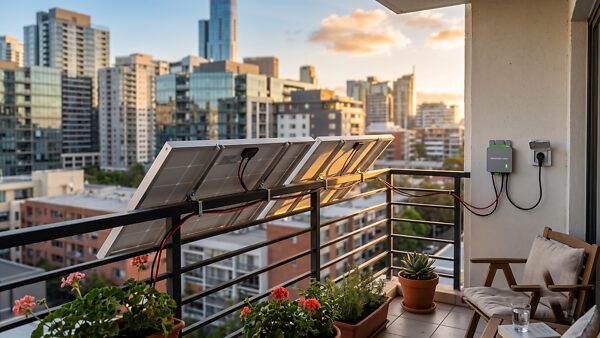
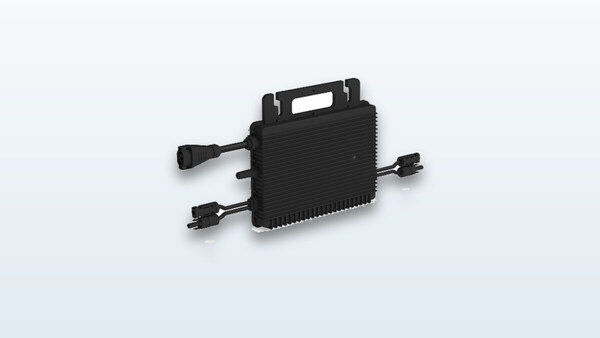
Balcony batteries such as the Zendure SolarFlow range or the Anker Solix Solarbank are built for one specific job: sitting between a solar panel and a micro-inverter, then letting that inverter feed current into a wall socket, inside a precise regulatory framework. Our article on the UK's plug-in solar legalisation covered this in detail: the British regulation specifically governs this category of device, and explicitly excludes from its simplified regime any equipment designed to store energy for later supply. Makers of dedicated balcony batteries design and certify their products specifically for this role, anti-islanding protection and grid feed-in included.
A general-purpose power station, built for camping or backup power, was never designed or certified for that role. Wiring it into a micro-inverter to integrate it into a grid-connected setup would mean improvising an electrical installation without the safeguards dedicated products build in as standard. This isn't about technical skill, it's about hardware that simply wasn't engineered or approved for that job.
What works: storing and using it off-grid
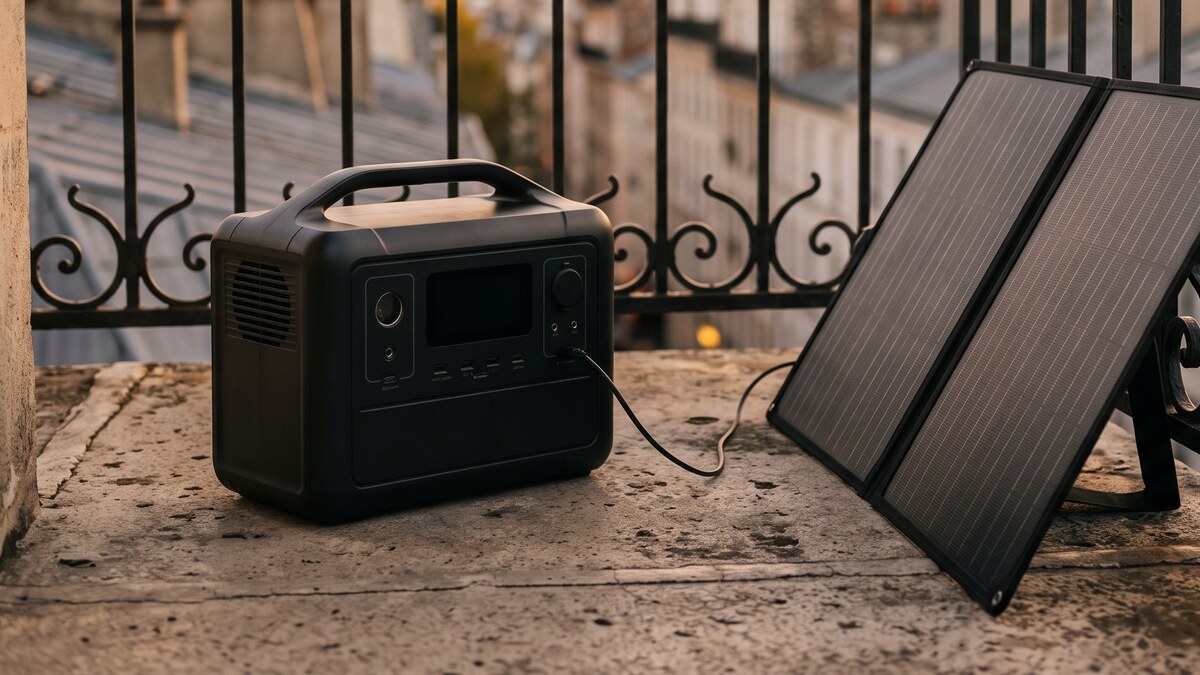
The good news is that almost every power station on the market already has everything needed to capture solar: a solar input with a built-in MPPT controller, exactly like a dedicated balcony battery. The difference lies in what happens to the stored energy next.
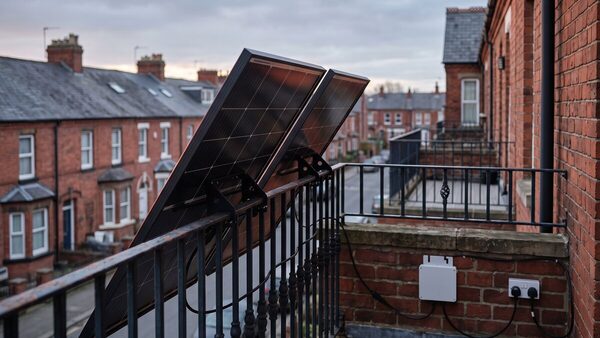
Rather than feeding it back into the home's circuit, you use it directly, through the station's own outputs: mains socket, USB ports, 12 V output. A panel set out on the balcony or leaning against the railing charges the station during the day; in the evening, it powers a lamp, charges household devices, runs a small cool box or a laptop, exactly as it would while camping. Nothing gets fed into the home's fuse board, so none of the regulation governing grid-connected microgenerators applies.
How much does a balcony panel actually charge per day?
With a typical portable panel propped against a wall, rarely at an optimal angle and yielding accordingly less (count on roughly 70% of the theoretical output, the same assumption documented in our solar payback tool), here's what an average sunny day in the UK produces:
| Rated power | Estimated daily output | What that recharges | |
|---|---|---|---|
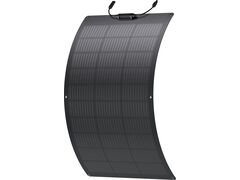
| 100 W flexible panel | ≈ 196 Wh/day | A small station (250-300 Wh) in about a day and a half | |
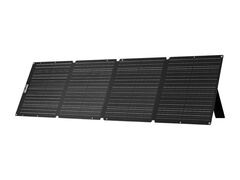
| 200 W rigid panel | ≈ 392 Wh/day | About a third of a 1,024 Wh station in one day |
Enough to fully recharge a small station over a day or two of sun, or to top up a third of a larger one. To fine-tune this for your own region and panel, our solar payback calculator runs the same maths with your own figures.
Before you plug in: two checks, no more
Two things to check on your station's datasheet before wiring up a panel: the maximum power it accepts on its solar input (a compact station might cap at 100 W even if the panel delivers 200), and the panel's open-circuit voltage, which needs to sit within the station's accepted range. Both are listed on every panel's and every station's product page in our catalogue.
If the panel sits far from the station, with several metres of cable run along a wall, our voltage drop calculator checks that the cable gauge isn't losing part of the output along the way.
When to switch to a dedicated balcony battery
This off-grid approach has an honest limit: it feeds nothing into the home, so it doesn't lower the general electricity bill, it provides a standalone reserve of energy. For a measurable reduction across every appliance in the home, tied to the metre, you need a kit built for that: a panel, a certified micro-inverter such as the Hoymiles HMS-800W-2T we reviewed, and possibly a dedicated balcony battery to smooth out production. Our article on the French balcony-solar boom details what these kits actually change on a bill.
Between the two, the question is simple: are you after a low-cost, standalone energy reserve, or a visible drop in your electricity bill? The first can be built with what you already own. The second needs hardware approved for that exact purpose.