
EcoFlow Trail 300 DC
(4 reviews)
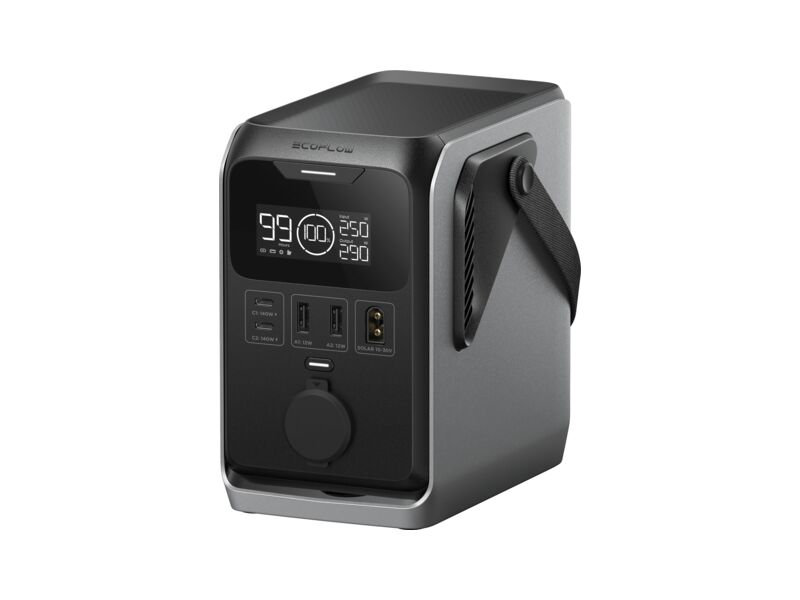
A 100% DC power station of 288Wh with a 12V car outlet: dual 140W USB-C, long-life LiFePO4 battery, built for camping and road trips.
- Capacity: 288 Wh (LiFePO4, 3000+ cycles)
- Output: 300W max, 100% direct current (DC)
- Ports: 2x USB-C 140W, 2x USB-A, 12V outlet (120W)
- Weight: 2.58 kg (167 x 115 x 166 mm)
- 288Wh pure DC, dual 140W USB-C and a 12V outlet, 2.58 kg
Detailed overview: EcoFlow Trail 300 DC 288Wh portable power station
The EcoFlow Trail 300 DC is the bigger sibling of the Trail 200 DC, in the same family of 100% direct current (DC) power stations, with no inverter and no 230V mains socket. With a capacity of 288 Wh, it targets the same portable use cases as its little sister, but with more runtime and a genuine first for the Trail range: a real 12V car outlet.
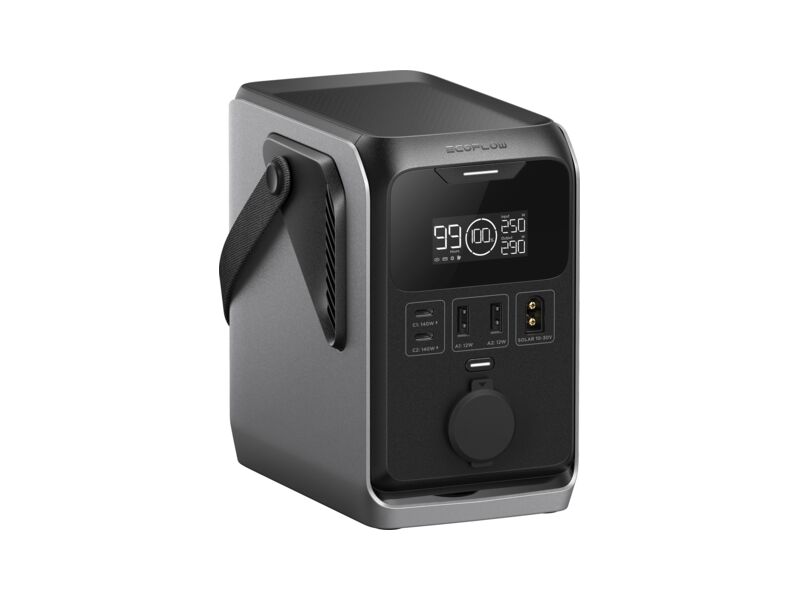
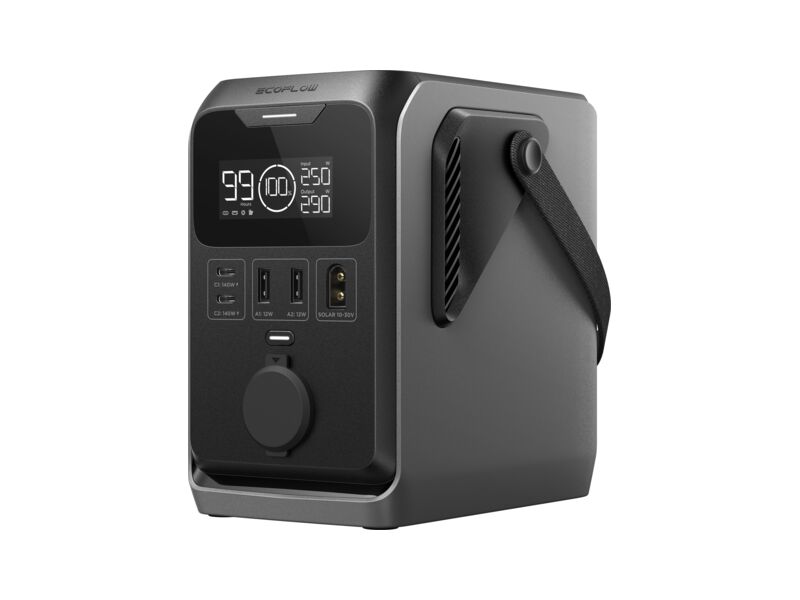
Its LiFePO4 (lithium iron phosphate) battery is rated for over 3000 charge cycles before dropping to 80% capacity, meaning years of regular use. It delivers up to 300W across five outputs: two bidirectional USB-C ports at 140W each, powerful enough to charge a laptop or recharge the station itself at full speed, two USB-A ports at 12W, and a 12V car-style outlet at 120W, able to power a portable cooler, a pump or any classic car accessory. It weighs 2.58 kg for a compact 167 x 115 x 166 mm format, barely bigger than an insulated bottle.
Another notable difference from the Trail 200 DC: the Trail 300 DC has a genuine dedicated solar and car charging port, up to 110W, in addition to USB-C charging. That lets you connect it directly to a solar panel or a vehicle's 12V socket without a USB-C adapter in between, a real gain in simplicity on the move. Silent (no fan, 0 dB operation), it features drop and fire resistant construction, with an IP30 protection rating and a 3-year manufacturer warranty.
Compact, hardy and now able to power a 12V accessory alongside USB devices, EcoFlow's Trail 300 DC is aimed at campers, van lifers, photographers and hikers who want a more complete and versatile energy reserve than the Trail 200 DC, without the weight of a classic AC inverter station.
Full specifications
Detailed characteristics (EAN: 4895251668712)
Battery and capacity
| Rated capacity?Total stored energy in watt-hours. The higher the figure, the longer the runtime. | 288 Wh |
|---|---|
| Expandable capacity?Whether capacity can be increased with add-on batteries. | No |
| Removable battery?The main battery can be removed or replaced by the user. | No |
| Battery chemistry?LiFePO4 (LFP) lasts far longer and is safer than NMC. | LFP (LiFePO4) |
| Charge cycles?Number of full charges before capacity drops to the stated threshold. | 3000 cycles (80 %) |
AC output
| Continuous AC power?Power the unit can sustain continuously on its 230 V outlets. | 300 W |
|---|---|
| RV / TT-30 outlet?Dedicated 30 A outlet for North-American style RVs. | No |
Recharging
| Max solar input?Maximum solar power accepted at the input (PV panels). | 110 W |
|---|---|
| Accepted solar voltage?Panel voltage range compatible with the solar input. | 10 to 30 V |
| Max solar current?Maximum current accepted on the solar input. | 10 A |
| Vehicle charging (12/24 V)?Can be charged from a vehicle's cigarette-lighter socket. | Yes |
Ports and connectors
| USB-C ports?Number of USB-C ports and the fastest port's power (laptops, phones). | 2 × 140 W |
|---|---|
| USB-A ports?Number of USB-A ports and maximum power (small devices). | 2 × 12 W |
| 12 V output (car socket)?12 V cigarette-lighter output and its power (coolers, pumps…). | Yes (120 W) |
Portability
| Weight?Net weight of the unit, battery included. | 2.58 kg |
|---|---|
| Dimensions (L × W × H)?Overall size of the unit in millimetres. | 166 × 115 × 167 mm |
| Form factor?Portable (hand-carried), transportable (heavy), or wheeled. | Portable |
| Wheels?Built-in wheels for moving the unit. | No |
| Telescopic handle?Retractable handle like a wheeled suitcase. | No |
Safety and environment
| Certifications?Standards and approvals obtained (CE, RoHS, UN38.3, UL…). | CE, RoHS, UN38.3 |
|---|---|
| Ingress protection (IP)?Resistance to dust and water (e.g. IP54). | IP30 |
Backup / UPS
| UPS / EPS mode?Automatic switch to battery on a mains outage (backup). | No |
|---|
Noise and thermal
| Noise level (rated)?Manufacturer-stated noise; a quiet room is around 30 dB. | 0 dB(A) |
|---|---|
| Quiet mode?Setting that limits fan noise, often by capping charge power. | Yes |
| Self-heating battery?Battery pre-heating to allow charging in cold weather. | No |
Display and connectivity
| Display?Type of screen showing power, runtime and alerts. | LED indicators |
|---|---|
| Bluetooth?Bluetooth link for nearby control. | No |
| Wi-Fi?Wi-Fi connection for remote control and monitoring. | No |
| Mobile app?iOS / Android app to control the unit. | No |
| Local control (no cloud)?Control possible over Bluetooth without an account or internet. | No |
| Solar connector?Connector type of the solar input (XT60, Anderson, MC4…). | XT60 |
Availability and warranty
| Market launch?Date the model first became available on the European market. Useful to place its generation: technology moves fast in this segment, and a device several years old may be at the end of its commercial life. | August 2025 |
|---|---|
| Warranty?Length of the manufacturer's warranty. | 3 years |
⚡ How long will this power station run a device?
With 288 Wh, the EcoFlow Trail 300 DC external battery runs a fridge (50 W) for ~4h55 or an LED TV (90 W) for ~2h45.
| Home | Runtime |
|---|---|
| Fan (45 W) | ~5h25 |
| Refrigerator (50 W) | ~4h55 |
| Freezer (60 W) | ~4h05 |
| American fridge (150 W) | ~1h40 |
| Outdoor & workshop | Runtime |
|---|---|
| LED lighting (10 W) | ~24h |
| RV fridge (60 W) | ~4h05 |
| E-scooter (charging) (100 W) | ~2h25 |
| E-bike (charging) (150 W) | ~1h40 |
Rough estimate: real consumption varies, and very power-hungry appliances (heating elements) must stay below the output power.
What is this power station best for?
-
Camping & Tent Ideal
For a comfortable camp, the Trail 300 DC is a solid choice: its 288 Wh power a lamp, a laptop, a tablet and a 12V cooler at the same time via its car outlet, a real plus over the Trail 200 DC which lacks this outlet. Its two 140W USB-C ports recharge mobile devices fast, with excellent efficiency since there is no conversion to 230V. At 2.58 kg, it stays easy to carry, a bit heavier than its little sister but far more versatile. Its dedicated solar and car port, up to 110W, recharges it directly at camp in good weather, without a USB-C adapter. Silent (0 dB, no fan) and drop resistant, it suits regular use perfectly. Without a 230V mains socket, however, it does not replace an inverter station for a device that truly needs alternating current: it is a deliberate DC station, built for connected, practical camping.
-
Road trip & Car Ideal
It is on the road that the Trail 300 DC really stands out from its little sister: its 12V car outlet (120W) powers a portable cooler, a pump or any classic car accessory directly, a use case simply impossible with the Trail 200 DC which lacks this outlet. It recharges itself from the vehicle's 12V socket or from its dedicated solar port up to 110W, with no USB-C adapter in between. Its two 140W USB-C ports keep phones, a tablet and a laptop running at stops and overnight in a van or car. Ultra-silent (0 dB) and rugged, it stows easily in the boot or the glovebox. With 288 Wh, it remains a top-up reserve rather than power for a long weekend with no recharge, but for a road trip of a few days with DC and 12V needs, it is the most complete and versatile station in the Trail range.
-
Motorhome & Van life Suitable
In a motorhome or campervan, the Trail 300 DC's 12V car outlet (120W) is handy for a small backup fridge, a pump or a car accessory, something the Trail 200 DC cannot do. Its two 140W USB-C ports and its dedicated solar port up to 110W nicely complement the vehicle's electrical setup on short trips. With 288 Wh and 2.58 kg, however, it remains a top-up solution, not a replacement for a motorhome's main electrical system: without a 230V mains socket, equipment that needs one stays out of reach.
-
Hiking & Bivouac Suitable
At 2.58 kg, the Trail 300 DC stays portable for hiking, but it is heavier than the Trail 200 DC (1.8 kg), which is built for the ultralight crowd. In exchange, its 288 Wh and two 140W USB-C ports last longer for recharging a headlamp, GPS, camera and phone over several days at the bivouac. Its dedicated solar port up to 110W recharges it efficiently at each stop. For a trek where every gram counts, the Trail 200 DC remains more suitable; for a lighter bivouac trip (car, fixed base), the Trail 300 DC offers more reserve.
-
Photo & Video Suitable
The Trail 300 DC efficiently keeps photo and video gear running: its two 140W USB-C ports recharge a camera body, an editing laptop and a drone battery in parallel, and its 288 Wh of LiFePO4 last several battery cycles on a shoot. Its 12V outlet also powers a light or a car accessory on location. At 2.58 kg it stays portable, a bit heavier than the Trail 200 DC but with more reserve. Without an inverter, it cannot power a 230V LED panel or a mains charger.
-
Off-grid & Solar Suitable
Unlike the Trail 200 DC, which only recharges over USB-C, the Trail 300 DC has a genuine dedicated solar and car port, up to 110W: a solar panel plugs straight in, no adapter needed. Its 288 Wh power USB lighting, sensors, a surveillance camera or small 12V devices via its car outlet for an isolated spot. Its 100% DC architecture, with no conversion losses, makes it an efficient solution for lightweight self-sufficiency. For heavier use (a fridge, 230V devices), a higher-capacity inverter station remains necessary.
Our team's recommendations based on the model's capacity, output power and weight.
Compatible solar panels
A selection of photovoltaic panels that suit this station's solar input (up to 30V / 110W), best match first.


Comparison
At around £150 to £220, the EcoFlow Trail 300 DC competes with other compact 100% DC power stations, targeted by searches such as "Trail 300 DC vs Trail 200 DC" or "Trail 300 DC vs Anker SOLIX C300 DC". Here is how it sits against three references: its little sister the Trail 200 DC, the Anker SOLIX C300 DC and the Jackery Explorer 300D.
| Criterion | EcoFlow Trail 300 DC | EcoFlow Trail 200 DC | Anker SOLIX C300 DC | Jackery Explorer 300D |
|---|---|---|---|---|
| Capacity | 288 Wh | 192 Wh | 288 Wh | 288 Wh |
| 12V car outlet | Yes (120W) | No | Yes | Yes (120W) |
| Max USB-C | 140W (x2) | 140W | 140W | 140W |
| Weight | 2.58 kg | 1.8 kg | ≈ 2.7 kg | ≈ 2.7 kg |
| Observed price | ≈ £169 | ≈ £129 | ≈ £180 | ≈ £145 |
In short, the Trail 300 DC keeps everything that made the Trail 200 DC good (100% DC, fast USB-C, ruggedness) while adding what it lacked, a real 12V outlet and a dedicated solar port, for a weight that stays below the Anker SOLIX C300 DC and the Jackery Explorer 300D. The Jackery Explorer 300D remains the best placed on pure price, but with a less direct solar port, while the Anker SOLIX C300 DC does not clearly stand out on features for a higher price. For anyone who wants the maximum versatility of the Trail range without compromise, the Trail 300 DC is the most balanced choice.
Related video
Video: EcoFlow Trail 300 DC - Lasts 144 Days on a Single Charge!? - Published on 21/08/2025
Our tester's review: Christophe Delpuech
We took the Trail 300 DC out for testing after already adopting its little sister the Trail 200 DC, and the real surprise is the 12V car outlet: it changes everything on a road trip, you plug a portable cooler straight in with no adapter. In the field, the two 140W USB-C ports keep pace, a laptop and a camera body recharge in parallel without slowing down. The dedicated solar port is a real plus over the 200 DC: you connect the panel without going through USB-C, simpler at the bivouac. At 2.58 kg it stays reasonable to carry, though you do notice the difference against the 1.8 kg of its little sister. The total silence (no fan) and the announced ruggedness inspire confidence. One honest caveat: still no 230V mains socket, so you cannot plug in a small classic appliance, and 288Wh remains a backup capacity over several days. But for anyone who wants more versatility than the Trail 200 DC without moving up to a big inverter station, it is a success.
In-depth review EcoFlow Trail 300 DC: our full review 4.4/5 Read our full review → Capacity and efficiency 4.4 Delivered power 4.4 Recharging 4.3 Ports and control 4.2 Build and endurance 4.3 Noise 4.8Frequently asked questions: EcoFlow Trail 300 DC 288Wh portable power station
No, it stays 100% direct current like the whole Trail range: no 230V socket, no inverter. However, unlike the Trail 200 DC, it has a 12V car outlet (120W) for car accessories.
The Trail 300 DC offers 288Wh versus 192Wh, two 140W USB-C ports instead of one, a 12V car outlet and a dedicated solar/car charging port up to 110W. It weighs 2.58 kg versus 1.8 kg for the 200 DC.
With its two 140W USB-C ports used together, recharging is fast. It can also recharge via its dedicated solar/car port, up to 110W, or via a standard USB-C mains charger.
Yes. Its 12V car outlet delivers up to 120W, enough to power a portable cooler, a pump or any classic car accessory, a use case impossible with the Trail 200 DC which lacks this outlet.
Need help choosing?
Other products in the "Compact power stations" category
Aferiy P040
£162.12 (11)
With 256Wh, a full mains recharge in just over an hour and a UPS mode under 10ms, the Aferiy P040 protects sensitive devices without breaking the bank.
Allpowers R600
See price (7)
Affordable and backed by a 5-year warranty, the Allpowers R600 delivers 299 Wh, 600 W and a one-hour recharge, plus a built-in wireless charger.
Allpowers S200
See price (6)
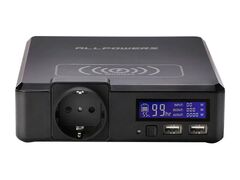
154Wh and 200W in an ultra-compact, book-sized station with built-in wireless charging: the mini power station that goes everywhere without weighing you down.
Allpowers S300 Plus
See price (5)
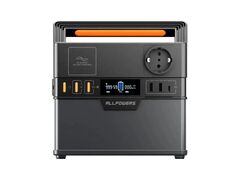
Compact and clever, the Allpowers S300 Plus (288 Wh) combines USB-C 100 W, a wireless charger, an LED torch and app control.
Published on 21/08/2026, updated on 25/08/2026