
What the advertised 288 Wh are really worth
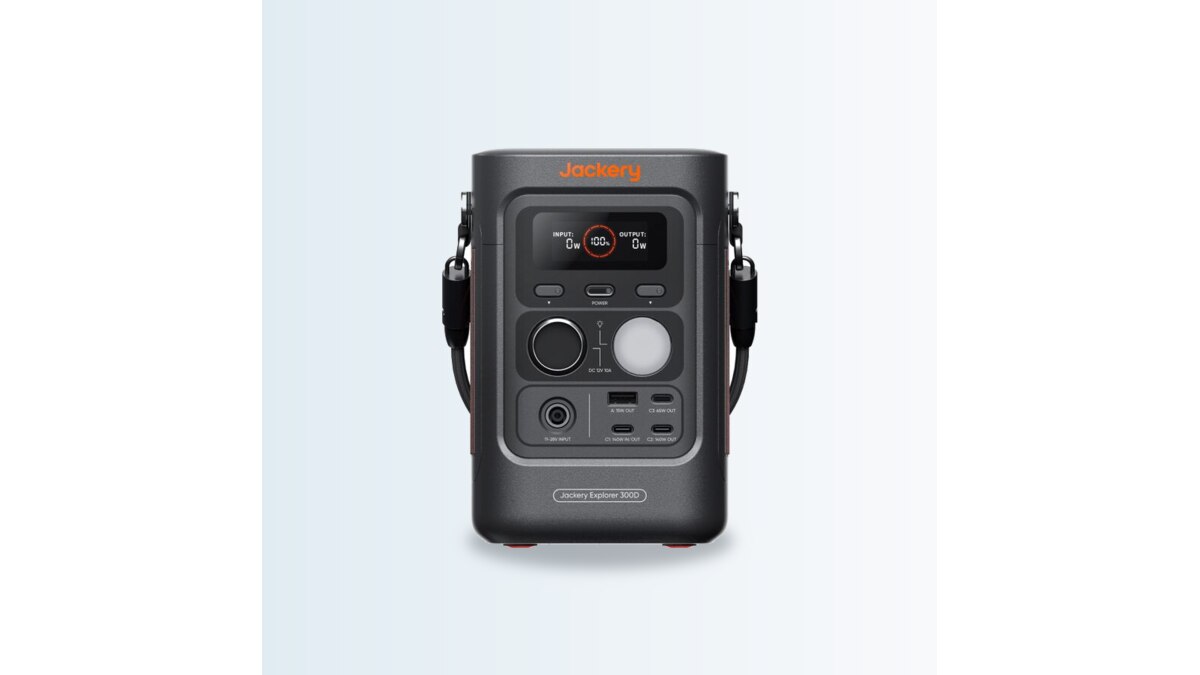
The 300D carries a 288 Wh LiFePO4 battery, rated for 4000 cycles down to 70 % of its original capacity. At the instrumented charge/discharge bench, 267 Wh are genuinely delivered at the USB-C output, or 93 % of the rated value. That is a very good score for this type of product: the 7 % gap matches the normal losses from battery management, not an underdelivery dressed up as marketing promise.
This good score is explained by the product's own architecture, already observed on other 100 % continuous-current stations on the market: without an inverter, there is only a single conversion stage between the cell and the output port, against two on a classic mains-socket station. That is the mechanism behind most of the strengths in this review.
The carry cable: a good idea, a report worth knowing
The 2-in-1 carry cable, both a handle and the 140 W USB-C charging cable, is the design argument Jackery pushes hardest: no more hunting for a charger, it is built in and also carries the unit, up to 10 kg according to the spec sheet. On paper, it is a genuine find.
In practice, this 10 kg rating remains a manufacturer figure repeated as is by every retailer, never corroborated by an independent test. One precise, dated case: on a unit two months old, the cable's attachment loop deformed after roughly five short-distance carries, and the 2.5 kg unit fell, causing a severe bruise that persisted for several weeks. The case, backed by photos, was closed by Jackery with no replacement and no compensation.
Charging speed: real, but conditional
With an identified, compliant 140 W USB-C charger, a full charge takes 2h25 at the instrumented bench, against 2h18 advertised: a 5 % gap that remains consistent with the claim. With an unidentified charger, a markedly slower charge shows up in a second, independent measurement (29 % to 100 % in 4h04, at an average power of only 58 W).
The most likely explanation, consistent with both measurements: the 300D requires a charger capable of negotiating the high-voltage fast-charging profile the station expects, and a "140 W" charger that does not genuinely support it can stretch the charging time to several days in the least favourable cases. This is not, strictly speaking, a flaw in the station, but a hidden condition the spec sheet does not mention: the advertised charging time assumes a compatible charger, not just any charger showing 140 W on its casing.
Silence confirmed, no thermal drift, with one reservation in combined use
The complete absence of a fan, a direct result of removing the inverter, also holds up in real-world use: no perceptible noise, including at full-power charging. On an endurance test of more than five hours with a 12 V cool box, no noticeable heat to the touch and no unexpected cutout show up.
One isolated reservation deserves a mention: a power throttling appears after several hours of combined use (charging from the cigarette lighter while driving and powering a device at the same time), in a single case recorded. This point is not corroborated by other sources and only concerns one specific use, simultaneous charge and discharge, but it is worth knowing for anyone planning to use the station this way in a van or a car.
What is missing for its class
Against its direct competition in 100 % continuous current and at equal capacity, two connectivity limits stand out. First, only one port can recharge the station at a time: no combining two chargers to go faster, an option a direct competitor of the same capacity offers. Second, the station has to be switched on manually to activate its USB ports, where a direct competitor wakes up automatically as soon as a load is detected.
The built-in charging cable also remains too short to comfortably reach a standard wall outlet, forcing the unit to be propped up for a comfortable connection, an observation that comes up on two separate test benches. Finally, no IP rating against water or dust is advertised, a point other DC stations in the same price range do offer.
300D or 300 Plus: the real choice to make
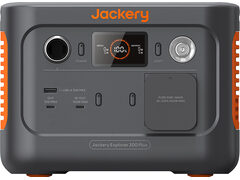
Jackery also sells the Explorer 300 Plus in parallel, strictly identical in capacity (288 Wh) but fitted with a genuine 230 V mains socket, Wi-Fi, Bluetooth and an app. That versatility comes at a cost: 3.75 kg against 2.5 kg, and around 265 € observed against 159 € for the 300D. The risk of confusion when buying is real, since the two products share a very close name and an identical capacity.
The choice comes down to one simple question: does everything you plan to recharge accept USB-C or 12 V? If yes, the 300D clearly does better across the board, efficiency included. If even one device requires a classic mains socket, even a simple older-generation laptop charger, the 300 Plus is the one to choose, not the 300D.
Against the direct competition in 100 % continuous current
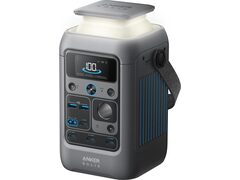
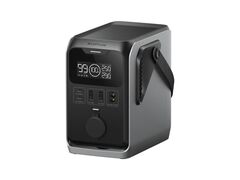
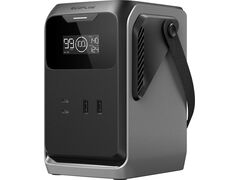
In the still-narrow segment of 100 % USB-C/DC stations around 288 Wh, two references come up most often for comparison: the Anker Solix C300X DC and the EcoFlow Trail 300 DC, both at identical capacity. Against them, the 300D stands out with efficiency of the same order and a price that is now lower than both, once real-world prices are compared rather than catalogue rates.
Its main reservation against these two competitors remains the reported case on the carry cable detailed above, which does not appear to affect the other two references so far, along with its status as a more recent product, and therefore less available track record on long-term reliability.
Customer service: a real point of caution
Beyond the carry cable case, Jackery's customer service proved unresponsive in several documented cases in Germany and the United Kingdom: generic replies, requests for additional evidence that were disproportionate, processing times of several weeks. One legitimate claim was eventually resolved through Amazon support rather than directly through Jackery, after 18 days of exchanges.
This finding stays consistent with Jackery's broader brand reputation, where warranty handling comes up regularly in complaints, without being unanimous: other cases, by contrast, get settled without friction. No identified case comes from a French buyer to date, the product being too recent for local track record. This is a point to watch rather than an established certainty.
Who it is for
The 300D suits a nomadic use centreed on portable electronics particularly well: hiking, photography, van life, or outdoor remote work. Everything that recharges over USB-C or 12 V finds a light, silent base here with excellent real-world efficiency for its category. The price now observed, the lowest in its class at equal capacity, reinforces that case.
It does not suit anyone who needs, even occasionally, a classic 230 V mains socket, nor anyone planning to suspend the unit by its carry cable over the long term without particular care. In both cases, the Explorer 300 Plus or another mains-socket station remain the safer choice.