
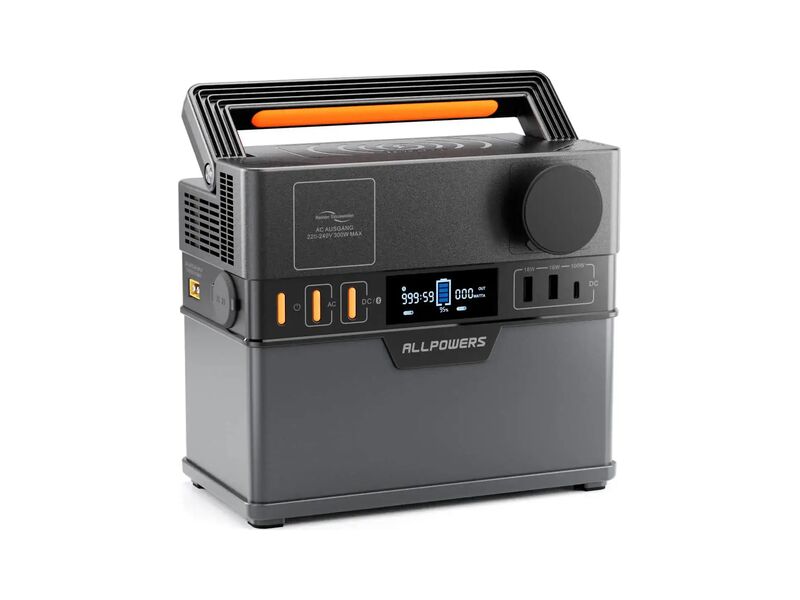
Allpowers S300 Plus
(5 reviews)
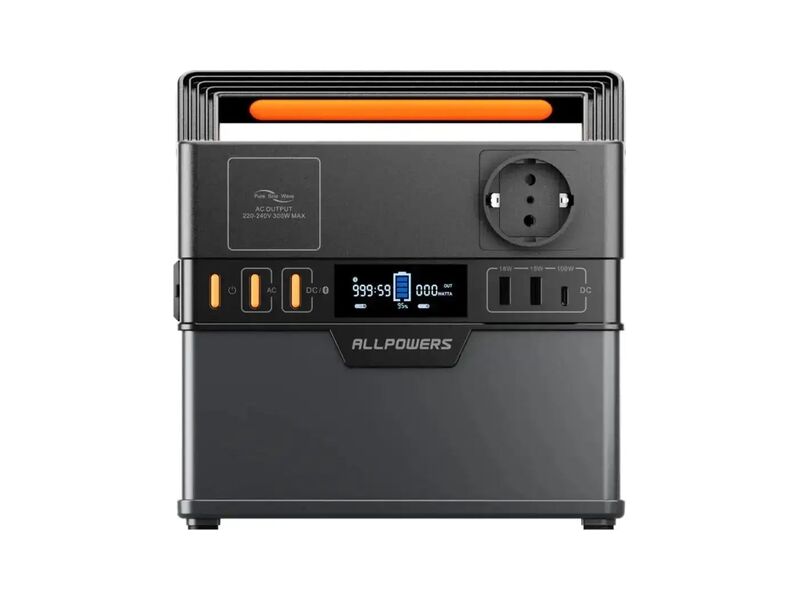
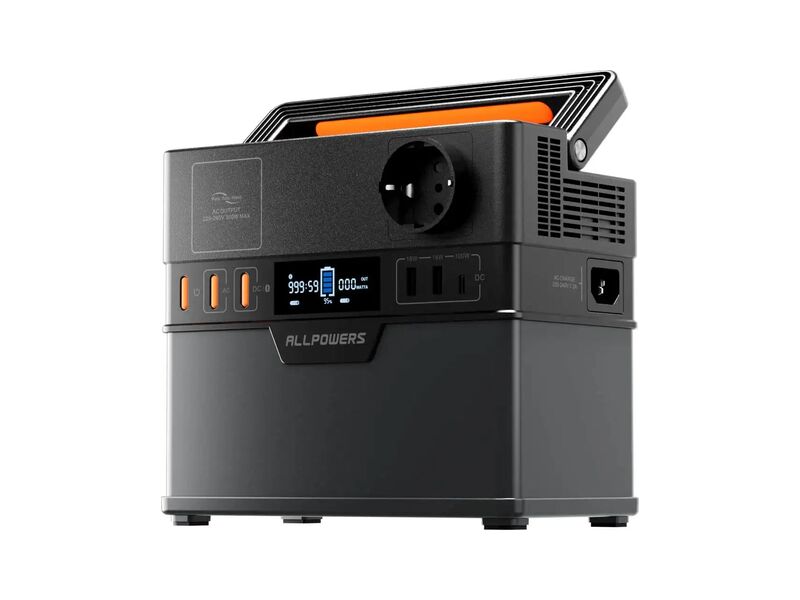
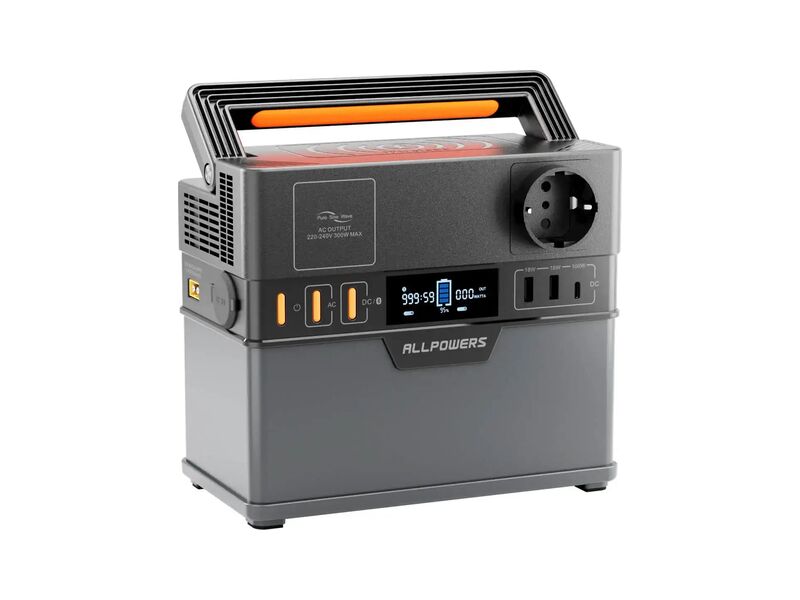
Compact and clever, the Allpowers S300 Plus (288 Wh) combines USB-C 100 W, a wireless charger, an LED torch and app control.
Buy at AmazonAs an Amazon Associate I earn from qualifying purchases.
Characteristics
- Capacity: 288 Wh
- Power: 300 W (600 W peak)
- Recharge: about 1 h 30 from mains
- Weight: 3.4 kg
- USB-C 100 W, wireless charger, LED torch and Bluetooth app
Detailed overview: Allpowers S300 Plus portable power station
The Allpowers S300 Plus is a compact portable power station that offers a lot for its size and price. With its 288 Wh lithium-ion NMC battery and a 300 W pure sine wave inverter (up to 600 W peak), it is designed for small and medium everyday portable devices: a smartphone, a tablet, a laptop, lighting, a router, a camera or small camping gear.
Its strength is how well-equipped it is for its size. It combines an AC outlet, a USB-C 100 W port (rare at this format, able to charge a laptop at full speed), two USB-A ports, a 12 V car output, a wireless charging pad on top and even a built-in LED torch, handy for camping or during an outage. It is controlled through the ALLPOWERS app (Bluetooth), which lets you monitor charging and turn outputs on or off remotely.
For charging, expect about 1.5 hours for a full charge from the mains, 3 to 4 hours via solar (MPPT input up to 100 W) or from the car's cigarette-lighter socket. Its lithium-ion ternary (NMC) battery keeps the unit compact and light, but it ages faster than an LFP cell: that is the trade-off for this format and this price.
Its limits are those of its format: 288 Wh and 300 W suit top-up use (charging devices, lighting, small gear), not running large appliances or a heater. But for anyone after a compact, light (3.4 kg), very well-equipped power station at a low price, the S300 Plus is one of the most attractive options in its category.
Full specifications
Detailed characteristics (EAN: 0759187220229)
Battery and capacity
| Rated capacity?Total stored energy in watt-hours. The higher the figure, the longer the runtime. | 288 Wh |
|---|---|
| Expandable capacity?Whether capacity can be increased with add-on batteries. | No |
| Removable battery?The main battery can be removed or replaced by the user. | No |
| Battery chemistry?LiFePO4 (LFP) lasts far longer and is safer than NMC. | NMC (Li-ion) |
AC output
| Continuous AC power?Power the unit can sustain continuously on its 230 V outlets. | 300 W |
|---|---|
| Surge power?Brief peak tolerated when starting motor or compressor devices. | 600 W |
| Inverter type?A pure sine wave is essential for sensitive electronics and motors. | Pure sine wave |
| AC voltage / frequency?Voltage and frequency of the AC output (230 V / 50 Hz in Europe). | 230 V / 50 Hz |
| Number of 230 V AC outlets?Number of mains outlets available on the unit. | 1 |
| RV / TT-30 outlet?Dedicated 30 A outlet for North-American style RVs. | No |
Recharging
| Max AC charging power?Maximum power drawn from a wall socket; higher means faster charging. | 200 W |
|---|---|
| AC charge 0-100%?Stated time for a full charge on mains power. | 90 min |
| Max solar input?Maximum solar power accepted at the input (PV panels). | 100 W |
| Accepted solar voltage?Panel voltage range compatible with the solar input. | 12 to 60 V |
| Max solar current?Maximum current accepted on the solar input. | 8.5 A |
| MPPT controllers?Number of independent MPPT solar inputs (yield optimisation). | 1 |
| Vehicle charging (12/24 V)?Can be charged from a vehicle's cigarette-lighter socket. | Yes |
| Pass-through charging?The unit can power devices while charging (pass-through). | Yes |
Ports and connectors
| USB-C ports?Number of USB-C ports and the fastest port's power (laptops, phones). | 1 × 100 W |
|---|---|
| USB-A ports?Number of USB-A ports and maximum power (small devices). | 2 × 18 W |
| 12 V output (car socket)?12 V cigarette-lighter output and its power (coolers, pumps…). | Yes (120 W) |
Portability
| Weight?Net weight of the unit, battery included. | 3.4 kg |
|---|---|
| Dimensions (L × W × H)?Overall size of the unit in millimetres. | 206 × 165 × 110 mm |
| Form factor?Portable (hand-carried), transportable (heavy), or wheeled. | Portable |
| Wheels?Built-in wheels for moving the unit. | No |
| Telescopic handle?Retractable handle like a wheeled suitcase. | No |
Safety and environment
| Certifications?Standards and approvals obtained (CE, RoHS, UN38.3, UL…). | CE, RoHS, UN38.3 |
|---|
Backup / UPS
| UPS / EPS mode?Automatic switch to battery on a mains outage (backup). | Yes |
|---|---|
| Switchover time (rated)?Delay before switching to battery; under 20 ms suits a PC or router. | 15 ms |
Noise and thermal
| Quiet mode?Setting that limits fan noise, often by capping charge power. | No |
|---|---|
| Self-heating battery?Battery pre-heating to allow charging in cold weather. | No |
Display and connectivity
| Display?Type of screen showing power, runtime and alerts. | LCD |
|---|---|
| Bluetooth?Bluetooth link for nearby control. | Yes |
| Wi-Fi?Wi-Fi connection for remote control and monitoring. | No |
| Mobile app?iOS / Android app to control the unit. | Yes |
| Local control (no cloud)?Control possible over Bluetooth without an account or internet. | Yes |
| Solar connector?Connector type of the solar input (XT60, Anderson, MC4…). | XT60 |
Availability and warranty
| Market launch?Date the model first became available on the European market. Useful to place its generation: technology moves fast in this segment, and a device several years old may be at the end of its commercial life. | December 2024 |
|---|---|
| Warranty?Length of the manufacturer's warranty. | 2 years |
User manual / Instructions for use (PDF)
⚡ How long will this power station run a device?
With 288 Wh, the Allpowers S300 Plus external battery runs a fridge (50 W) for ~4h55 or an LED TV (90 W) for ~2h45.
| Home | Runtime |
|---|---|
| Fan (45 W) | ~5h25 |
| Refrigerator (50 W) | ~4h55 |
| Freezer (60 W) | ~4h05 |
| American fridge (150 W) | ~1h40 |
| Outdoor & workshop | Runtime |
|---|---|
| Electric cooler (45 W) | ~5h25 |
| Nebulizer (100 W) | ~2h25 |
| Games console (200 W) | ~1h15 |
| Oxygen concentrator (300 W) | ~50 min |
Rough estimate: real consumption varies, and very power-hungry appliances (heating elements) must stay below the output power.
What is this power station best for?
-
Camping & Tent Ideal
At just 3.4 kg for 288 Wh, the S300 Plus is the ideal companion for the light-travelling camper: it easily handles lighting, charging phones, tablets and watches, a small fan, and even its built-in wireless charger and LED lamp, very handy in the tent. Its 300 W output (500 W peak) covers everyday small devices, and its slim format slips into a bag or a corner of the boot. Rechargeable in 90 minutes from mains and up to 100 W from solar, it lasts a modest camping weekend. For large cooking appliances, a more powerful station is preferable.
-
Remote work Suitable
For occasional work away from the office, the S300 Plus keeps the essentials running: its 300 W output powers a laptop and a router or 4G box for several hours, and its 60 W USB-C recharges a second device in parallel. Its 288 Wh suit a morning or a video meeting in a garden, a workshop or a shared space without an outlet. Very light (3.4 kg), it moves around effortlessly. Its modest capacity and 300 W output reserve it for light work: a dual-monitor setup or a printer will call for a beefier model.
-
Photo & Video Suitable
On a photo or video outing, the S300 Plus is a discreet backup station: its 288 Wh recharge several sets of mirrorless batteries, drone packs and lavalier mics, and its 300 W output runs a small LED panel or a fast charger between takes. Its wireless charger and 60 W USB-C simplify charging phones and audio gear. At 3.4 kg it fits in the camera bag and follows the photographer scouting or wandering, where a large station would be overkill.
-
Road trip & Car Suitable
Compact and rechargeable from the car socket while driving, the S300 Plus is a good road-trip companion: it keeps a small cooler cold at stops, recharges phones, cameras and a laptop, and doubles as a light in the evening thanks to its built-in lamp. Its 288 Wh and 3.4 kg fit anywhere in the cabin. For several successive nights off-grid, its modest capacity will need regular recharging, in the car or via a small solar panel.
Our team's recommendations based on the model's capacity, output power and weight.
Compatible solar panels
A selection of photovoltaic panels that suit this station's solar input (up to 60V / 100W), best match first.


Comparison
Under £171, the Allpowers S300 Plus compares with the most sought-after small 250 to 300 Wh power stations, through searches such as "S300 Plus vs EcoFlow River 2" or "S300 Plus vs Jackery 300". Here is how it stacks up against three of its most compared alternatives: the EcoFlow River 2, the fastest to recharge, the Jackery Explorer 300 Plus, a segment benchmark, and the Bluetti EB3A, more powerful.
| Criterion | Allpowers S300 Plus | EcoFlow River 2 | Jackery Explorer 300 Plus | Bluetti EB3A |
|---|---|---|---|---|
| Capacity | 288 Wh | 256 Wh | 288 Wh | 268 Wh |
| Continuous / peak power | 300 W / 600 W | 300 W / 600 W | 300 W / 600 W | 600 W / 1200 W |
| Battery chemistry | NMC (lithium-ion) | LFP (LiFePO4) | LFP (LiFePO4) | LFP (LiFePO4) |
| Mains recharge 0-100% | ≈ 1 h 30 | ≈ 1 h | ≈ 2 h | ≈ 1 h 10 |
| Weight | 3.4 kg | ≈ 3.5 kg | ≈ 3.75 kg | ≈ 4.6 kg |
| Observed price | ≈ £162 | ≈ £170 | ≈ £256 | ≈ £221 |
In short, the Allpowers S300 Plus is the most compelling option on budget and equipment: it is the cheapest of the group, one of the lightest, and the best equipped for its format (USB-C 100 W, wireless charger, LED torch and app control). The EcoFlow River 2 recharges faster (1 h) and benefits from a very established brand, while the Bluetti EB3A wins on power (600 W). For top-up portable use on small and medium devices, at the best price, the S300 Plus is hard to beat.
Related video
Video: ALLPOWERS S300 Plus Portable Power Station Review - Published on 15/11/2024
Our tester's review: Christophe Delpuech
We tested the S300 Plus for several weeks, and for a station this size it is surprisingly complete. Compact as a small shoebox and light (3.4 kg), it fits anywhere. What stands out first is the USB-C 100 W port: rare at this format, it charges a laptop at full speed, where many rivals cap at 60 W. The wireless charging pad on top and the built-in LED torch are two well-thought-out extras for camping or an outage. We also liked the Bluetooth app, which lets you monitor charging and switch ports off remotely, not that common on such an affordable model. Its 288 Wh and 300 W suit small and medium devices (phones, laptops, lighting, a router, small gear), not running large appliances. Two honest downsides: the 300 W output limits its uses, and a few users report a perfectible finish on the fans. But at under £170, with this level of equipment, it offers formidable value for a first portable station.
In-depth review Allpowers S300 Plus: our full review 3.8/5 Read our full review → Capacity and efficiency 3.6 Delivered power 3.7 Recharging 4.1 Ports and control 4.0 Build and endurance 3.5 Noise not measuredFrequently asked questions: Allpowers S300 Plus portable power station
With 288 Wh and 300 W (up to 600 W peak), it charges and runs a smartphone, a tablet, a laptop, lighting, a router or small camping gear. It is not designed for large appliances.
About 1.5 hours for a full charge from the mains. Expect 3 to 4 hours via solar (MPPT input up to 100 W) or from the car's cigarette-lighter socket.
Yes, and it is one of its strengths: its USB-C 100 W port charges a laptop at full speed, where many stations of this format are limited to 60 W. It also has a 300 W AC outlet.
Yes. Compact and light (3.4 kg), solar-rechargeable and fitted with a built-in LED torch, it is ideal for camping, van life or days out. Its 288 Wh suit top-up use over an evening or a weekend.
Yes, it is controlled through the ALLPOWERS app over Bluetooth: monitor charging and consumption and turn outputs on or off remotely, which is rare on such an affordable model.
Need help choosing?
Other products in the "Compact power stations" category
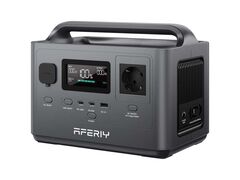
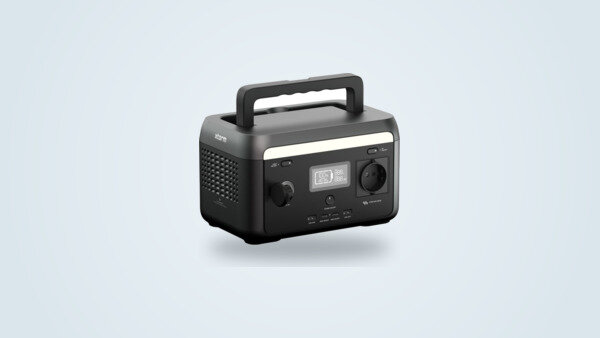
Aferiy P040
£162.12 (11)
With 256Wh, a full mains recharge in just over an hour and a UPS mode under 10ms, the Aferiy P040 protects sensitive devices without breaking the bank.
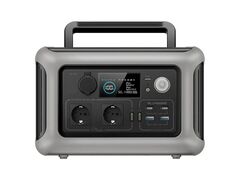
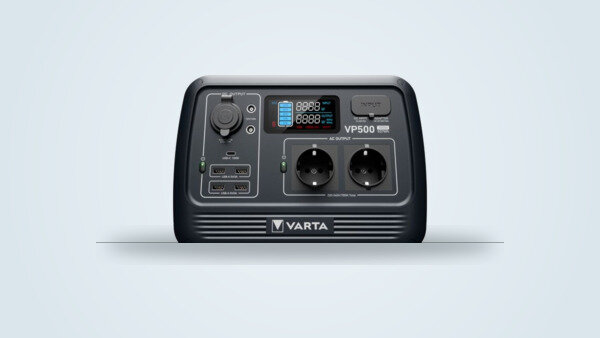
Allpowers R600
See price (7)
Affordable and backed by a 5-year warranty, the Allpowers R600 delivers 299 Wh, 600 W and a one-hour recharge, plus a built-in wireless charger.
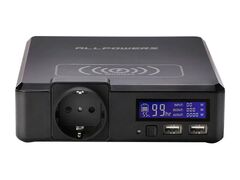
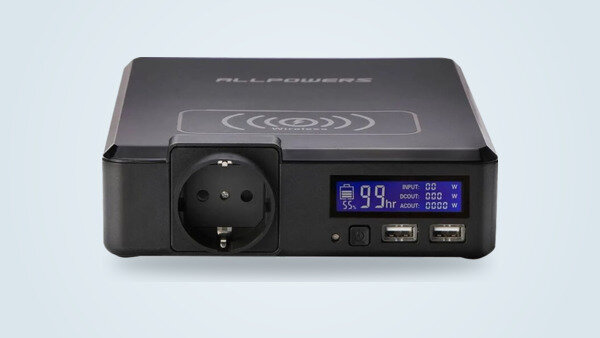
Allpowers S200
See price (6)
154Wh and 200W in an ultra-compact, book-sized station with built-in wireless charging: the mini power station that goes everywhere without weighing you down.
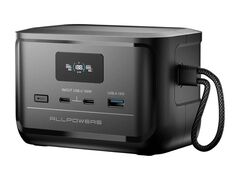
Allpowers Solax P100
See price
99Wh and 128W in a 950g compact format, with no mains socket: the all-USB-C mini power station that recharges almost everything while hiking or travelling.
Published on 07/07/2026, updated on 25/08/2026