
EcoFlow Trail 300 DC: our full review

With 288 Wh, no mains socket, and a 140 W USB-C port whose measured efficiency sits close to 94 %, the EcoFlow Trail 300 DC fully commits to its all direct current design. But that efficiency is not uniform: on the 12 V car outlet, it drops to around 81 %, which tempers the promise of a 100 % DC architecture that is necessarily more efficient. Another point worth knowing before buying: this recent product (launched in August 2025) has not been the subject of any independent lab test found to date, in any language.

Our rating
3.8/5
Capacity and efficiency: 4.0 out of 5 (weighting 25%)Capacity4.0Output power: 3.7 out of 5 (weighting 25%)Power3.7Recharging: 4.1 out of 5 (weighting 15%)Recharging4.1Ports and control: 3.6 out of 5 (weighting 15%)Ports3.6Build and endurance: 3.8 out of 5 (weighting 12%)Build3.8
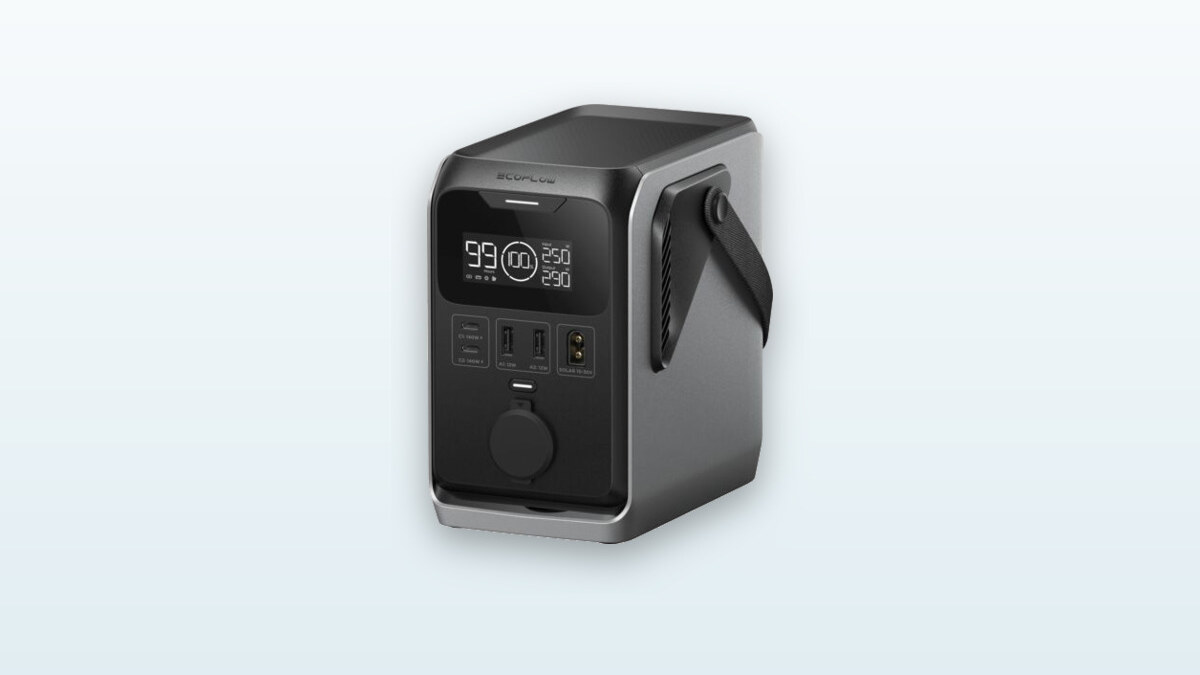
Compact EcoFlow Trail 300 DC portable power station, USB-C ports and 12 V car outlet visible

The essentials

The Trail 300 DC commits to a radical design choice: no mains socket, all direct current. On its USB-C port, the measured efficiency is excellent, around 93.7 % of the advertised capacity, but it drops to around 81 % on the 12 V car outlet, which tempers the promise of an architecture that is systematically more efficient. Recharging is fast and confirmed (around 69 minutes to 80 % with both USB-C ports), and the quiet operation (no fan) is a real strength. One point remains worth knowing before buying, rather than a criticism of the product itself: this recent model has not been the subject of any independent lab test found to date. An efficient, well-designed small DC station for connected outdoor use, provided its functional limits (no mains socket) fit your needs.

Strengths

  • Excellent efficiency on the USB-C port, around 93.7 % of the advertised capacity delivered
  • Fast recharge, around 69 minutes to 80 % measured with both USB-C ports used together
  • Genuinely quiet, no internal fan inside the unit
  • Dedicated solar and car port (XT60, 110 W), a genuine new addition compared with the Trail 200 DC
  • Very compact and light (2.58 kg), with a 12 V car outlet that's handy on a road trip

Limitations

  • Notably lower efficiency on the 12 V car outlet, only around 81 %
  • No 230 V mains socket: incompatible by design with any device that requires alternating current
  • No independent lab test found for this specific model, despite having launched a year ago
  • Overload protection limited to a simple cutoff, with no smart power distribution
  • Only two USB-C ports against a direct rival that offers four, and no built-in flashlight
  • IP30 only: protection against dust, not against water
EcoFlow Trail 300 DC: see the full details and price →

On paper: a radical choice, all direct current

With 288 Wh of LiFePO4 capacity and a total output of 300 W spread across five outputs, the EcoFlow Trail 300 DC makes a radical choice: no inverter, no 230 V mains socket. It bets everything on direct current, with two bidirectional 140 W USB-C ports, two USB-A ports and a 12 V car outlet, a new addition compared with its little sister the Trail 200 DC. At 2.58 kg, it remains easy to carry.

288 Wh
advertised capacity
2.58 kg
weight
300 W
total output

100 % direct current: a genuine functional limit

The absence of an inverter is not a marketing simplification: it is a genuine functional limit to understand before buying. Without a 230 V mains socket, no device that requires alternating current (a classic charger, small kitchen appliances) can be plugged in directly. In exchange, the stored energy does not need to be converted to power USB or 12 V devices, which avoids a loss point that inverter-based stations suffer from. This is a station designed for connected outdoor use (laptop, phone, drone, 12 V accessories), not to replace a classic electrical installation.

Real efficiency depends on the port used

Real efficiency is not the same across every outlet. On the USB-C port, under a load close to 90 W, the measured output reaches around 93.7 % of the advertised capacity, an excellent result. On the 12 V car outlet, however, under a constant load of around 107 W, the measured output drops to around 81 %. The gap comes down to the DC-DC converter specific to that outlet, which has its own losses even without an inverter in the picture. The promise of a 100 % DC architecture that is systematically more efficient than an inverter-based station therefore needs to be qualified based on the port actually used.

Recharging: fast in practice

The measured recharge time is fast: around 69 minutes to reach 80 % using both 140 W USB-C ports at the same time, against 1h54 with a single USB-C port. Via the dedicated solar or car port (110 W), expect around 2h24 to reach 80 %. A full charge with a single 140 W charger draws around 334 Wh from the mains meter to fill the rated 288 Wh, a loss of around 10 % on the charging side.

Connectivity: a dedicated XT60 port, but choices worth knowing

The dedicated solar and car charging port uses an XT60 connector, accepting a range of 10 to 30 V and up to 110 W. This is a genuine new addition compared with the Trail 200 DC, which only recharges via USB-C. Overload protection is limited to a cutoff with a warning message above 300 W combined across all outlets: there is no smart power distribution between ports. Against a direct rival that offers four USB-C ports, the Trail 300 DC has only two, and it does not include a built-in flashlight, unlike some competitors in the same segment.

Silent and IP30: what to know

No internal fan is fitted to the unit, and no noticeable noise has been reported, including while charging a laptop. The 0 dB figure remains a manufacturer claim, with no sound-meter measurement available for this model. On the durability side, the IP30 rating only covers dust and solid particles, not water: worth keeping in mind for use in the rain.

A recent product, still barely scrutinized

Launched in August 2025, the Trail 300 DC remains a recent product: no full lab test, with a detailed protocol, has been found for this specific model, including from sites that are generally active on other EcoFlow ranges. A buyer therefore relies largely on the specifications provided by the manufacturer rather than on extensive independent evaluation, a point worth knowing before buying rather than a criticism of the product itself.

Watch out for the Trail Plus 300 DC, a different model

Be careful not to confuse this model with the Trail Plus 300 DC, a different and more recent product (NCM chemistry instead of LiFePO4, three USB-C ports instead of two, Bluetooth and Wi-Fi with an app). Some of the content available online, including from specialized sites, actually covers this Plus variant rather than the base model covered here.

Who it suits, and who it does not

It suits anyone looking for a small energy reserve for camping, van life or light hiking, with needs that are mostly USB and 12 V, and who does not need to plug in a classic mains-powered appliance.

It does not suit anyone who needs, even occasionally, to power a 230 V mains appliance: this 100 % DC architecture rules that out by design, not just as a range positioning choice.
In one sentence: a small DC station that is efficient on its USB-C port, provided you accept its functional limits and the limited independent track record available for this recent model.

The product and its alternatives

EcoFlow Trail 300 DC

EcoFlow Trail 300 DC

£169.00 (4)

A 100% DC power station of 288Wh with a 12V car outlet: dual 140W USB-C, long-life LiFePO4 battery, built for camping and road trips.

View product

Frequently asked questions

No, and it's a deliberate design choice: it runs on 100 % direct current, with no inverter and no mains socket. It can only power devices compatible with USB-C, USB-A or 12 V.

It depends on the port used. On the USB-C port, the measured output reaches around 93.7 % of the advertised capacity, a very good result. On the 12 V car outlet, however, it drops to around 81 %, due to losses specific to that outlet's converter.

An XT60 connector, for a range of 10 to 30 V and up to 110 W. A full recharge via this port takes around 2h24 to reach 80 %.

It's a different model, with NCM chemistry, three USB-C ports and Bluetooth/Wi-Fi connectivity absent from the base model covered here. Some of the content available online actually covers this Plus variant.

Yes, no internal fan is fitted to the unit. The 0 dB figure claimed by the manufacturer, however, remains a figure not measured with a sound meter for this specific model.

The rating in detail

Our rating
3.8/5
Capacity and efficiency 4.0
Output power 3.7
Recharging 4.1
Ports and control 3.6
Build and endurance 3.8
Noise not measured
EcoFlow Trail 300 DC: see the full details and price →