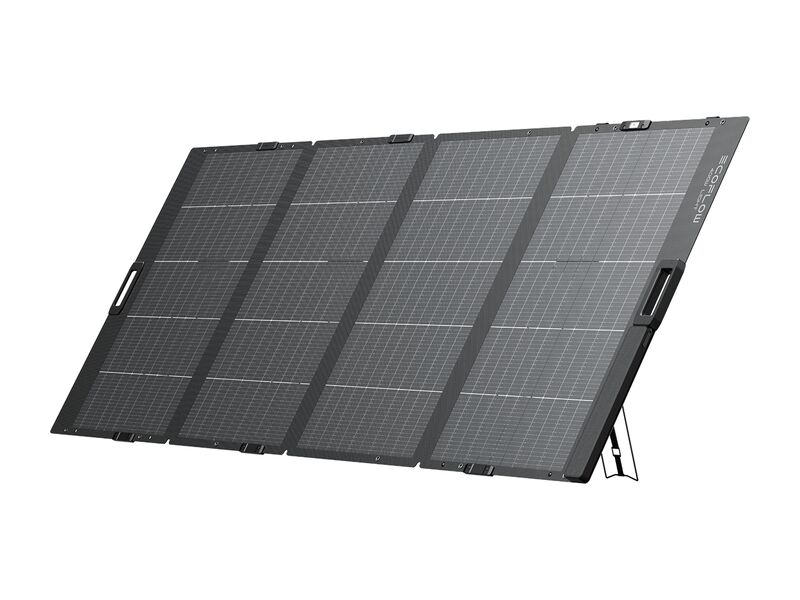
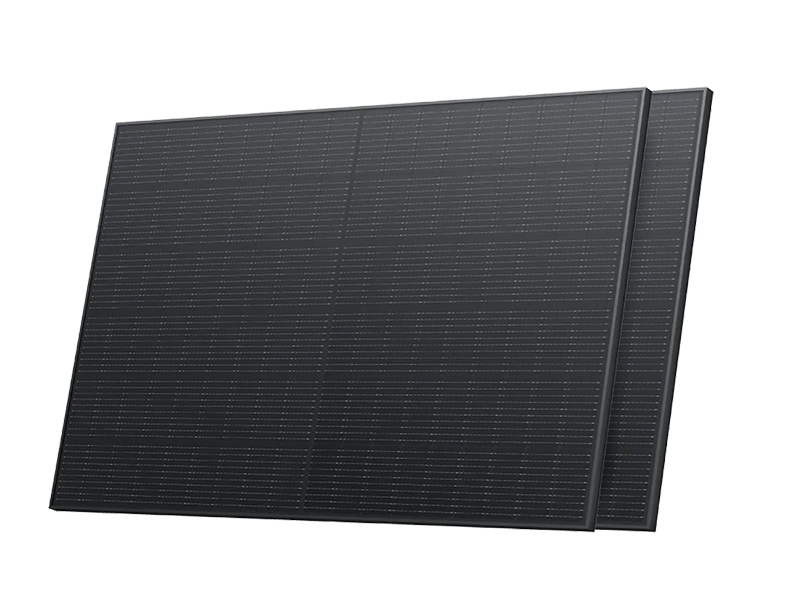
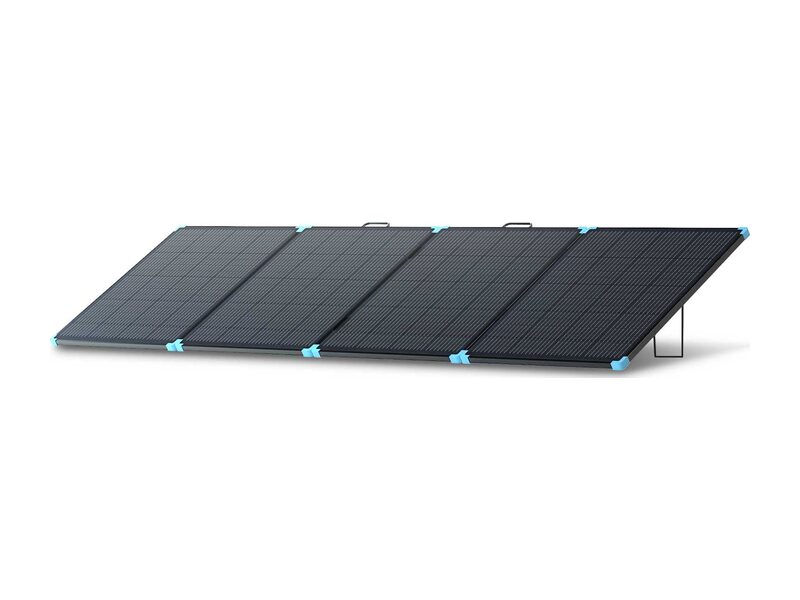
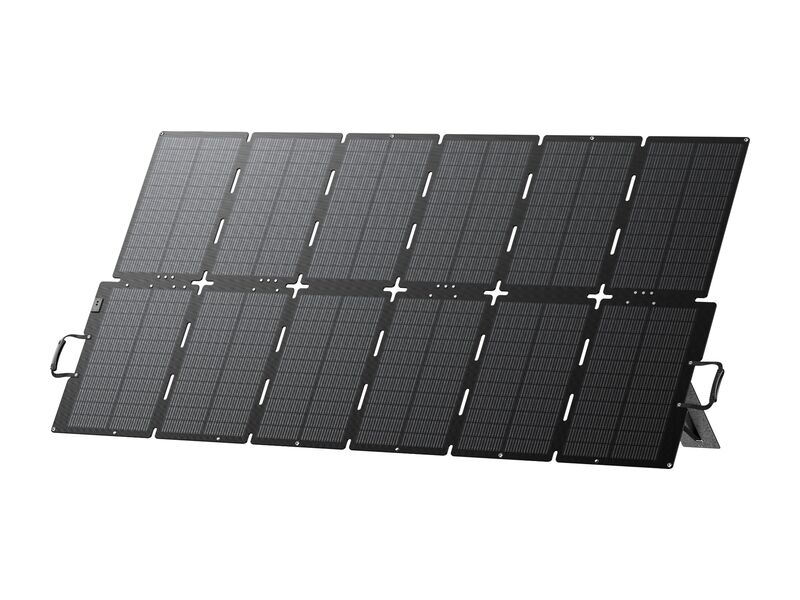
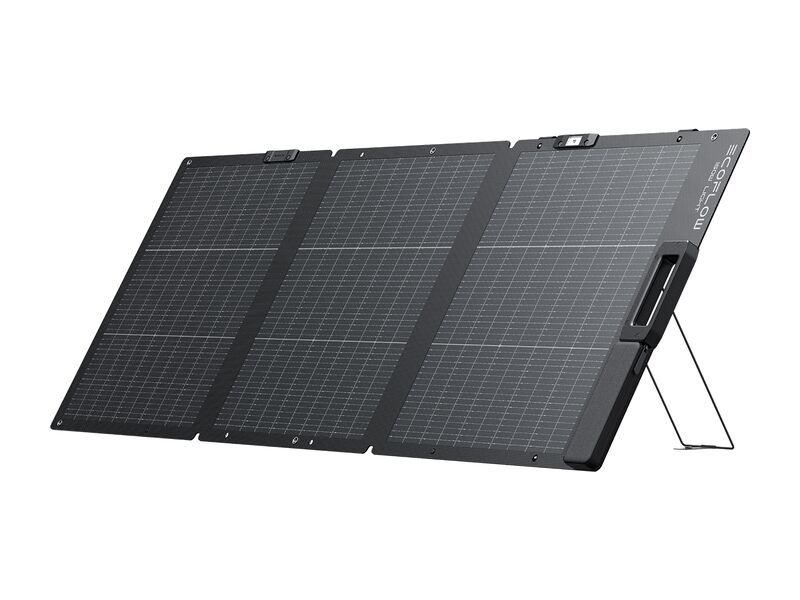
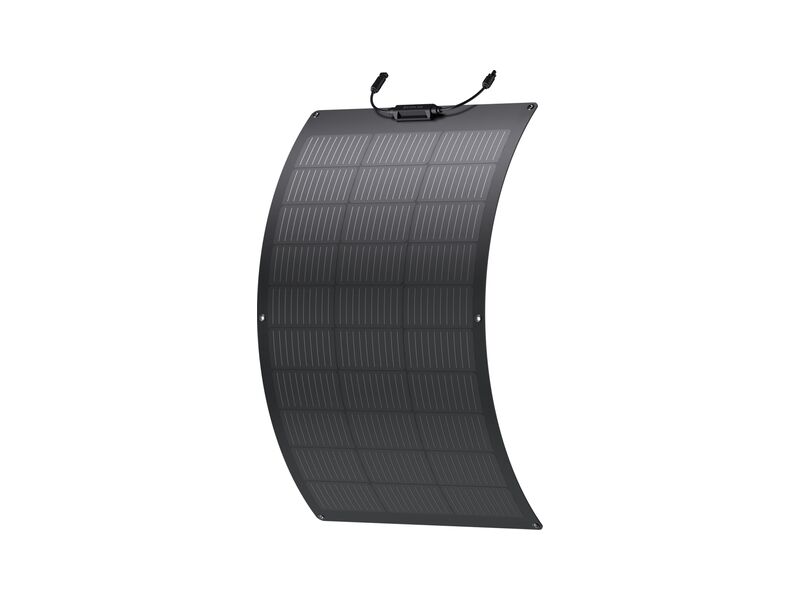
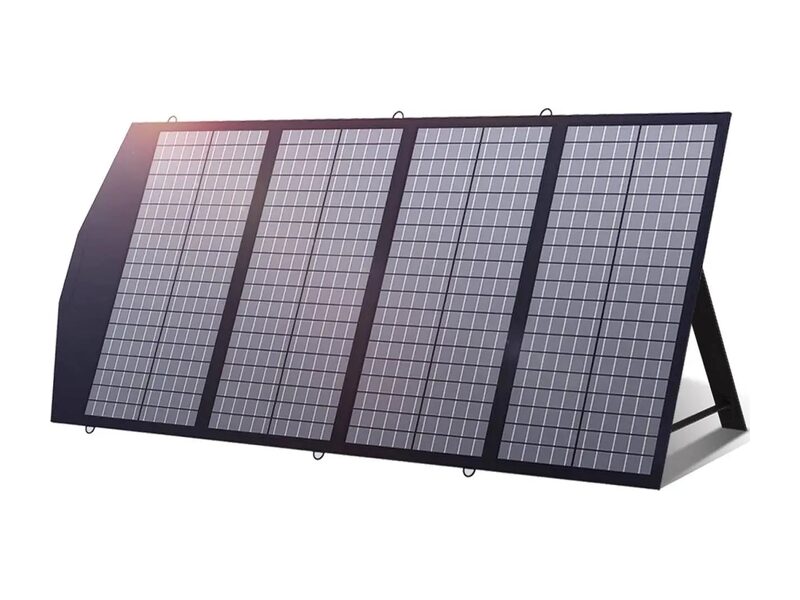
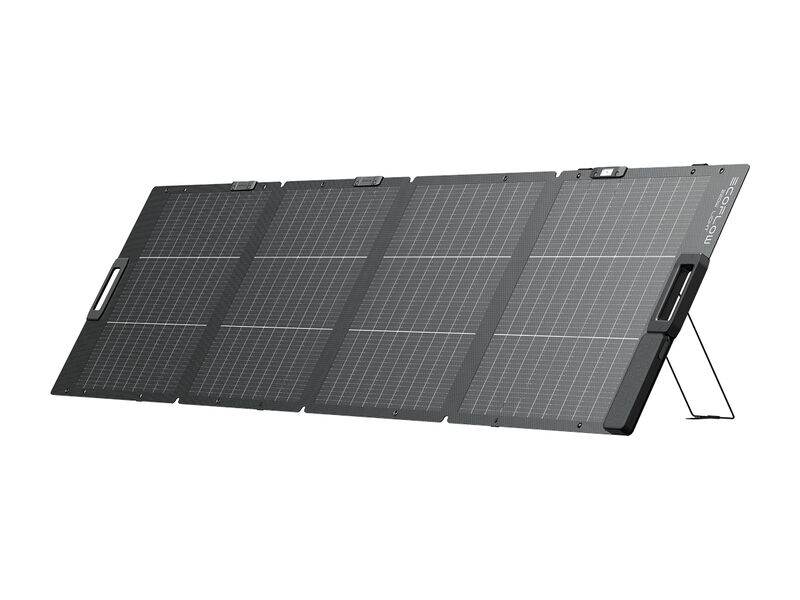
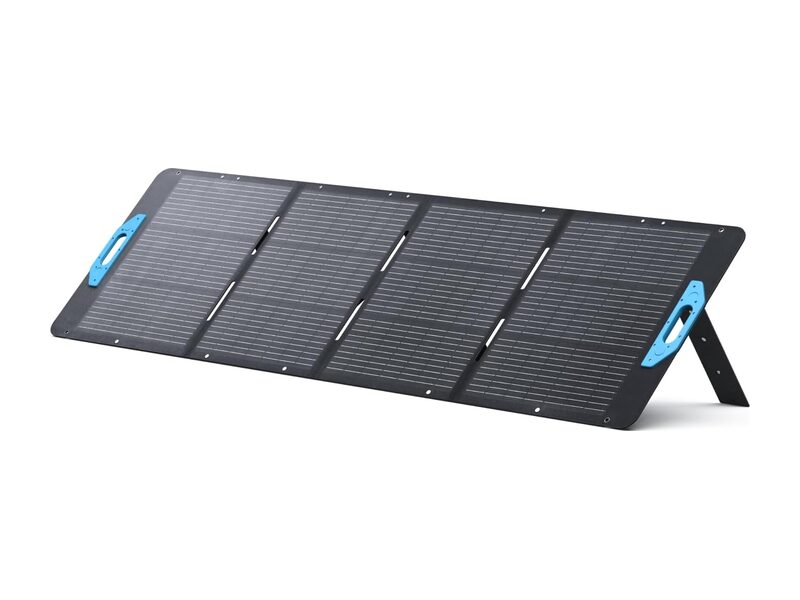
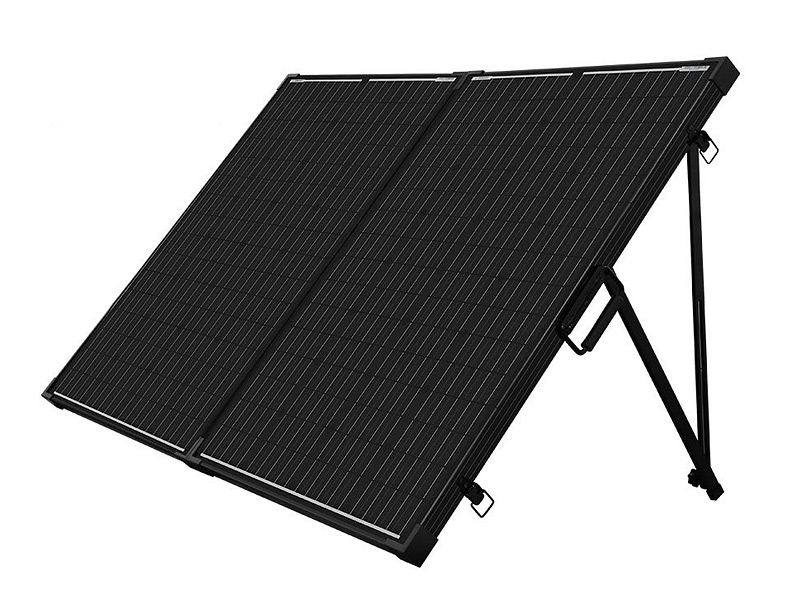
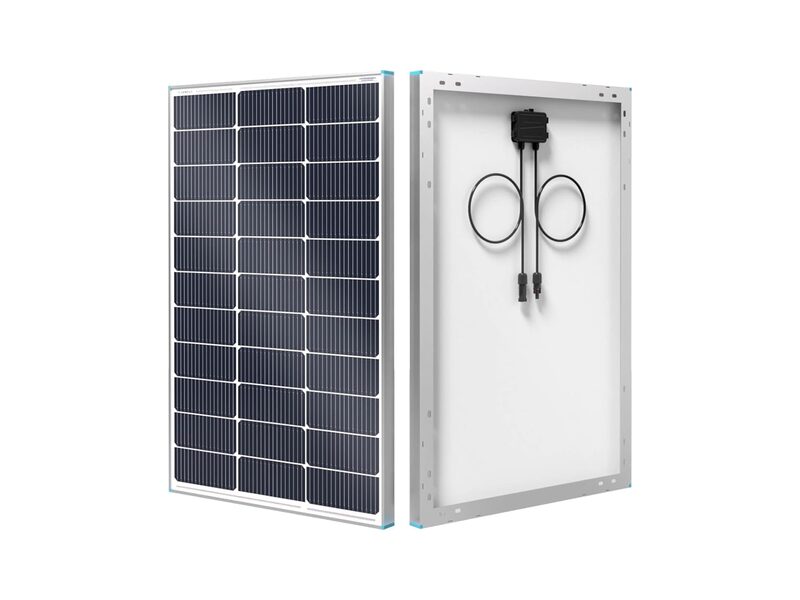
The solar panel that truly fits your power station.
Plugging any panel into any station is a false good idea: a panel whose voltage exceeds what the station accepts will not charge, and may even damage it. This tool settles the question upfront: you pick your station (or enter its solar input), and we show the panels in our catalogue that are genuinely compatible.
The safety criterion
Every station has a solar charge controller (MPPT) with a voltage range and a maximum input power. The critical point is the panel’s open-circuit voltage (Voc): it must stay below the input’s maximum voltage. That is the gate we check first, before anything else. A panel out of range is ruled out immediately.
The ranking
- Among compatible panels, we favour those whose power best uses the station’s input: they are marked Ideal. The others, compatible but less exact, are marked Suitable.
- At the same level, we rank by popularity (the most-chosen models first).
- A panel with a different connector (MC4, XT60…) stays compatible through an adapter, which we flag.
Two ways to use it
Is your station in our catalogue? Select it and everything is pre-filled. Do you have a model from another brand? Switch to manual entry and enter the maximum voltage and power of its solar input (given in its manual): the tool still finds the panels that fit. Remember that real output depends on sunshine, orientation and temperature; these recommendations guarantee compatibility, not instant charging on a cloudy day.
Getting the most from your panels
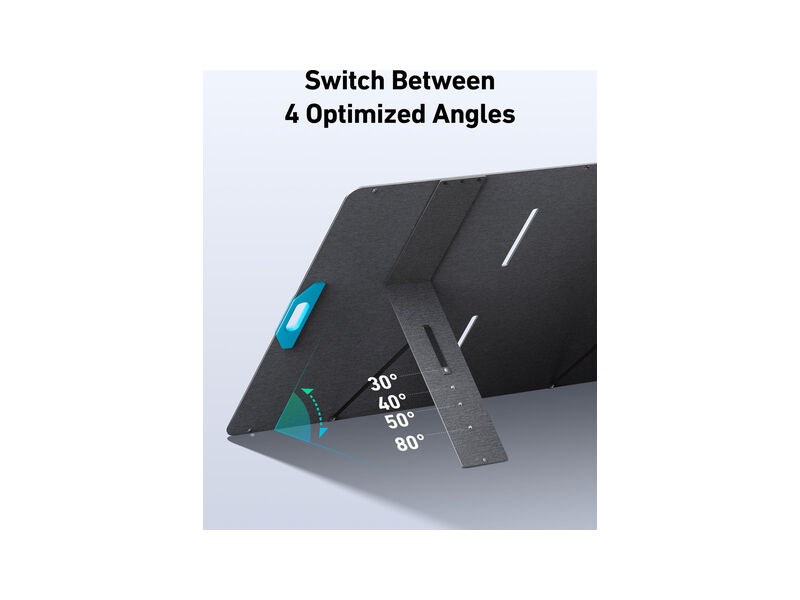
Compatibility ensures the current flows; efficiency depends on you. Face the panel due south (in the northern hemisphere), tilt it toward the sun and follow its path through the day: a simple readjustment every two hours can gain 20 to 30 % of output. Avoid the slightest cast shadow, even partial, which makes a whole string collapse.
To go further, you can combine several panels, in series (voltages add up, taking care not to exceed the station’s maximum voltage) or in parallel (currents add up). Heat, paradoxically, slightly reduces efficiency: a well-ventilated panel performs better than a scorching one. Finally, a short cable of good cross-section limits losses. These simple actions turn a decent charge into an optimal one.
Matching a station to its panels is one of the questions that comes up most in our exchanges with customers: this tool answers it in seconds, with no risk of a voltage error. Once the right panel is found, its page details output, connectors and size so you can finalise your solar setup with peace of mind.