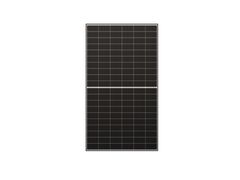

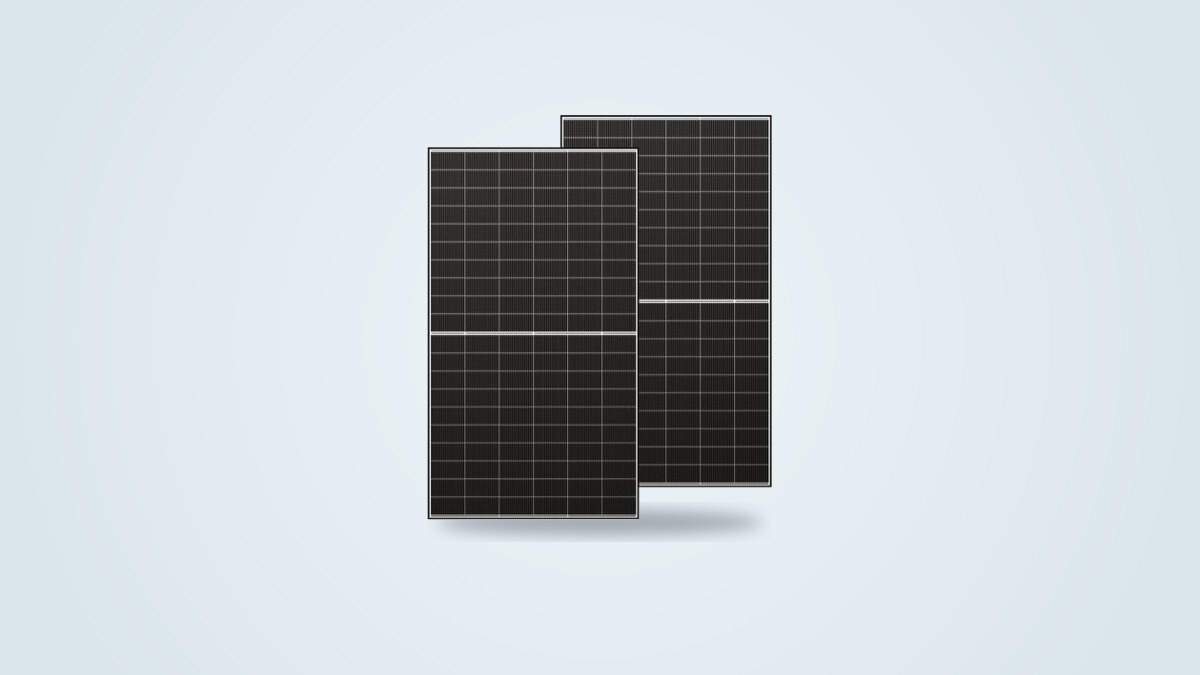
Two rigid bifacial 500W panels, built for the balcony
This Zendure product bundles two rigid bifacial solar panels at 500W each, in dual-glass construction. Unlike a standard panel that only captures light on its front face, each module also picks up light reflected off the ground or nearby surfaces on its rear face.
On paper, two 500W modules mean 1000W nominal on the front face alone. Zendure's claimed 1300Wp potential includes up to 300Wp of extra output from the rear face, under good reflection conditions. That makes real sense on a raised balcony or flat roof, where light bounces easily off a light-colored surface underneath.
Bifacial: a real bonus, if installed correctly
The physics behind bifacial panels is sound: a photovoltaic cell converts whatever light reaches it, regardless of which face. By letting some radiation pass through the rear glass, these panels capture light reflected off the ground, a white railing, light gravel, or snow, on top of the direct radiation hitting the front.
The claimed cell efficiency (up to 22.5%) sits toward the upper end of current monocrystalline panels. No independent measurement of the real cell efficiency or the actual bifacial gain exists for this model to date: these figures remain manufacturer claims, consistent with how the technology physically works, but not verified under controlled conditions.
27kg per panel: an installation that needs planning
This isn't a nomadic panel: at 27kg per module and 54kg for the pair, mounting demands a solid fixing and a two-person job. The dimensions (1960 x 1134 x 30mm per panel) confirm a format built for fixed installation, balcony, flat roof, or terrace, not for travel.
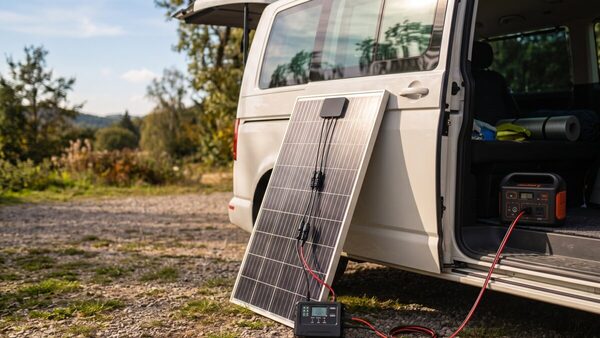
To actually benefit from the bifacial effect, Zendure recommends a slightly raised or tilted mount, so light can reach the rear face too. Mounting flat directly on the ground, with no gap underneath, strips the panel of most of its bifacial advantage: in that case, it behaves like an ordinary 500W panel, nothing more.
This weight and installation constraint aren't flaws in themselves, they come with the choice of a more durable dual-glass build over a lighter backsheet design. But they rule this product out for anyone looking for a panel that's easy to move or install solo.
2400 Pa wind, 5400 Pa snow: unusually precise figures
The panels are certified to withstand wind loads of 2400 Pascals and snow loads of 5400 Pascals, specific figures that few balcony-panel listings document in this much detail. The junction box carries an IP68 rating, the strongest common protection against water and dust.
The dual-glass build (glass-glass rather than the more common glass-backsheet) protects the cells better over time against UV and moisture, a sensible choice for a permanent outdoor install rather than seasonal use.
These certifications are manufacturer-stated: no independent mechanical stress test has turned up for this specific model to date, but the specific figures and dual-glass construction remain solid indicators of durability.
MC4 connectors: compatible with SolarFlow and most third-party setups
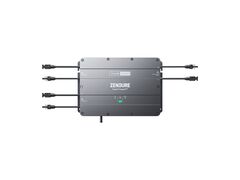
The panels connect via MC4 connectors (MC4 Evo2 compatible), the de facto standard across the solar industry. That makes them directly compatible with Zendure's own SolarFlow ecosystem, Hub 2000, Hyper 2000, and SolarFlow 800, as well as the vast majority of third-party microinverters and charge controllers on the market.
With an open-circuit voltage of 39.2V and a short-circuit current of 15.9A per panel, the electrical characteristics stay within common standards for this output class, with no special requirement on the paired regulator or microinverter beyond the usual check of accepted voltage range.
This MC4 standard is a genuine practical plus: it avoids any proprietary adapter and lets these panels pair with any compatible existing setup, not just Zendure's own range.
Against the same brand's flexible 420W: rigid versus flexible
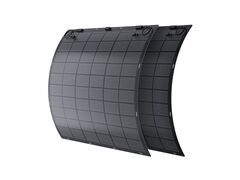
Zendure sells a pair of flexible 210W panels (420W total) in parallel, a directly comparable alternative within its own range.
| Criterion | 500W bifacial (this product) | 420W flexible |
|---|---|---|
| Combined output | Up to 1300Wp | 420W |
| Type | Rigid, dual-glass | Flexible, bends to 220° |
| Weight per panel | 27kg | 4.3kg |
| Bifacial | Yes | No |
| Stated warranty | Not stated | 12 years |
The choice between the two mainly comes down to the surface available: a rounded railing or a curved roof calls for the flexible option, while a flat balcony with good ground reflection makes the most of the rigid bifacial design. The flexible panel stays far easier to handle solo, with a clearly stated warranty, where the bifacial version bets everything on maximum output at the cost of much greater weight and installation demands.
Who this bifacial pair is for
This pair of bifacial panels suits anyone with a balcony, terrace, or flat roof with a light or reflective surface underneath, and who can arrange a solid mount for 54kg of rigid panels. That's the profile that gets the most out of the claimed 1300Wp potential.
For a curved surface, a rounded railing, or a need to handle the panels solo, the same brand's flexible 420W panels remain a better fit. And for anyone who wants a clearly stated warranty before buying, the absence of one on this specific listing is worth confirming directly with the seller.