
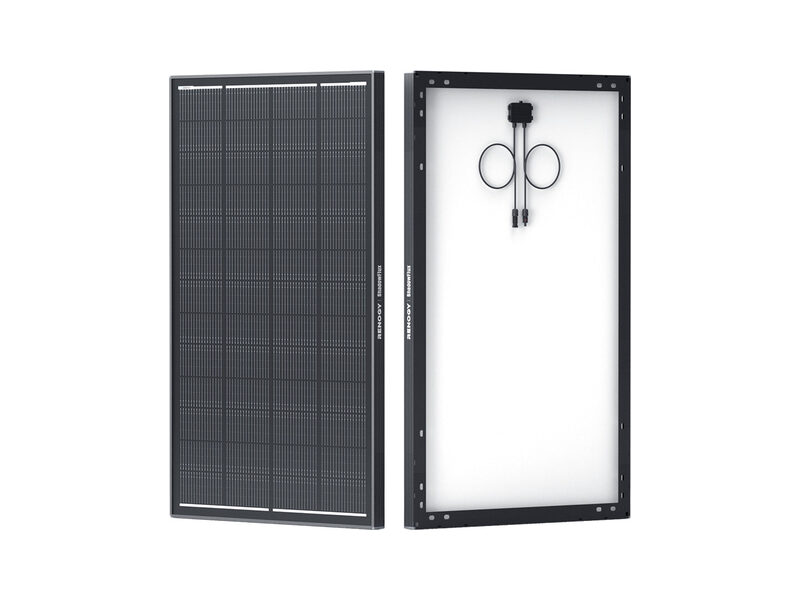
Renogy ShadowFlux 200W
(3 reviews)
A roof vent, an aerial, a branch: on a campervan roof, partial shade is expensive. This panel is built to keep producing when part of its surface is covered.
Buy at AmazonAs an Amazon Associate I earn from qualifying purchases.
Characteristics
- Power: 200 W, N-type cells (25% efficiency)
- Anti-shading: 28 bypass diodes, up to 85% more output in shade
- Module efficiency: 20.7%
- Format: 1262 x 764 x 30 mm, 10.81 kg
- Keeps producing when part of the panel is covered
Detailed overview: Renogy ShadowFlux 200 W anti-shading solar panel
The Renogy ShadowFlux 200 W is a rigid solar panel built for one specific problem: partial shading. On an ordinary photovoltaic module the cells are wired in series and grouped into three large sections, each protected by a bypass diode. If a single cell falls into shade, its whole section is bypassed: the panel loses a third of its output over a few square centimetres.
ShadowFlux technology splits the module into 28 independent zones, each with its own diode. A localised shadow now knocks out only a fraction of the surface, and Renogy claims up to 85% more output in those conditions than a conventional panel. That is the difference between a cluttered van roof that still produces and one that collapses as soon as the sun moves behind the rack.
The cells are N-type, a newer generation than the PERC found in most panels on the market. They reach 25% cell efficiency, degrade more slowly under light exposure and cope better with heat, which matters on a roof where operating temperature often passes 60 °C. The 16 busbars cut resistive losses and limit the impact of a micro-crack.
At module level, efficiency stands at 20.7%, for 200 W at 31.3 V and 6.86 A. The 1262 x 764 x 30 mm format and the claimed 10.81 kg represent roughly 7% less area and 10% less mass than the average 200 W panel, a gap you notice when lining up several modules on an already crowded roof.
Construction follows industry standards: low-iron tempered glass, POE film, anti-corrosion aluminium frame, junction box and MC4 connectors rated IP67. Operating range runs from -40 to 85 °C. Renogy covers materials and workmanship for five years and quotes a 25-year lifespan. For an installation with no shading constraint, the Renogy 100 W rigid remains cheaper per watt.
Full specifications
Detailed characteristics
Panel
| Peak power?Rated panel power in full sun (STC conditions). | 200 W |
|---|---|
| Cell technology?Cell type; monocrystalline offers the best efficiency, flexible CIGS tolerates shading better. | Monocrystalline |
| Conversion efficiency?Share of solar energy converted to electricity; higher means a more compact panel for the same power. | 20.7 % |
| Panel type?Foldable (portable), rigid framed (fixed install) or flexible (curved surfaces). | Rigid (framed) |
| Bifacial?Also captures reflected light on its rear side, for extra output. | No |
Electrical specifications
| Voltage at max power (Vmp)?Voltage at the maximum power point. | 31.3 V |
|---|---|
| Current at max power (Imp)?Current at the maximum power point. | 6.86 A |
| Open-circuit voltage (Voc)?Open-circuit voltage; check against your station/controller MPPT input range. | 36.5 V |
| Short-circuit current (Isc)?Maximum short-circuit current. | 6.86 A |
Outputs and connectors
| Output connectors?Output socket type(s) (MC4, XT60, Anderson, DC, USB…); determines compatibility with your station. | MC4 |
|---|
Durability and format
| Ingress protection?Water and dust resistance (IP rating). | IP67 |
|---|---|
| Adjustable kickstand?Kickstand or support to angle the panel toward the sun. | No |
| Weight?Weight of the panel. | 10.81 kg |
| Unfolded dimensions (L × W × D)?Footprint when unfolded, in millimetres. | 1262 × 764 × 30 mm |
Warranty
| Warranty?Length of the manufacturer's warranty. | 5 years |
|---|
☀ How fast does this panel recharge a power station?
The Renogy ShadowFlux 200W panel (200 W) recharges a Jackery Explorer 1000 v2 (1070 Wh) in ~7h40 or an EcoFlow Delta 2 Max (2048 Wh) in ~15h, in full sun.
| Compact / mid | Recharge |
|---|---|
| Jackery Explorer 100 Plus (99 Wh) | ~40 min |
| EcoFlow River 2 (256 Wh) | ~1h50 |
| Jackery Explorer 500 v2 (512 Wh) | ~3h40 |
| DJI Power 1000 (1024 Wh) | ~7h20 |
| High capacity | Recharge |
|---|---|
| EcoFlow Delta 2 Max (2048 Wh) | ~15h |
| Jackery Explorer 3000 v2 (3072 Wh) | ~22h |
| Allpowers R4000 (3456 Wh) | ~25h |
| EcoFlow Delta Pro 3 (4096 Wh) | ~29h |
Estimate in full sun (ideal conditions). In practice, count on 3 to 5 hours of truly useful sunlight per day, so a full recharge may span several days depending on weather and orientation.
Compatible power stations
A selection of power stations whose solar input accepts this photovoltaic panel, best match first.


Comparison
Between 95 and 200 pounds, rigid panels are compared on cost per installed watt and on cell technology. Here is how the ShadowFlux stands against three panels from our selection, for searches such as “campervan solar panel” or “anti-shading solar panel”.
| Criterion | Renogy ShadowFlux 200 W | Renogy 100 W | EcoFlow 100 W | Zendure 500 W |
|---|---|---|---|---|
| Power | 200 W | 100 W | 100 W | 500 W |
| Cell technology | N-type, 16 busbars | Monocrystalline PERC | Monocrystalline | Bifacial |
| Anti-shading zones | 28 diodes | 3 diodes | 3 diodes | 3 diodes |
| Module efficiency | 20.7% | 20% | 23% | Not stated |
| Weight | 10.81 kg | 5.9 kg | 6.2 kg | 27 kg |
| Typical price | ≈ £234 | ≈ £95 | ≈ £155 | ≈ £155 |
In short, the ShadowFlux is the only one here that seriously addresses partial shading, and that is what justifies its price gap: on a clear roof it will not out-produce a good standard panel of the same rating. The Renogy 100 W remains the economical way to extend an installation, the EcoFlow 100 W posts the best module efficiency of the group on a smaller surface, and the Zendure 500 W bifacial targets ground-mounted fixed installations where its 27 kg is no obstacle. Pick the ShadowFlux if your roof is cluttered, the others if it is bare.
Related video
Video: RENOGY ShadowFlux 200w Anti-shading N-Type Solar Panel Review - Published on 18/04/2025
Our tester's review: Julien De Jurquet
Partial shade is the problem you discover after fitting, never before. On a van roof there is always a vent, an aerial or a rack casting a shadow at some point in the day, and on a conventional panel that shadow does not cost you the covered area: it collapses the entire cell string involved. That is exactly what this ShadowFlux tackles, with 28 bypass diodes instead of the usual three. Each zone keeps working on its own account. The claimed 85% gain obviously applies in the manufacturer's best case, but the principle is sound and checkable: the finer the electrical subdivision, the less a local shadow penalises the whole. The rest of the spec sheet holds up, with N-type cells that age better than PERC and a format 7% more compact than the average 200 W, which matters when fitting three panels between two roof vents. Two reservations: the materials warranty runs five years where some rivals offer ten or twelve, and 10.8 kg on a van roof calls for proper bonding or serious brackets. If your roof is completely clear, a standard panel will do just as well for less.
In-depth review Renogy ShadowFlux 200W: our full review 4.2/5 Read our full review → Efficiency 4.5 Portability and size 4.0 Weather resistance 4.1 Output ports 4.2 Capacity and expansion not measured Solar input and MPPT not measured Control and smart features not measured Installation and compliance not measured Build and endurance 4.3 Battery compatibility not measured Safety and protections not measured Storage battery compatibility not measured Control and smart features not measured Compliance and grid connection not measuredFrequently asked questions: Renogy ShadowFlux 200 W anti-shading solar panel
An ordinary panel groups its cells into three sections: if one cell is covered, the whole section stops producing, a third of the panel. The ShadowFlux splits the module into 28 zones each protected by a diode, so a localised shadow knocks out only a small fraction of the surface.
It reflects the most favourable case, a well-placed partial shadow. The principle is sound: the finer the electrical subdivision, the less a local shadow penalises the whole. On a completely clear roof the advantage disappears.
N-type cells degrade more slowly under light exposure and lose less efficiency as temperature rises, which matters on a roof where the module often passes 60 °C. Here they reach 25% cell efficiency against 22 to 23% for a good PERC.
Yes, that is its main use. At 1262 x 764 mm and 10.81 kg it sits in the lower half of the 200 W range. Plan for suitable bonding or properly sized brackets, and check the roof's load rating before fitting several.
Renogy covers materials and workmanship for five years and quotes a 25-year lifespan. That is shorter than the ten or twelve years some rivals offer on materials, a point to weigh against the technical advantage.
Need help choosing?
Other products in the "Fixed solar panels" category
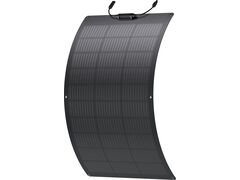
EcoFlow 100W flexible solar panel
£109.00 (14)
Ultra-light (2.3 kg) and flexible up to 258°, it hugs the roof of a van, a boat or a motorhome: the discreet solar panel that disappears once fitted.
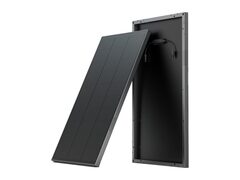
EcoFlow Rigid solar panel 100W (x2)
£139.00 (10)
Two 100 W rigid panels to mount once and forget: 23% efficiency, IP68 tempered glass and mounting feet supplied to equip a van or a roof.
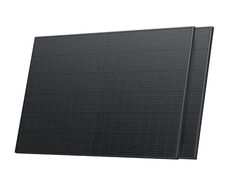
EcoFlow Rigid Solar Panel 400W (x2)
See price (4)
Fit two EcoFlow 400W rigid solar panels at home or on your RV: 23% efficiency, IP68 rating and long-lasting weather resistance built to last.
Renogy 16BB 175W Panel
See price (3)
The same watts on less roof. N-type cells at 25% efficiency and 16 busbars, in a shorter format than the average 175 W panel.
Published on 28/08/2026