
Renogy 16BB 175W Panel
(3 reviews)
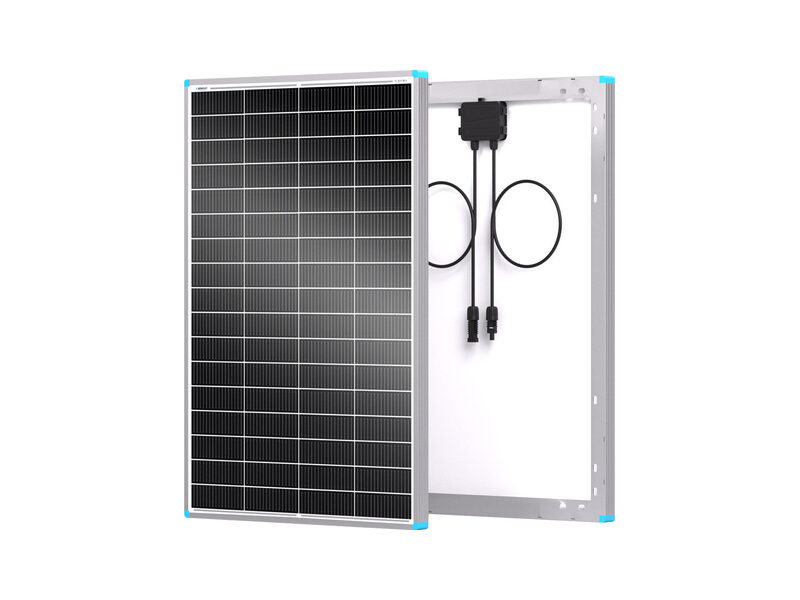
The same watts on less roof. N-type cells at 25% efficiency and 16 busbars, in a shorter format than the average 175 W panel.
Buy at AmazonAs an Amazon Associate I earn from qualifying purchases.
Characteristics
- Power: 175 W at 12 V, N-type cells (25% efficiency)
- Module efficiency: 20.6%
- Footprint: 1110 x 764 x 30 mm, 7 to 10% less than typical 175 W panels
- Weight: 9.6 kg
- The best watts-per-centimetre-of-roof ratio in our selection
Detailed overview: Renogy 175 W N-type 16-busbar solar panel
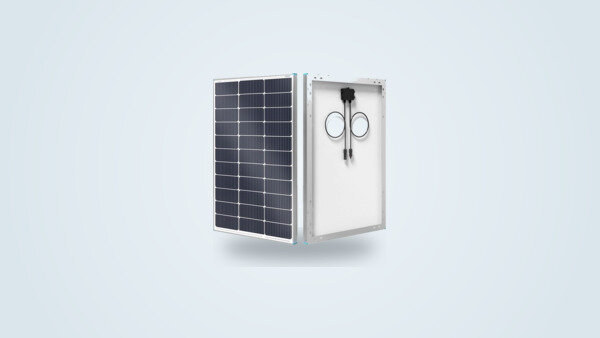
The Renogy 16BB N-type is a 175 W rigid solar panel designed for 12 V installations: motorhome roof, boat, cabin or garden shelter. What sets it apart is not its rating, which is common on the market, but the area it occupies to deliver it.
The module measures 1110 x 764 x 30 mm and weighs 9.6 kg. Renogy quotes a footprint 7 to 10% smaller than other 175 W panels. On a van roof already taken up by a vent and a rack, those ten centimetres sometimes change how many modules you can fit.
That density comes from two technical choices. First the N-type cells, a newer generation than the PERC found in most panels: they reach 25% cell efficiency, degrade more slowly under light exposure and hold their efficiency better as temperature rises, which is the normal state of a summer roof. Then the 16 busbars, against 5 to 9 on a conventional panel: current is collected at more points, resistive losses fall and a micro-crack isolates a smaller portion of the cell.
At module level, efficiency stands at 20.6%, for 175 W at 20.88 V and 8.88 A, with an open-circuit voltage of 24.48 V compatible with the 12 V controllers on the market. Construction follows industry standards: tempered glass, anti-corrosion aluminium frame, junction box and MC4 connectors rated IP67, operating range from -40 to 85 °C.
This panel does not have the anti-shading subdivision of the ShadowFlux 200 W: on a roof where an aerial or a rack regularly casts a shadow, that is the one to choose. On a clear surface, however, the 16BB offers the best ratio of installed power to space used in our selection.
Full specifications
Detailed characteristics
Panel
| Peak power?Rated panel power in full sun (STC conditions). | 175 W |
|---|---|
| Cell technology?Cell type; monocrystalline offers the best efficiency, flexible CIGS tolerates shading better. | Monocrystalline |
| Conversion efficiency?Share of solar energy converted to electricity; higher means a more compact panel for the same power. | 20.6 % |
| Panel type?Foldable (portable), rigid framed (fixed install) or flexible (curved surfaces). | Rigid (framed) |
| Bifacial?Also captures reflected light on its rear side, for extra output. | No |
Electrical specifications
| Voltage at max power (Vmp)?Voltage at the maximum power point. | 20.88 V |
|---|---|
| Current at max power (Imp)?Current at the maximum power point. | 8.88 A |
| Open-circuit voltage (Voc)?Open-circuit voltage; check against your station/controller MPPT input range. | 24.48 V |
| Short-circuit current (Isc)?Maximum short-circuit current. | 8.88 A |
Outputs and connectors
| Output connectors?Output socket type(s) (MC4, XT60, Anderson, DC, USB…); determines compatibility with your station. | MC4 |
|---|
Durability and format
| Ingress protection?Water and dust resistance (IP rating). | IP67 |
|---|---|
| Adjustable kickstand?Kickstand or support to angle the panel toward the sun. | No |
| Weight?Weight of the panel. | 9.6 kg |
| Unfolded dimensions (L × W × D)?Footprint when unfolded, in millimetres. | 1110 × 764 × 30 mm |
Warranty
| Warranty?Length of the manufacturer's warranty. | 5 years |
|---|
☀ How fast does this panel recharge a power station?
The Renogy 16BB 175W Panel panel (175 W) recharges a Jackery Explorer 1000 v2 (1070 Wh) in ~8h45 or an EcoFlow Delta 2 Max (2048 Wh) in ~17h, in full sun.
| Compact / mid | Recharge |
|---|---|
| EcoFlow Trail 200 DC (192 Wh) | ~1h35 |
| EcoFlow River 2 (256 Wh) | ~2h05 |
| EcoFlow River 2 Pro (768 Wh) | ~6h15 |
| DJI Power 1000 (1024 Wh) | ~8h20 |
| High capacity | Recharge |
|---|---|
| Anker Solix F2000 (2048 Wh) | ~17h |
| Allpowers R3500 V2 (2880 Wh) | ~24h |
| Jackery Explorer 3000 v2 (3072 Wh) | ~25h |
| Fossibot F3600 Pro (3840 Wh) | ~31h |
Estimate in full sun (ideal conditions). In practice, count on 3 to 5 hours of truly useful sunlight per day, so a full recharge may span several days depending on weather and orientation.
Compatible power stations
A selection of power stations whose solar input accepts this photovoltaic panel, best match first.


Comparison
At around 115 pounds, rigid 12 V panels are separated by the area they occupy and by cell technology. Here is how the 16BB 175 W stands against three panels from our selection, for searches such as “campervan solar panel” or “12V solar panel”.
| Criterion | Renogy 16BB 175 W | Renogy ShadowFlux 200 W | Renogy 100 W | EcoFlow 100 W |
|---|---|---|---|---|
| Power | 175 W | 200 W | 100 W | 100 W |
| Cell technology | N-type, 16 busbars | N-type, 16 busbars | Monocrystalline PERC | Monocrystalline |
| Module efficiency | 20.6% | 20.7% | 20% | 23% |
| Footprint | 0.85 m² | 0.96 m² | 0.50 m² | 0.51 m² |
| Watts per m² of roof | ≈ 206 W | ≈ 208 W | ≈ 200 W | ≈ 196 W |
| Typical price | ≈ £144 | ≈ £234 | ≈ £95 | ≈ £155 |
In short, the 16BB 175 W is the best compromise in the group for a clear roof: it delivers almost as many watts per square metre as the ShadowFlux for half the money, because it does not pay for the anti-shading subdivision. Take the ShadowFlux if your roof suffers cast shadows, the Renogy 100 W to extend an existing installation cheaply, and the EcoFlow 100 W if module efficiency matters more than price.
Related video
Video: Renogy Guide | Which Solar Panel Is Right for Your Setup? - Published on 24/03/2026
Our tester's review: Julien De Jurquet
When fitting out a van you do not think in pounds per watt but in watts per metre of roof. Between vents, rack and aerial, usable area is counted in centimetres, and that is where this 175 W stands out: Renogy quotes 7 to 10% less area than other panels of the same rating, which can be enough to fit a third module where two looked like the limit. The gain comes from N-type cells, more efficient than PERC for a given area, and from 16 busbars collecting current at more points. Two secondary benefits deserve a mention: N-type degrades more slowly over time, and it loses less efficiency as the panel heats up, which is daily life on a summer roof. At this price that is a rare performance-to-footprint ratio. The only limit is positioning: without the anti-shading subdivision of its bigger ShadowFlux sibling, it remains vulnerable to a cast shadow, like any conventional panel. Clear roof, it is the best pick in our selection; cluttered roof, look at the ShadowFlux.
In-depth review Renogy 16BB 175W: our full review 4.1/5 Read our full review → Efficiency 4.2 Portability and size 4.0 Weather resistance 4.1 Output ports 4.1 Capacity and expansion not measured Solar input and MPPT not measured Control and smart features not measured Installation and compliance not measured Build and endurance 4.3 Battery compatibility not measured Safety and protections not measured Storage battery compatibility not measured Control and smart features not measured Compliance and grid connection not measuredFrequently asked questions: Renogy 175 W N-type 16-busbar solar panel
Busbars collect the current produced by the cell. Increasing their number shortens the path electrons travel, which cuts resistive losses and improves efficiency. It also limits the consequences of a micro-crack, which then isolates a smaller portion of the cell.
N-type cells reach higher efficiency for a given area, degrade more slowly under light exposure and lose less efficiency as temperature rises. That last point matters most on a roof, where the module often passes 60 °C in summer.
Renogy quotes 7 to 10% less area than panels of the same rating, at 1110 x 764 mm for 175 W. On an already crowded van roof, those ten centimetres can be enough to fit one more module.
Yes. Its 24.48 V open-circuit and 20.88 V optimum voltages are compatible with the 12 V MPPT controllers on the market. Just check that your controller's maximum input voltage covers the open-circuit figure in very cold weather, when it rises.
It depends on your roof. The ShadowFlux splits the module into 28 zones to resist partial shade, which this 16BB does not. If an aerial, a vent or a rack regularly casts a shadow, the ShadowFlux earns its place. On a clear surface the 16BB costs half as much for comparable density.
Need help choosing?
Other products in the "Fixed solar panels" category
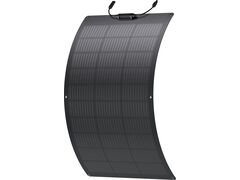
EcoFlow 100W flexible solar panel
£109.00 (14)
Ultra-light (2.3 kg) and flexible up to 258°, it hugs the roof of a van, a boat or a motorhome: the discreet solar panel that disappears once fitted.
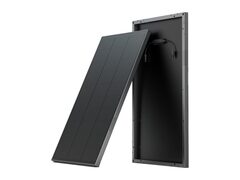
EcoFlow Rigid solar panel 100W (x2)
£139.00 (10)
Two 100 W rigid panels to mount once and forget: 23% efficiency, IP68 tempered glass and mounting feet supplied to equip a van or a roof.
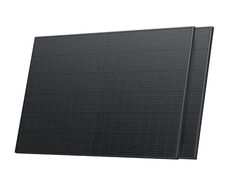
EcoFlow Rigid Solar Panel 400W (x2)
See price (4)
Fit two EcoFlow 400W rigid solar panels at home or on your RV: 23% efficiency, IP68 rating and long-lasting weather resistance built to last.
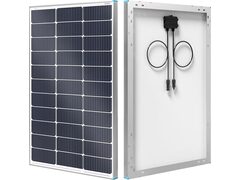
Renogy 100W Rigid Panel
£56.61 (6)
100W monocrystalline with N-type cells at 25% cell efficiency and a rugged aluminium frame: the Renogy rigid panel is the reliable base of any fixed solar setup.
Published on 28/08/2026