
Anker Zolo 10000 (30W): our full review

The Anker Zolo 10000 banks on a built-in USB-C cable and an advertised 30 W to simplify life on the go. The 30 W holds up as a peak figure, but under sustained load, power settles closer to 20 W, a nuance the marketing pitch leaves out.

Our rating
3.9/5
Capacity and runtime: 4.0 out of 5 (weighting 25%)Capacity4.0Output power: 3.5 out of 5 (weighting 20%)Power3.5Size and weight: 4.2 out of 5 (weighting 20%)Size4.2Ports and cables: 3.8 out of 5 (weighting 15%)Ports3.8Recharging: 4.0 out of 5 (weighting 10%)Recharging4.0Build and endurance: 3.9 out of 5 (weighting 10%)Build3.9
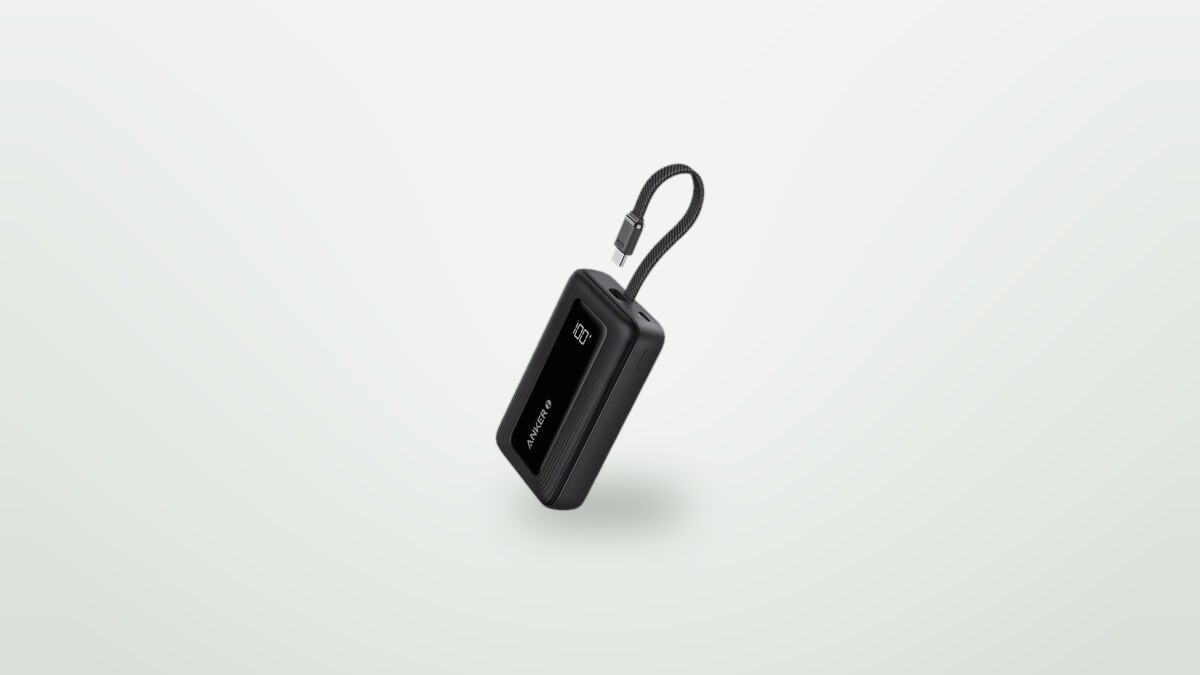
Anker Zolo 10000 external battery with its integrated USB-C cable on a light background

The essentials

The Zolo 10000 delivers on its simplest promise: the integrated USB-C cable genuinely solves the forgotten-cable problem, in a compact 215 g format that fits in a pocket. Real-world energy delivered falls in a good range for the category, between 79 and 94 % depending on the output voltage used. The most important nuance concerns the 30 W shown prominently on the spec sheet: that is a peak figure, reached only during short bursts. Under sustained load, output settles closer to 20 W, especially once the battery drops below 80 % of its own charge. Another reassuring point: this 10000 mAh model does not appear on the list of Zolo references affected by Anker's 2025 safety recall, unlike its 20000 mAh version. For a compact everyday backup battery that spares you hunting for a cable, the Zolo 10000 remains a reasonable choice, as long as you do not expect a sustained 30 W.

Strengths

  • Integrated USB-C cable that genuinely solves the forgotten-cable problem, in a compact 215 g format
  • Real-world energy delivered in a good range for the category: 79 to 94 % depending on the output voltage
  • This 10000 mAh model does not appear on the list of Zolo references affected by Anker's 2025 safety recall, unlike the 20000 mAh version
  • Three usable outputs: the integrated cable, a USB-C port, and a USB-A port
  • Compact format and contained price for a 10000 mAh capacity

Limitations

  • The advertised 30 W is a peak figure: under sustained load, output settles closer to 20 W, especially below 80 % of remaining charge
  • Total power is shared between outputs used at the same time rather than added together
  • The integrated cable is not replaceable if it fails; its stated fold resistance remains manufacturer data, not verified by a third party
  • The battery's own recharge is capped at 20 W, several hours for a full cycle
  • No screen, only LEDs to estimate the remaining level
  • No wall charger included
Anker Zolo 10000 (30W): see the full details and price →

Careful: make sure you have the right reference

Anker's Zolo lineup includes several 10000 mAh variants with similar-sounding names. The one covered here is the standard version, without wireless charging, with a non-retractable integrated USB-C cable. Another reference in the catalog, the Zolo Magnetic 10000, adds MagSafe wireless charging and does not have the same integrated cable: the two are easy to tell apart in photos by whether a ring of magnets is present on the back of the case.

A 20000 mAh version also exists in the same integrated-cable Zolo lineup. That is an important point for the rest of this review, since it is that 20000 mAh version, not this one, that was affected by a safety recall (see below).

30 W in practice: the peak and the sustained rate

The integrated cable and the USB-C port deliver up to 30 W over Power Delivery, with PPS and SCP protocols as a complement. This peak figure holds over the first few minutes of charging, well above entry-level batteries capped at 18 W.

One caveat: under a constant electrical load, delivered power decreases progressively and settles around 20 W, an effect that becomes more pronounced once the battery's own remaining charge drops below 80 %. In practice, the Zolo 10000 behaves more like a 20 W battery with a brief 30 W peak than like a sustained 30 W unit. This figure comes from a single test protocol using an electronic load, with no second source to cross-check it to date.

Advertised capacity and real-world usable energy

The nominal 10000 mAh work out to 37 Wh, a value consistent with the standard voltage of the internal cells. This is the strongest point in this file: real-world energy delivered falls between 79 and 94 % of that rated value depending on the output voltage used (efficiency mechanically drops as conversion voltage rises), a result that ranges from decent to good for the category.

37 Wh
Rated capacity
79 to 94 %
Real-world energy delivered
215 g
Weight
20 W
Battery's own recharge

Three devices at once, but not three times the power

The integrated cable, the secondary USB-C port, and the USB-A port allow three devices to charge at the same time, a genuine advantage over batteries limited to one or two outputs. In real-world use, a phone, earbuds, and a smartwatch at the end of the day can each draw power without having to unplug anything.

The total power available is shared between the active outputs rather than added together, a physical behavior common to this type of product rather than an exception. Each individual output therefore keeps its full potential only when it is used alone.

The integrated cable: practical day to day, durability still unconfirmed

The braided USB-C cable, about 13.5 cm long, tucks into the contour of the case and forms a wrist strap when not in use. This is the product's central selling point, and it delivers on that promise day to day: no more checking whether a cable is loose in the bag.

One caveat: Anker states a fold resistance of several thousand cycles for this cable, a manufacturer figure not verified by an independent fold test. Since the cable is not replaceable, a failure means falling back on the two remaining standard ports. At about 13.5 cm, the cable also runs on the short side, which can limit ease of use depending on the socket's position.

Safety: this model is not part of the 2025 recall

In 2025, Anker announced a voluntary recall affecting several external batteries across multiple lineups, over an overheating risk linked to defective lithium-ion cells. Within the integrated-cable Zolo lineup, that recall specifically concerns the 20000 mAh version. The 10000 mAh model covered in this review does not appear on any list of affected references for that recall.

This distinction matters, so as not to cast unjustified doubt on a model that is not implicated: anyone who owns a Zolo 20000 mAh should check its eligibility for the recall directly with Anker. For the 10000 mAh version covered here, no such action has been announced.

Against the competition

Against the Anker Nano 30W, which advertises the same power but has no integrated cable or third output, the Zolo 10000 stands out for its convenience and a slightly lower price. Against 5000 mAh models like the Anker Nano A1653 or the Ugreen Nexode Mini, the Zolo doubles the capacity for a full day of use rather than a simple top-up.

Ugreen's own Nexode lineup also comes in several 10000 mAh variants at different power levels (30, 45, or 55 W depending on the version) under very similar names: checking the exact power shown on the spec sheet before comparing remains essential, as with any comparison between lineups with multiple variants.

Who this battery suits

This product suits anyone who wants a compact, everyday backup battery, without ever having to worry about bringing a cable. The three simultaneous outputs and the properly delivered energy make it a reliable companion for a busy day or a light weekend away.

It suits less well anyone who needs a sustained 30 W continuously, for example to quickly recharge a large device during a long trip: in that case, it is worth looking at batteries advertising a continuous power closer to their peak, or accepting that charging slows down after the first few minutes.
The product and its alternatives

Anker Zolo 10000 (30W)

Anker Zolo 10000 (30W)

See price (55)

A 10,000 mAh pocket pack with its USB-C cable already attached: 30 W fast charging and three devices powered at once, with no cord to carry.

View product

Frequently asked questions

The 30 W is a short-duration peak. Under sustained load, output power settles closer to 20 W, an effect more pronounced once the battery drops below 80 % of charge.

No. The safety recall Anker announced in 2025 concerns the 20000 mAh version of the integrated-cable Zolo lineup, not the 10000 mAh model covered here.

No, it is part of the case. If it fails, the two remaining ports (USB-C and USB-A) let you keep using the battery with an external cable.

Its 10000 mAh, about 37 Wh, provide roughly two full charges of a recent smartphone, depending on the model.

The rating in detail

Our rating
3.9/5
Capacity and runtime 4.0
Output power 3.5
Size and weight 4.2
Ports and cables 3.8
Recharging 4.0
Build and endurance 3.9
Anker Zolo 10000 (30W): see the full details and price →