
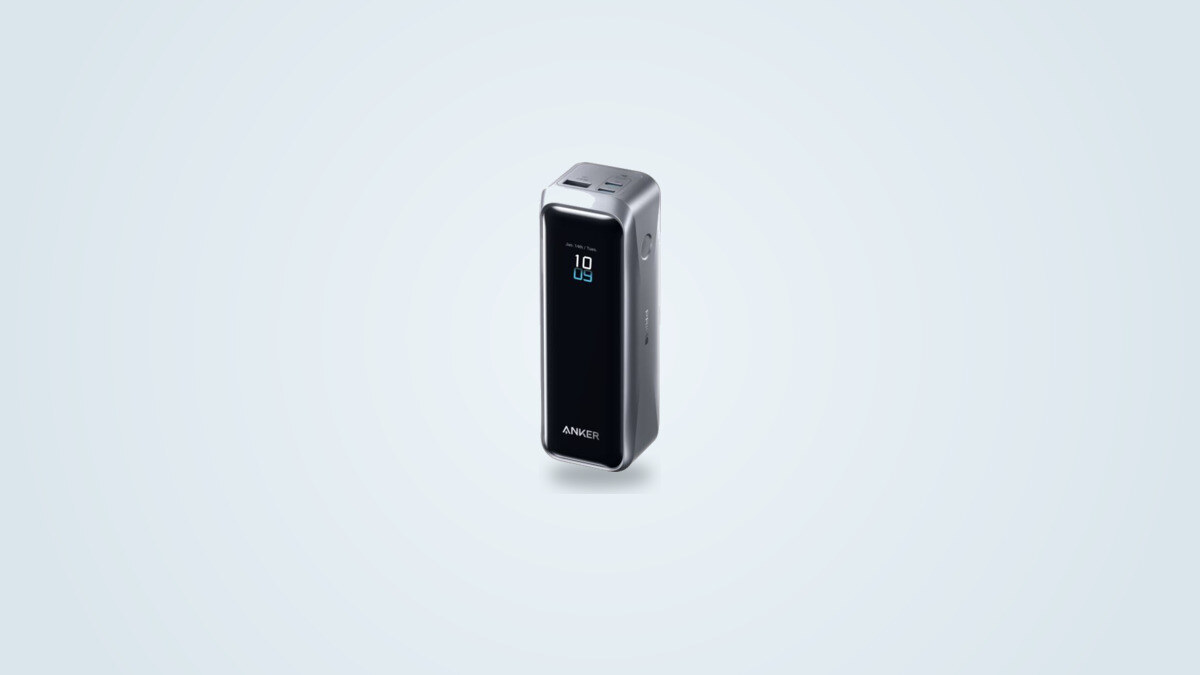
140W, but not on both ports at once
The headline 220W figure covers a more nuanced reality than a flat 2x140W split. Only one of the two USB-C ports actually reaches 140W, the second caps at 100W: total system output stays capped at 220W, split asymmetrically between the two outputs rather than identically across each. On the primary port, power delivery lives up to its promise: a MacBook Pro M4 charges from 0 to 50 % in about thirty minutes, with a certified 5A cable, without triggering a slow-charging warning.
The point to watch is simultaneous high-power use of both ports over an extended period: combined output gradually sags past 140W drawn across both outputs at the same time, a pattern reminiscent of the previous 200W generation, where the combined 200W was only reached under good conditions and often dropped much lower with two real laptops plugged in. The 220W generation makes clear progress here without fully solving it.
Real-world capacity: a consistent yield
Out of the advertised 72.36 Wh (20,100 mAh), real-world capacity sits between 87 and 93 %, depending on charge and discharge conditions. That is a normal gap, tied to the voltage conversion between the internal cells and the USB-C output, rather than a sign of a fault: the narrow spread between the two bounds reinforces confidence in this figure.
Recharging the battery itself
On input, the Prime 20100 accepts up to 100W over USB-C, enough to recover 50 % of its capacity in about 25 to 31 minutes, and a full charge in a little under an hour to an hour and ten minutes. This is one area where the 220W generation clearly lives up to its promises, with no notable gap.
Display, app and reliability
The rotating display shows the remaining percentage, the power delivered on each port and the estimated charging time in real time, complemented by the Bluetooth-connected Anker app for tracking energy distribution remotely. The brand issued several product recalls in 2025 over fire risk, covering power bank models distinct from this one (reference A110B): none of these recalls concerns the Prime 20100 220W based on available information. A separate, weaker signal also circulates around the Prime charging base, an accessory sold separately, with no direct link to the battery itself.
A format built for travel
At 72.36 Wh, the Prime 20100 stays under the 100 Wh cabin baggage limit enforced by nearly all airlines, and so travels without special authorisation. At 510 g, though, it is a battery you feel in a bag rather than a pocket: an accepted trade-off for this power class.