
Xiaomi 212W HyperCharge 25000: our full review

External battery rated at 25000 mAh (90.8 Wh), with 140 W on its main USB-C port and 212 W combined across three ports. The measured peak reaches 132 W on a 16-inch MacBook Pro early in the charge, but drops to about 62 W after 10 minutes under thermal protection. All three ports used at once cap out between 168 and 182 W measured, short of the advertised 212 W. The actual weight, between 627 and 634 g, makes it one of the heaviest power banks in its category. Contrary to what some product listings state, the unit does have a color screen and uses a square-sectioned block shape, not a cylinder.

Our rating
3.7/5
Capacity and runtime: 3.8 out of 5 (weighting 25%)Capacity3.8Output power: 3.6 out of 5 (weighting 20%)Power3.6Size and weight: 3.6 out of 5 (weighting 20%)Size3.6Ports and cables: 3.9 out of 5 (weighting 15%)Ports3.9Recharging: 3.6 out of 5 (weighting 10%)Recharging3.6Build and endurance: 4.0 out of 5 (weighting 10%)Build4.0
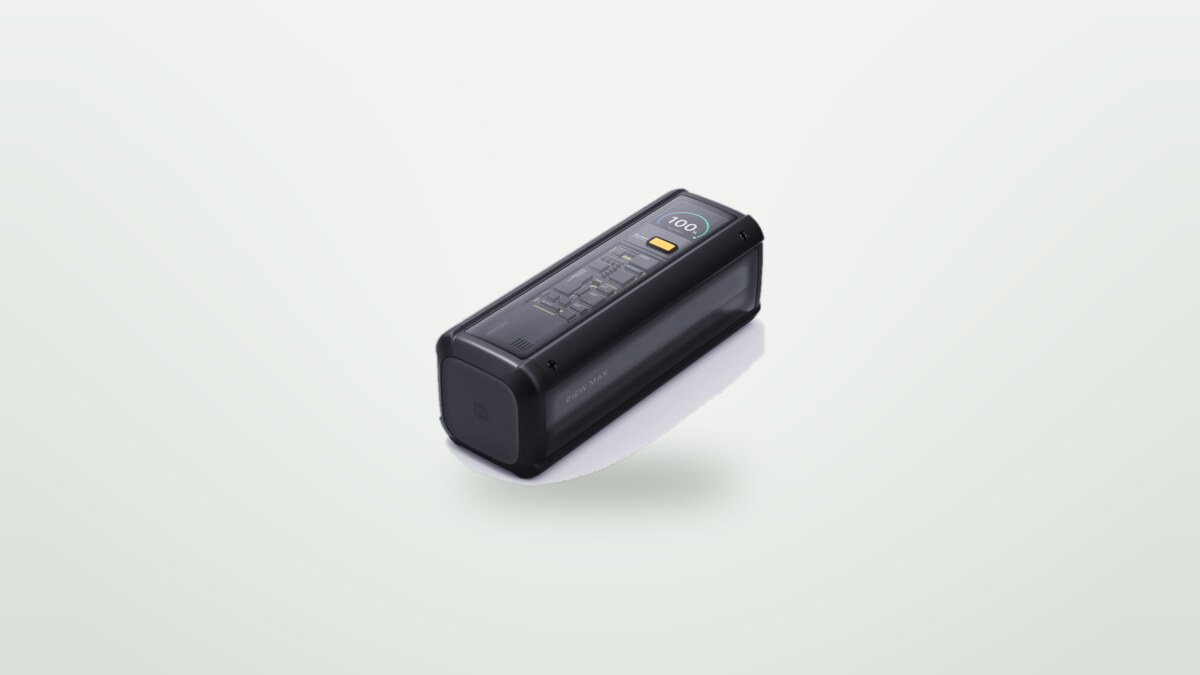
Xiaomi 212W HyperCharge 25000 power bank on a light background

The essentials

The Xiaomi 212W HyperCharge delivers on part of its promise: the 132 W peak measured on a 16-inch MacBook Pro comes close to the rated 140 W, and the 627 to 634 g weight matches the manufacturer's rated figure. But power drops sharply under sustained charging, to about 62 W after 10 minutes, behavior a standard wall charger does not have. The rated 212 W combined across three ports is never reached in real measured use, capping instead between 168 and 182 W. Recharging the battery itself, between 2 h20 and 2 h50 depending on the measurement, is judged slow next to rivals of the same rated power. The rather heavy block shape (627 to 634 g) is not built for discreet daily carrying. No recall or safety notice concerns this specific model to date: the only Xiaomi recall identified for external batteries covers a completely different product, smaller and with a built-in cable.

Strengths

  • Peak power measured at 132 W on a 16-inch MacBook Pro, close to the rated 140 W early in the charge
  • Color screen that is genuinely there (%, mAh, charging current, active protocol), despite what some product listings state
  • Actual weight matching the manufacturer's rated figure, between 627 and 634 g
  • All three ports work at once without cutouts or notable overheating
  • No recall or safety notice concerns this specific model to date
  • Capacity under the 100 Wh threshold, allowed in the cabin without formalities despite its large capacity

Limitations

  • Power drops sharply under sustained charging, from about 132 W to about 62 W after just 10 minutes, behavior a standard wall charger does not have
  • The rated 212 W combined across three ports is never reached in real measured use, capping between 168 and 182 W
  • Self-recharging judged slow next to rivals of the same rated power, between 2 h20 and 2 h50 for a full charge
  • High weight and bulk (627 to 634 g) for its capacity, notably more than a direct rival of the same capacity (505 g)
  • Block shape poorly suited to discreet daily carrying
  • Conversion efficiency measured between 75 and 88 % depending on the power drawn, in the low-to-decent average for the category
Xiaomi 212W HyperCharge 25000: see the full details and price →

A color screen that is really there, a block shape rather than a cylinder

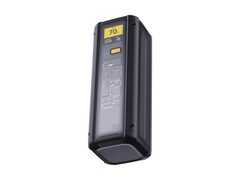
Some product listings describe this power bank as screenless and cylindrical. Both claims are inaccurate: the unit has a color screen of about 3.3 cm diagonally, showing the charge percentage, remaining and output mAh, and the active charging protocol (the interface changes color depending on whether the unit is charging or discharging). Its shape, with dimensions of 160 x 55.4 x 55.4 mm, is a square-sectioned block, not a cylinder: the width and thickness dimensions are identical, which corresponds to a square cross-section rather than a circle's diameter.

132 W measured at peak, but a sharp drop under sustained charging

On the main USB-C port, rated at 140 W, the most complete figure recorded is 132 W (27.73 V / 4.76 A) on a 16-inch MacBook Pro M1 Max, about 94 % of the rated figure. That figure does not hold up over time, though: on another laptop, the measured power dropped from a peak near 87 W to about 62 W after just 10 minutes of continuous charging, with thermal protection kicking in after 9 minutes of full-power use (maximum measured temperature around 48.1 °C). That is normal thermal-protection behavior, but it is nothing like a standard wall charger, which can hold its rated power continuously.

On the second USB-C port, rated at 45 W, the recorded figure is 43.40 W, close to the rated value. On the USB-A port, rated at 120 W, the recorded figure is 96.17 W, falling noticeably further short.

212 W combined: never reached in real measured use

The combined total of 212 W, spread across all three ports at once, is not confirmed by any real-world measurement to date: two independent measurements with three devices plugged in at the same time yield 168 W and 182 W combined, or 79 to 86 % of the rated figure. Much of the gap comes down to the fact that no real device simultaneously demands the theoretical maximum on each of its ports: three-device charging runs without cutouts or notable overheating, simply without ever pushing the rated ceiling.

Decent efficiency, but self-recharging judged slow next to the competition

Measured conversion efficiency runs between 75 and 88 %, depending on the power drawn and the measurement protocol, a normal range for this product category. Fully recharging the battery itself, with input up to a rated 100 W, is measured at between 2 h20 and 2 h50 depending on the sources (50 % reached in about 53 minutes, 80 % in 1 h33). This model comes out as the slowest of the 140 W power banks compared on this point, a comparative observation worth factoring in rather than a standalone figure.

627 to 634 g confirmed, a same-capacity rival weighs about half as much

The actual weight lies between 627 and 634 g, matching the manufacturer's rated figure (628 g). So this is not a manufacturer inaccuracy, but a genuinely high weight for the category: a direct rival of the same capacity (25000 mAh) weighs 505 g, notably less for comparable stored energy. The block shape is poorly suited to constant daily carrying, better reserved for a bag on a specific outing or workday.

Safety: no recall covers this specific model

A Xiaomi recall covering external batteries does exist, announced in late August 2025, but it concerns a completely different product: a 33 W, 20000 mAh power bank with a built-in cable (a distinct reference from this model), over an overheating risk linked to a cell from a specific supplier, with about 146891 units affected. The 212 W HyperCharge 25000, more powerful, of a different capacity, and supplied with a separate cable (not built in), carries a distinct product reference and is not covered by any recall identified to date, nor by any report of overheating or a recurring defect.

"As fast as a wall outlet": true at peak, not over time

No direct timed comparison between this power bank and the original wall charger of the same laptop has been found to date. What is measured, however, does help qualify the claim: at peak, on a compatible high-end device, the delivered power (132 W) does come close to that of a 140 W wall charger. But past 9 to 10 minutes of continuous charging, power drops sharply under thermal protection, which a standard wall charger does not do to the same extent. The claim holds up for a short top-up charge, less so for a full, sustained charge.

Who it suits, and who it does not

It suits anyone who needs an occasional power reserve for a laptop on the move, is not bothered by the weight, and appreciates staying under the 100 Wh threshold for cabin travel.

It does not suit anyone looking for a lightweight power bank for constant daily carrying, nor anyone counting on a sustained 140 W over a long charging session, since the real power drops sharply after a few minutes.
The product and its alternatives

Xiaomi 212W HyperCharge 25000

Xiaomi 212W HyperCharge 25000

See price (5)

Up to 140 W on a single port and 212 W total: the Xiaomi 212W HyperCharge recharges a laptop as fast as a wall socket, with 25000 mAh.

View product

Frequently asked questions

Yes, a color screen about 3.3 cm diagonally, despite what some product listings state. It shows the charge percentage, the mAh, and the active protocol.

Not for long. The measured power reaches up to 132 W early in the charge, but drops to about 62 W after 10 minutes under thermal protection.

Between 627 and 634 g depending on the independent measurement, matching the manufacturer's rated figure (628 g) but high next to rivals of the same capacity.

No. The only Xiaomi recall identified for external batteries covers a different model, less powerful and with a built-in cable. No recall covers this specific model.

The rating in detail

Our rating
3.7/5
Capacity and runtime 3.8
Output power 3.6
Size and weight 3.6
Ports and cables 3.9
Recharging 3.6
Build and endurance 4.0
Xiaomi 212W HyperCharge 25000: see the full details and price →