
Ugreen Nexode 55W: Our Full Review

This compact 10,000 mAh power bank returns close to 82% of its rated capacity, an excellent result, but its actual recharge caps at 35W where the spec sheet claims 45, and its combined output across multiple ports drops to just 15W in total.

Our rating
4.1/5
Capacity and runtime: 4.3 out of 5 (weighting 25%)Capacity4.3Output power: 3.8 out of 5 (weighting 20%)Power3.8Size and weight: 4.3 out of 5 (weighting 20%)Size4.3Ports and cables: 4.0 out of 5 (weighting 15%)Ports4.0Recharging: 3.6 out of 5 (weighting 10%)Recharging3.6Build and endurance: 4.0 out of 5 (weighting 10%)Build4.0
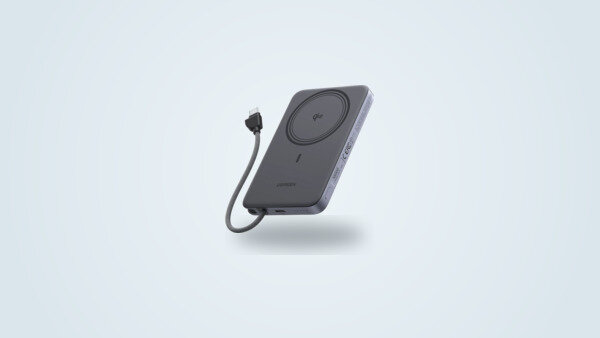
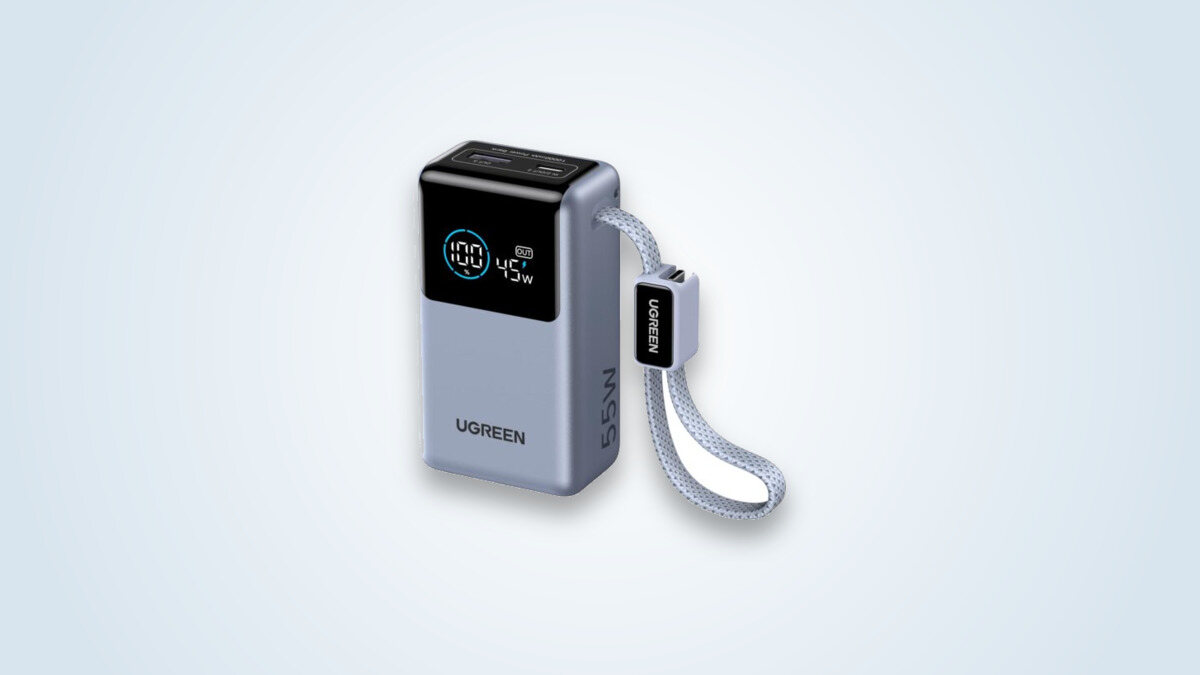
Ugreen Nexode 55W power bank, screen showing 100% charge and 45W output, integrated USB-C cable unfolded

The essentials

The Ugreen Nexode 55W returns close to 82% of its rated 37Wh, a measured result well above the average for its category, in a compact and light 249g body. Its output power on a single port lives up to its promise, with 54W measured close to the 55W advertised. Two reservations weigh on the score: the battery's own recharge caps in practice around 35W, far from the 45W sometimes mentioned, with a full charge time that can climb to as much as 2h30 depending on the charger used; and simultaneous charging of several devices, as on other models in the range, drops to 15W in total as soon as two ports are used. A good choice for anyone recharging one device at a time who wants a compact format, less suited to anyone counting on a fast, predictable recharge of the battery itself.

Strengths

  • Real-world efficiency measured around 82%, well above the 60 to 70% typical for this format
  • Single-port output matches the claim, 54W measured against 55W advertised
  • Compact and light for its power: 249g, smaller than a large-format smartphone
  • USB-A port that delivers more than its spec sheet states, 22.5W measured
  • Legible digital display showing the remaining percentage and output power in real time

Limitations

  • Battery recharge capped in practice around 35W, far from the 45W sometimes mentioned
  • Full recharge time inconsistent depending on the charger used, from 1h30 to about 2h30
  • Simultaneous charging across multiple ports drops to 15W in total, regardless of the number of devices
  • Integrated USB-C cable found short in daily use, about 22cm
  • Noticeable heat build-up reported under sustained full-power charging
Ugreen Nexode 55W: see the full details and price →

What the advertised 37Wh are really worth

The Nexode 55W's rated 37Wh never fully reach the USB output. A detailed measurement puts the energy returned at 29.3 to 29.9Wh depending on the discharge rate, which places efficiency around 82%. A second, independent measurement, carried out with a different protocol, converges on a very close result, around 81%.

29.5 Wh
returned out of the 37Wh advertised, average of the measurements
82 %
efficiency, against 60 to 70% typical for this format

This figure places the Nexode 55W well above the market average for a power bank of this format, where 60 to 70% efficiency remains the norm.

Power held on a single port

On a single port used alone, the Nexode 55W lives up to its promise: an in-depth measurement records 54W in practice, very close to the 55W advertised. That maximum figure, however, is only reached with a smartphone compatible with Xiaomi's proprietary fast-charging protocol; for every other device, the real ceiling sits at 45W over standard USB PD, still a high output for this format.

The USB-A port, for its part, delivers 22.5W measured, a value higher than the one sometimes advertised in the commercial documentation, which counts in the product's favor rather than against it.

Simultaneous charging across multiple ports

As on other models in the same range, simultaneous charging of several devices is very limited: the manufacturer states itself, in its official documentation, that total output power drops to 15W as soon as two or three ports are used at the same time, regardless of the number of devices connected. An independent measurement records a slightly better result, around 20W combined, but the gap with the 54W available on a single port remains considerable.

54 W
single port
15 to 20 W
in total, two or three ports used together

Multi-port charging is therefore suited to small devices or a slow top-up, not to the fast simultaneous recharge of two demanding devices.

Recharging the battery: slower and less consistent than advertised

This is the most problematic point of the product. The official documentation mentions a full recharge in two hours with a suitable charger, but the input power actually measured caps around 34 to 35W, not 45W. A measurement carried out with a dedicated 100W charger achieves a full recharge in 1h32, at sustained power with no slowdown. Another measurement, carried out with common 67W and 100W chargers, records markedly lower input power, between 16 and 19W, for a full recharge in about 2h30.

The gap between these two results is probably explained by the negotiation of the fast-charging protocol, which does not engage the same way with every third-party charger. In practical terms, this power bank's recharge time is not guaranteed: it depends heavily on the charger used, which is rarely the case with the best products of this format.

The integrated cable

The USB-C cable integrated into the case avoids having to hunt for a separate one, a real benefit day to day. Its length, about 22cm, is on the other hand found short in use: it becomes difficult to hold the smartphone in hand while it charges, unlike a longer, ordinary cable.

A compact format for its power

At 249g for 10,000 mAh and up to 55W of output, the Nexode 55W remains a compact format, described as smaller than a large smartphone. This is a clearly favorable point for this product, unlike some higher-capacity models from the same brand that weigh noticeably more for comparable power.

Heat build-up under sustained charging

Several independent reports mention noticeable heat build-up in the case under sustained full-power charging, to the point that the manufacturer's own documentation recommends leaving the device in open air while it charges. An assessment carried out on a laptop records a power drop from 45W to about 22W after roughly thirty minutes of continuous charging, consistent with a thermal protection that activates to limit the rise in temperature.

Reliability, still lightly documented

The product is too recent, on sale since March 2026, for feedback covering several months or years of use to exist yet. One isolated report mentions a unit received defective and returned, without this case recurring in the other feedback reviewed. No safety incident or swelling has been reported.

The price actually observed

The official listed price is €59.99, but the price actually observed at the partner retailer commonly ranges between €35.98 and €39.98, about a third less. A gap of this size clearly changes the value for money: at full price, the product holds up less well against its recharge limits, but becomes distinctly more appealing at the price actually charged.
The product and its alternatives

Ugreen Nexode 55W

Ugreen Nexode 55W

See price (13)

The small power bank that charges hard: 10000mAh, 55W, a built-in USB-C cable with strap and a digital display, smaller than an iPhone.

View product
Ugreen Nexode 45W

Ugreen Nexode 45W

See price (14)

The all-in-one power bank: 20000mAh, a built-in USB-C cable that doubles as a handle, 45W fast charging and a display to track it all.

View product
Anker A1695 (165W)

Anker A1695 (165W)

See price (48)

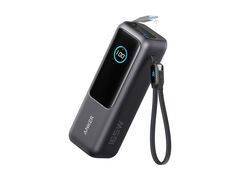
With 25,000 mAh, 165 W, two built-in cables and a display, the Anker A1695 power bank even charges a laptop and up to 4 devices at once.

View product
Nitecore NB20000 Gen 3

Nitecore NB20000 Gen 3

£75.19 (8)

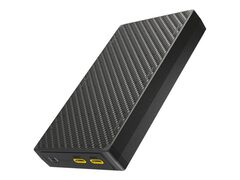
20,000 mAh for just 291 g: the carbon-fiber Nitecore NB20000 Gen 3 is the ultralight power bank for hikers and travellers.

View product

Frequently asked questions

Independent measurements place actual efficiency around 82% of the advertised 37Wh, or about 29.5Wh usable, an efficiency above the average for its category.

Not in a guaranteed way. Actual input power caps around 35W, not 45W, and the measured full recharge time ranges from 1h30 to about 2h30 depending on the charger used.

No. Total available power drops to 15 to 20W combined as soon as two or three ports are used at the same time, against 54W on a single port.

Yes, at 249g for 10,000 mAh and up to 55W of output, it remains smaller and lighter than a large smartphone, a compact format for its power.

Yes, noticeable heat build-up is reported under sustained full-power charging, to the point that the manufacturer itself recommends leaving the device in open air while it charges.

The product is too recent for feedback covering several months of use to exist yet. No safety incident or swelling has been reported to date.

The rating in detail

Our rating
4.1/5
Capacity and runtime 4.3
Output power 3.8
Size and weight 4.3
Ports and cables 4.0
Recharging 3.6
Build and endurance 4.0
Ugreen Nexode 55W: see the full details and price →