
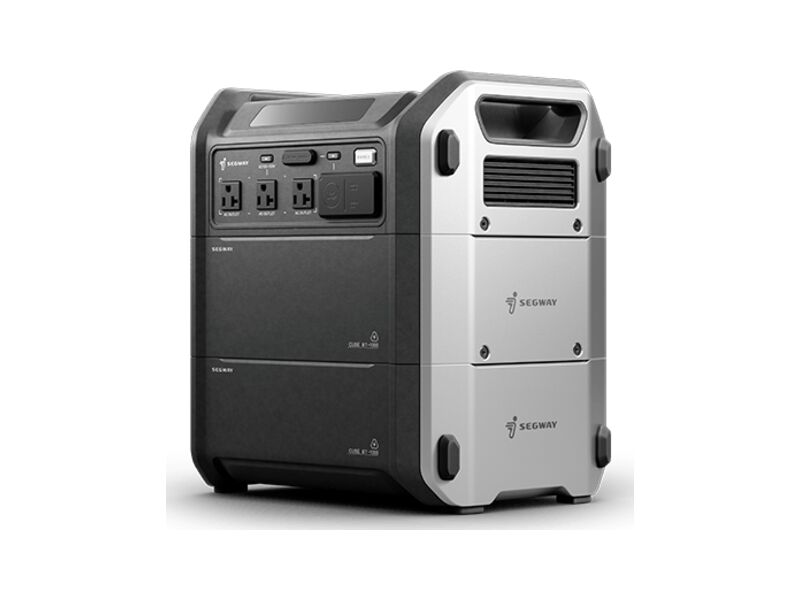
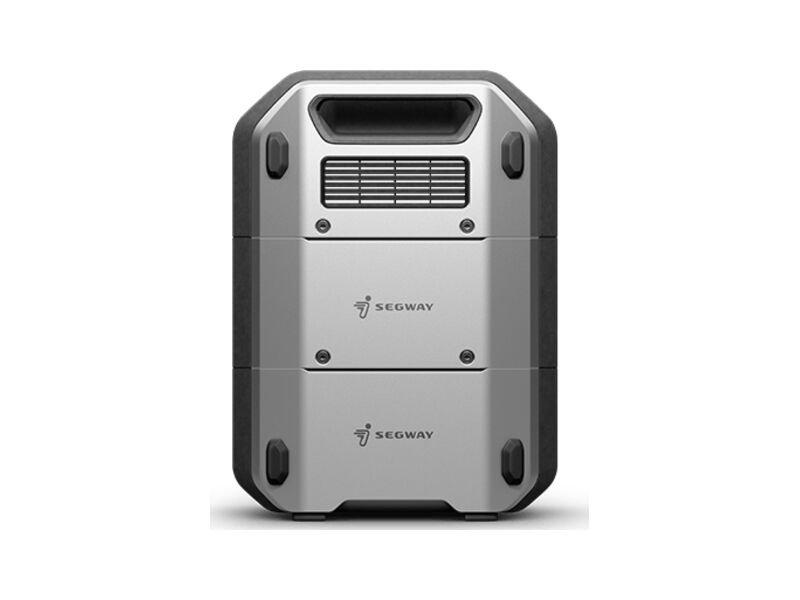
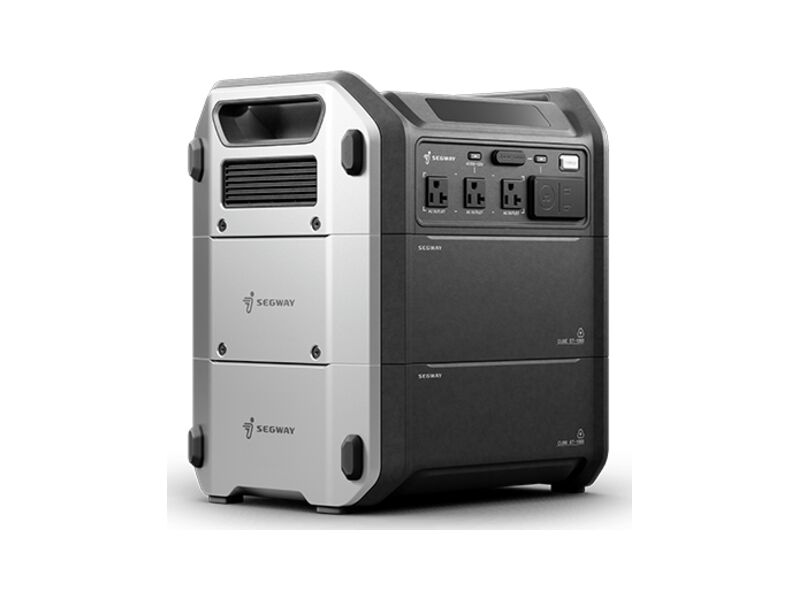
Segway Cube 2000
(7 reviews)
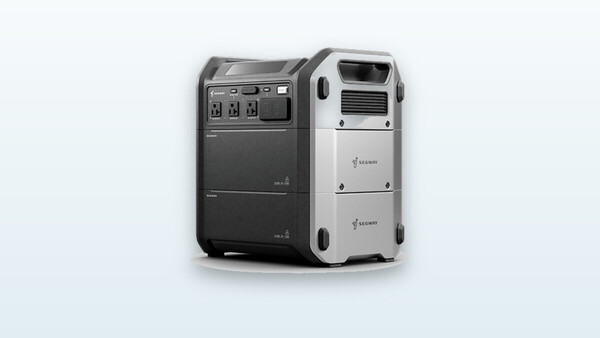
The Segway Cube 2000 is a rugged, modular power station built to grow with your energy needs, one 1kWh block at a time, from home backup to job sites.
Characteristics
- Capacity: 2048Wh (expandable to 5120Wh)
- Power: 2200W continuous, 4400W R-Drive surge
- Recharge: 0 to 100% in 1h48 on mains (1250W)
- Weight: 26.1 kg
- Modular in 1kWh blocks, up to 5kWh total
Detailed overview: Segway Cube 2000 modular power station, 2048Wh
The Segway Cube 2000 is the "high-capacity" version of Segway's modular Cube lineup, a brand better known until now for e-scooters and self-balancing vehicles. With a rated 2048Wh capacity and the option to expand up to 5120Wh via additional 1kWh battery blocks, it targets households and professionals who want their energy reserve to grow without swapping the base unit.
Its LFP (LiFePO4) automotive-grade battery, UL certified, is rated for over 4000 charge cycles and comes with a Battery Management System (BMS) offering ten protection mechanisms: overcharge, overcurrent, short circuit, temperature, and more. The battery pack carries an IP56 rating, while the whole unit is IPX3 certified, reassuring for outdoor use exposed to rain or dust.
On power, the Cube 2000 delivers 2200W continuous through its three mains outlets with a pure sine wave, and an R-Drive function that allows up to 4400W for demanding resistive appliances (kettles, ovens, hair dryers). It offers 12 output ports in total: three 230V outlets, two 100W USB-C ports, four 18W USB-A ports, two DC5525 outputs and a 136W car socket. Its UPS function switches to battery power in just 30 milliseconds, useful for protecting a computer, a router or sensitive medical equipment during an outage.
A full recharge takes 1h48 on mains power (1250W max), and the solar input, up to 800W with MPPT tracking, lets you recharge it on the move or off-grid. The Segway-Ninebot app over Bluetooth gives access to control and real-time charge monitoring.
The trade-off for this ruggedness: at 26.1 kg, the Cube 2000 is notably heavier than most direct 2kWh rivals, and its 2200W continuous output sits a notch below the 2400 to 2600W offered by some competitors. It suits semi-stationary use (home, a fitted-out van, a fixed job site) rather than truly portable, carry-everywhere use.
Full specifications
Detailed characteristics (EAN: 8720254406794)
Battery and capacity
| Rated capacity?Total stored energy in watt-hours. The higher the figure, the longer the runtime. | 2048 Wh |
|---|---|
| Max capacity (with extensions)?Total capacity reachable by adding extra batteries. | 5120 Wh |
| Expandable capacity?Whether capacity can be increased with add-on batteries. | Yes |
| Removable battery?The main battery can be removed or replaced by the user. | No |
| Battery chemistry?LiFePO4 (LFP) lasts far longer and is safer than NMC. | LFP (LiFePO4) |
| Charge cycles?Number of full charges before capacity drops to the stated threshold. | 4000 cycles |
| Pack nominal voltage?Internal battery voltage; higher voltage helps deliver high power. | 51.2 V |
AC output
| Continuous AC power?Power the unit can sustain continuously on its 230 V outlets. | 2200 W |
|---|---|
| Boost-mode power?Extended power via a proprietary mode (X-Boost, AmpUp…) by lowering voltage. | 4400 W |
| Inverter type?A pure sine wave is essential for sensitive electronics and motors. | Pure sine wave |
| AC voltage / frequency?Voltage and frequency of the AC output (230 V / 50 Hz in Europe). | 230 V / 50 Hz |
| Number of 230 V AC outlets?Number of mains outlets available on the unit. | 3 |
| RV / TT-30 outlet?Dedicated 30 A outlet for North-American style RVs. | No |
Recharging
| Max AC charging power?Maximum power drawn from a wall socket; higher means faster charging. | 1250 W |
|---|---|
| AC charge 0-100%?Stated time for a full charge on mains power. | 108 min |
| Max solar input?Maximum solar power accepted at the input (PV panels). | 800 W |
| Accepted solar voltage?Panel voltage range compatible with the solar input. | 12 to 60 V |
| MPPT controllers?Number of independent MPPT solar inputs (yield optimisation). | 1 |
| Vehicle charging (12/24 V)?Can be charged from a vehicle's cigarette-lighter socket. | Yes |
| Pass-through charging?The unit can power devices while charging (pass-through). | Yes |
Ports and connectors
| USB-C ports?Number of USB-C ports and the fastest port's power (laptops, phones). | 2 × 100 W |
|---|---|
| USB-A ports?Number of USB-A ports and maximum power (small devices). | 4 × 18 W |
| 12 V output (car socket)?12 V cigarette-lighter output and its power (coolers, pumps…). | Yes (136 W) |
| Other DC outputs?Additional DC connectors (Anderson, DC5521, XT60…). | DC5525, Allume-cigare |
Portability
| Weight?Net weight of the unit, battery included. | 26.1 kg |
|---|---|
| Dimensions (L × W × H)?Overall size of the unit in millimetres. | 354 × 289 × 399 mm |
| Form factor?Portable (hand-carried), transportable (heavy), or wheeled. | Transportable |
| Wheels?Built-in wheels for moving the unit. | No |
| Telescopic handle?Retractable handle like a wheeled suitcase. | No |
Safety and environment
| Certifications?Standards and approvals obtained (CE, RoHS, UN38.3, UL…). | CE, UL |
|---|---|
| Discharge temperature?Temperature range in which the unit can deliver power. | -10 to 45 °C |
| Charge temperature?Temperature range in which the unit can be recharged. | 5 to 45 °C |
| Ingress protection (IP)?Resistance to dust and water (e.g. IP54). | IPX3 |
Backup / UPS
| UPS / EPS mode?Automatic switch to battery on a mains outage (backup). | Yes |
|---|---|
| Switchover time (rated)?Delay before switching to battery; under 20 ms suits a PC or router. | 30 ms |
Display and connectivity
| Display?Type of screen showing power, runtime and alerts. | LCD |
|---|---|
| Bluetooth?Bluetooth link for nearby control. | Yes |
| Wi-Fi?Wi-Fi connection for remote control and monitoring. | No |
| Mobile app?iOS / Android app to control the unit. | Yes |
Availability and warranty
| Market launch?Date the model first became available on the European market. Useful to place its generation: technology moves fast in this segment, and a device several years old may be at the end of its commercial life. | January 2024 |
|---|---|
| Warranty?Length of the manufacturer's warranty. | 5 years |
User manual / Instructions for use (PDF)
⚡ How long will this power station run a device?
With 2,048 Wh, the Segway Cube 2000 external battery runs a fridge (50 W) for ~35h or an LED TV (90 W) for ~19h.
| Home | Runtime |
|---|---|
| Mini fridge (45 W) | ~39h |
| Dehumidifier (300 W) | ~5h50 |
| Espresso machine (1300 W) | ~1h20 |
| Kettle (1800 W) | ~60 min |
| Outdoor & workshop | Runtime |
|---|---|
| RV fridge (60 W) | ~29h |
| LED TV (90 W) | ~19h |
| Nebulizer (100 W) | ~17h |
| Air compressor (1100 W) | ~1h35 |
Rough estimate: real consumption varies, and very power-hungry appliances (heating elements) must stay below the output power.
What is this power station best for?
-
Home & Power cuts Ideal
With 2048Wh and a UPS function that switches to battery in just 30 milliseconds, the Cube 2000 effectively backs up a home during an outage: the fridge, router, lighting and sensitive small appliances keep running without a noticeable interruption. Its capacity, expandable up to 5120Wh via 1kWh blocks added as needed, lets you size the reserve precisely to the length of outage you're planning for, without swapping the base unit. The R-Drive function allows up to 4400W for demanding resistive appliances (kettles, electric ovens), and a full mains recharge in 1h48 quickly tops the reserve back up between outages. At 26.1 kg it's better suited to a fixed spot than frequent moving around the house, but that's exactly the use case it's built for: a backup power hub you set up once, backed by a 5-year warranty and an LFP battery rated for over 4000 cycles.
-
Off-grid & Solar Ideal
Thanks to its solar input of up to 800W with MPPT tracking and its capacity expandable up to 5120Wh via 1kWh blocks, the Cube 2000 can form the core of a small standalone system for a cabin, a workshop or an off-grid plot. You start with the 2048Wh base unit and add batteries as your needs grow, without changing the inverter or the wiring. Its 2200W continuous output (4400W via R-Drive) covers most household needs: a fridge, a pump, lighting, small power tools. The LiFePO4 chemistry, rated for over 4000 cycles and five years, handles daily charge cycles for years without flinching. The IP56 battery pack and alloy shell reassure for a semi-permanent install exposed to the elements. One catch: at 26.1 kg per block, installing and moving it takes a bit more effort than a lighter station, a fair trade-off for this level of ruggedness and modularity.
-
Motorhome & Van life Suitable
In a motorhome or a converted van, the Cube 2000's 2048Wh comfortably covers a day or two of autonomy (fridge, lighting, charging devices), and the solar input of up to 800W tops up the reserve at a stopover on a sunny day. Its 2200W continuous output handles most onboard equipment, and a full recharge in 1h48 at a service point is handy during a technical stop. The modular format lets you add capacity if the vehicle moves toward heavier use. Its 26.1 kg weight, though, points to a fixed spot in the vehicle rather than frequent handling, worth planning for in the fit-out.
-
Job site & Tools Suitable
On a remote job site, the Cube 2000's R-Drive function allows up to 4400W at peak, enough to start and run most power tools (saws, grinders, drills) without resorting to a noisy petrol generator. Its 2048Wh covers a good chunk of a working day, and the alloy shell shrugs off knocks and dust in professional use, backed by an IP56-rated battery pack. Recharging in 1h48 on mains keeps downtime between sessions short. At 26.1 kg, it's better suited to a fixed spot on site than being carried around all day.
-
Remote work Backup only
For a simple remote work setup, the Cube 2000 easily has the runtime to spare (2200W, 2048Wh), but its 26.1 kg bulk is clearly overkill and awkward to move between rooms daily. It still makes sense for occasional backup power or a fixed off-grid desk, but a more compact station suits everyday use better.
Our team's recommendations based on the model's capacity, output power and weight.
Compatible solar panels
A selection of photovoltaic panels that suit this station's solar input (up to 60V / 800W), best match first.


Comparison
At over £1539.36 the Segway Cube 2000 goes up against the best 2kWh power stations on the market, often compared in searches like "Segway Cube 2000 vs Jackery Explorer 2000 v2" or "Segway Cube 2000 vs EcoFlow Delta 2 Max". Here's how it stacks up against three direct rivals: the Jackery Explorer 2000 v2, champion of the weight-to-price ratio; the EcoFlow Delta 2 Max, the reference in the category; and the Anker Solix C2000 Gen 2, a well-equipped alternative.
| Criterion | Segway Cube 2000 | Jackery Explorer 2000 v2 | EcoFlow Delta 2 Max | Anker Solix C2000 Gen 2 |
|---|---|---|---|---|
| Capacity | 2048Wh (expandable to 5120Wh) | 2042Wh | 2048Wh (expandable to 6144Wh) | 2048Wh |
| Continuous / peak power | 2200W / 4400W (R-Drive) | 2200W / 4400W | 2400W / 4800W | 2400W |
| Battery chemistry | LFP (LiFePO4) | LFP (LiFePO4) | LFP (LiFePO4) | LFP (LiFePO4) |
| Mains recharge 0-100% | 1h48 | ≈ 1h40 | ≈ 1h25 (53 min to 80%) | ≈ 1h |
| Weight | 26.1 kg | 17.5 kg | 23 kg | 18.9 kg |
| Observed price | ≈ £1262.28 | ≈ £683.30 | ≈ £811.58 (promo) | ≈ £1026.24 |
On paper, the Segway Cube 2000 is the priciest and heaviest of the comparison, with continuous output slightly behind the EcoFlow Delta 2 Max and Anker Solix C2000 Gen 2. It stands out, however, for its fine-grained modularity (1kWh blocks, versus larger packs from EcoFlow) and for a build quality (alloy shell, IP56 battery, UL-certified automotive cells) geared toward heavy use rather than light weight. For anyone who prioritises capacity-per-pound value or portability, the Jackery Explorer 2000 v2 remains the more rational pick.
Related video
Video: Segway Power Station Cube Series EXTREME Testing - Published on 03/11/2023
Our tester's review: Christophe Delpuech
We ran the Cube 2000 for several weeks, between the garage and a camping weekend. First impression: it's built like a tank. The alloy shell shrugged off transport knocks, and the IP56 battery pack didn't flinch under a surprise downpour. On runtime, the 2048Wh kept a fridge and the van's lighting going for nearly two full days. Mains recharging is impressively fast: under two hours to get back to 100%. We also liked the twelve output ports, which save you juggling adapters. The catch, and it's a real one: at 26.1 kg, you need both hands to move it, well above the 17 to 19 kg of its direct rivals. Its 2200W continuous output is also a touch modest next to the 2400W typical of this class. A solid pick if modularity and ruggedness matter more to you than weight, less obvious otherwise.
In-depth review Segway Cube 2000: our full review 4.1/5 Read our full review → Capacity and efficiency not measured Delivered power 4.0 Recharging 4.2 Ports and control 4.3 Build and endurance 4.1 Noise not measuredFrequently asked questions: Segway Cube 2000 modular power station, 2048Wh
Its rated capacity is 2048Wh (two 1024Wh blocks), expandable up to 5120Wh by adding up to three Cube BTX-1000 batteries, sold separately.
Yes, that's the whole point of the Cube range: you add 1kWh battery blocks (Cube BTX-1000) to the base unit, without changing the inverter, up to a total of 5kWh.
Yes, its UPS function switches to battery in 30 milliseconds during a mains outage, enough to protect a computer, a router or sensitive medical equipment.
26.1 kg for the base unit (2048Wh), noticeably heavier than most rival stations of the same capacity, which typically sit between 17 and 23 kg.
A full recharge takes about 1h48 on mains power (1250W max). It also accepts up to 800W of solar input with MPPT tracking for off-grid charging.
Need help choosing?
Other products in the "High-capacity power stations" category
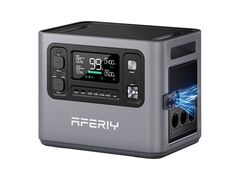
Aferiy P280
See price (11)
With 2048 Wh expandable up to 10.24 kWh, 2800 W (5600 W peak) and a 7-year LiFePO4 warranty, the Aferiy P280 is built for long-haul home backup.
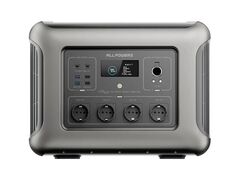
Allpowers R2500 V2
See price (1)
2500W (4000W peak) and 1920Wh of LiFePO4, expandable past 4000Wh, with solar input up to 1000W: the Allpowers R2500 V2 targets serious home backup and demanding campervan use.
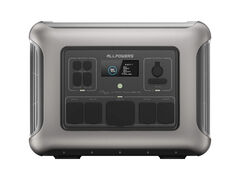
Allpowers R2500 Plus
See price (8)
2016 Wh, 2500 W continuous and a 15 ms UPS function: the Allpowers R2500 Plus keeps the home running and climbs to 4320 Wh with two expansion batteries.
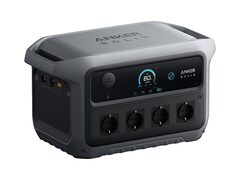
Anker Solix C2000 Gen 2
See price (12)
2048Wh, 2400W and a full recharge in 58 minutes: Anker's new-generation station, faster, with 140W USB-C and expansion up to 4 kWh.
Published on 24/08/2026