
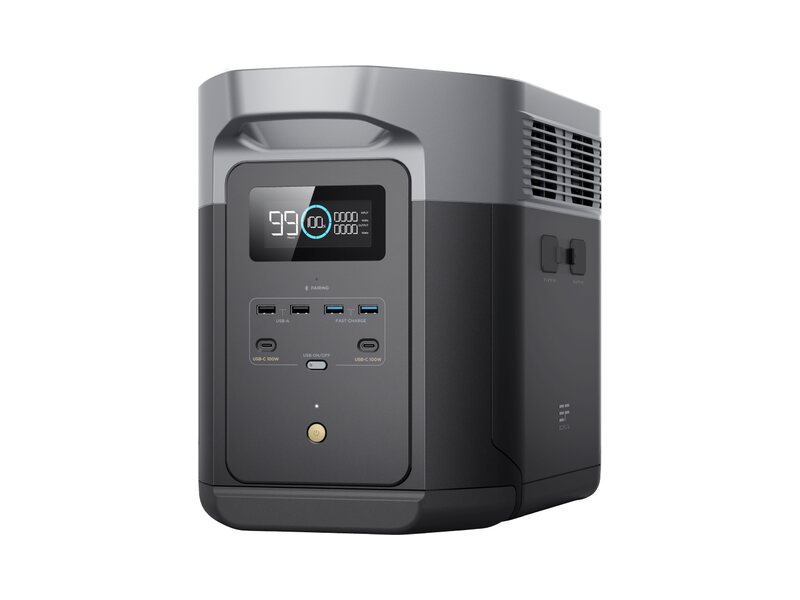
EcoFlow Delta 2 Max
(6 reviews)
The EcoFlow Delta 2 Max power station turns any place into a reliable energy source, from camping to home backup, with no noise and no fuel at all.
As an Amazon Associate I earn from qualifying purchases.
Characteristics
- Capacity: 2,048 Wh (expandable to 6,144 Wh)
- Power: 2,400 W (3,100 W X-Boost, 4,800 W surge)
- Recharge: 80% in 53 min on AC, up to 1,000 W solar
- Weight: 23 kg
- Versatile 2 kWh LFP station, easy to move at 23 kg
Detailed overview: EcoFlow Delta 2 Max portable power station
The EcoFlow Delta 2 Max is a 2,048 Wh portable power station built for people who want to plug in almost anything without a second thought. With 2,400 W of continuous power (and up to 3,100 W thanks to X-Boost technology, 4,800 W surge), it runs a fridge just as easily as a microwave, a coffee machine, a drill or a portable air conditioner. Its LFP (LiFePO4) battery is rated for 3,000 charge cycles before dropping to 80% capacity, roughly ten years of daily use, far beyond conventional lithium-ion batteries.
On the charging side, the Delta 2 Max is one of the fastest stations on the market: 80% in 53 minutes from a plain wall socket, and even 80% in 43 minutes when combining AC and solar through X-Stream dual charging. On solar alone it accepts up to 1,000 W of input via its two independent MPPT controllers, for a full charge in about 2.5 hours in good sunlight.
Key points to remember:
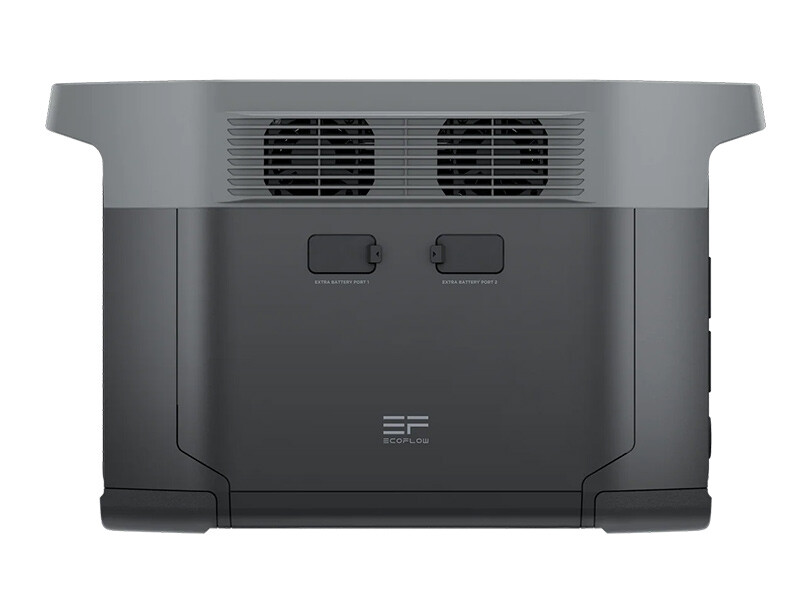
- Capacity: 2,048 Wh, expandable up to 6,144 Wh with two extra batteries
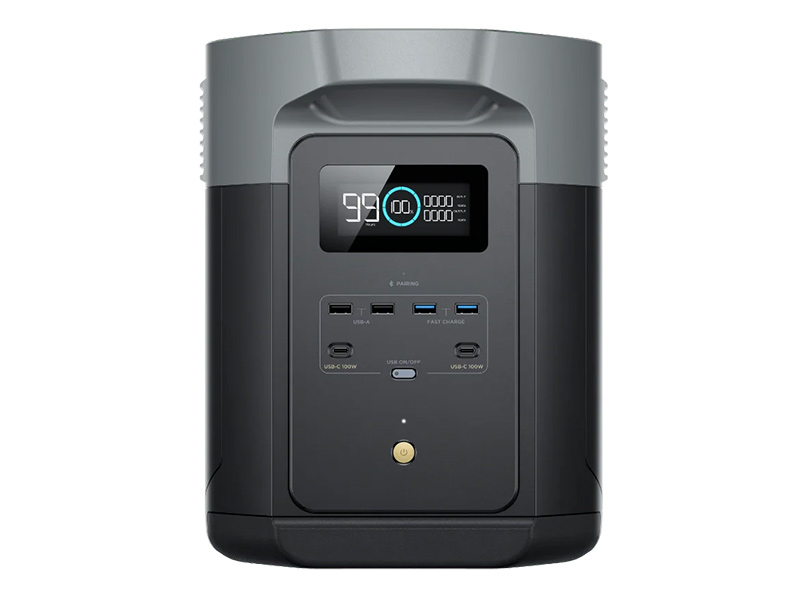
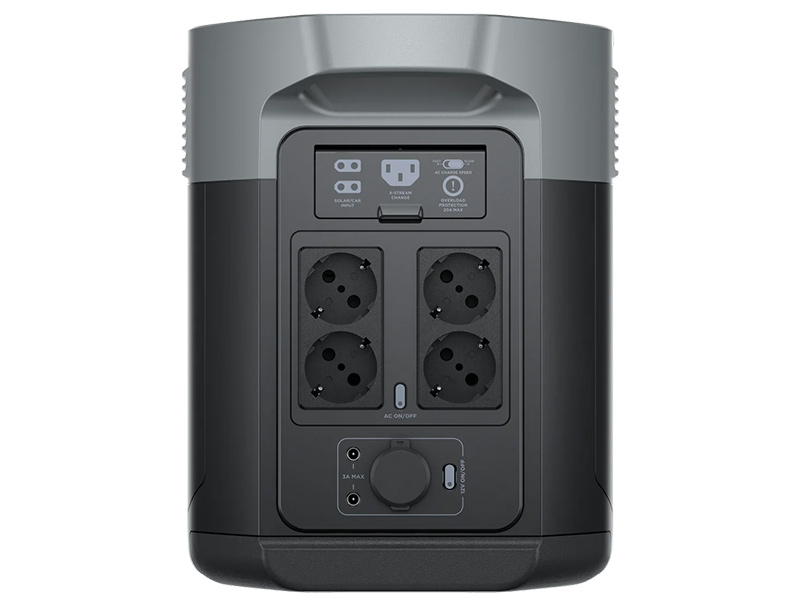
- Outputs: 4 AC outlets (2,400 W), 2 USB-C ports at 100 W, 2 USB-A, 2 USB-A fast charge, a 126 W car port and 2 DC5521, up to 13 devices at once
- Recharge: X-Stream AC at 2,300 W, solar up to 1,000 W, car 12 V / 24 V
- Connectivity: Wi-Fi and Bluetooth, full control via the EcoFlow app
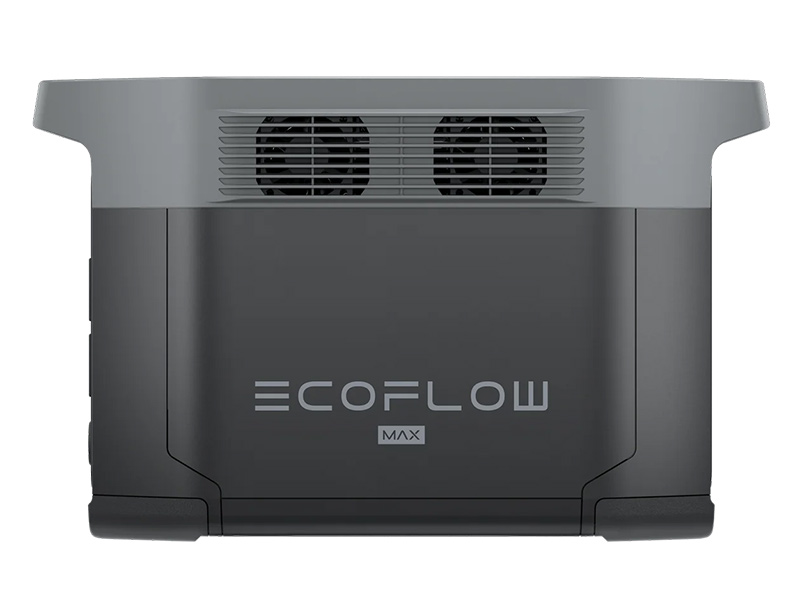
- Format: 497 x 242 x 305 mm at 23 kg, 5-year warranty
At 23 kg, it stays clearly lighter than the expandable 2 kWh LFP stations of its generation, often past 28 kg, a real advantage when moving it from the living room to the van without wrecking your back. Its 30 dB noise level under moderate use makes it as discreet as a quiet conversation, a world away from thermal generators. One honest limitation: its weight is still significant for truly on-foot nomadic use, and the solar input is capped at 60 V, which calls for a little thought about panel wiring. For home backup, comfortable camping or professional work in the field, the Delta 2 Max ticks almost every box.
Full specifications
Detailed characteristics (EAN: 0842783123220)
Battery and capacity
| Rated capacity?Total stored energy in watt-hours. The higher the figure, the longer the runtime. | 2048 Wh |
|---|---|
| Delivered energy, measured?Energy that actually leaves the battery and reaches the devices. Always below the stored energy, as conversion costs heat. Taken from our in-depth review. | 1780 Wh |
| Max capacity (with extensions)?Total capacity reachable by adding extra batteries. | 6144 Wh |
| Expandable capacity?Whether capacity can be increased with add-on batteries. | Yes |
| Removable battery?The main battery can be removed or replaced by the user. | No |
| Battery chemistry?LiFePO4 (LFP) lasts far longer and is safer than NMC. | LFP (LiFePO4) |
| Charge cycles?Number of full charges before capacity drops to the stated threshold. | 3000 cycles (80 %) |
AC output
| Continuous AC power?Power the unit can sustain continuously on its 230 V outlets. | 2400 W |
|---|---|
| Surge power?Brief peak tolerated when starting motor or compressor devices. | 4800 W |
| Boost-mode power?Extended power via a proprietary mode (X-Boost, AmpUp…) by lowering voltage. | 3100 W |
| Inverter type?A pure sine wave is essential for sensitive electronics and motors. | Pure sine wave |
| AC voltage / frequency?Voltage and frequency of the AC output (230 V / 50 Hz in Europe). | 230 V / 50 Hz |
| Number of 230 V AC outlets?Number of mains outlets available on the unit. | 4 |
| RV / TT-30 outlet?Dedicated 30 A outlet for North-American style RVs. | No |
Recharging
| Max AC charging power?Maximum power drawn from a wall socket; higher means faster charging. | 2300 W |
|---|---|
| AC charge 0-80%?Stated time to go from 0 to 80% on mains power. | 53 min |
| Max solar input?Maximum solar power accepted at the input (PV panels). | 1000 W |
| Accepted solar voltage?Panel voltage range compatible with the solar input. | 11 to 60 V |
| Max solar current?Maximum current accepted on the solar input. | 15 A |
| MPPT controllers?Number of independent MPPT solar inputs (yield optimisation). | 2 |
| Vehicle charging (12/24 V)?Can be charged from a vehicle's cigarette-lighter socket. | Yes |
| Pass-through charging?The unit can power devices while charging (pass-through). | Yes |
Ports and connectors
| USB-C ports?Number of USB-C ports and the fastest port's power (laptops, phones). | 2 × 100 W |
|---|---|
| USB-A ports?Number of USB-A ports and maximum power (small devices). | 4 × 18 W |
| 12 V output (car socket)?12 V cigarette-lighter output and its power (coolers, pumps…). | Yes (126 W) |
| Other DC outputs?Additional DC connectors (Anderson, DC5521, XT60…). | DC5521 |
Portability
| Weight?Net weight of the unit, battery included. | 23 kg |
|---|---|
| Dimensions (L × W × H)?Overall size of the unit in millimetres. | 497 × 242 × 305 mm |
| Form factor?Portable (hand-carried), transportable (heavy), or wheeled. | Transportable |
| Wheels?Built-in wheels for moving the unit. | No |
| Telescopic handle?Retractable handle like a wheeled suitcase. | No |
Safety and environment
| Certifications?Standards and approvals obtained (CE, RoHS, UN38.3, UL…). | CE, RoHS, UN38.3 |
|---|---|
| Discharge temperature?Temperature range in which the unit can deliver power. | -10 to 45 °C |
| Charge temperature?Temperature range in which the unit can be recharged. | 0 to 45 °C |
Backup / UPS
| UPS / EPS mode?Automatic switch to battery on a mains outage (backup). | Yes |
|---|---|
| Switchover time (rated)?Delay before switching to battery; under 20 ms suits a PC or router. | 20 ms |
Noise and thermal
| Noise level (rated)?Manufacturer-stated noise; a quiet room is around 30 dB. | 30 dB(A) |
|---|---|
| Quiet mode?Setting that limits fan noise, often by capping charge power. | No |
| Self-heating battery?Battery pre-heating to allow charging in cold weather. | No |
Display and connectivity
| Display?Type of screen showing power, runtime and alerts. | LCD |
|---|---|
| Bluetooth?Bluetooth link for nearby control. | Yes |
| Wi-Fi?Wi-Fi connection for remote control and monitoring. | Yes |
| Mobile app?iOS / Android app to control the unit. | Yes |
| Local control (no cloud)?Control possible over Bluetooth without an account or internet. | Yes |
| Solar connector?Connector type of the solar input (XT60, Anderson, MC4…). | XT60 |
Availability and warranty
| Market launch?Date the model first became available on the European market. Useful to place its generation: technology moves fast in this segment, and a device several years old may be at the end of its commercial life. | May 2023 |
|---|---|
| Warranty?Length of the manufacturer's warranty. | 5 years |
User manual / Instructions for use (PDF)
⚡ How long will this power station run a device?
With 2,048 Wh, the EcoFlow Delta 2 Max external battery runs a fridge (50 W) for ~35h or an LED TV (90 W) for ~19h.
| Home | Runtime |
|---|---|
| Mini fridge (45 W) | ~39h |
| American fridge (150 W) | ~12h |
| Space heater (1500 W) | ~1h10 |
| Hair dryer (1800 W) | ~60 min |
| Outdoor & workshop | Runtime |
|---|---|
| RV fridge (60 W) | ~29h |
| LED TV (90 W) | ~19h |
| Nebulizer (100 W) | ~17h |
| Air compressor (1100 W) | ~1h35 |
Rough estimate: real consumption varies, and very power-hungry appliances (heating elements) must stay below the output power.
What is this power station best for?
-
Home & Power cuts Ideal
With 2048 Wh and 2400 W, the Delta 2 Max secures a large part of a home during an outage: fridge, freezer, router, lighting and small appliances run for many hours, and its UPS function takes over in under 20 ms for a near-invisible transition. Its expandability to 6 kWh with add-on batteries covers a multi-day failure, and its 4800 W peak absorbs the startup surges of large appliances. A recharge from 0 to 80 % in 53 minutes tops it up fast, and a solar input up to 1000 W makes it a sun-rechargeable reserve. LiFePO4 chemistry and a 5-year warranty make it a reliable, scalable home backup.
-
Off-grid & Solar Ideal
With up to 1000 W of solar input and expansion to 6 kWh, the Delta 2 Max becomes a genuine storage core for autonomous living in a cabin, a tiny house or an off-grid workshop. Start with its 2048 Wh and add batteries as needs grow, without changing inverter. Its 2400 W (4800 W peak) power a fridge, pump, tools and appliances, and LiFePO4 chemistry (3000 cycles) withstands years of daily cycling. In good weather it refills a large part of its charge in a few hours. App control makes it easy to track solar production and consumption, for seasonal or permanent use.
-
Motorhome & Van life Ideal
Its 2048 Wh, expandable to 6 kWh, offer comfortable autonomy in a motorhome: fridge, electric cooking, lighting and comfort run for several days in a row, and its 2400 W accept hungry appliances without compromise. A solar input up to 1000 W recharges quickly at a stop in good weather, and a recharge from 0 to 80 % in 53 minutes is valuable at a service area. Its quiet operation (30 dB) preserves the calm of nights aboard. At 23 kg, it suits motorhomes and A-classes with a dedicated bay; for a compact van, a lighter model fits daily use better.
-
Job site & Tools Suitable
On an off-grid site, the Delta 2 Max combines a large reserve and power: its 2400 W output (4800 W peak) runs a saw, grinder, sander or compressor, and its four outlets feed several stations. Its 2048 Wh, expandable to 6 kWh, cover an intensive workday, and a solar input up to 1000 W recharges on site in good weather, without the noise or fumes of a generator. The pure sine wave protects the machines’ electronics. At 23 kg, position it at a central point of the site rather than moving it constantly.
-
Events & Market stalls Suitable
Quiet (30 dB), the Delta 2 Max cleanly powers a wedding, a market or an outdoor stand, without the noise or smells of a fuel generator: its 2400 W handle a PA system, lighting, a payment terminal and small catering gear, and its 2048 Wh cover a long day. Its expansion to 6 kWh lets you run several days in a row or absorb consumption peaks, while a recharge from 0 to 80 % in 53 minutes refills between highlights. A reliable alternative to a generator where calm is essential, with simple setup despite its 23 kg.
Our team's recommendations based on the model's capacity, output power and weight.
Compatible solar panels
A selection of photovoltaic panels that suit this station's solar input (up to 60V / 1000W), best match first.


Comparison
Under the £1112 mark, the EcoFlow Delta 2 Max competes head-to-head with the most sought-after 2 kWh stations in its range, notably through searches like “Delta 2 Max vs Bluetti AC200L” or “Delta 2 Max vs Jackery 2000 Plus”. Here is how it stacks up against three of its most compared alternatives: the Bluetti AC200L, its most direct rival on capacity and charging speed; the Jackery Explorer 2000 Plus, the champion of raw power and expandability; and the Anker SOLIX F2000, very aggressive on the capacity-to-price ratio.
| Criterion | EcoFlow Delta 2 Max | Bluetti AC200L | Jackery Explorer 2000 Plus | Anker SOLIX F2000 |
|---|---|---|---|---|
| Capacity | 2,048 Wh (expandable to 6,144 Wh) | 2,048 Wh (expandable to 8,192 Wh) | 2,042 Wh (expandable to 24 kWh) | 2,048 Wh (expandable to 4,096 Wh) |
| Continuous / peak power | 2,400 W / 4,800 W (3,100 W with X-Boost) | 2,400 W / 4,800 W | 3,000 W / 6,000 W | 2,400 W / 3,600 W |
| Battery chemistry | LFP (LiFePO4) | LFP (LiFePO4) | LFP (LiFePO4) | LFP (LiFePO4) |
| Mains recharge 0-80% | 53 min (43 min with AC + solar) | ≈ 45 min | ≈ 1 h 30 | ≈ 1 h |
| Weight | 23 kg | ≈ 28 kg | ≈ 27.9 kg | ≈ 28 kg |
| Noise level | 30 dB | ≈ 50 dB | 30 dB | ≈ 40 dB |
| Observed price | ≈ £1025 (sale, £1111 regular) | ≈ £1025 | ≈ £1196 | ≈ £1282 |
In short, the EcoFlow Delta 2 Max remains the most balanced option: at just 23 kg it is the lightest of the group (around 5 kg less than its rivals), one of the fastest to recharge and one of the quietest, all at a contained price. The Jackery Explorer 2000 Plus wins on raw power (3,000 W) and maximum expandability (24 kWh), the Bluetti AC200L shaves a few minutes off mains charging and accepts a bit more solar (1,200 W), and the Anker SOLIX F2000 holds its own on the capacity-to-price ratio, but each does so in a heavier chassis. For versatile home, van and field use, the Delta 2 Max stays the most practical choice day to day.
Related video
Video: EcoFlow Delta 2 Max Review - Published on 08/07/2023
Our tester's review: Christophe Delpuech
After several weeks with the Delta 2 Max, it earned a permanent spot by the front door, ready to grab. The first real test came during a winter power cut: the fridge, the internet router, a few LED torches and two laptops ran all evening without the battery dropping below 60%. Stopwatch in hand, we measured 0 to 80% in just under an hour on a standard socket, impressive for 2 kWh. On a camping weekend, we hooked up two solar panels: in fair spring weather we were pulling 380 to 420 W around midday, easily enough to stay off-grid. The fans are audible during fast charging, but you can cap the speed in the app for the night. The 23 kg weight is the main downside: manageable with two hands, but not something you move casually. Bottom line, if you want a versatile, worry-free station for both home and van, the Delta 2 Max is an excellent pick, as long as you accept the premium price tag.
In-depth review EcoFlow Delta 2 Max: our full review 4.4/5 Read our full review → Capacity and efficiency 4.5 Delivered power 4.3 Recharging 4.5 Ports and control 4.6 Build and endurance 4.5 Noise 4.2Frequently asked questions: EcoFlow Delta 2 Max portable power station
With 2,400 W of continuous power (3,100 W in X-Boost) and 2,048 Wh, it runs almost all household devices: fridge, microwave, coffee machine, power tools and even a small air conditioner. Expect around 14 hours for a compressor fridge.
From a wall socket it goes from 0 to 80% in 53 minutes and reaches 100% in about 1 h 25. Combining AC and solar (X-Stream dual charging) brings the 80% mark down to 43 minutes. On solar alone, up to 1,000 W of input gives a full charge in around 2.5 hours.
Yes, it is one of its flagship uses. Its 2,048 Wh easily cover a day of remote work, the router, lighting and the fridge. At 23 kg it stays easy to move, though it suits fitted vehicles more than on-foot transport.
Yes. By connecting up to two extra Delta 2 Max (or Delta Max) batteries, capacity rises from 2,048 Wh to 6,144 Wh, enough to sustain home backup for several hours or even a full day depending on consumption.
Its LFP (LiFePO4) battery is rated for 3,000 charge cycles before dropping to 80% of its original capacity, roughly ten years of daily use. EcoFlow backs it with a 5-year warranty.
Need help choosing?
Other products in the "High-capacity power stations" category
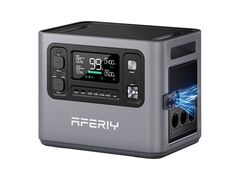
Aferiy P280
See price (11)
With 2048 Wh expandable up to 10.24 kWh, 2800 W (5600 W peak) and a 7-year LiFePO4 warranty, the Aferiy P280 is built for long-haul home backup.
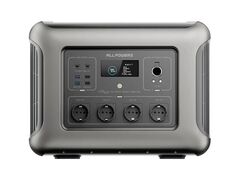
Allpowers R2500 V2
See price (1)
2500W (4000W peak) and 1920Wh of LiFePO4, expandable past 4000Wh, with solar input up to 1000W: the Allpowers R2500 V2 targets serious home backup and demanding campervan use.
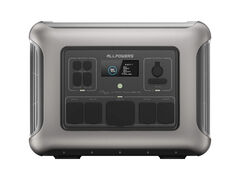
Allpowers R2500 Plus
See price (8)
2016 Wh, 2500 W continuous and a 15 ms UPS function: the Allpowers R2500 Plus keeps the home running and climbs to 4320 Wh with two expansion batteries.
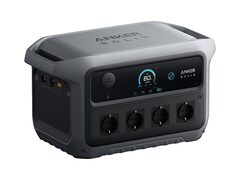
Anker Solix C2000 Gen 2
See price (12)
2048Wh, 2400W and a full recharge in 58 minutes: Anker's new-generation station, faster, with 140W USB-C and expansion up to 4 kWh.
Published on 07/07/2026, updated on 14/08/2026