
Goal Zero Yeti 1500X
(9 reviews)
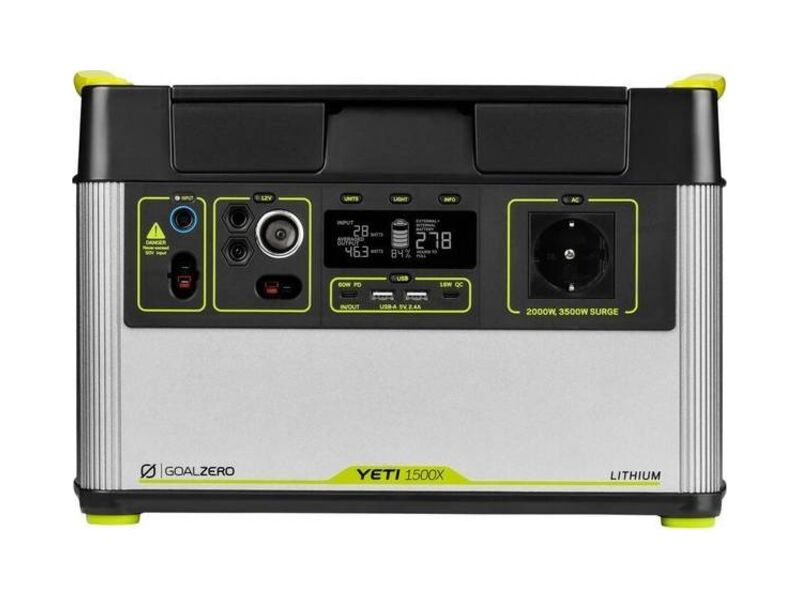
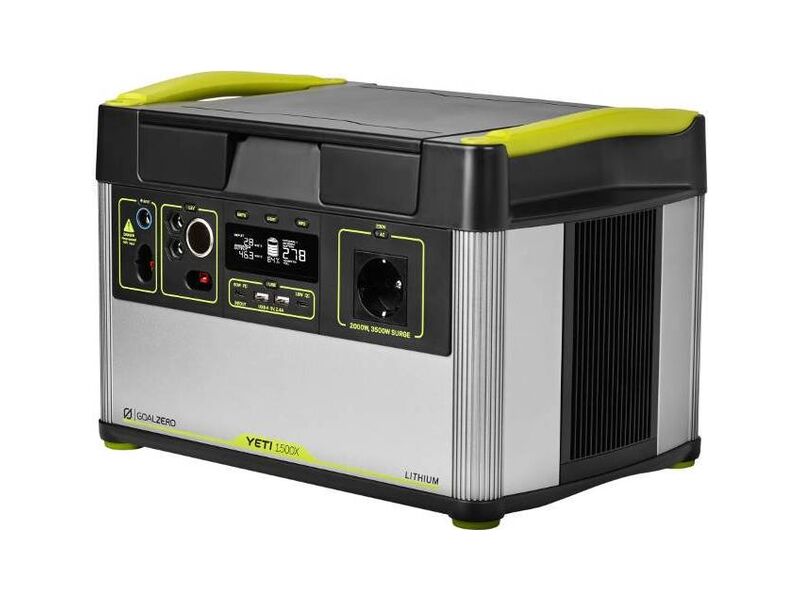
1516Wh and 2000W (3500W surge): the Yeti 1500X trades cutting-edge battery chemistry for Goal Zero's rugged, pioneer-brand build quality.
Characteristics
- Capacity: 1516Wh (Li-ion NMC)
- Power: 2000W (3500W surge)
- Cycles: 500 cycles to 80% (vs 3000-4000+ on LFP)
- Weight: 20.7 kg
- Expandable to 3900Wh with the Yeti Tank
Detailed overview: Goal Zero Yeti 1500X portable power station
The Goal Zero Yeti 1500X is a 1516Wh portable power station from a brand that has been a genuine pioneer in nomadic power since 2009, well before EcoFlow, Bluetti or Jackery entered the market. It targets home backup, van life, job sites and solar top-ups, with a continuous AC output of 2000W and up to 3500W of surge, enough for most everyday appliances (a fridge, power tools, small kitchen equipment).
One point deserves to be flagged clearly before any purchase: unlike almost every other station reviewed on this site, the Yeti 1500X uses NMC lithium-ion chemistry rather than LiFePO4 (LFP). Goal Zero rates it for only 500 charge cycles before it drops to 80% of its original capacity, where direct rivals such as the EcoFlow Delta 2 or Bluetti AC180 clear 3000, even 4000 cycles. Per Wh it is also pricier than most recent LiFePO4 units. This older technical choice is consistent with how long the Yeti X range has been on the market, but it weighs on longevity and value if you plan to cycle the battery often.
The European-spec unit ships with a single 230V AC outlet (versus two 120V outlets on the North American version sold directly through Goal Zero's US store, currently the only place to buy one new), a 60W USB-C port for in/out charging, a second 18W USB-C, two USB-A ports, and several 12V outputs including a 360W high-power port. Mains recharging tops out at 600W, but only with an optional power supply sold separately: the bundled 120W charger takes around 14 hours for a full charge. A built-in MPPT controller accepts up to 600W of solar input through Goal Zero's Boulder or Nomad panels (proprietary 8mm connector). Capacity is expandable to 3900Wh with an additional Yeti Tank battery.
The Yeti 1500X is controlled via Bluetooth and WiFi through the Goal Zero app, and testers rate its aluminium construction as genuinely rugged, alongside notably quiet operation. Its 2-year warranty is short next to the 5 years several LiFePO4 rivals offer. Right now it isn't stocked new by any UK or EU retailer, including Amazon; the only new-purchase route is Goal Zero's own US store, which ships the North American variant, so the price above is a EUR to GBP conversion shown for reference rather than a live UK price.
Full specifications
Detailed characteristics (EAN: 0847974007556)
Battery and capacity
| Rated capacity?Total stored energy in watt-hours. The higher the figure, the longer the runtime. | 1516 Wh |
|---|---|
| Delivered energy, measured?Energy that actually leaves the battery and reaches the devices. Always below the stored energy, as conversion costs heat. Taken from our in-depth review. | 1267 Wh |
| Max capacity (with extensions)?Total capacity reachable by adding extra batteries. | 3900 Wh |
| Expandable capacity?Whether capacity can be increased with add-on batteries. | Yes |
| Removable battery?The main battery can be removed or replaced by the user. | No |
| Battery chemistry?LiFePO4 (LFP) lasts far longer and is safer than NMC. | NMC (Li-ion) |
| Charge cycles?Number of full charges before capacity drops to the stated threshold. | 500 cycles (80 %) |
| Pack nominal voltage?Internal battery voltage; higher voltage helps deliver high power. | 10.8 V |
AC output
| Continuous AC power?Power the unit can sustain continuously on its 230 V outlets. | 2000 W |
|---|---|
| Surge power?Brief peak tolerated when starting motor or compressor devices. | 3500 W |
| Inverter type?A pure sine wave is essential for sensitive electronics and motors. | Pure sine wave |
| AC voltage / frequency?Voltage and frequency of the AC output (230 V / 50 Hz in Europe). | 230 V / 50 Hz |
| Number of 230 V AC outlets?Number of mains outlets available on the unit. | 1 |
| RV / TT-30 outlet?Dedicated 30 A outlet for North-American style RVs. | No |
Recharging
| Max AC charging power?Maximum power drawn from a wall socket; higher means faster charging. | 600 W |
|---|---|
| AC charge 0-100%?Stated time for a full charge on mains power. | 840 min |
| Max solar input?Maximum solar power accepted at the input (PV panels). | 600 W |
| Accepted solar voltage?Panel voltage range compatible with the solar input. | 14 to 50 V |
| Max solar current?Maximum current accepted on the solar input. | 50 A |
| MPPT controllers?Number of independent MPPT solar inputs (yield optimisation). | 1 |
| Vehicle charging (12/24 V)?Can be charged from a vehicle's cigarette-lighter socket. | Yes |
| Pass-through charging?The unit can power devices while charging (pass-through). | Yes |
Ports and connectors
| USB-C ports?Number of USB-C ports and the fastest port's power (laptops, phones). | 2 × 60 W |
|---|---|
| USB-A ports?Number of USB-A ports and maximum power (small devices). | 2 × 12 W |
| 12 V output (car socket)?12 V cigarette-lighter output and its power (coolers, pumps…). | Yes (360 W) |
| Other DC outputs?Additional DC connectors (Anderson, DC5521, XT60…). | 8mm, 6mm, Car Port 12V |
Portability
| Weight?Net weight of the unit, battery included. | 20.7 kg |
|---|---|
| Dimensions (L × W × H)?Overall size of the unit in millimetres. | 387 × 260 × 263 mm |
| Form factor?Portable (hand-carried), transportable (heavy), or wheeled. | Portable |
| Wheels?Built-in wheels for moving the unit. | No |
| Telescopic handle?Retractable handle like a wheeled suitcase. | No |
Safety and environment
| Discharge temperature?Temperature range in which the unit can deliver power. | 0 to 40 °C |
|---|---|
| Charge temperature?Temperature range in which the unit can be recharged. | 0 to 40 °C |
Backup / UPS
| UPS / EPS mode?Automatic switch to battery on a mains outage (backup). | No |
|---|
Noise and thermal
| Quiet mode?Setting that limits fan noise, often by capping charge power. | No |
|---|---|
| Self-heating battery?Battery pre-heating to allow charging in cold weather. | No |
Display and connectivity
| Display?Type of screen showing power, runtime and alerts. | LCD |
|---|---|
| Bluetooth?Bluetooth link for nearby control. | Yes |
| Wi-Fi?Wi-Fi connection for remote control and monitoring. | Yes |
| Mobile app?iOS / Android app to control the unit. | Yes |
| Local control (no cloud)?Control possible over Bluetooth without an account or internet. | Yes |
Availability and warranty
| Market launch?Date the model first became available on the European market. Useful to place its generation: technology moves fast in this segment, and a device several years old may be at the end of its commercial life. | November 2020 |
|---|---|
| Warranty?Length of the manufacturer's warranty. | 2 years |
User manual / Instructions for use (PDF)
⚡ How long will this power station run a device?
With 1,516 Wh, the Goal Zero Yeti 1500X external battery runs a fridge (50 W) for ~26h or an LED TV (90 W) for ~14h.
| Home | Runtime |
|---|---|
| Refrigerator (50 W) | ~26h |
| Freezer (60 W) | ~21h |
| Induction hob (1500 W) | ~50 min |
| Hair dryer (1800 W) | ~45 min |
| Outdoor & workshop | Runtime |
|---|---|
| Laptop (60 W) | ~21h |
| Desktop PC (250 W) | ~5h10 |
| Angle grinder (900 W) | ~1h25 |
| Pressure washer (1400 W) | ~55 min |
Rough estimate: real consumption varies, and very power-hungry appliances (heating elements) must stay below the output power.
What is this power station best for?
-
Home & Power cuts Ideal
In a power cut, the Goal Zero Yeti 1500X keeps a household's essentials running: a fridge, home router, lighting and phone charging can hold on for several hours from its 1516Wh, and its 2000W output (3500W surge) shrugs off the start-up surge of a fridge compressor without flinching. Its rugged aluminium enclosure and quiet operation make it pleasant to leave plugged in continuously, which Goal Zero itself recommends to keep it ready at all times. Two honest caveats to know before relying on it for home backup: the European-spec unit has only a single 230V outlet (a power strip helps for multiple appliances), and its NMC battery is rated for just 500 cycles, against 3000 to 4000 on most LiFePO4 rivals, a point that matters most if outages are frequent and the station gets fully recharged often. Its genuine asset is Goal Zero's pedigree as one of the sector's pioneers and the build quality that comes with it, though buying one new currently means ordering from Goal Zero's US store rather than a UK or EU retailer.
-
Motorhome & Van life Ideal
Installed permanently in a motorhome or van, the Yeti 1500X easily runs a coffee machine, a small oven or a compressor fridge thanks to its 2000W continuous output (3500W surge), with 1516Wh in reserve to cover a stopover without recharging. Its MPPT solar input, up to 600W, tops up the charge while driving or parked via Goal Zero's Boulder or Nomad panels (proprietary 8mm connector, less universal than the MC4 standard used by rivals), and the Bluetooth/WiFi app lets you monitor charge level from inside the vehicle. At 20.7 kg it suits a fixed installation better than being carried around by hand. A serious point to weigh for year-round van life: the NMC battery is rated for only 500 cycles, well below the 3000-4000 cycles of rival LiFePO4 stations, which can hurt real-world lifespan if it's recharged very often.
-
Job site & Tools Suitable
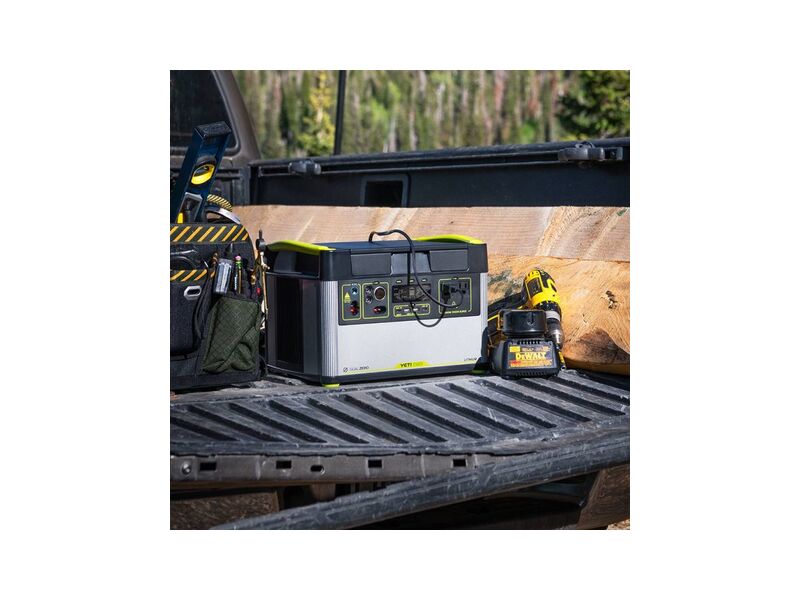
On a job site, the Yeti 1500X's 2000W continuous output (3500W surge) handles most power tools, and its aluminium shell copes well with rough conditions. At 20.7 kg it's manageable with two hands but less convenient to move around often than a lighter station. The European-spec unit has only a single AC outlet, so a power strip is recommended for running several tools at once. Its NMC battery, rated for 500 cycles, wears out faster than a LiFePO4 pack if it's recharged daily over months of site work.
-
Remote work Suitable
For nomadic remote work, the Yeti 1500X is comfortably oversized: its 2000W output effortlessly runs a laptop, a monitor, a router and lighting, with reserve for several days thanks to its 1516Wh capacity. Its quiet operation and rugged build suit a station left running at a desk or outdoors. It's a costly choice if remote work is the only intended use, though: its capacity far exceeds what a single workstation needs, and its price per Wh remains high next to more compact stations better matched to this exact use case.
-
Off-grid & Solar Suitable
The Yeti 1500X's built-in MPPT controller accepts up to 600W of solar input, enough to recharge the station in a single sunny day using Goal Zero's Boulder or Nomad panels. Its proprietary 8mm connector, however, limits compatibility with the more common MC4 third-party panels unless an adapter is added. For permanent off-grid use, cycled daily over several years, its NMC battery rated for only 500 cycles remains a real drawback next to LiFePO4 stations built for this kind of intensive, long-term duty.
Our team's recommendations based on the model's capacity, output power and weight.
Compatible solar panels
A selection of photovoltaic panels that suit this station's solar input (up to 50V / 600W), best match first.


Comparison
How does the Goal Zero Yeti 1500X compare with other stations in its capacity class (roughly 1.5 to 2kWh)? Here is a comparison against three direct rivals.
| Criterion | Goal Zero Yeti 1500X | Jackery Explorer 2000 v2 | Bluetti AC200L | EcoFlow Delta 2 Max |
|---|---|---|---|---|
| Price | ≈ £1104 | ≈ £684 | ≈ £1283 | ≈ £812 |
| Capacity | 1516Wh | 2042Wh | 2048Wh | 2048Wh |
| Chemistry | Li-ion NMC | LiFePO4 | LiFePO4 | LiFePO4 |
| Cycles | 500 | 4000 | 3000 | 3000 |
| Power | 2000W (3500W) | 2200W | 2400W | 2400W |
| Warranty | 2 years | 5 years | 5 years | 5 years |
On paper, the Yeti 1500X offers less capacity, far fewer cycles and a shorter warranty than these three LiFePO4 rivals, at a price that is close to or above theirs: a genuine disadvantage if you want the best capacity-per-pound or a battery built for heavy daily use. Its real strength lies elsewhere: Goal Zero is a genuine pioneer of the sector (founded in 2009), known for the ruggedness of its enclosures, and its build quality and quiet running remain a real draw, even though, unlike these three rivals, it currently has no active UK or EU retailer selling it new.
Related video
Video: Goal Zero Yeti 1500X Review: This Is One Yeti You Can Believe In! - Published on 26/05/2021
Our tester's review: Christophe Delpuech
We were struck first by how well the Yeti 1500X shrugs off knocks: the anodised aluminium shell takes daily abuse without a mark, and the fans stay surprisingly quiet even under full load, a real plus next to some noisier rivals. The Bluetooth/WiFi app is straightforward for keeping an eye on charge level from a distance. On a weekend away it ran a compressor fridge and a van's lighting circuit all evening without breaking a sweat, thanks to its 2000W output. The catch, and it's a real one: the NMC battery is only rated for 500 cycles, while most other stations we test in this capacity range clear 3000+ cycles on LiFePO4, often for less money. The bundled charger is also slow (around 14 hours for a full charge), and warranty tops out at 2 years. Worth considering if you can find genuine European stock, but the current lack of any UK or EU retailer selling it new is a real practical drawback.
In-depth review Goal Zero Yeti 1500X: our full review 3.9/5 Read our full review → Capacity and efficiency 3.6 Delivered power 4.5 Recharging 3.6 Ports and control 3.5 Build and endurance 3.8 Noise 4.4Frequently asked questions: Goal Zero Yeti 1500X portable power station
No. Unlike almost every other station in this comparison, the Yeti 1500X uses Li-ion NMC chemistry, rated for 500 cycles to 80% capacity, well below the 3000-4000 cycles of recent LiFePO4 rivals.
It isn't currently sold new by any UK retailer, including Amazon UK, and Goal Zero has no active European store (goalzero.eu redirects to its US site). The only new-purchase route is Goal Zero's own US store; the price shown here is a EUR to GBP conversion for reference, not a live UK price.
About 14 hours with the included 120W charger. This can drop to 7 hours with an optional 230W power supply, or 3 hours with an optional 600W supply, both sold separately.
Yes, with an optional Yeti Tank expansion battery, which raises total capacity to 3900Wh, useful for extended home backup or semi-residential use.
2000W continuous and up to 3500W surge through its AC outlet, enough for most everyday appliances: a fridge, power tools, small kitchen equipment or a moderate-power microwave.
Need help choosing?
Related articles
Other products in the "High-capacity power stations" category
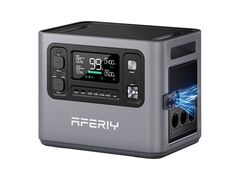
Aferiy P280
See price (11)
With 2048 Wh expandable up to 10.24 kWh, 2800 W (5600 W peak) and a 7-year LiFePO4 warranty, the Aferiy P280 is built for long-haul home backup.
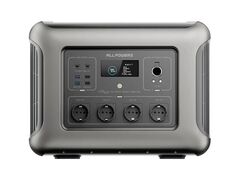
Allpowers R2500 V2
See price (1)
2500W (4000W peak) and 1920Wh of LiFePO4, expandable past 4000Wh, with solar input up to 1000W: the Allpowers R2500 V2 targets serious home backup and demanding campervan use.
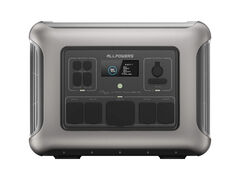
Allpowers R2500 Plus
See price (8)
2016 Wh, 2500 W continuous and a 15 ms UPS function: the Allpowers R2500 Plus keeps the home running and climbs to 4320 Wh with two expansion batteries.
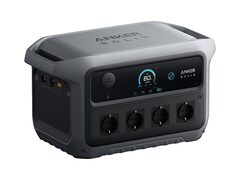
Anker Solix C2000 Gen 2
See price (12)
2048Wh, 2400W and a full recharge in 58 minutes: Anker's new-generation station, faster, with 140W USB-C and expansion up to 4 kWh.
Published on 30/08/2026, updated on 01/10/2026