
A retired battery is (almost) never waste
It is tempting to picture a battery at 'end of life' going straight in the bin. The reality is more nuanced: a lithium battery considered worn out has simply lost part of its original capacity, typically 20 to 30 %, sometimes faster if it has been through a lot of fast charging or high heat. It is no longer good enough for its original job, but it is far from unusable.
Three paths are then possible, in an order of preference that comes straight from the circular economy: direct reuse (resale as-is, no transformation), second life (it changes use), and recycling (its raw materials are recovered). Recycling only comes as a last resort, once a cell is genuinely too degraded or damaged to be reused as it is.
| Path | Battery condition | What follows |
|---|---|---|
| Direct reuse | Capacity still high (> 80 %) | Resold second-hand for the same use |
| Second life | Reduced capacity (50 to 80 %) | Stationary storage, a less demanding job |
| Recycling | Low capacity or damaged cell | Recovery of lithium, cobalt, nickel |
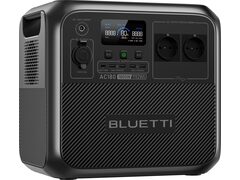
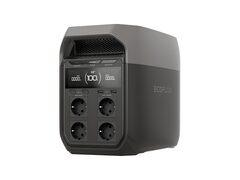
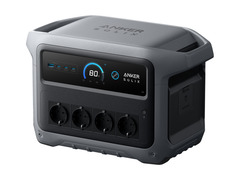
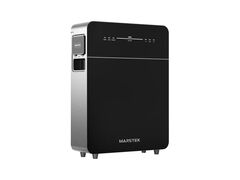
The exact same logic applies to a power station or a large power bank: their internal battery follows this same three-step journey, just on a smaller scale than an EV battery.
Second life: giving a tired cell a new job
Second life (or 'repurposing') means pulling cells out of their original pack, sorting and testing them one by one, then reassembling them into a new pack for a less demanding use. A cell that no longer has the power to drive a vehicle is perfectly capable of storing solar energy in a home, where power and fast-charging requirements are much lower.
Typical second-life uses include renewable energy storage for homes or industrial sites, backup power for off-grid sites, and load-levelling for EV charging stations. The benefit is twofold: the cell's useful life is extended by several years before it finally goes for recycling, and no new raw materials need to be mined for a fresh battery dedicated to these less demanding uses.
It is the same reasoning behind choosing a good power station for home use: the longer a battery stays useful, the less its real environmental footprint weighs per year of use.
Recycling: recovering lithium, cobalt, nickel
When a cell is genuinely too degraded, damaged, or simply too old to justify second-life sorting, it goes for recycling. Two main families of processes exist today. Pyrometallurgy smelts the cells in very high-temperature furnaces: it recovers cobalt, nickel and copper well, but a large share of the lithium ends up in the slag and is not recovered. Hydrometallurgy, more recent, dissolves the components in chemical solutions to separate them one at a time: more selective, it recovers lithium noticeably better, at the cost of a more complex process.
More and more plants combine both approaches to maximise the overall recovery rate. The concrete result: cobalt and nickel are now recovered above 90 % in the best facilities, and lithium recovery is rising fast, pushed by new regulatory requirements (see below). These recycled materials go straight back into making new cells, which reduces pressure on mining, a sensitive issue for cobalt (mining conditions in the Democratic Republic of Congo) as much as for lithium (heavy water use at some extraction sites).
For your own gear, the good practice stays simple: never throw a battery in the bin. Our guide on how to recycle a battery details where to drop off used batteries, and the precautions to take with a swollen one.
What the EU's new battery regulation changes
The EU's new battery regulation (Regulation (EU) 2023/1542, replacing the old 2006 directive) sets, for the first time, binding, progressive targets for manufacturers. Concretely: a minimum lithium battery recycling efficiency of 65 % by the end of 2025, rising to 70 % by the end of 2030, plus specific lithium recovery targets of their own (50 % from 2027, 80 % by 2031). From 2031, new batteries will also have to contain a minimum share of recycled materials.
Another major change: a digital battery passport, mandatory by 2027 for industrial, electric-vehicle and light-transport batteries. It will trace the origin of materials, the manufacturing carbon footprint and disassembly instructions, precisely to make sorting for second life or efficient recycling easier. The regulation also introduces extended producer responsibility: manufacturers, not taxpayers, fund collection and recycling.
This regulation is broad: we have already covered its rules on mandatory battery labelling and on user-replaceable batteries. The recycling and second-life side follows the same logic: give buyers more transparency, and push the industry to close the loop instead of always mining more virgin material.
LiFePO4: a chemistry more suited to second life
Not every battery chemistry copes equally well with this second-life-then-recycling cycle. LiFePO4 (lithium iron phosphate), increasingly used in power stations and home batteries, brings two concrete advantages for the circular economy. First, it uses neither cobalt nor nickel: its manufacturing puts far less pressure on those sensitive materials, and its recycling focuses almost entirely on lithium and iron, which is far more abundant. Second, its native lifespan is much longer than classic lithium-ion, running to several thousand charge cycles instead of a few hundred, which pushes back the point where recycling is even needed.
LiFePO4 is also chemically more stable: the risk of thermal runaway during disassembly or second-life reassembly is noticeably lower than with classic lithium-ion, which makes the whole supply chain simpler and safer. It is no coincidence that most recent power stations have switched to this chemistry. For a deeper look at the differences between the two technologies, our dossier on Li-ion vs LiFePO4 goes further into safety, weight and energy density.
And your power bank or power station, in practice?
For a private individual, this whole industrial cycle boils down to one simple gesture: drop a used battery off at a dedicated collection point instead of the bin. Battery collection schemes exist across most countries and feed straight into the exact paths described above, second life or recycling depending on the battery's real condition.
Weighing this up before a purchase? A power station rated for several thousand cycles, or a well-built power bank, are exactly the choices that push this cycle furthest away. It is also one of the criteria we systematically look at in our comparisons and product reviews.