
Where does the "10 years" figure come from?
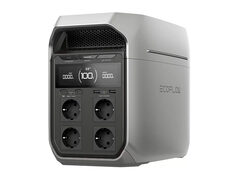
Open the spec sheet of a recent power station or LiFePO4 leisure battery and you'll see it almost everywhere: "up to 10 years of lifespan". The number is reassuring, but where does it actually come from? It isn't the result of an actual ten-year real-world test, no manufacturer has that kind of time before launching a product. It comes from a calculation.
Manufacturers publish a guaranteed number of charge/discharge cycles before capacity drops below a threshold (usually 80% of original capacity): 3,500, 4,000, sometimes over 6,000 cycles for the best LiFePO4 cells. They then divide that number by an assumed usage pattern, most often one full cycle per day. 3,650 cycles divided by 365 days a year comes out to exactly 10 years. The arithmetic is correct. The assumption behind it is worth checking.
What's true: the cycle numbers are real
First the good news: unlike some vague marketing claims, the cycle figures quoted for LiFePO4 (lithium iron phosphate) chemistry aren't made up. Cell manufacturers publish degradation curves measured in the lab, and they hold up. Victron Energy, for example, rates its LiFePO4 batteries at above 80% of original capacity after 2,500 cycles at full discharge (100% DoD), with capacity loss under 1% every 100 cycles at 25 °C (77 °F). Some cells reach 3,000, even 5,000 cycles before crossing that threshold.
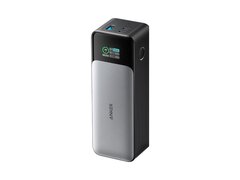
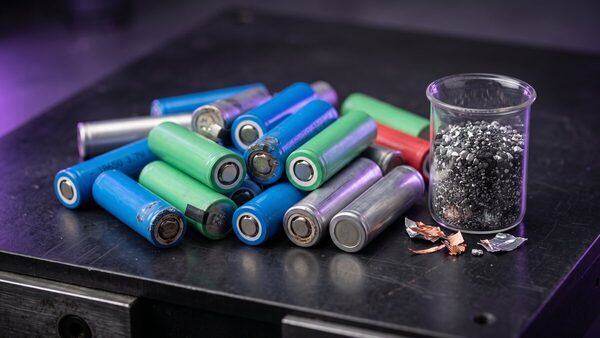
That's far above a classic lithium-ion battery (NMC, the kind in smartphones and most power banks), typically rated for 300 to 1,000 cycles depending on use. That's exactly why LiFePO4 has taken over high-end power stations and leisure batteries: for the same target lifespan, the safety margin is much more comfortable. Our in-depth piece on Li-ion vs LiFePO4 covers the chemistry differences in detail.
What's overstated: the perfect-use assumption
The "cycles ÷ 365 = years" math assumes perfectly regular use, exactly one full cycle a day, all year round. In reality that's rarely the case, in either direction. Occasional use slows down how fast cycles get used up, but it doesn't stop ageing: a battery sitting in storage keeps ageing through a separate process called calendar ageing (see the next section). Conversely, heavy use can burn through cycles far faster than planned.
Lab tests also don't always mirror real-world conditions. A striking example, documented by Battery University: lab testing on an electric vehicle battery predicted only a 10% capacity loss after 500 cycles at 60 °C (140 °F). Real owners, however, reported losses of up to 27.5% after just one to two years of normal use, without aggressive driving. The gap comes from real ambient temperatures, far more variable than in a lab, and from cycles rarely as clean as the test protocol's.
The real deciding factor: temperature
If one single factor explained why two identical batteries, sold the same year, don't last the same number of years, it would be temperature. A high charge voltage combined with high heat noticeably speeds up electrolyte oxidation, one of the main degradation mechanisms identified by Battery University. The effect is even stronger at rest: a cell charged to 100% and stored at 60 °C (140 °F) can lose up to 35% of its capacity in a single month, against roughly 2% a month for a cell at 50% charge kept at 0 °C (32 °F).
| Conditions | Realistic lifespan |
|---|---|
| Careful use: moderate temperature, sensible charging, stored at half charge | 8 to 12 years, close to the promise |
| Average use: occasional summer heat, frequent full charges | 6 to 9 years |
| Harsh use: regular high heat, routine fast charging, stored at 100% | 3 to 6 years |
The habits that actually protect a battery line up with our in-depth piece on the 20-80% rule: avoiding heat during charging matters far more than watching every percentage point on the display.
Cycle ageing vs calendar ageing: which kills the battery first?
A battery ages through two mechanisms running in parallel, not one after the other. Cycle ageing depends on use: every charge/discharge wears the electrodes a little. Calendar ageing, on the other hand, keeps advancing even when the battery is unplugged, sitting in a drawer or a utility room, driven by time, storage temperature, and the charge level it was left at. Whichever of the two reaches the critical threshold first determines the real end of life.
The practical consequence: a power station bought "just in case" and barely ever used doesn't automatically save its 10 years. Stored poorly (full, in the heat, in a garage over summer), it can lose a large share of its capacity before even using up 10% of its rated cycles. Our guide on how to store and winterize a lithium battery covers best practice, and our guide on recalibration debunks another common myth about long-term upkeep.
So, 10 years: myth or reality? Our advice
The verdict is neither "pure marketing lie" nor "contractual guarantee". The 10-year figure describes an achievable upper limit, demonstrated in the lab on LiFePO4 chemistry, but only under usage conditions close to the test's. With good habits, the target is realistic. With careless use (heat, full-charge storage, routine fast charging), it can easily be cut in half or by two thirds, without the product being defective.
- Favor LiFePO4 for any battery you want to keep long-term: its cycle margin is far above classic lithium-ion.
- Avoid heat, especially during charging: it's the number-one driver of accelerated degradation.
- Store at half charge (40 to 60%) a battery left unused for months, never full or empty.
- Don't aim for 100% at all times if your device offers a charge limit, especially for stationary use.
- Track real capacity over time rather than trusting only the number stamped on the box when new: that's what actually tells your battery's story.
For more on what advertised capacity figures are actually worth, our in-depth piece on the Wh of a power station is a useful follow-up read.