
Two cousins in the big lithium family
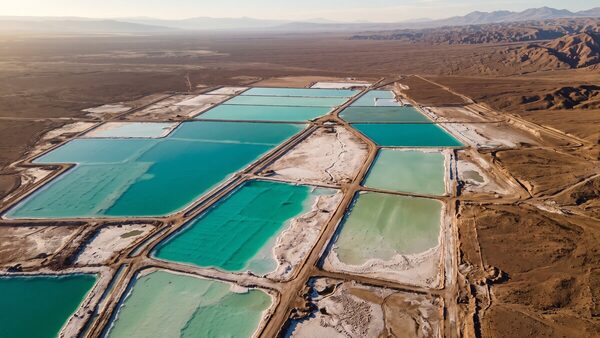
Let us clear up a common confusion first: LiFePO4 is also a lithium battery. Both belong to the same large family of lithium-ion accumulators. What changes is the recipe of the positive electrode (the cathode), and that difference in composition has very concrete consequences for weight, longevity and safety.
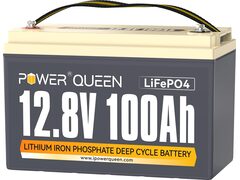
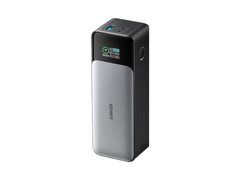
When people say Li-ion in everyday terms, they usually mean the NMC (nickel-manganese-cobalt) or NCA chemistries found in smartphones, laptops and most power banks. LiFePO4 (lithium iron phosphate, sometimes written LFP) increasingly powers power stations, solar installations and vehicles.
Energy density: Li-ion's strength
Energy density is the amount of energy stored for a given weight (expressed in Wh/kg). On this front, conventional Li-ion wins clearly: it stores about 150 to 250 Wh/kg, versus 90 to 160 Wh/kg for LiFePO4.
In concrete terms: for the same capacity, a LiFePO4 battery is heavier and bulkier. That is precisely why your smartphone and your power bank use Li-ion: in your pocket, every gram counts. Nobody would want a phone twice as thick for the same runtime.
Lifespan: LiFePO4 dominates by far
Here is LiFePO4's great strength. A cycle is one full charge and discharge. A conventional Li-ion battery keeps most of its capacity for about 500 to 1,000 cycles, after which it declines. LiFePO4 routinely handles 2,000 to 6,000 cycles before dropping to 80 % of its original capacity.
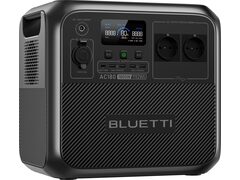
On a power station used regularly, that makes all the difference: we are talking about a decade of use, versus three or four years for Li-ion. These orders of magnitude are confirmed by the reference work of Battery University. It is also why the best stations, like those compared in our EcoFlow Delta 2 vs Bluetti AC180 showdown, have all switched to LiFePO4.
Safety: the stability of iron phosphate
LiFePO4 is reputed to be safer. Its chemical structure is more stable at high temperature: the thermal runaway threshold (the point at which a battery can catch fire) sits far higher than for an NMC chemistry. In plain terms, LiFePO4 tolerates heat, overcharge and minor knocks better.
That does not mean Li-ion is dangerous: modern batteries all include a protection circuit (BMS) that manages temperature, voltage and current. But for a battery that stays plugged in permanently at home or in a van, LiFePO4's extra safety margin is a real argument. Note too that LiFePO4 contains no cobalt, a costly material that is problematic on both ethical and environmental grounds.
The match in one table
| Criterion | Li-ion (NMC / NCA) | LiFePO4 (LFP) |
|---|---|---|
| Energy density | 150 to 250 Wh/kg (high) | 90 to 160 Wh/kg (moderate) |
| Weight for same capacity | Light | Heavier |
| Cycle life | 500 to 1,000 | 2,000 to 6,000 |
| Safety / thermal stability | Good (with BMS) | Excellent |
| Cobalt | Yes (NMC) | No |
| Ideal use | Phones, power banks, laptops | Stations, solar, motorhome |
So which one should you choose?
The answer fits in one sentence: each chemistry shines in its own field. It is not about which is better in absolute terms, but which suits your need.
- Conventional Li-ion remains king of pocket mobility: power banks, smartphones, laptops, anything that must be light and compact.
- LiFePO4 takes over whenever you want longevity and safety over time: power stations, solar installations, house batteries for vans and motorhomes.
And tomorrow? Sodium-ion is knocking
The Li-ion / LiFePO4 duel could soon gain a third contender: sodium-ion, a chemistry that does away with lithium entirely and promises a lower cost and better performance in the cold. Still emerging, it is starting to appear on the first products. We devote a dedicated article to it: can sodium-ion dethrone lithium?