
What Exactly Is This EU Battery Regulation?
Regulation (EU) 2023/1542 of the European Parliament and of the Council, adopted on 12 July 2023, is the key text. It repeals the old 2006 Directive on batteries and accumulators, which was considered inadequate given today's challenges. Its three-fold goal: reduce electronic waste, improve product durability, and secure the supply of critical raw materials (lithium, cobalt, nickel, and more).
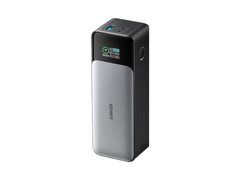
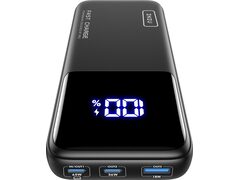
The regulation applies to all batteries placed on the European market, regardless of size - from small AA batteries to the massive packs in electric vehicles. For us, as specialists in portable energy, the most relevant category is portable batteries: any battery under 5 kg integrated into a consumer electronic device.
The full text is available on the Official Journal of the EU (EUR-Lex).
What Does the Regulation Actually Say About User Replacement?
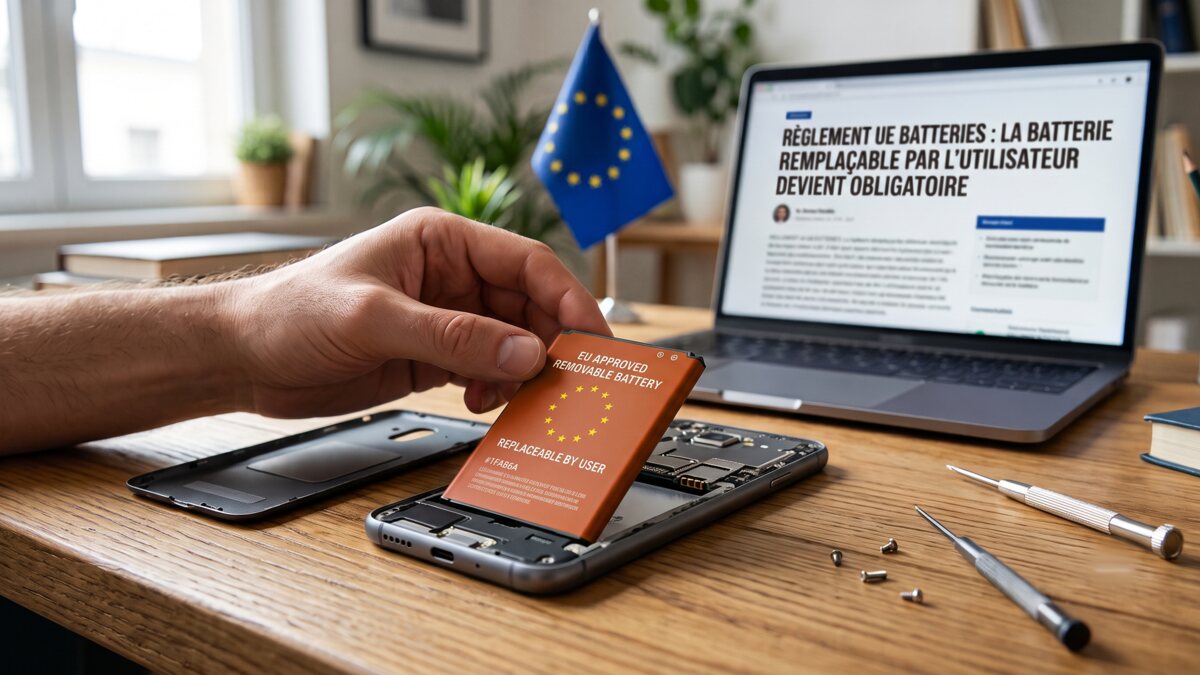
Article 11 of the regulation is the heart of the matter. It requires that batteries incorporated into portable devices be 'readily removable and replaceable by the end user' before 18 February 2027. Here is what that means in practice:
- The user must be able to remove the battery without specialist tools or using common tools (standard screwdriver).
- The manufacturer must provide or make accessible replacement instructions.
- Replacement batteries must remain available for at least 5 years after the last model in the range is placed on the market.
- The casing must not require glue or soldering to access the battery.
The law distinguishes two levels: replacement by the end user (general public, no technical skills required) and replacement by an authorised professional. For mainstream consumer portable devices, the first requirement applies. More complex devices (certain industrial power tools, medical equipment) may fall under the second category.
Which Devices Are Covered (and Which Are Exempt)?
The regulation classifies batteries into several categories, and replacement obligations do not apply identically to all. Here is a summary table:
| Battery Category | Example Devices | User Replacement Obligation | Application Date |
|---|---|---|---|
| Portable battery (under 5 kg) | Smartphone, power bank, headphones, cordless vacuum | Yes, by the end user | 18 February 2027 |
| Battery for portable power tools | Drill, chainsaw, garden tool | Yes (portable battery) | 18 February 2027 |
| Light means of transport battery | E-bike, e-scooter, electric moped | Yes, professional or user | 18 February 2027 |
| EV battery (electric vehicle) | Electric car, truck | No (professional only) | Outside consumer scope |
| Industrial / SLI battery (starting) | Conventional car battery | Not specifically regulated | Separate legislation |
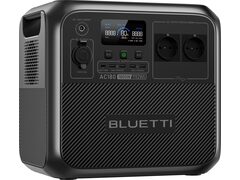
In short: your power bank, your smartphone, your Bluetooth headphones, your cordless vacuum, and even your connected toothbrush will all be covered. Portable power stations - which often exceed 5 kg - sit in a grey area: depending on their weight and commercial classification, they may fall under light industrial batteries. We are monitoring the implementing regulations on this point closely.
Why Does This Law Change Everything for Portable Energy?
Over ten years of testing and selling portable energy equipment, we have seen hundreds of power banks and power stations come and go. The recurring problem is always the same: Li-Ion batteries degrade after 300 to 500 charge cycles (one cycle = one full charge from 0 to 100 %). Beyond this threshold, real capacity often drops by 20 to 40 %. The result: you throw away the whole device when only the cell is worn out.
With this regulation, that scenario becomes legally impossible for new devices. Imagine a 20,000 mAh power bank (mAh = milliampere-hours, the unit of capacity): if its cell is replaceable, users will be able to buy a replacement cell in 3 or 4 years and recover 100 % of the original capacity, at 20 to 30 % of the cost of a new device.
For solar chargers and other camping or outdoor equipment, this is equally good news: on a long trip, being able to carry a spare battery and swap it in seconds, without tools, is a genuine tactical advantage.
How Will Manufacturers Adapt?
For major brands, the adaptation is a massive undertaking. A modern smartphone integrates its Li-Po (lithium-polymer) battery in an ultra-compact space, often glued in place to ensure waterproofing and chassis rigidity. Making that battery accessible without glue means completely rethinking the mechanical design. Apple, Samsung, and others have already begun publishing product environmental reports announcing more repairable models.
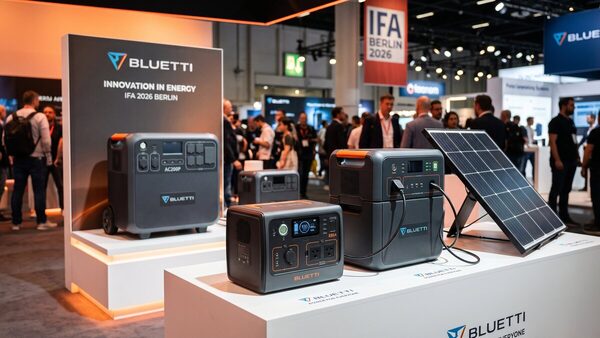
On the power bank and portable power station side, the situation is more favourable: many of these devices already integrate standardised cylindrical 18650 or 21700 lithium cells in modular housings. Brands like Jackery, EcoFlow, and Bluetti will simply need to formalise and document the replacement procedure, and guarantee the availability of replacement cells.
Manufacturers that fail to comply will not be able to sell their products on the European market. Market surveillance will be carried out by the relevant national authorities (in France, the DGCCRF and ADEME play a key role).
What Does This Mean for You as a Consumer, Right Now?
The February 2027 deadline may seem far away, but its effects are already being felt. Here is what you can do right now to benefit:
- Before buying: ask or check whether the battery is replaceable. Check the repairability score (the French repairability index, rated out of 10, is already displayed in stores for smartphones and laptops).
- For your current devices: if your power bank is losing capacity, check whether the manufacturer already offers a replacement cell. Some do so quietly.
- For purchases in 2026-2027: if possible, wait for the new regulation-compliant models, especially for heavily used devices (smartphones, cordless vacuums, travel power banks).
- For professionals (outdoor workers, photographers, paramedics): anticipate by choosing brands that have already adopted modular batteries. In the field, being able to swap a battery mid-mission is a safety matter.
The economic impact is also significant: according to research by the NGO European Environmental Bureau (EEB), European consumers could save on average 100 to 200 euros per year on their electronics if repairability becomes the norm. For a 60-euro power bank replaced every two years, that works out to a 20-euro replacement cell every 2 or 3 years.
Other Key Obligations in the Regulation
Beyond user replacement, EU Regulation 2023/1542 introduces a set of complementary obligations that will permanently transform the industry:
- Mandatory recycled content: from 2030, new batteries will have to incorporate a minimum percentage of recycled materials (e.g. 16 % cobalt, 85 % lead, 6 % lithium, 6 % nickel in certain categories).
- Collection and recycling: portable battery collection rates must reach 63 % by end 2027, then 73 % by end 2030 (light means of transport batteries follow separate targets of 51 % then 61 %).
- Carbon footprint declaration: batteries over 2 kWh will have to display their carbon footprint from 2025 (industrial and EV batteries).
- Mandatory labelling: selective sorting pictogram, QR code linking to recycling data, capacity stated in Wh (watt-hours, which measures stored energy).
For fans of portable solar panels and off-grid solar systems, the regulation also touches stationary storage batteries: from 2025, they must be labelled according to their state of health (SoH), and their minimum guaranteed lifespan is regulated.
Our Expert View After 10 Years in Portable Energy
This regulation is excellent news, and we have been waiting for it for a long time. Over ten years of testing and distributing portable energy equipment, the number-one issue our customers faced was always the same: 'my power bank only charges to half after 18 months - what can I do?' The honest answer was usually: nothing, except replace it.
Now, the European legislator is making mandatory what the best manufacturers were already doing out of conviction: designing durable devices whose critical components can be renewed. This is a perfect alignment between our philosophy and the law.
Our practical advice for 2026: if you need to replace an important piece of equipment this year, look carefully at models that already anticipate the standard (glue-free removable battery, documented parts availability). For portable power stations and power banks alike, durability is now just as important a purchase criterion as capacity or charging speed.