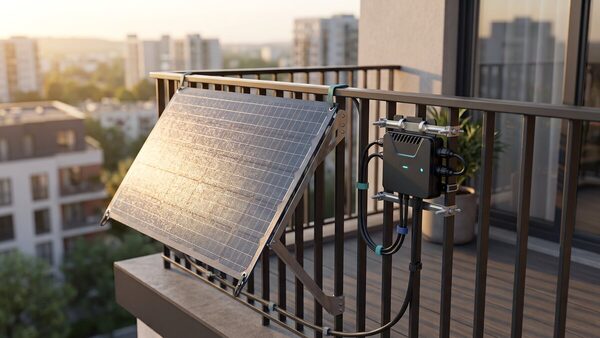
Julien de Jurquet is Best Batteries' technical reference for everything to do with photovoltaics and storage. Backed by long field experience, he joined the team in 2013, just as the company was broadening its range towards panels and power stations, and brought to it the rigor of a seasoned scientific profile. His signature is found on the site's most demanding solar tests, and on a good share of the blog's in-depth features.
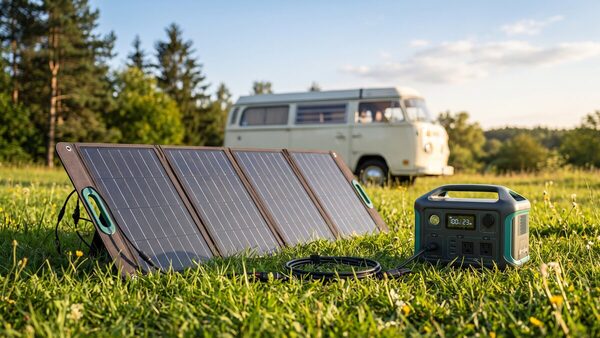
Where others rely on the manufacturer's spec sheet, Julien measures. Real efficiency depending on sunlight, behavior in partial shade, conversion losses, how the cells hold up after several cycles at high temperature: over the years he has built a base of comparative measurements that serves as a reference for the whole team. A power station, he keeps repeating, is not judged by its advertised watt-hours, but by what it actually delivers once plugged into real devices.
His most improbable feat, which the team loves to bring up: a few years ago, Julien took part in installing the solar panels of a polar research station, on the Antarctic continent. It is hard to imagine a more demanding real-world test than a photovoltaic array at -40 °C and katabatic winds. Enough to put a simple day of measurements under the Lozère sun into perspective afterwards.
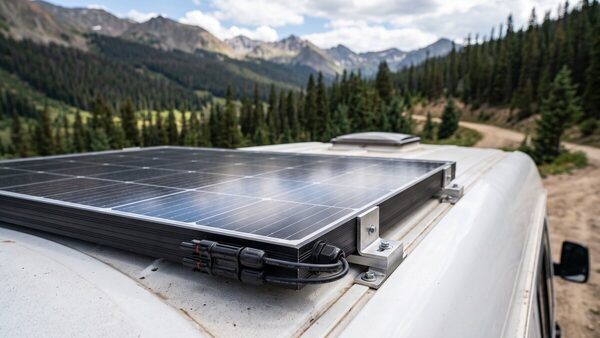
A mountain lover, Julien sets off every summer on treks in the Alps or the Pyrenees, a solar panel strapped to his pack. It has become a team ritual: he is always handed the latest model to arrive, certain he will come back with a detailed report, a few photos, and sometimes a product a little more worn out than when it left.


 Published on October 16, 2026 by Julien