What exactly changes on 18 August 2026
Regulation (EU) 2023/1542 on batteries and waste batteries has been phasing in since 18 August 2024. The step that shoppers will actually notice arrives now: from 18 August 2026, every battery placed on the EU market must carry a standardised label listing the general information set out in Annex VI, Part A of the regulation.
That information has to be printed, engraved or affixed visibly, legibly and indelibly on the battery itself. Where its size makes that impossible, as on a coin cell, the information moves to the packaging and to the documents accompanying the product. Either way, you will see it before you buy.
The list is considerably longer than what most manufacturers print today:
- the manufacturer identification and contact details;
- the battery category and its identification (type, batch or serial number);
- the place and date of manufacture (month and year);
- the weight;
- the capacity;
- the chemistry: lithium-ion, NiMH, alkaline, lead and so on;
- the hazardous substances present, other than mercury, cadmium and lead;
- the critical raw materials present above 0.1 %.
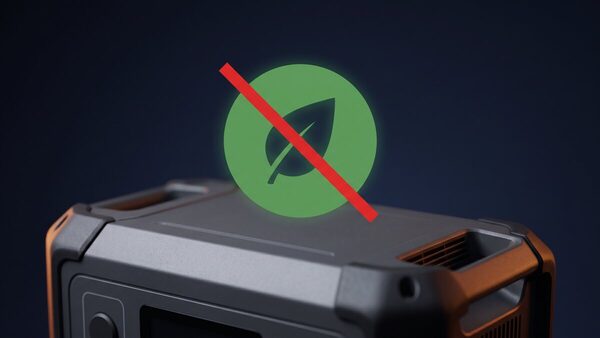
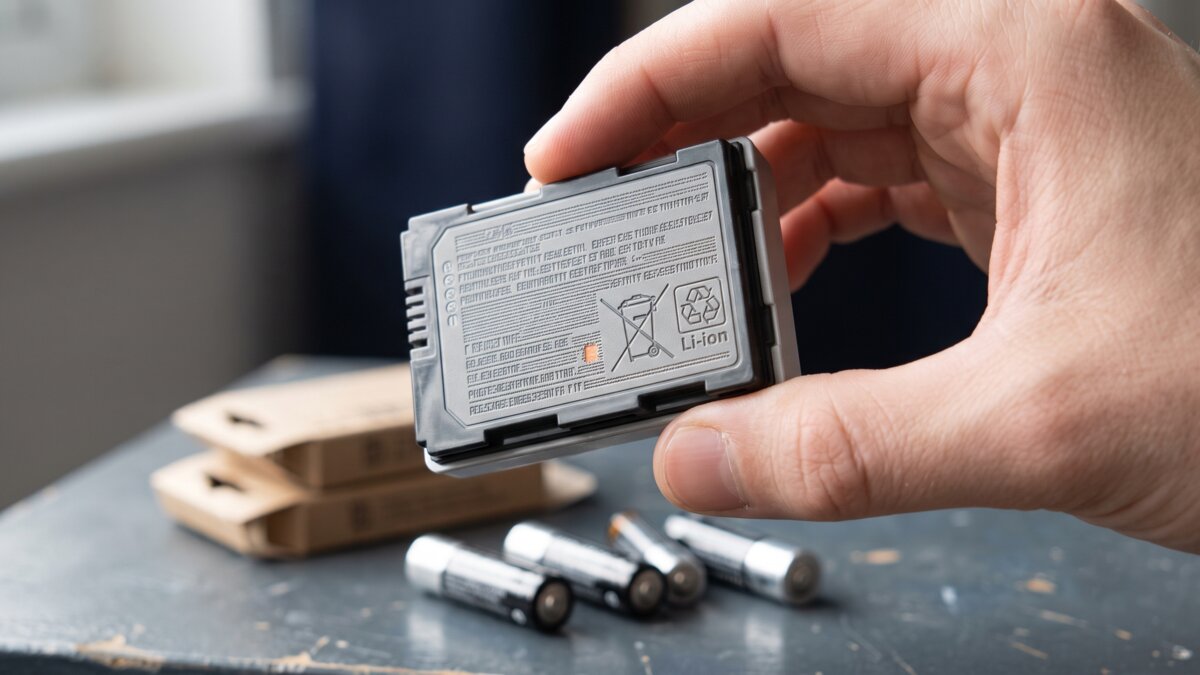
Two familiar symbols join them, now framed by the regulation itself: the crossed-out wheeled bin, a reminder that separate collection is mandatory, and, where relevant, the chemical symbol of the heavy metal concerned, printed directly beneath it. CE marking has been required since 18 August 2024.
One point of scope worth stating plainly: this is EU law. It applies to batteries placed on the market of the European Union, and by extension shapes what most international brands print worldwide, since nobody runs two production lines for the sake of a label.
What the new label will look like
Visually, nothing dramatic: no single logo, no “nutrition score for batteries”. What the regulation imposes is a minimum information baseline, with the layout left to the manufacturer. Here is how the blocks break down.
The chemical symbol only appears when thresholds are exceeded, and the regulation goes as far as specifying its size: it must cover at least a quarter of the area of the crossed-out wheeled bin, printed directly beneath it. Burying it in a corner in four-point type is no longer an option.
Cells, power banks, power stations: who falls into which category?
The regulation never says “power bank” or “power station”. It thinks in legal categories, and the category is what determines which extra statement has to appear. One detail catches most people out: above 5 kg (about 11 lb), a battery that is neither an e-bike nor a vehicle battery falls into the “industrial” category, even if all you do with it is boil a kettle at a campsite.
| Category under the regulation | What that covers in our world | Specific statement required |
|---|---|---|
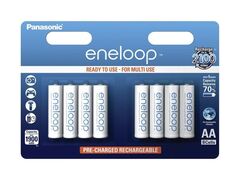
| General purpose portable battery | AA, AAA, C, D, 9 V, the standard retail formats | Minimum average duration, measured with a harmonised method |
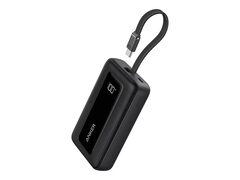
| Portable battery | Power bank, tool battery, camera battery: sealed and under 5 kg | Capacity (mAh or Wh) |
| LMT battery | Electric bike, scooter | Capacity, then a battery passport in 2027 |
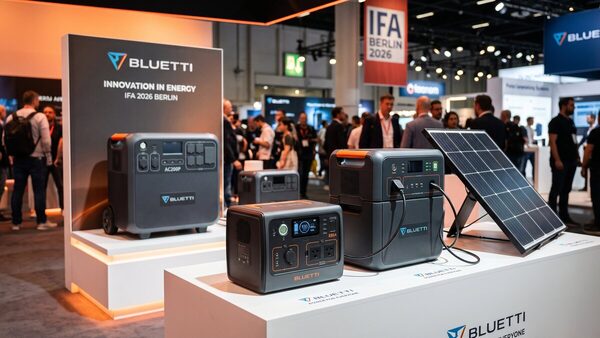
| Industrial battery | Any battery above 5 kg that fits none of the above: most portable power stations | Capacity, then a battery passport above 2 kWh |
The consequence is very concrete. A small 300 Wh portable battery usually stays under the 5 kg mark and follows the portable regime. A power station of 1,000 Wh, weighing some fifteen kilos, sits in the industrial regime and will need a digital battery passport from 2027. Same product in your boot, two different regulatory regimes.
Two statements that finally make comparison possible
Most of the label is about traceability. But two statements matter directly to the buyer, because they attack an old problem: the impossibility of honestly comparing two products.
Capacity, stated by everyone
This is the sore point on power banks. Today a manufacturer prints 20,000 mAh in large type on the box, without mentioning that this is the cell capacity at 3.7 V rather than the energy actually available at the USB port. We unpacked that mechanism in our piece on what advertised mAh figures are really worth, and the same fog exists on the station side with advertised Wh.
The mandatory label does not abolish that physical gap, which is inherent to voltage conversion. What it does impose is a declared capacity, measured by a defined method, which makes the gap far harder to hide. That is real progress, even if reading Wh rather than mAh remains the only serious way to compare.
Minimum average duration on primary cells
This is the most useful novelty in the batteries and cells aisle. General purpose portable batteries will have to state their minimum average duration in reference applications, obtained through a harmonised test method. No more impossible comparisons between a pack promising “up to 10 years in storage” and another boasting “long-lasting power”: two packs side by side will finally share one common number.
What it changes for you, in the shop
First thing to know, because it heads off a lot of worry: there is no product recall. The rule applies to batteries placed on the market from 18 August 2026. Anything placed on the market before that date can still be sold as it is, with its old labelling.
In practice, shelves will be mixed for several months. You will find products with the full new label sitting next to earlier stock that says far less. That is not fraud, nor a second-rate product: it is simply stock being cleared.
How to make it work for you when buying:
- Read the chemistry. On a station or a portable battery, “LiFePO4” and “NMC” differ in lifespan and behaviour. Our piece on Li-ion versus LiFePO4 covers which to choose for which use.
- Read the date of manufacture. A lithium cell ages even when it is not used. A unit built three years ago and left in a warehouse is not worth the same as a recent one at the same price.
- Read the capacity in Wh. It is the only unit that lets you compare a power bank, a tool battery and a station on one scale. It is also the number that counts when taking a battery on a plane.
Serious brands already held all of this, usually buried in a spec sheet in small type. From August 2026 it comes back up onto the product, in the same place for everyone. That is exactly where the regulation earns its keep: it does not create new information, it makes it comparable.
After 2026: the QR code and the battery passport
The printed label is only one step. The regulation then shifts things towards the digital, with two deadlines on 18 February 2027.
First, a QR code will have to appear on batteries, giving access to regulatory information: declaration of conformity, carbon footprint, collection instructions. Until then, some of that information has to physically accompany the product.
Second, the digital battery passport becomes mandatory for electric vehicle batteries, light means of transport batteries and industrial batteries above 2 kWh. Each unit will have a unique electronic record tracing its composition, its performance and its history. That is the foundation of repair and reuse: knowing what is inside a battery before deciding whether to fix it, refurbish it or recycle it.
The same underlying logic drives the other big strand of the regulation, which we covered separately: the obligation, from 18 February 2027, to make batteries in portable appliances easily replaceable by the user. Labelling, passport, replaceability: three bricks in one wall, making batteries last longer.