
Where does the 20-80 % rule come from?
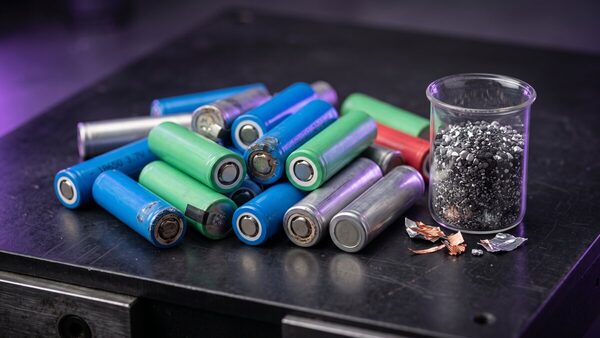
This recommendation did not come from nowhere: it rests on the chemistry of lithium-ion batteries. A cell is under greater stress the closer it sits to its extremes. Charged to 100 %, it is held at a high voltage that speeds up small parasitic chemical reactions, which slowly degrade the electrodes.
At the other end, a full, prolonged discharge down to 0 % also stresses the cell. By staying in a middle range, you limit both sources of wear. That is exactly what serious makers already do, behind the scenes.
The 20-80 % rule therefore means adding your own margin on top of the maker's. Useful, but with nuances.
What is true in this rule
Yes, over the long term, a battery kept constantly at 100 % ages faster than one managed between 20 and 80 %. Reference studies, such as those from Battery University, clearly show that a lower charge voltage increases the number of cycles a cell can take.
The most concrete case: a laptop permanently plugged into the mains, its battery stuck at 100 % for months. That is the worst-case scenario. It is also why many makers have added a mode that deliberately caps charging at 80 % in those conditions.
Another truth: leaving a device at 0 % for weeks is a bad idea. A fully discharged battery stored for a long time can degrade to the point of no longer recharging. This point ties into our feature Li-ion versus LiFePO4: not all chemistries react the same way.
What is largely exaggerated
Where the rule turns into an anxious myth is when you make it a daily obsession. For the vast majority of uses, the difference between charging to 100 % now and then and religiously stopping at 80 % is modest over the real lifespan of a device you replace every three to five years.
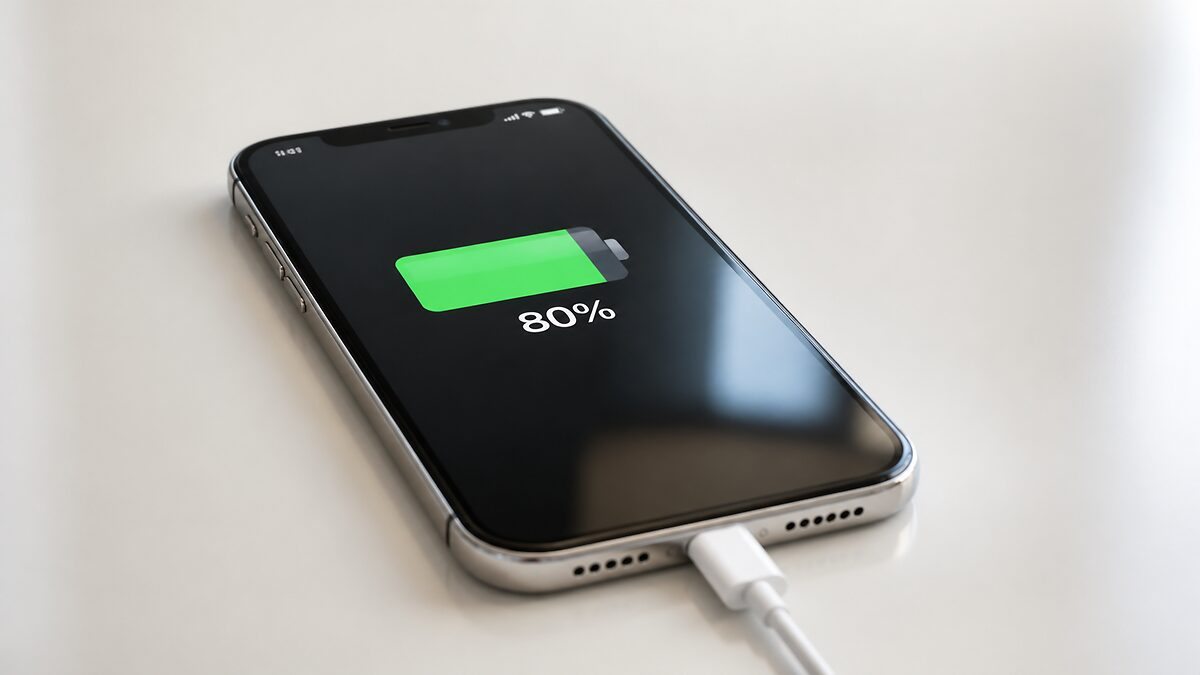
Your devices already work for you. Recent smartphones include optimised charging: they charge to 80 %, then wait until the last moment before you wake to finish at 100 %, limiting time spent at full charge. Many even offer an 80 % cap you can toggle in one tap.
Denying yourself a full charge before a long trip, for fear of harming your battery, means spoiling your life for a near-zero gain. An occasional 100 % charge is nothing dramatic.
The real culprit: heat
If you remember only one thing, let it be this: temperature does far more damage than the charge level. A battery that heats up, especially during charging, wears at an accelerated pace. A battery charged to 100 % at 20 °C will age less than a battery at 80 % left in full sun at 40 °C.
The habits that really matter: do not leave your phone charging under the duvet or on the dashboard in the sun, do not recharge a power station in a closed boot in summer, and avoid prolonged fast charging when the device is already hot. That is where most of the longevity is decided.
Extreme cold, for its part, does not destroy the battery but temporarily cuts its capacity and power. Charging a freezing battery is, however, not advised: better to let it return to room temperature first.
Case by case: phone, car, station
| Device | Should you aim for 20-80 %? | The right habit |
|---|---|---|
| Smartphone / tablet | Useful but not binding | Enable optimised charging, avoid heat |
| Laptop | Recommended if always plugged in | Enable the 80 % cap in sedentary use |
| Electric car | Yes for daily use | Charge to 100 % only before a long trip |
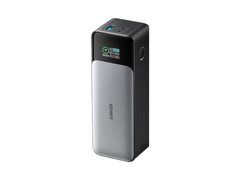
| Power bank / station | Above all for long storage | Store around 50-60 % if unused for a long time |
For power banks and stations, the key point is storage: a battery you do not use for months keeps better at half charge than at 100 % or 0 %. Recharge it once every few months so it never runs flat.
Our recommendations, without the fuss
Let us sum up in actionable terms, to get the best without falling into obsession.
- Every day: enable optimised charging or the 80 % cap if your device offers it, and forget about it.
- Before a real need: charge to 100 % without guilt, that is what it is for.
- Avoid prolonged extremes: neither 100 % held for weeks, nor 0 % forgotten in a drawer.
- Flee heat: it is the number one wear factor, far ahead of the charge level.
- For long storage: leave the battery around 50 % and recharge it from time to time.
The truth is that the 20-80 % rule is a good principle, but not a commandment. Your batteries are designed to be used, not watched. To understand why the stated capacity is never what you actually get back, continue with our feature on what mAh are really worth.