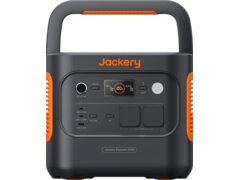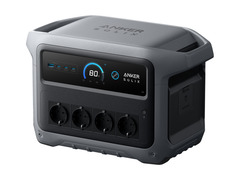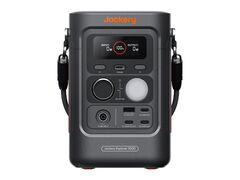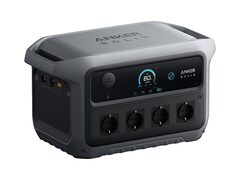

The pioneer against the electronics giant
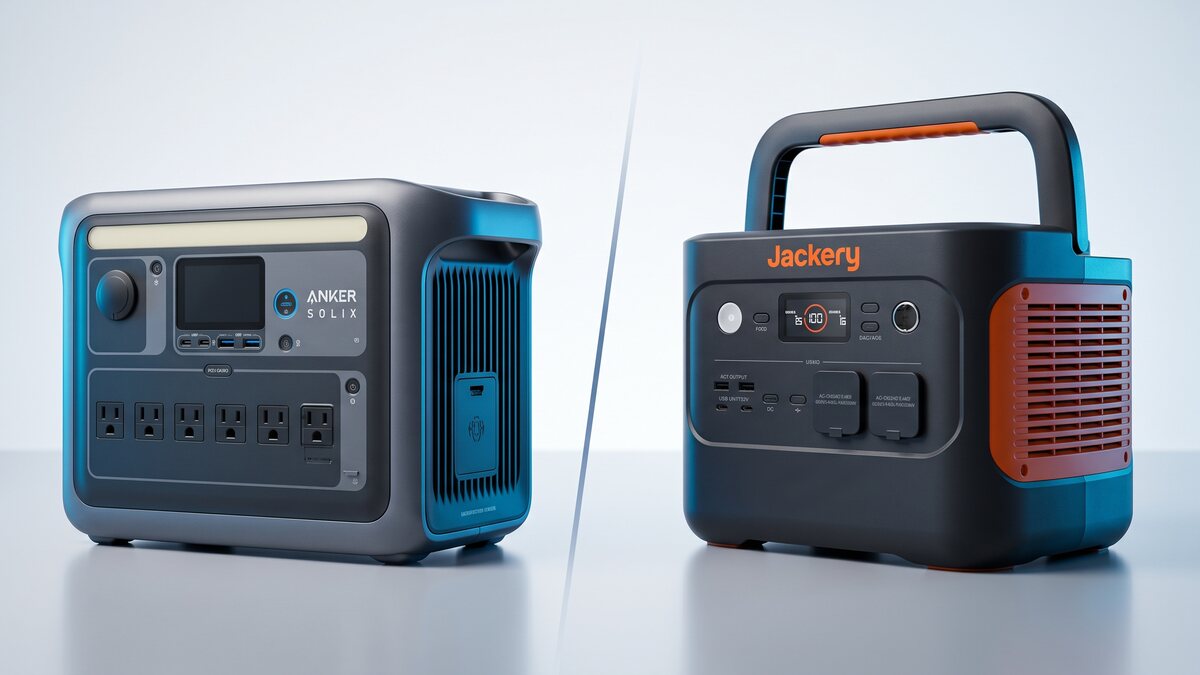
These two brands reached power stations from opposite directions, and it shows in our measurements.
Jackery pioneered the category. Founded in 2012 in California by a former Apple battery engineer, the company launched the first consumer portable power stations in 2016 and now claims more than seven million units sold. Its whole catalogue revolves around a single family, the Explorer series, from a sub-kilo model to a 3 kWh station.
Anker Solix comes from the other end of the market. Anker first made its name on chargers and power banks before launching its PowerHouse range in that same year, 2016, then folding all of its energy business into the Solix brand in June 2023. The name is recent, but the industrial experience behind it is not: this is a consumer electronics manufacturer applying its methods to a bigger product.
To settle the question with something other than marketing claims, we rely on our own readings. We tested twelve stations, five Anker Solix and seven Jackery, scoring each on six weighted criteria and measuring the energy actually available at the socket. That last figure drives everything else in this comparison.
This duel is part of our complete matrix of the four major power station brands: all six possible match-ups between EcoFlow, Bluetti, Jackery and Anker Solix are published, including EcoFlow against Bluetti, EcoFlow against Jackery and Bluetti against Anker Solix.
€565 against €773 per kilowatt-hour delivered
This is the sharpest result of the duel, and it appears on no spec sheet.
We divide the price paid by the kilowatt-hour actually delivered by the station, not by its rated capacity: that is the only honest way to compare two devices whose electronics return different shares of the stored energy. Restricting the calculation to models of 1,000 Wh and above, so as to compare like with like, Jackery comes out at €565 per kWh against €773 for Anker Solix. That is 27% less, the widest gap we have measured between two brands in this segment.
The figure takes on a different meaning once placed alongside the two other brands that dominate the market, the pair from our previous duel.
| Brand | Stations tested | Average score | Cost per kWh delivered |
|---|---|---|---|
| Jackery | 7 | 4.11 | €565 |
| Bluetti | 5 | 4.12 | €711 |
| EcoFlow | 17 | 4.28 | €712 |
| Anker Solix | 5 | 4.30 | €773 |
The pattern is strikingly regular: the brands rank on score in the exact reverse order of their ranking on the price of energy. Anker Solix is the highest rated and the most expensive, Jackery the lowest rated and the cheapest, EcoFlow and Bluetti sit in the middle within one euro of each other. In other words, there is no hidden bargain in this table: each brand charges roughly what it delivers.
Which leaves the real question: what exactly do those €208 per kilowatt-hour buy?
What our 12 tests say
Our six weighted criteria answer without ambiguity: Anker Solix leads Jackery everywhere.
| Scoring criterion | Anker Solix | Jackery | Gap |
|---|---|---|---|
| Capacity and efficiency (25%) | 4.32 | 4.24 | +0.08 |
| Sustained power (25%) | 4.30 | 4.16 | +0.14 |
| Recharging (15%) | 4.42 | 4.10 | +0.32 |
| Connectivity and control (15%) | 4.42 | 3.97 | +0.45 |
| Build quality and endurance (12%) | 4.20 | 3.77 | +0.43 |
| Noise (8%) | 4.25 | 4.18 | +0.07 |
| Overall score | 4.30 | 4.11 | +0.19 |
The ranking is clear, but the overall gap of 0.19 points hides a very uneven distribution. On the two heaviest criteria in our scale, delivered capacity (25%) and sustained power (25%), the brands are close: 0.08 and 0.14 points. The gulf opens on the second-tier criteria.
Two of them explain almost everything. Connectivity and control (+0.45): Anker Solix stations carry more useful sockets, more generous USB-C ports and a more polished app. Build quality (+0.43): chassis, port covers, handles, how the unit holds up over time. These are precisely the two areas a manufacturer can trim to hold an aggressive price, which is exactly what the previous section shows.
Three duels at equal capacity
Brand averages stay theoretical: you buy a model. Here are three direct face-offs at comparable capacity, drawn from our readings.
288 Wh: €140 apart for the same energy
The Anker Solix C300X DC (€299) delivers 272.9 Wh out of a rated 288, an efficiency of 94.8%, and scores 4.3 out of 5. The Jackery Explorer 300D (€158.99) delivers 267 Wh (92.7%) and scores 4.0. Six watt-hours apart, €140 of difference: €1,096 per delivered kWh for the Anker against €595 for the Jackery.
What those €140 buy is visible in the detailed scores: build quality 4.3 against 3.2, connectivity 4.6 against 3.7. The Jackery is lighter (2.5 kg against 2.8) and better covered (5 years against 3), but it clearly feels like a product built to a price.
Around 1,000 Wh: Jackery cheaper and more generous
The Anker Solix C1000 (1,024 Wh, €800.56) delivers 920 Wh (89.8%) and takes 4.4 out of 5, the best score of this duel. The Jackery Explorer 1000 v2 (1,070 Wh, €624.71) delivers 943 Wh (88.1%) for 4.1. Jackery is €176 cheaper, returns 23 Wh more and weighs 500 g less.
Anker keeps two concrete arguments: a build quality score of 4.6 against 3.5, the widest gap on that criterion in any of our duels, and an efficiency 1.7 points higher. Whether that is worth €176 is your call.
2,000 Wh: the most spectacular duel
Here is the most telling face-off of the comparison. The Anker Solix C2000 Gen 2 (2,048 Wh, €1,199.99) delivers 1,850 Wh, the Jackery Explorer 2000 v2 (2,042 Wh, €799) delivers 1,920. The Jackery is therefore €401 cheaper, returns 70 Wh more and weighs 1.4 kg less. Its cost per delivered kilowatt-hour falls to €416 against €649 for the Anker.
Those €416 are the best ratio in our entire power station database, all brands included, ahead of the Fossibot F2400 by just four euros. Anker Solix keeps the better overall score (4.4 against 4.2), thanks to recharging (4.5 against 4.0) and connectivity (4.5 against 3.8), but the price gap here is hard to justify on anything other than day-to-day comfort.
Efficiency, on the other hand, settles nothing
Where price clearly separates the two brands, efficiency puts them level again.
Across the five models from each brand whose delivered energy we measured, Anker Solix averages 89.9% against 90.6% for Jackery. A 0.7 point gap, far below the spread observed within a single brand: the Ankers range from 83.3% (Solix C300) to 94.8% (Solix C300X DC), the Jackerys from 84.6% (Explorer 3000 v2) to 94.0% (Explorer 2000 v2). Eleven points of amplitude on each side.
In other words, efficiency depends on the model, not on the logo. Picking one brand over the other in the hope of better efficiency makes no sense; picking a specific model on the basis of a measurement does.
What the extreme cases reveal
Beyond the averages, the extremes of our database tell the story of how both brands have evolved.
Weight, a marker of generation. The Anker Solix F2000, launched at the end of 2022, weighs 30.5 kg for 1,870 Wh delivered. The Jackery Explorer 2000 v2, from 2025, delivers 1,920 Wh for 17.5 kg. Thirteen kilos apart at identical energy, between two devices three years apart: that is the progress of LiFePO4 and integration, not a difference between brands. The F2000 also drags Anker's average down, with the lowest score in our sample (4.0) and a build quality of 3.3.
The cabin format. Jackery alone occupies a niche Anker Solix does not cover in our database: the Explorer 100 Plus and its 965 grams for 99 Wh, under the 100 Wh threshold that allows carry-on transport with most airlines. Its noise score of 4.8 is the best in the whole comparison, which is hardly surprising for a device with no fan.
Longevity and warranty. The Jackery Explorer 500 v2 is rated for 6,000 cycles, the record across both brands, while Anker Solix tops out at 4,000. On warranty, both makers offer 5 years across most of the range, with two exceptions worth knowing: the Anker Solix C300X DC (3 years) and the Jackery Explorer 100 Plus (2 years).
Lifespan is no side issue. The European battery regulation is progressively tightening requirements on information, durability and recyclability for batteries placed on the Union market: a high cycle count and a long warranty stop being mere sales arguments and become objective buying criteria for a product meant to last a decade.
The match in one table
| Criterion | Anker Solix | Jackery |
|---|---|---|
| Stations tested | 5 | 7 |
| Average score | 4.30 / 5 | 4.11 / 5 |
| Measured efficiency | 89.9% | 90.6% |
| Cost per kWh delivered (1,000 Wh and up) | €773 | €565 |
| Rated cycles | 3,000 to 4,000 | 2,000 to 6,000 |
| Warranty | 3 to 5 years | 2 to 5 years |
| Best score achieved | 4.4 (Solix C300, C1000, C2000 Gen 2) | 4.2 (Explorer 2000 v2 and 3000 v2) |
| Best cost per kWh | €649 (Solix C2000 Gen 2) | €416 (Explorer 2000 v2) |
| Strength | Connectivity, build quality, recharging | Price of energy, weight, cycles |
| Weakness | The most expensive per kWh of the four big brands | Build quality and connectivity behind |
These averages aggregate our individual tests: every model mentioned has its own detailed review, with the full set of measurements. You will find them all in our complete product reviews, filterable by device type.
Verdict: which one for you?
This duel has no single winner. It has two answers, depending on what you are actually buying.
Choose Anker Solix if the station is to become an everyday object rather than an emergency backup: better connectivity, a more complete app, clearly superior build quality and faster recharging. It is also the safer choice if you plan to handle it often, lend it out, keep it for years. You will pay for it: this is the most expensive brand per kilowatt-hour actually delivered of the market's big four.
Choose Jackery if you want the most available energy per euro spent. The Explorer 2000 v2 currently posts the best ratio in our entire power station database. In exchange you accept a simpler finish and a thinner set of ports, which matters little if the station spends most of its life in a garage, a van or a plant room.
Either way, compare on delivered watt-hours, never on rated capacity. Our duels show it every time: two stations with the same rated capacity can deliver the same energy €400 apart. You will find those measurements model by model in our power station selection, taken according to our test methodology.