
Where does the full-discharge habit come from?
The advice has circulated for decades: fully discharge a battery before recharging it, to keep it healthy. The tip is not made up, but it comes from a completely different chemistry than the one powering today's power banks, power stations and van batteries.
Nickel-based batteries (NiCd, then NiMH), common until the 2000s in phones, camcorders and early cordless tools, suffered from a genuine memory effect: recharged before being emptied, the cell seemed to “forget” its full capacity and really did lose usable runtime over time. The only known fix was to discharge it fully on a regular basis so the cathode crystals could reform correctly.
With lithium-ion, and then LiFePO4 (lithium iron phosphate, common in today's power stations and van batteries), that habit should have disappeared. It survived instead, passed down from one generation of devices to the next, long after the chemistry it was meant for had largely vanished from consumer shelves.
Lithium has no memory, but its gauge does
Good news: a modern lithium-ion or LiFePO4 cell has no memory effect. It does not “forget” anything and does not need to be emptied to keep its real capacity. What actually drifts is not the chemistry, it is the electronics watching it: the charge gauge.
Most devices estimate the displayed percentage through coulomb counting: they continuously add up the current flowing in and out of the battery to infer the state of charge. This method accumulates a small error with every cycle, especially after partial and irregular discharges, fast current spikes that are hard to measure precisely, or long storage in warm conditions that speeds up self-discharge. Over time, the digital estimate drifts away from the cell's real electrochemical state.
According to Battery University, some manufacturers recommend recalibrating the gauge once the error reaches about 8%, trigger an alarm around 12%, and consider the reading unusable past 16% (source). In other words: the battery itself stays perfectly healthy, only the displayed percentage becomes unreliable.
How to recalibrate properly (and how often)
Recalibrating a gauge is not about draining it to zero volts or forcing a destructive discharge: it is simply giving it two reliable reference points, a low one and a high one, between which it can plot an accurate estimate.
Battery University recommends doing this roughly every three months, or after about 40 partial cycles, for a battery in continuous use (source). Batteries fitted with a more advanced gauge, known as “impedance tracking”, which models the cell's real ageing instead of only counting coulombs, need this ritual far less often: several recent power station and smartphone models handle this resync almost automatically.
There is no need, however, to repeat the operation every week “just to be safe”: discharging fully too often does not make the reading any more reliable, it simply wears the battery out faster (see below).
Why discharging fully too often really does wear the battery out
Every lithium battery ages with each cycle, but not in the same way depending on its depth. A full cycle from 0 to 100% stresses the cell far more than a series of partial cycles, for example between 20 and 80%. That is exactly why most LiFePO4 power station manufacturers quote their cycle life at a given depth of discharge (often 80% or 100%), rather than as a single absolute figure valid in every case.
| Old NiMH/NiCd habit | Reality with a lithium/LiFePO4 battery |
|---|---|
| Fully discharge before every recharge | Unnecessary, and wears the cell out faster long-term |
| Always charge to 100% | Fine occasionally, not necessary day to day |
| Never run a full cycle | A full cycle is still useful, but only to recalibrate the gauge, roughly every 3 months |
The special case of the battery monitor (shunt)
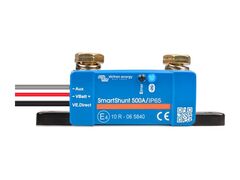
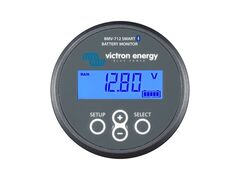
On a van, a boat or an off-grid solar setup fitted with a shunt-based battery monitor such as a Victron SmartShunt or a BMV-712 Smart, the principle is the same but even more visible: the device only resets its estimate to 100% once it detects a genuinely full charge, based on three combined settings: the “charged” voltage, the tail current at the end of charge, and a minimum time spent at those conditions.
If these thresholds are set too loosely, the monitor resyncs to 100% too early and overestimates the remaining runtime; if they are too strict, it never resyncs and the drift sets in. Victron Energy recommends making sure the battery reaches a genuinely full charge at least twice a month so the monitor keeps a reliable reading (source).
It is exactly the same principle as a consumer power station, applied to a dedicated measuring instrument: no need for frequent recalibration, but a genuinely full charge on a regular basis rather than permanently sitting at 80 or 90%.
Power station, power bank, van battery: the right routine
In practice, the same logic applies across the whole range, with a few nuances by use case:
- Power bank and smartphone: feel free to use it daily between 20 and 80%, without a second thought. If the displayed percentage looks inconsistent (jumping from 15% to 0%, for instance), run one full discharge/charge cycle before suspecting a fault.
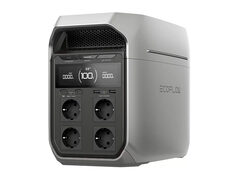
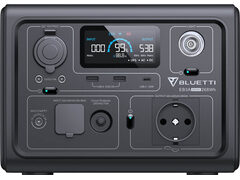
- Power station (such as the EcoFlow Delta 3 Plus or the Bluetti EB3A): same reflex. A drifting percentage or seemingly reduced runtime is often fixed by a single full cycle, the first thing to try before any deeper diagnosis.
- Van or boat battery with a dedicated shunt: see the previous section, aim for a genuinely full charge at least twice a month.
- Long-term storage: never store a lithium battery fully empty or fully full; aim for 40 to 60% instead when putting it away for the season.
One last precaution, valid year round: never charge a LiFePO4 battery below 0 °C (32 °F), as the cold encourages lithium-metal plating that permanently damages the cell, a far more serious issue than a simple gauge drift.