
Anker 737 Power Bank
(60 reviews)
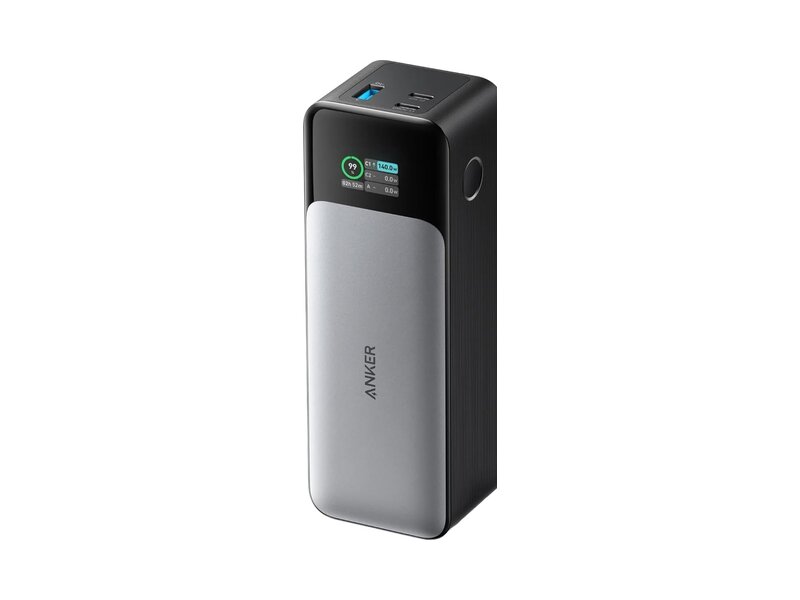
24000mAh and 140W of power: the Anker 737 charges a laptop like a smartphone, with a display that shows everything in real time.
Buy at AmazonAs an Amazon Associate I earn from qualifying purchases.
Characteristics
- Capacity: 24000mAh (86.4Wh)
- Power: 140W max (Power Delivery 3.1)
- Ports: 2 USB-C + 1 USB-A
- Display: Digital display (power, runtime, time)
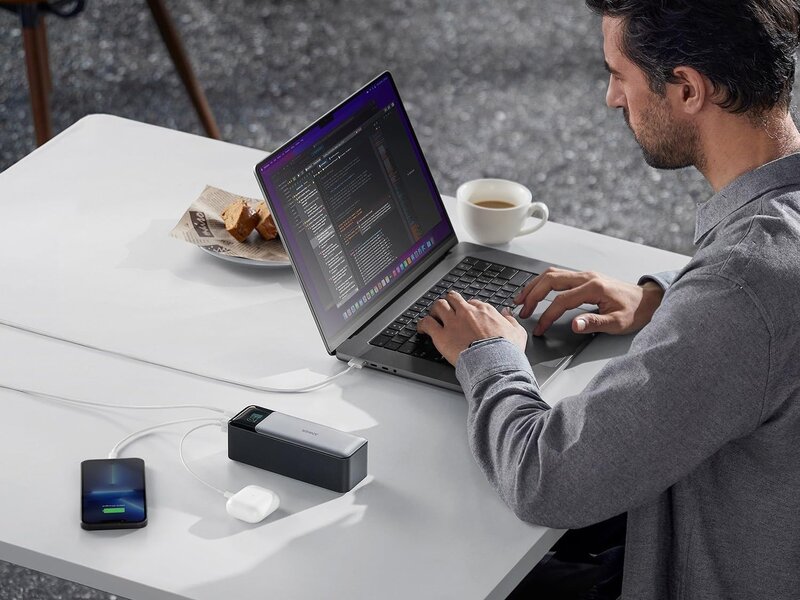
- 140W to charge a laptop
Detailed overview: Anker 737 PowerCore 24000mAh 140W power bank
The Anker 737 Power Bank (PowerCore 24K) is a premium power bank designed for heavy on-the-go needs. With its 24000mAh capacity (86.4Wh) and an output of up to 140W via Power Delivery 3.1, it clearly stands apart from conventional power banks: it does not just charge smartphones, it also powers demanding laptops, MacBook Pro included, at full speed.
It has 3 ports (2 USB-C and 1 USB-A) that let you charge up to three devices at once, with smart power distribution. Its digital display is particularly useful: it shows in real time the input and output power, the remaining charge level and the estimated time to full charge, giving full control over its use.
Recharging the bank itself is another asset: it accepts up to 140W input, allowing a full recharge in about 1 hour with a suitable charger, where most large banks take several hours. Its 24000mAh capacity charges, for example, an iPhone nearly 5 times, or a MacBook Air about 1.3 times.
Its only real limits are physical: at over 600 g and with a bulky body, it is heavier and larger than a standard power bank, the price to pay for this capacity and power. Its price is also above average. But for anyone needing to charge a laptop on the move without carrying the mains charger, the Anker 737 remains one of the best benchmarks on the market.
Full specifications
Detailed characteristics (EAN: 0194644098728)
Battery
| Rated capacity?Cell capacity in milliamp-hours, as stated by the manufacturer. | 24000 mAh |
|---|---|
| Actual energy?Actual stored energy in watt-hours; what matters for runtime and air travel (100 Wh cabin limit). | 86.4 Wh |
| Delivered energy, measured?Energy that actually leaves the battery and reaches the devices. Always below the stored energy, as conversion costs heat. Taken from our in-depth review. | 72.6 Wh |
| Battery chemistry?Cell type; LFP lasts longer, Li-ion/LiPo is lighter. | Li-ion |
Output (device charging)
| Max output power?Maximum total power delivered; above 60 W it can charge a laptop. | 140 W |
|---|---|
| USB-C ports?Number of USB-C ports and the fastest port's power. | 2 × 140 W |
| USB-A ports?Number of USB-A ports and maximum power. | 1 × 18 W |
| Fast-charge protocols?Supported fast-charge standards (PD, QC, PPS…); PD/PPS is the most universal. | USB PD 3.1, PPS |
| Wireless charging (Qi)?Inductive charging of a phone placed on top, and its power. | No |
| Magnetic attachment (MagSafe)?Attaches magnetically to the back of a MagSafe-compatible iPhone. | No |
Recharging the power bank
| Recharge power (input)?Maximum input power to recharge the power bank; higher means faster. | 140 W |
|---|---|
| Recharge time 0-100%?Time to fully recharge the power bank. | 60 min |
| Pass-through charging?Can charge a device while being recharged itself (pass-through). | Yes |
Cable and interface
| Built-in cable?A cable is permanently attached to the power bank (nothing extra to carry). | No |
|---|---|
| Retractable cable?The built-in cable retracts into the housing. | No |
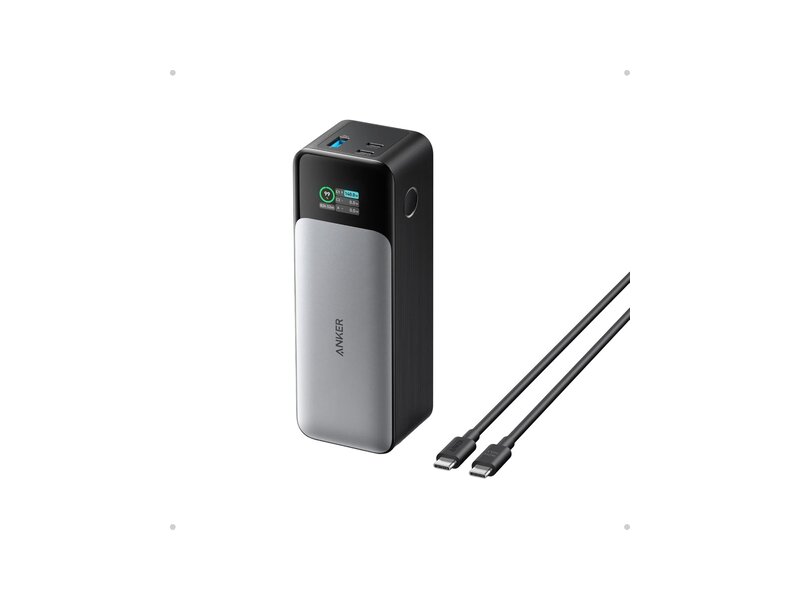
| Cable included?A cable is included in the box. | Yes |
| Display?Level display: simple LED indicators or a digital screen (%, watts). | Digital display (LCD) |
| LED light?Built-in LED torch / light. | No |
Form factor
| Weight?Weight of the power bank, in grams. | 630 g |
|---|---|
| Dimensions (L × W × D)?Length × width × depth, in millimetres. | 155.7 × 54.6 × 49.5 mm |
Availability and warranty
| Market launch?Date the model first became available on the European market. Useful to place its generation: technology moves fast in this segment, and a device several years old may be at the end of its commercial life. | August 2022 |
|---|
User manual / Instructions for use
⚡ How many charges with this power bank?
With 86.4 Wh of capacity, the Anker 737 power bank recharges iPhone 16 ~4.5 times or Samsung Galaxy S25 ~4 times.
| Smartphone | Charges |
|---|---|
| iPhone 13 | ~5 |
| iPhone 15 | ~4.8 |
| iPhone 16 Pro | ~4.5 |
| iPhone 18 Pro Max | ~2.9 |
| Tablet / console | Charges |
|---|---|
| Nintendo Switch 2 | ~3.2 |
| iPad (A16) | ~2.2 |
| iPad Pro (M5) | ~2 |
| Asus ROG Ally | ~1.6 |
Rough estimate: real-world losses (conversion, cable, heat) are around 25 to 35%.
Comparison
How does the Anker 737 compare with rival high-power banks?
| Criterion | Anker 737 Power Bank | Ugreen 145W Power Bank | Baseus Blade 100W |
|---|---|---|---|
| Capacity | 24000mAh | 25000mAh | 20000mAh |
| Power | 140W | 145W | 100W |
| Ports | 2 USB-C + 1 USB-A | 2 USB-C + 1 USB-A | 2 USB-C + 2 USB-A |
| Display | Yes | Yes | Yes |
In the high-power bank category, the Anker 737 matches the Ugreen 145W on capacity and power, with the asset of a clear display and Anker's reputation for reliability. The Baseus Blade is slimmer and a little cheaper, but caps at 100W. To charge a laptop, the Anker 737 is a safe bet.
Related video
Video: Anker 737 Power Bank Review: 140W Charging + Smart Display! - Published on 19/01/2024
Our tester's review: Guillaume Hoarau
The Anker 737 is the power bank you take when you refuse to compromise. Its 140W make it one of the few power banks able to charge a laptop at full speed, MacBook Pro included, and not just as a stopgap. Over a day on the move, it charged a laptop, two smartphones and earbuds without flinching, its 24000mAh offering a real reserve. The digital display is a genuine plus day to day: you see at a glance the power delivered and the remaining runtime, which avoids nasty surprises. It recharges itself very fast, in about an hour with a good 140W charger. The only downsides are its weight and size, hefty for a power bank (over 600 g), and its price, above average. But for real portable power, it is a benchmark.
In-depth review Anker 737 Power Bank: our full review 4.0/5 Read our full review → Capacity and runtime 4.3 Output power 3.9 Size and weight 3.6 Ports and cables 4.2 Recharging 4.4 Build and endurance 4.0Frequently asked questions: Anker 737 PowerCore 24000mAh 140W power bank
Yes, and it is its main asset. With 140W output, it charges most USB-C laptops at full speed, including a MacBook Pro, which very few power banks can do.
Its 24000mAh charges an iPhone nearly 5 times, or a MacBook Air about 1.3 times. It is a real energy reserve for several days of smartphone use.
It accepts up to 140W input, allowing a full recharge in about 1 hour with a suitable charger, far faster than most large power banks.
Yes. At 86.4Wh, it stays under the 100Wh cabin threshold allowed by most airlines. It can therefore be taken in hand luggage, like most power banks.
Need help choosing?

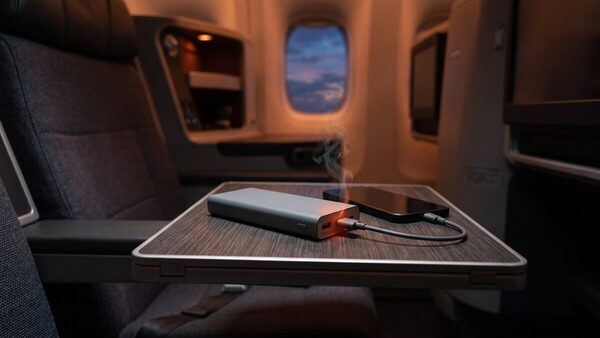
Other products in the "High capacity power banks" category
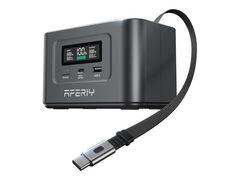
Aferiy Nano100
£71.47 (8)
99 Wh of LiFePO4 in your pocket: the Aferiy Nano100 is a 100 W power bank with a retractable USB-C cable, cabin-friendly and long-lasting (2000+ cycles).
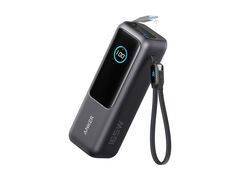
Anker A1695 (165W)
See price (48)
With 25,000 mAh, 165 W, two built-in cables and a display, the Anker A1695 power bank even charges a laptop and up to 4 devices at once.
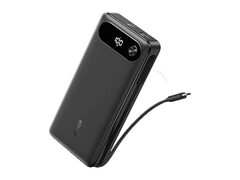
Anker Power Bank 20000 (87W)
See price (46)
20,000 mAh and 87 W with the USB-C cable already in the pack: enough to charge a MacBook at 65 W plus two more devices, without ever hunting for a cord.
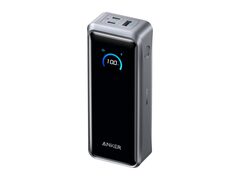
Anker Prime 26250 (300W)
See price (4)
26,250 mAh and 300 W of total output: two USB-C ports at 140 W that charge a MacBook Pro like mains power, and 250 W recharging that refills the pack before your eyes.
Published on 11/07/2026, updated on 19/07/2026