
Why choose an expandable power station over a fixed-capacity model?
A power cut that lasts an evening is easy to handle with a few candles. A power cut that lasts an entire weekend, in the middle of winter, with a full freezer and a boiler that needs electricity just to ignite, is a different problem. That is exactly where an expandable power station beats a fixed-capacity model: it starts with a sensible capacity, enough for the essentials (fridge, router, lighting, chargers), then grows one extra battery at a time, at whatever pace your budget and real needs allow, without buying a new inverter or cables.
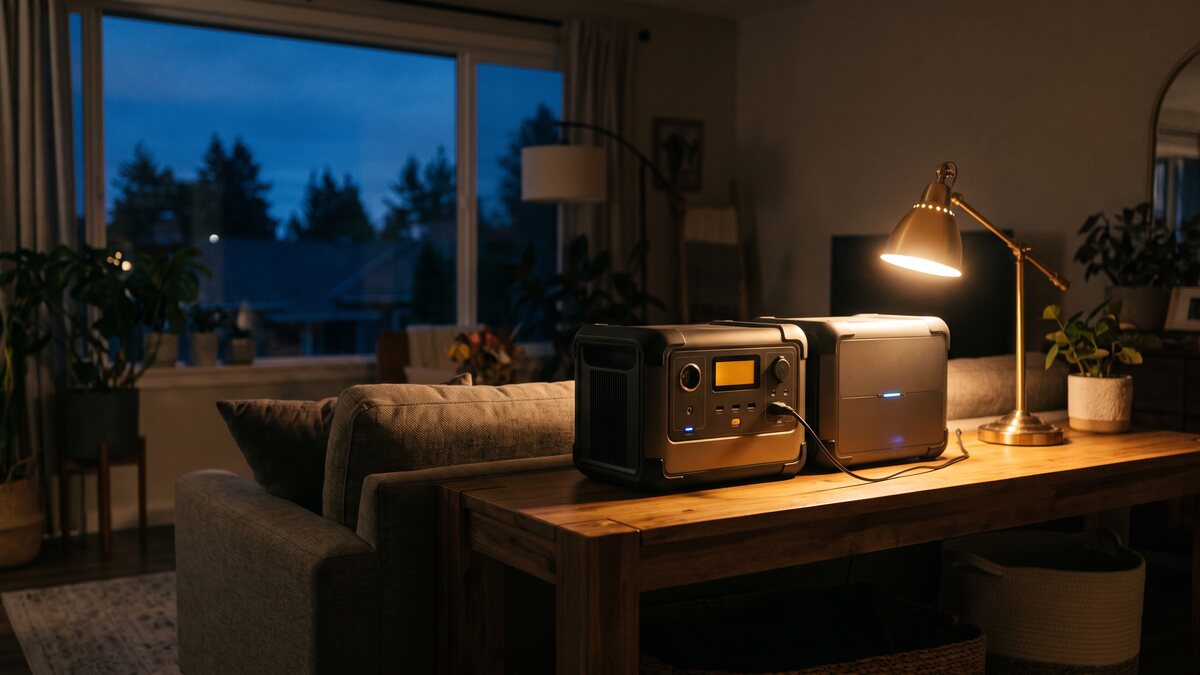
The principle is simple: the main unit, the “power module”, holds the inverter, the outlets and a first LiFePO4 battery. One or more expansion batteries, sold separately, plug into it with a single cable to add capacity without touching the output power. For a home backup reserve, this is the most rational format: it avoids overpaying for a huge station on day one if outages stay occasional, while leaving the door open to real autonomy if they start repeating.
How an expansion battery works (and its real limits)
Technically, an expansion battery is nothing more than a second (or third) LiFePO4 pack, with its own BMS, the circuit that protects the cells, connected to the main unit by a proprietary cable. The output power, the number of watts you can draw continuously, generally does not change when you add an expansion: only the capacity, the stored watt-hours, goes up. A unit rated at 4000 W continuous stays at 4000 W whether it holds 2 kWh or 12 kWh.
A second real limit: the headline maximum capacity (26.9 kWh, 12 kWh...) often assumes stacking several expansions on the same unit, which comes with real cost and weight, since each expansion pack typically weighs between 25 and 40 kg. It is worth starting from the real need, covered next, rather than the most impressive number on the spec sheet.
How many kWh do you need to ride out a power cut?
Before picking a capacity, work out what you actually want to keep running during an outage. An entire home, with electric heating, hot water and a hob, draws several kW continuously, well beyond what even an expandable portable station can supply: that is not the goal. The realistic goal is to keep the essential circuits running for the length of a typical outage, from a few hours to a day or two.
| Appliance | Typical draw | Runtime on 2 kWh |
|---|---|---|
| Fridge-freezer combo | 100 to 200 W (cycling) | Roughly 20 to 30 hours |
| Router and Wi-Fi access point | 15 to 25 W | Several days |
| Gas boiler (electric ignition only) | 50 to 150 W | Several days on standby |
| LED lighting, whole home | 30 to 60 W | Several days |
| Microwave (occasional use) | 1000 to 1500 W | A few cumulative minutes |
In practice, 2 to 4 kWh is already enough to keep the fridge, the home network and the lighting running through a day-long outage. Beyond that, to also protect a boiler, a sump pump or medical equipment at home, aim for 8 to 12 kWh and a real automatic transfer switch, covered further down. For the practical steps to take during the outage itself, our complete power outage guide covers the first ten minutes and the mistakes to avoid.
Our 2026 picks: from the entry tier to a near whole-home reserve
We picked four stations that represent the tiers that actually matter for home backup, from the most accessible entry point to a reserve that comes close to a residential inverter-battery system.
| Model | Base capacity | Expandable to | Power (peak) | Price |
|---|---|---|---|---|
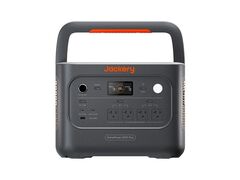
| Jackery HomePower 2000 Plus v2 | 2048 Wh | 12 kWh | 2400 W (4800 W) | £916.99 |
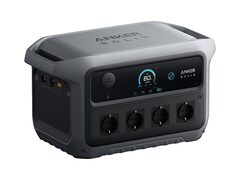
| Anker Solix C2000 Gen2 | 2048 Wh | 4 kWh | 2400 W (4000 W) | £1026.23 |
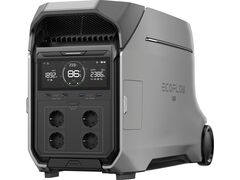
| EcoFlow Delta Pro 3 | 4096 Wh | 4 to 12 kWh | 4000 W (6000 W) | £2599.00 |
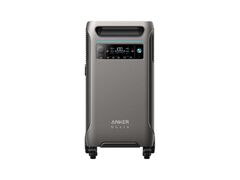
| Anker Solix F3800 | 3840 Wh | 26.9 kWh (53.8 kWh with two) | 6000 W (9000 W) | £3162.65 |
The Jackery HomePower 2000 Plus v2 is the most logical entry point: a modest base capacity, but its 10 ms automatic transfer switch, covered below, makes it a genuine home backup unit from the very first tier, at a contained price. The Anker Solix C2000 Gen2 leans toward dual-purpose camper and home use, with a very fast 58-minute recharge. The EcoFlow Delta Pro 3, whose spec sheet explicitly markets home backup as a use case, doubles its capacity easily with a second battery. The Anker Solix F3800 is the choice for a genuine home reserve: the only one in this selection to clear the 20 kWh mark, it comes close to a residential battery inverter while staying portable.
Why LiFePO4 is the safest chemistry for home energy storage
All four models rely on the same chemistry: LiFePO4 (lithium iron phosphate), the most stable lithium chemistry currently sold for this kind of use. Unlike the lithium-cobalt cells of early power stations, LiFePO4 does not release oxygen when a cell fails, which sharply reduces the risk of cascading thermal runaway, a decisive factor once you start storing several dozen kWh inside an occupied home. It is also the chemistry that lasts the longest, with 4000 to 6000 rated cycles depending on the model, roughly a decade of use even with weekly recharging.
In the US, the UL standards cover exactly this risk for stationary energy storage systems: UL 1973 for the battery itself, UL 9540 for the complete system, with a UL 9540B track specific to residential use. Checking that a model claims these certifications remains a solid proxy for build quality before installing meaningful capacity at home.
Automatic transfer switch (UPS): the detail that changes everything during a cut
On the Jackery HomePower 2000 Plus v2, this switch is built in and rated by the manufacturer at 10 milliseconds, fast enough that a computer or a router will not even restart. On the EcoFlow Delta Pro 3 and Anker Solix F3800, automatic switching typically goes through a separate panel, a “Smart Home Panel” type device, that connects to the consumer unit and decides on its own which circuits to keep powered first (fridge, router, lighting). That panel has its own cost and needs installation by a qualified electrician, unlike simply plugging the stations themselves into a wall socket. Before buying for serious home backup use, check whether this transfer panel exists for the model you want, its price, and whether it is available in your market: it is often the real hidden budget line of this kind of project.
Mistakes to avoid before investing in an expandable power station
Three mistakes come up again and again with this choice.
- Confusing power output with capacity. Adding an expansion battery increases runtime, not available power: a unit rated at 2400 W continuous will never run an electric oven, often 2000 to 3000 W on its own on top of everything else, no matter how many kWh it holds.
- Underestimating the weight of expansion packs. An extra 3 to 4 kWh battery easily weighs 25 to 40 kg: regular handling, moving it, storing it, becomes a real factor, especially up a staircase or into a basement.
- Forgetting the cost of the automatic transfer switch. The advertised price of the station alone does not always include the transfer panel needed for genuine, hands-off backup use: budgeting for it from the start avoids an unpleasant surprise.
For a broader look at choosing a power station in general, our full ranking of fifty tested models covers every use case, from off-grid trips to home backup; the power stations hub lists every product page in the catalogue.