
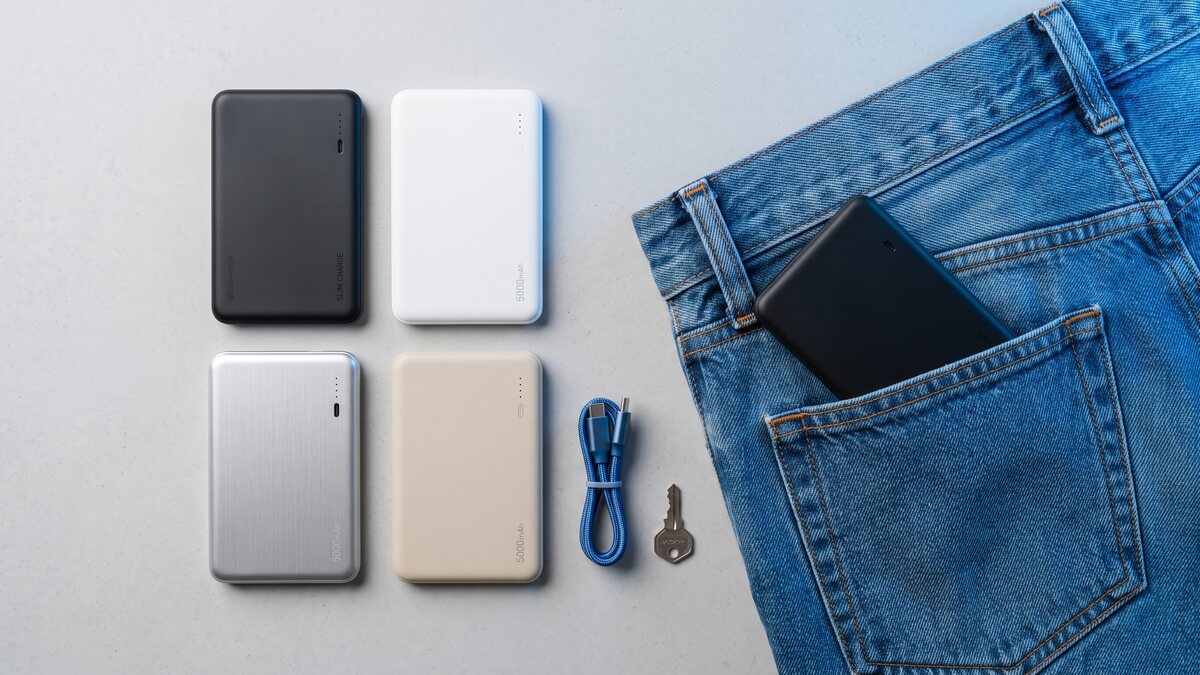
Why choose a mini power bank over a standard one?
An ultra-compact mini power bank is the opposite of a bulky 20,000 mAh power bank built to recharge a laptop or keep you going for several days of travel. Here, the goal is different: a charging top-up that slips into a jeans pocket, a small bag or a pouch, without you even noticing you're carrying it.
In practice, these models typically sit between 5,000 and 10,000 mAh, weighing 90 to 200 g, whereas a versatile travel power bank easily tops 300 g. The trade-off is logical: less capacity, so fewer full recharges. A mini power bank is meant for the occasional top-up (one phone charge, a boost for your earbuds), not multi-day autonomy.
It's the ideal format for everyday carry (commuting, the office, a night out), light travel, or simply a backup you always keep on you without thinking about it. For heavier use, or to recharge a laptop, a higher-capacity model is the better choice.
Our selection criteria
To separate the models in this crowded segment, we compared five concrete criteria, the ones that genuinely matter day to day:
- Real-world capacity, not just the mAh figure on the box. Between voltage conversion and unavoidable losses, a power bank never delivers 100% of its rated capacity as usable energy for your phone.
- Weight and dimensions, the number one criterion for a power bank you want to forget you're carrying.
- USB-C PD output, which determines how fast your device actually charges.
- Built-in cable or not. A built-in or retractable USB-C plug saves you from carrying a separate cable, at the cost of a bit more thickness.
- Price, given this segment ranges from premium models to under £15.
1. The most minimalist, no cable needed: Anker Nano A1653
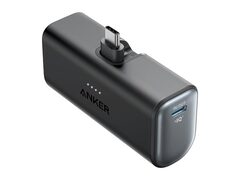
The Anker Nano A1653 takes the mini power bank idea to its logical conclusion: no cable at all, just a built-in, foldout USB-C plug that swings straight into your phone's port. At 5,000 mAh and barely 100 g, it slips into any pocket and comes out ready to use in one motion, no digging through a bag for a missing cable.
The trade-off is deliberate: a single output, no wireless charging, a format built purely for a quick USB-C phone top-up. For what it is, a genuinely frictionless backup, it's a benchmark in this category at a modest price.
2. The slimmest and lightest: Xiaomi Ultra Slim 5000
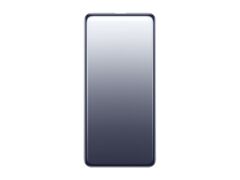
At just 10 mm thick and 93 g, the Xiaomi Ultra Slim 5000 is about the size of a slightly thicker bank card. In our selection, it's the one that disappears most easily into a back pocket or a card holder, practically vanishing next to a smartphone.
Its 5,000 mAh is enough for one full smartphone charge over USB-C, with no display or extra frills to speak of. A clear pick for anyone after the most discreet format possible, at a genuinely accessible price.
3. The strongest without getting bigger: Nitecore Pocket 10000
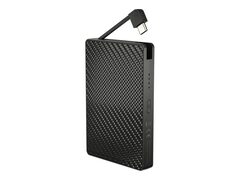
The Nitecore Pocket 10000 doubles the capacity of our first two picks (10,000 mAh) while still fitting into a carbon-fibre shell just 12.5 mm thick and 160 g. A built-in, retractable USB-C cable rounds it off: no need to carry one separately, even for the fastest charge this model can deliver.
The carbon-fibre finish isn't just cosmetic: it also makes the shell noticeably more scratch-resistant, a real plus for a power bank that ends up loose in a bag alongside keys or coins day after day.
The obvious pick for anyone who wants two to three full smartphone charges without giving up compactness: the benchmark of this comparison for the balance between capacity and size.
4. The most versatile, wireless and built-in cable: Baseus PicoGo AM52
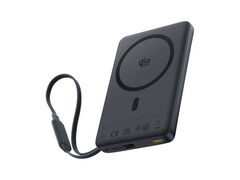
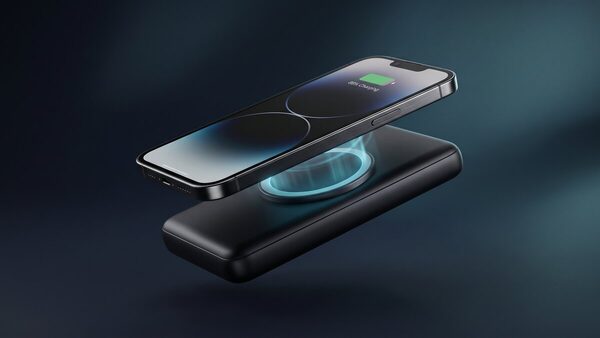
The Baseus PicoGo AM52 packs several features into an ultra-thin shell: 10,000 mAh, a built-in USB-C cable for wired charging, and a Qi2.2 wireless charging face rated at 25 W, so you can just set a compatible phone on top with no cable at all. At 198 g, it stays within pocket territory while offering noticeably more flexibility than purely wired models.
In practice, that means two charging habits covered by one device: drop your phone on the wireless face while it sits on a desk, or grab the built-in cable when you need the fastest possible top-up on the move.
The pick for anyone who wants the best of both worlds, wireless and wired, without stepping up to a handbag-sized power bank. Expect to pay around £50 to £60, a price that matches the feature set on board.
5. The best budget pick: Varta Energy 5000
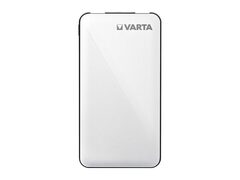
You don't need to spend much to get solid backup power: the Varta Energy 5000 offers 5,000 mAh, a USB-C port and two USB-A outputs, for around £13. At 150 g it isn't the lightest in our selection, but it's still easy to carry and covers the essentials for anyone after a simple backup with no extra features to pay for.
An excellent first power bank, or a second one to leave in a bag, a glovebox or a desk drawer, without breaking the bank.
Comparison table: the 5 mini power banks
| Model | Capacity | Weight | Max output | Built-in cable | Observed price |
|---|---|---|---|---|---|
| Anker Nano A1653 | 5,000 mAh | 100 g | 20 W | Retractable USB-C plug | ≈ £26 |
| Xiaomi Ultra Slim 5000 | 5,000 mAh | 93 g | 10 W | No | ≈ £18 |
| Nitecore Pocket 10000 | 10,000 mAh | 160 g | 18 W | Yes (USB-C) | ≈ £63 |
| Baseus PicoGo AM52 | 10,000 mAh | 198 g | 25 W (wireless Qi2.2) | Yes (USB-C) | ≈ £60 |
| Varta Energy 5000 | 5,000 mAh | 150 g | N/A | No | ≈ £13 |
Which mini power bank should you choose?
Our picks summed up in one line per profile:
- To carry nothing extra: the Anker Nano A1653 with its built-in USB-C plug.
- For the most discreet object possible: the Xiaomi Ultra Slim 5000, credit-card sized.
- For two to three charges without extra bulk: the Nitecore Pocket 10000.
- For wireless charging with no cable to find: the Baseus PicoGo AM52.
- For the tightest budget: the Varta Energy 5000.
In practice, the smartest approach is to match the choice to how often you'll actually use it, rather than to the most impressive spec sheet. A mini power bank that stays in a drawer because it's too thick or too heavy to carry is useless: a slightly lower-capacity model that's genuinely pocketable, and that you actually have on you the day your phone dies, wins every time.
If you're travelling for several days or need to recharge a laptop, these five models will run out of steam fast: head instead to our guide to the best travel power banks, which covers higher capacities.
Good to know for every model in this selection: with a capacity of roughly 18 to 37 Wh, they sit well under the 100 Wh limit most airlines allow in carry-on luggage, so they travel without any issue in hand baggage, never in checked luggage.