
What the 4019 Wh are really worth against lead-acid
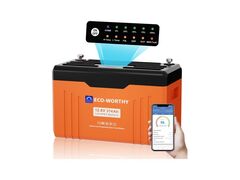
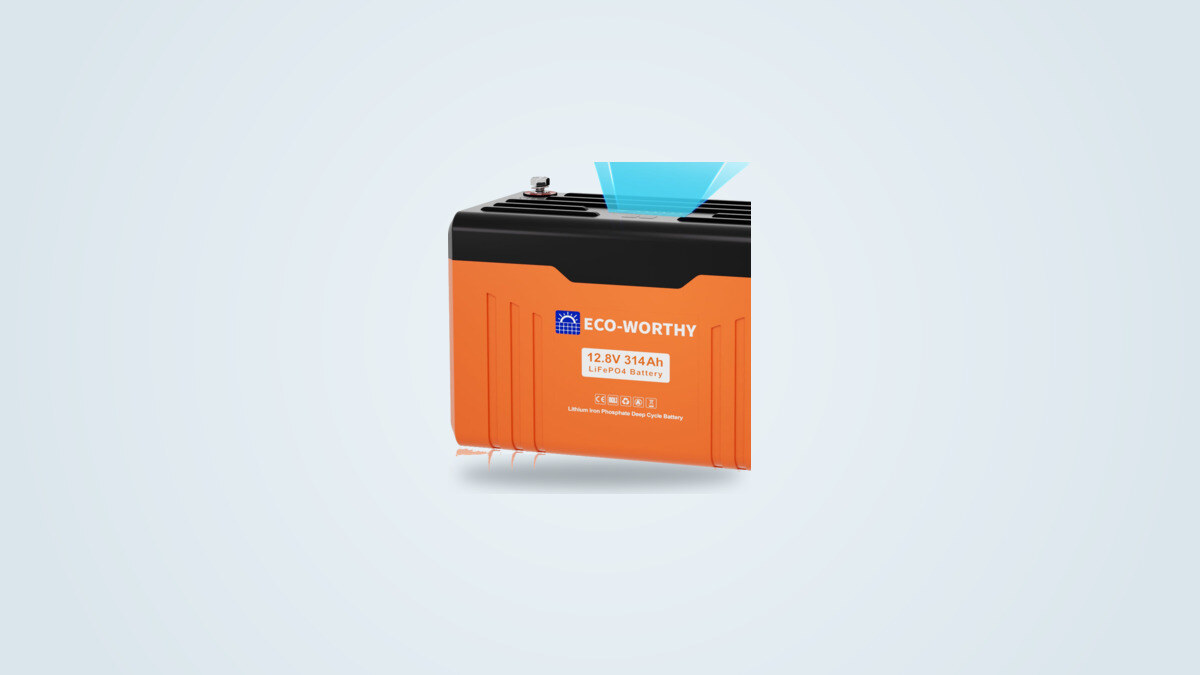
The Eco-Worthy EnergyTrek 314Ah is rated at 314Ah at a nominal 12.8V, or 4019 Wh, with a stated depth of discharge of 100%, a trait of LiFePO4 chemistry. A lead-acid battery should never be run below 50% depth of discharge without noticeably shortening its life, so matching the same usable energy as these 4019 Wh would take a lead-acid bank with a much bigger nominal capacity to start with.
An AGM lead-acid bank putting out the same usable energy (oversized to make up for its 50% discharge ceiling) would need a nominal capacity close to 630Ah at 12.8V: in practice, two to three high-capacity 12V blocks totaling 150 to 160 kg, against 27.4 kg here. The real-world gap runs well past the simple weight figure printed on the label.
| Criterion | AGM lead-acid (equivalent usable energy) | EnergyTrek 314Ah (this product) |
|---|---|---|
| Nominal capacity | About 630Ah | 314Ah (4019 Wh) |
| Recommended discharge | 50% maximum | 100% claimed |
| Real usable energy | About 4019 Wh | 4019 Wh |
| Weight | 150 to 160 kg | 27.4 kg |
The EnergyTrek 314Ah also succeeds an older 280Ah model from the same brand: the manufacturer states roughly 12% more capacity (4019 Wh versus 3840 Wh) for a similar external footprint, a real generational gain rather than just a relabeling exercise. No independent measurement of the actual delivered capacity behind the claimed 4019 Wh could be cross-checked as of this writing for this specific model: it is a manufacturer figure, not yet confirmed by a third party, and should be read as a confidence gap rather than a proven flaw.
The 200A BMS and its dual protection: what's confirmed, what stays closed
The stated 200A BMS covers the protections expected on a modern LiFePO4 of this format: overcharge, deep discharge, overcurrent, short circuit, and overheating, with an automatic charge cutoff in cold weather. The manufacturer also states a secondary protection circuit, separate from the main BMS board: on losing control of charging or discharging, or on an abnormal cell voltage, this second circuit independently cuts both circuits and permanently locks the battery, with a fault light coming on to flag the shutdown. That is a more explicit two-tier design than most generic BMS units in this segment, which usually only detail a single layer of protection.
The case is also stated as fire-retardant, claimed to extinguish a fire start within 30 seconds to stop it spreading, and the cells are said to be held by a metal compression fixture that limits swelling over time. Those are solid safety arguments on paper, but purely stated ones at this point: no independent teardown or test of this specific 314Ah model could be found to back them up, while older and smaller capacities from the same brand have had public teardowns.
On the most recent units, the BMS identifies itself in the app under a dedicated prefix and only talks to this manufacturer app: unlike the more common generic BMS units in the DIY solar community, no third-party diagnostic tool can pull per-cell detail or the protection history outside this proprietary app.
Cold-weather behavior: automatic cutoff, no self-heating
Charging is automatically disabled below -7 °C and resumes from 0 °C, while discharging stays possible down to -20 °C. Operation is also stated as reliable up to 55 °C. That is a fairly wide range for nomadic use, and noticeably more forgiving than a classic NMC lithium chemistry, which handles a cold charge very poorly.
For boat or RV use in shoulder-season weather, this automatic cutoff avoids the main risk of charging lithium in the cold (metallic lithium plating on the electrode during a too-cold charge, which permanently degrades the cell) with no action needed from the owner. The trade-off is that a charge attempted on a chilly morning simply will not start until the temperature climbs back above the threshold, since this model has no active cell self-heating feature.
Bluetooth, app and LED screen: handy, but an overstated range
The ECO-WORTHY app (Bluetooth 5.1, available on iOS and Android) shows state of charge, voltage and current in real time, with dedicated tabs for a home screen, control, detailed data, and an alert history. The case's built-in LED screen stays useful alongside it: it shows the charge level in 25% steps, plus dedicated lights for high temperature, low temperature and protection faults, without needing a phone for a quick check.
The battery works fine on its own with no phone around: the BMS runs its protections continuously, and the app is only an optional monitoring layer. On the most recent units, though, the Bluetooth module identifies itself in the app under a prefix dedicated to this exact component and only talks to this manufacturer app: no third-party diagnostic tool of the kind the DIY solar community commonly uses on more open BMS designs can connect to it to read per-cell detail outside the bundled app. No WiFi relay or cloud gateway is confirmed on this specific model either: remote monitoring stays capped at the case's own Bluetooth range.
Expandable up to 32.15 kWh: what that promise really means
The manufacturer states expandability up to 8 units total, wired as 4P2S (4 parallel strings, 2 in series, a 25.6V system) or 2P4S (2 parallel strings, 4 in series, a 51.2V system), for a stated combined capacity of 32.15 kWh. That ceiling sits well above what other standalone batteries in the same segment on the site offer, mainly because each base unit already starts from a far bigger capacity (4019 Wh versus 640 to 2560 Wh elsewhere), not because the number of units you can wire together is itself higher.
For comparison, a more modest standalone battery in the catalogue tops out at 16 units for a combined 10.24 kWh: twice as many units allowed, but for a total nearly three times lower, simply for lacking as big a starting capacity per unit. To stay reliable, wiring several EnergyTrek units in series and parallel calls for units from the same batch, brought to the same charge level before being put into service together, a precaution that applies to any LiFePO4 chemistry wired this way and not just to this brand. For a more modest job (a straight lead-acid swap on a boat or RV), a single unit remains the most common and simplest route.
Stated cycle life: 6000 or 15000, a spec sheet that won't commit
The spec sheet dedicated to this model states 6000 cycles, already a solid figure for a LiFePO4 of this format. Several marketplaces list a noticeably higher figure for the very same product, though: up to 15000 cycles. A gap like that is not necessarily a contradiction: at several manufacturers in this space, a high cycle count usually corresponds to a partial depth of discharge (60 to 80%, say), while the lower figure corresponds to a full 100% discharge. The trouble is that, for this specific model, no document found spells out that breakdown by depth of discharge: both numbers circulate without letting the reader know which one applies to their actual use.
For scale, 6000 cycles at full discharge already works out to more than 16 years of use at one full cycle a day, well beyond how long most solar or on-board setups stay in service before being upgraded. This documentation gap does not undercut the product's practical value, but it does point to technical communication that is less rigorous than some direct rivals, which sometimes publish a clear cycles-versus-depth-of-discharge breakdown on their own spec sheet.
The 10-year warranty and the recommended care for long-term storage
The stated warranty reaches 10 years, double the 5 years typical of direct rivals in this segment, rounded out with lifetime customer support as stated by the manufacturer. The manufacturer states that a proof of purchase should be kept for any service request, and the listed exclusions stay standard for this type of product: improper installation, an unsuitable environment, incorrect wiring, or unauthorized work on the case.
The brand's official usage guide recommends storing the battery at 50 to 60% charge during extended downtime, recharging it at least every 3 months, and keeping it in a temperature-controlled space, under 45 °C. This is presented as good maintenance practice rather than a formal warranty clause with an explicit exclusion for skipping it, but it is still worth following, especially for a seasonal boat or RV use case laid up for months at a stretch, where forgetting is the most likely outcome.
Up against the direct competition
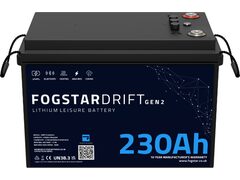
In the roughly 300Ah lithium battery bracket, the Eco-Worthy EnergyTrek 314Ah regularly comes up against three direct rivals: the LiTime 12V 300Ah, one of the most compared brands in this segment; the Renogy Core Mini 300Ah, more compact; and the Fogstar Drift 300Ah, a premium pick in the UK.
| Criterion | Eco-Worthy EnergyTrek 314Ah | LiTime 12V 300Ah | Renogy Core Mini 300Ah | Fogstar Drift 300Ah |
|---|---|---|---|---|
| Energy | 4019 Wh | 3840 Wh | 3840 Wh | 3840 Wh |
| BMS / continuous discharge | 200A intelligent | 200A | 200A intelligent | 200A (JBD) |
| Expandable | Up to 32.15 kWh (4P2S/2P4S) | Up to 1200Ah (series/parallel) | Unspecified | Unspecified |
| Weight | 27.4 kg | About 25 kg | 25 kg | Unspecified |
| Warranty | Up to 10 years | 10 years | 5 years | 10 years |
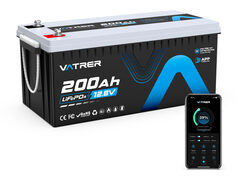
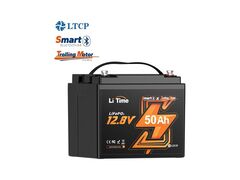
Against these three similarly-sized rivals, the EnergyTrek 314Ah stands out with slightly higher energy and a clearly stated expansion ceiling of 32.15 kWh. Against the two other standalone batteries already reviewed on best-batteries.com in this same segment (the LiTime 12V 50Ah and the Vatrer Power 200Ah, both noticeably smaller), it wins comfortably on raw capacity and expansion ceiling, and doubles their stated warranty. It falls behind, though, on how open the control ecosystem is: neither the LiTime's simplified QR-code pairing nor the Vatrer's relatively common generic BMS, compatible with tools the DIY solar community already uses, shows up here, and its technical documentation is the least consistent of the three on the one point of stated cycle life.
Who it's for, and who should look elsewhere
This battery is the best fit for anyone replacing a large lead-acid bank on a converted van, a boat, or an off-grid solar setup, who wants a generous energy reserve with room to expand later without starting over. The LED screen and app also make it a sound choice for anyone new to monitoring a lithium battery who doesn't want to rely solely on a multimeter.
It is a poorer fit for anyone who needs reliable remote monitoring beyond a few meters, an open monitoring ecosystem compatible with third-party tools, or technical documentation that is fully consistent from one channel to the next. Checking the compatibility of a charger or solar controller already on hand before buying remains a useful precaution too, as does planning for the recommended periodic recharge if the battery will be laid up over winter.