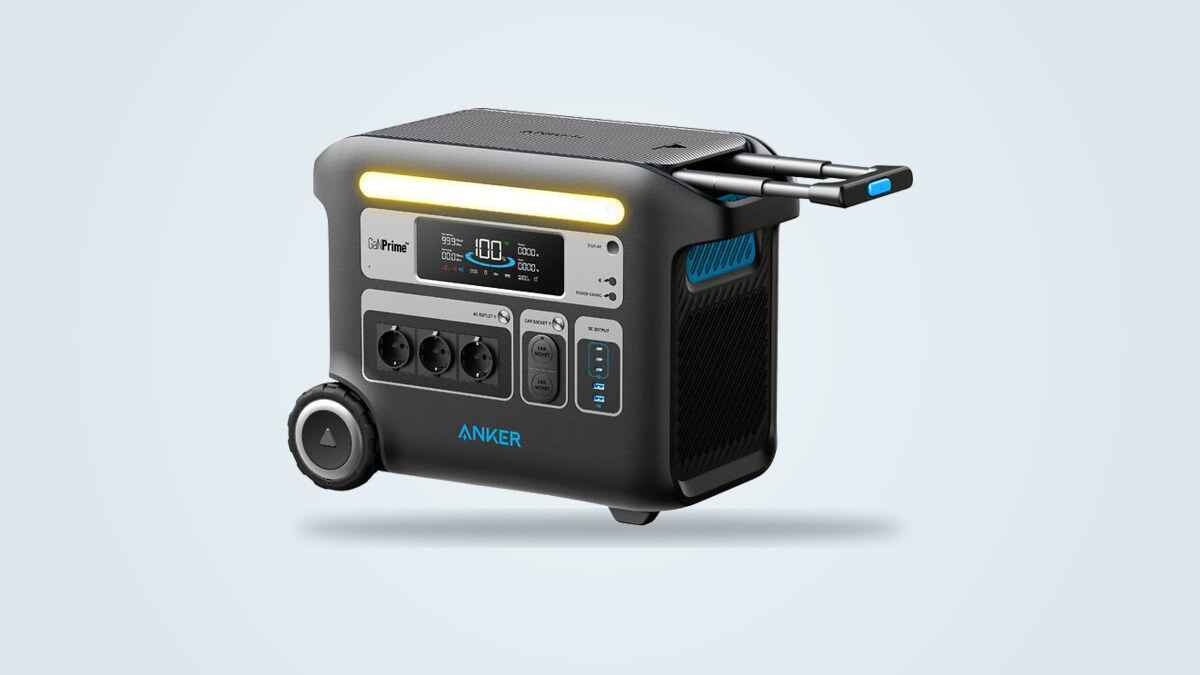
What the claimed 2048 Wh are really worth
The F2000 packs a 2048 Wh LiFePO4 battery, rated for 3000 cycles down to 80% capacity. The capacity actually delivered comes to between 1800 and 1870 Wh, that is 88 to 91% of the rated value. The full round-trip efficiency (energy delivered relative to energy consumed while charging) is lower and distinct from simple delivered capacity: around 78 to 81%, a nuance not to be confused with the delivered-capacity figure.
Efficiency at several different output power levels remains untested, a real limitation that leaves it unclear whether this figure holds at both low and high power.
HyperFlash recharging, confirmed but worth watching
The promised 80% recharge in 60 minutes, delivered by HyperFlash technology, is confirmed under the same conditions. A full charge takes between 80 and 90 minutes, a range consistent with the original claim of 90 minutes.
One nuance is worth knowing: the comparison table Anker currently publishes to position the F2000 against newer models states an 80% charge time of 1 h 24, slower than the 60 minutes of the original spec sheet. This gap between two sources from the same manufacturer remains without an established explanation (a revised figure after field feedback, a different measurement method): it does not invalidate the 60-minute figure, but it is worth keeping in mind.
Noise under heavy load, a real gap versus the claim
The spec sheet claims 49 dB. Under heavy load, though, the noise level comes in well above that figure: up to 57.5 dB at 1 metre under full load with a stated measurement method, up to 66 dB "right at the unit" in another case, and up to 55 dB during a charge at around 2000 W in a third. Heavy-load noise is also explicitly listed as a weak point, without a precise figure, in a fourth, more qualitative case.
None of these values follows a standardised acoustic protocol (anechoic chamber, systematic distance), so no exact figure should be taken to the nearest dB. But these four results converge on the same finding: a real noise level well above the claim as soon as the load becomes sustained. The spec sheet's 49 dB likely corresponds to idle or low-power use, a condition the spec sheet does not state.
Expandable to 4608 Wh, with a bug acknowledged by Anker
The base 2048 Wh capacity expands to 4608 Wh with an additional BP2600 battery, a genuine expansion that matches what the manufacturer's official documentation states.
Anker's own support documentation acknowledges a software point to watch: if the main unit's charge level drops below 99% while the expansion battery is charging, the handoff between the two does not always happen correctly, an issue the manufacturer identifies as a possible software logic flaw rather than a hardware defect. This expansion's reliability over time under real-world conditions otherwise remains without available data.
Backup switchover, a genuine strength
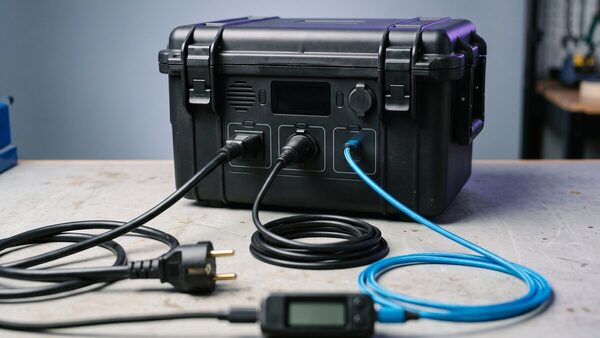
The UPS function, which automatically switches to the battery in case of a mains outage, is rated at 20 ms. This value is confirmed twice over: one measurement puts it at exactly 20 ms, another at under 20 ms, with a computer left running not restarting during a simulated outage. No failure of this function is known to date.
One isolated failure case, to keep in perspective
A power electronics failure case (faulty switching components) occurred under normal use after several years of service on one specific unit. Anker replaced the unit under warranty, with no investigation into the cause apparent.
Can you still buy it new today?
This is the most important point to check before any purchase plan. At the time of writing, this reference appears to have disappeared from new sales in France: Amazon.fr redirects to a listing marked unavailable, Fnac shows it as unavailable with no price, the product pages on Anker France's official site return an error, and Darty, Boulanger and Cdiscount no longer list it at all. A history of several listings deactivated one after another exists on a price comparison site, the most recent dating from the very day of writing.
Brand reliability and the app
At the brand level rather than for this product alone, a US consumer protection organisation gives Anker its lowest rating, with several hundred complaints over three years, mostly related to warranty handling. The overall picture still comes out mixed: ratings mostly cluster at the extremes, with a large majority of top scores and a minority of bottom scores, and few in between.
On this specific model, the Bluetooth connection to the app drops if the phone moves away or stays idle for a while, which prevents genuinely continuous remote monitoring and requires a manual reconnection.
Against the direct competition
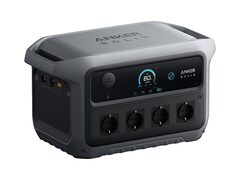
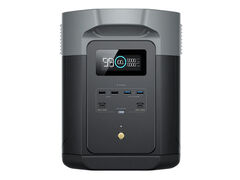
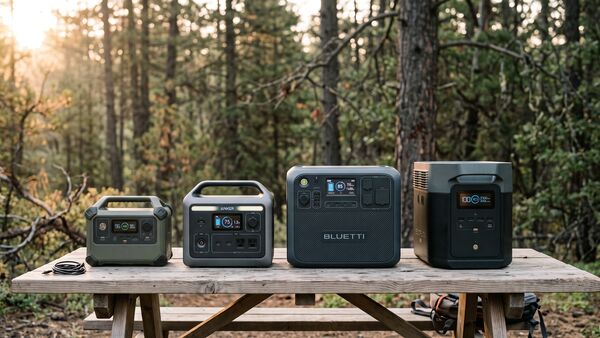
In the segment of 2 kWh stations on wheels, the F2000 compares with the EcoFlow Delta 2 Max and with the Anker Solix C2000 Gen 2, its own successor in the lineup. Against the latter, the F2000 weighs 30.5 kg versus 18.9 kg for the C2000 Gen 2, a compact, wheel-free format, and recharges to 80% in 60 minutes versus a claimed 45 minutes for the C2000 Gen 2. The trade-off for the F2000's weight is its mobility, thanks to wheels and a telescopic handle, absent on the compact format.
A purchase caution flagged on Amazon: the F2000 product listing groups several Anker Solix references of very different capacities (from 288 Wh to over 1000 Wh) under the same page via a selector, a real risk of mistakenly selecting a different model than the one intended.
Who it's for
If it becomes available again, the F2000 suits anyone who wants a large, mobile energy reserve thanks to its wheels, with a recharge speed that keeps its promise and a reliable backup switchover: home backup, worksite, motorhome with a dedicated bay. Its weight reserves it for use where it is positioned rather than carried.
It does not suit anyone looking for a compact, lightweight format, or anyone who values total silence under heavy load. And above all, it suits no one looking for an immediate new purchase: its availability in France currently appears too uncertain for that, with the C2000 Gen 2 or another in-stock reference remaining the most direct choice.