
Did DJI really announce a balcony solar kit?
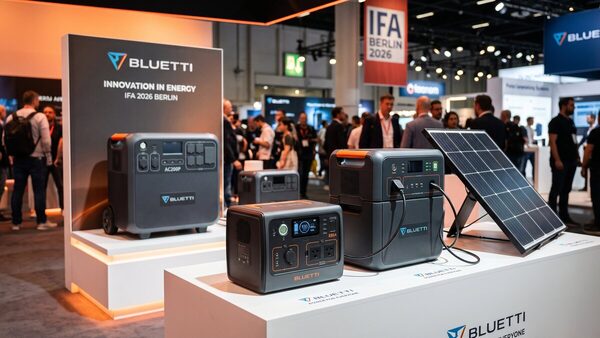
Yes, and it's a first for the brand. DJI showed off this new system at IFA 2026, the major Berlin consumer electronics show that ran from September 3 to 8 on the DJI stand (Hall 20-129), with a dedicated media launch on September 3. Best known for drones and, more recently, its Power line of portable power stations, the Chinese company is now stepping into balcony solar, a segment so far dominated by EcoFlow, Anker and Bluetti.
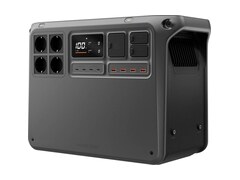
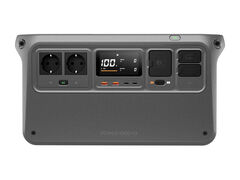
The system isn't built around a new device: it's the DJI Power 2000, already in our catalogue and already reviewed in our full assessment. This 2048 Wh station, rated for 3000 W continuous output and expandable up to 22,528 Wh with add-on batteries, becomes the storage core of a balcony solar kit, following the same plug-in logic already used by millions of households across Europe.
How does this system work with the Power 2000?
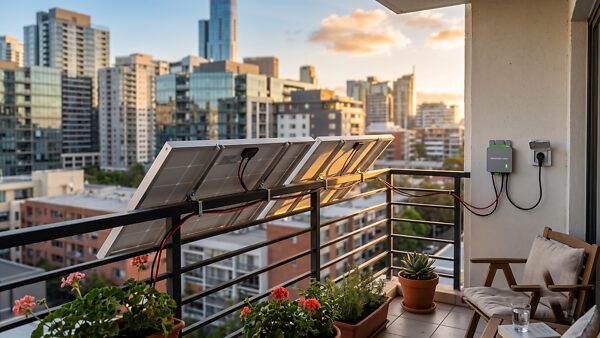
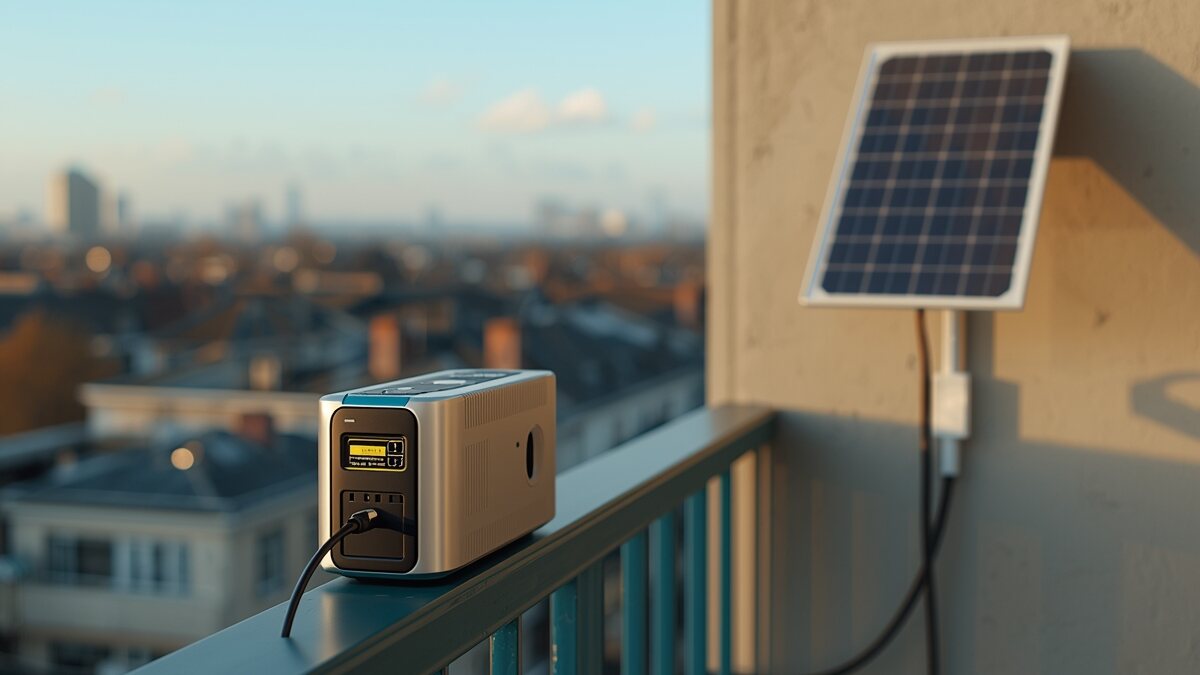
The principle mirrors classic balcony solar, with the Power 2000 added into the mix. Solar panels feed a microinverter that converts the panels' DC output into 230 V AC, then feeds that power into the home through a standard wall outlet, in a so-called grid-tied setup. The Power 2000 sits in that chain to store any surplus produced during the day and release it later, typically in the evening, instead of letting it go to waste.
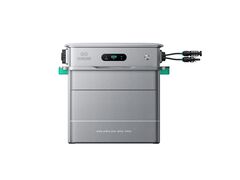
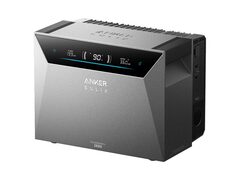
On paper, this is exactly what systems like the Zendure SolarFlow or the Anker Solix Solarbank already promise: pairing panels, a microinverter and a battery to smooth solar output across the day. The difference is that DJI is repurposing a station built for high-power, on-the-go use, rather than a battery designed solely for home use.
What's still missing: DJI hasn't disclosed the panel wattage supplied, the exact microinverter model, or the price of the full kit. The renders shown on the stand are enough to grasp the concept, not to judge value for money.
680 euros a year in savings: a figure to take with a pinch of salt
On its stand, DJI floated an estimated saving of 680 euros a year. That figure rests on two assumptions set by DJI itself: annual solar output of 2,160 kWh and a self-consumption rate of 90%.
| System | Claimed output | Claimed savings |
|---|---|---|
| Typical 400 to 800 W balcony kit | 300 to 950 kWh/year | 60 to 180 €/year |
| DJI Power 2000 kit (DJI's own assumption) | 2,160 kWh/year | 680 €/year |
Producing 2,160 kWh a year implies a noticeably larger setup than a simple 400 to 800 W kit clipped to a railing, meaning more panels, better sun exposure, or both, none of which DJI has specified in terms of surface area or peak wattage. DJI itself notes that the calculation excludes equipment cost, installation, maintenance, taxes and any incentives: it's a manufacturer's marketing figure, not an independent measurement, and it says nothing about how long the kit would actually take to pay for itself.
Germany first, France and Spain to follow
Rollout begins in Germany, the historic home of balcony solar (the well-known Balkonkraftwerk), where DJI will offer the kit bundled with the Power 2000. Grid-tied firmware is reportedly also enabled for France and Spain, which suggests a fairly quick expansion to those two markets, though no firm timeline has been given.
This ties into what we've already covered in our balcony solar plug-and-play guide: a setup that feeds electricity into a home's wiring generally needs to be declared to the local grid operator before it's switched on, and the hardware has to meet local electrical standards, which vary from one European country to another. Nothing suggests DJI is bypassing these rules, but the exact requirements per market still need to be confirmed by the manufacturer.
Why this mode stays locked in the United States
The US market isn't part of this launch, at least not for the grid-tied feature. Grid-tied mode is not enabled on units sold in the United States, for two separate regulatory reasons. First, an inverter that feeds power back into the grid needs UL 1741 certification plus approval from the local utility, a separate process from standard FCC authorization. Second, devices that include a Wi-Fi chip fall under FCC rules that block certain network functions by default until they're specifically cleared.
In other words, this isn't a business choice by DJI but a US regulatory constraint, the same one that more broadly slows the growth of balcony solar in the US compared with Europe.
Our take: a sensible move, still short on details
The logic behind DJI's move makes sense: the Power 2000 is a versatile station that's already well positioned in its segment, as detailed in our full assessment, and balcony solar is a fast-growing market across Europe. Repurposing an existing station instead of developing a dedicated battery is a coherent bet, one that could benefit owners who already have the device.
That said, the IFA 2026 announcement still leaves plenty of blanks: no price, no panel wattage, no microinverter model. The 680-euro annual savings figure, appealing on paper, rests on an output assumption that few balconies could realistically reach. We'll update this article as soon as DJI shares more details, and will keep an eye on actual availability in each market.