
What the regulation actually says
The instrument is called The Plugs and Sockets etc. (Safety) Regulations 1994 and Electricity Safety, Quality and Continuity Regulations 2002 (Amendment) Regulations 2026, reference SI 2026/848. It came into force on 27 August 2026.
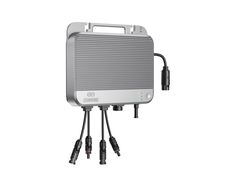
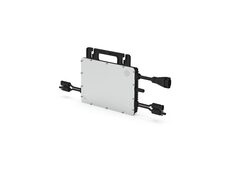
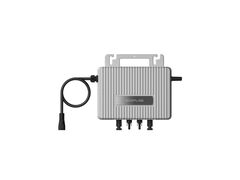
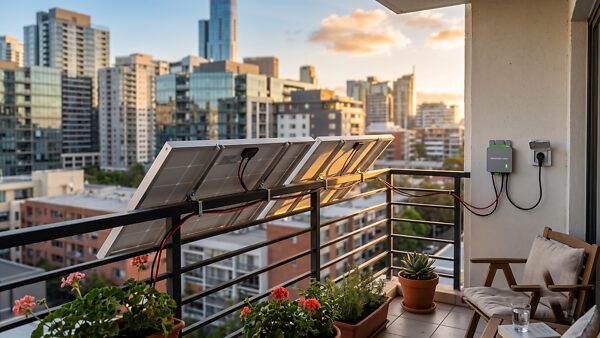
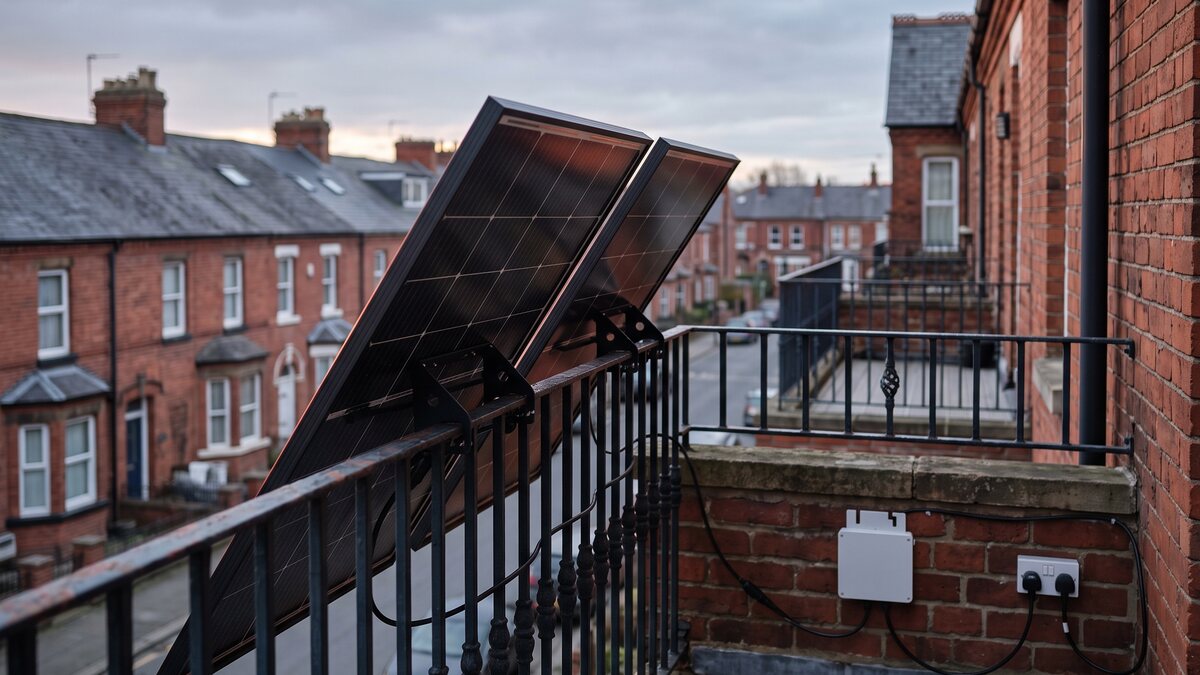
It creates a new legal category, the plug-in microgenerator, defined by four cumulative conditions: generating electricity from the direct conversion of sunlight, connecting to the domestic installation by means of a standard plug and socket, operating in parallel with the distributor's network, and not exceeding 800 watts of alternating current output.
One useful clarification that most coverage has missed: the 2 000 W panel limit widely quoted does not appear in the regulation. It comes from a separate document, the Plug-in Solar Device Interim Product Specification version 2, published on 16 July 2026, to which the regulation refers for product compliance. Another legal detail: the article carrying this definition extends only to England, Wales and Scotland. Northern Ireland is outside it.
The clause that rules out the battery
This is the most consequential passage, and the least discussed. To fall within the definition, the device must be:
not designed to import electrical energy from a low voltage consumer's installation for the purpose of storing energy for later supply, other than for control or auxiliary functions
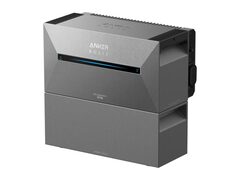
In plain terms: a kit that draws current from the home's installation in order to store it and give it back later does not qualify for the simplified regime. The closing caveat, other than for control or auxiliary functions, permits the small internal cell that runs a micro-inverter's electronics, not a domestic storage module.
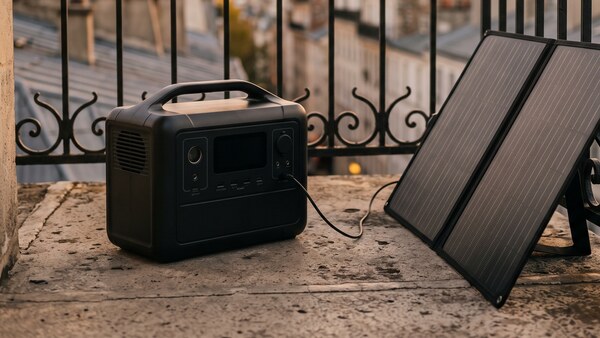
This does not make balcony batteries illegal in the UK. It means they fall outside the simplified regime: they then follow the ordinary connection procedures, with the paperwork and professional involvement that implies. The promised simplicity applies only to a kit without storage.
Five countries, five regimes
This is where the subject gets interesting: plug-in solar is governed by national texts, and two neighbouring countries can reach the same ceiling by opposite routes.
| United Kingdom | Germany | France | Italy | Spain | |
|---|---|---|---|---|---|
| Output power | 800 W | 800 VA | Unsettled | 800 W | 800 W exported |
| Panels | 2 000 W (specification) | 2 000 Wp | Unsettled | Unsettled | Unsettled |
| Storage | Outside the regime | Not excluded | Unsettled | Unsettled | Unsettled |
| Paperwork | Notify the operator | Federal register only | Declare to the operator | Notify the distributor | None below 800 W |
| Since | 27 August 2026 | 16 May 2024 | Undated | 2024 | RD 244/2019 |
Germany is the furthest ahead and the clearest: since 16 May 2024, paragraph 8(5a) of the renewable energy act sets 800 VA of export for 2 000 Wp of modules, and registration with the network operator has been removed entirely. Only the federal register entry remains. Spain is the most permissive at the gate: below 800 W exported through a socket, no step with the distributor at all. Italy moved these installations into a free-activity regime, with no planning permission and a simple notification to the distributor.
And France? A figure nobody can source
Search for French balcony solar rules and you will read the same thing everywhere: the ceiling is said to be 800 Wp, set by a decree of 6 October 2024. We wanted to cite that text. We could not find it.
The 6 October decrees present on Légifrance concern electricity purchase conditions for installations up to 500 kilowatts, an unrelated subject. Neither the grid operator's own page on self-consumption nor photovoltaique.info, the sector's non-commercial reference, mentions this 800 Wp ceiling.
What can be stated, on the other hand: declaring the installation to the grid operator before commissioning is mandatory, free and done online. And the genuinely enforceable constraint on a domestic connection is not a production ceiling but the wiring standard, which governs what a socket circuit can carry. We would rather say it that way than repeat a figure we cannot tie to a text.
What it changes if you are buying now
If you are in the UK, the change is real: a kit certified against the official specification can be set up and plugged in yourself, with no electrician in the standard case. Two reflexes all the same. First check that the product explicitly claims compliance with the July 2026 specification, without which it stays outside the regime. Then obtain written consent from your landlord or freeholder before drilling into a wall or a railing, on which the regulation grants no exemption.
If you are aiming at an installation with a battery, the UK simplified regime does not apply and you go through the classic route. In Germany, by contrast, nothing stands in the way, which explains the gap in product offering between the two markets.
One last point, valid everywhere: the micro-inverter must cut its output automatically when the grid goes down. This anti-islanding protection is not a comfort feature, it is what protects the engineers working on the line. It appears in every regulation cited here, without exception.