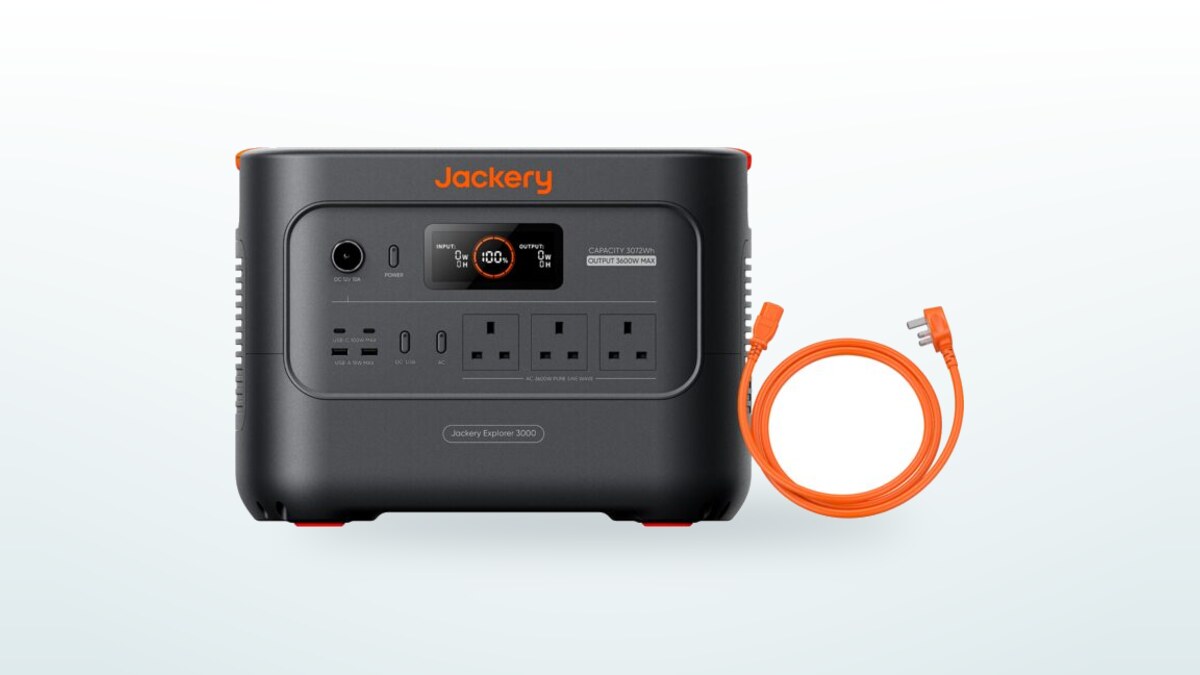
Usable capacity estimated at 82 to 85 %, never independently measured
Of the claimed 3072 Wh, the capacity actually usable would sit between 82 and 85 %, or roughly 2520 to 2620 Wh across the available estimates. These two figures, obtained through different methods, stay close to each other and consistent.
No independent measurement with a complete protocol (timed discharge, inline wattmeter) has been found for this specific model. The figures cited above are estimates, not lab measurements: best treated as a plausible order of magnitude rather than a figure verified to the exact percentage point.
One point deserves clarifying: under a very small load (a simple desk fan, for example), the loss percentage climbs much higher, past 70 %. This figure does not reflect poor conversion efficiency, but the inverter's own standby draw, which weighs proportionally heavy against a tiny load. It should not be confused with the overall efficiency under normal load, which is noticeably better.
27 dB and 30 dB: two different measurements, not a contradiction
The datasheet lists two figures that can look contradictory: 27 dB and 30 dB. These are actually two different conditions: 27 dB corresponds to discharge at 20 % battery charge and 25 °C ambient, while 30 dB corresponds to standard mains charging.
A quiet charging mode, switchable from the app, drops below 27 dB at the cost of a slower recharge. Fast charging, by contrast, pushes the fan noticeably higher: in practice, the range runs from 27 dB at the end of charge to around 43 dB during fast charging, with no named sound level metre or independent measurement confirming these figures; they remain reference points rather than strict lab data.
7200 W peak: protection trips after 25 seconds at 5000 W
The 7200 W peak rating is meant to absorb the startup surges of the most demanding appliances. The station absorbs a combined power draw of up to 5039 W without cutting out immediately.
An important nuance: the inverter's protection trips after about 25 seconds at that load level, whether from a normal high-load safety cutoff or from the connected appliances' own duty cycle. How the station holds up at the very top of its peak range, toward the advertised 7200 W figure, remains unconfirmed.
Solar input: 1000 W, not 800 or 1400
Maximum solar input power, panels alone, is 1000 W, split across two combined ports (16 to 60 V, 12 A each). A full solar charge under these conditions takes about 3h30.
This 1000 W figure needs to be kept separate from another model in the same brand's lineup, the Explorer 3000 Pro, whose solar input reaches 1400 W: the two stations carry very similar names but different specifications, a common mix-up to avoid before buying. No mode combining mains and solar to exceed 1000 W has been confirmed; a shorter hybrid charging time does exist, but that is a reduced duration, not a higher solar power figure.
No built-in wheels: a trolley is sold separately
At 27 kg, the Explorer 3000 v2 is carried by a handle, but has no built-in wheels. A folding trolley dedicated to this model does exist in the manufacturer's catalogue, but as a separate accessory, not included with the base unit.
This is a point worth knowing before buying, especially since other stations in this capacity range sometimes include wheels as standard. Portability stands out as this specific model's weak point when set against several other stations, consistent with the lack of built-in wheels.
The folding trolley sold as an accessory is rated for a load capacity comfortably above this station's weight. Budget for this extra cost, or plan on carrying it between two people over a distance, rather than defaulting to built-in wheels as its marketing sometimes seems to suggest.
20 ms backup switchover: a manufacturer figure, not independently verified
In the event of a mains outage, the station switches over to its own power. The manufacturer states a transfer time of 20 ms, in theory fast enough to avoid restarting a computer or an internet router.
No independent measurement with a named instrument has been found to verify this figure to within a tenth of a millisecond, whether for this model or for most of its direct rivals. This is a trait common to this entire product category rather than a weakness specific to this station, but it remains data to be taken for what it is: a stated specification, not a confirmed measurement.
Three mains sockets, two 100 W USB-C ports
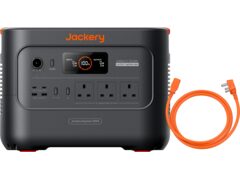
On the output side, the station offers three mains sockets, two USB-C ports delivering up to 100 W each, two USB-A ports at 18 W, and a 12 V DC car-lighter-style output at 120 W for automotive or camping gear.
The stated operating range spans -15 °C to 45 °C on discharge, and 0 °C to 45 °C on recharge, a fairly wide window that covers outdoor winter use well.
Home backup, job sites, events: power comes first
For home backup, the 3600 W continuous rating covers nearly every household appliance running at once, refrigerator, freezer, pump, and large appliances included, with a backup switchover that in theory protects sensitive equipment during an outage.
On a job site or at an outdoor event, silent operation and the absence of fumes make it a credible alternative to a petrol generator, provided you accept carrying it rather than rolling it from one spot to another.
108 minutes for a full charge, a genuine strength
A full mains recharge, from 0 to 100 %, is rated at 108 minutes (1h48), a fast figure for a 3072 Wh capacity. Unlike other figures covered in this review, this one stays consistent wherever it appears, with no nuance or contradiction to flag.
This level of speed makes home backup use easier: the station can be topped back up between two closely spaced outages without tying up a whole evening.
5-year warranty: 3 base years, 2 more with registration
The warranty shown as 5 years actually breaks down into 3 base years, plus 2 additional years granted after registering the product on the manufacturer's website (serial number, proof of purchase). So this is not a 5-year warranty granted automatically at purchase.
No precise deadline for completing this registration appears in the manufacturer's documentation: better to take care of it soon after purchase than to put it off.
≈1599 €: a price that lives on near-permanent discount
The going price for the unit alone is around 1599 € including tax, on both the official site and Amazon. The reference list price shown sits around 2499 €, but discounts of 30 to 40 % are applied on a near-continuous basis: the full price is almost never what actually gets paid.
One thing to watch when buying: an offer at 1799 € also exists on the official site, but it corresponds to a bundle including a solar panel, not the unit alone; do not confuse the two when comparing prices. This price sits at the European average, neither the cheapest market (Germany does better, around 1390 €) nor the most expensive (the UK shows noticeably higher prices).
Available from the manufacturer and Amazon, but not through general mass retailers
The product is well stocked, through the manufacturer's official site and Amazon. It is, however, absent from large general retailers, which carry other product lines from the same brand rather than this specific model.
This is not an issue for the purchase itself, but it limits the chances of seeing the unit in person before ordering.
No localized on-site support, email support at the European level
Support operates at the European level, by email and through a centralized returns portal, with no phone number or dedicated local entity identified.
No dated account of this model regarding a warranty repair has been found: this is a point still lacking material rather than a negative signal, given that the product is still relatively new to this market.
Few negative signals specific to this model
The brand does have general friction points unrelated to this specific model's hardware (delivery delays, customer service seen as room for improvement, disagreements over promotional offers): nothing specific to a hardware failure in normal use on this model has been found to date.
Combined use of several high-power appliances (induction hobs, a kettle, power tools) stays consistent with the stated output power.
This finding should be taken with the caution warranted for a product that is still relatively new to this market: long-term reliability cannot yet be firmly established.
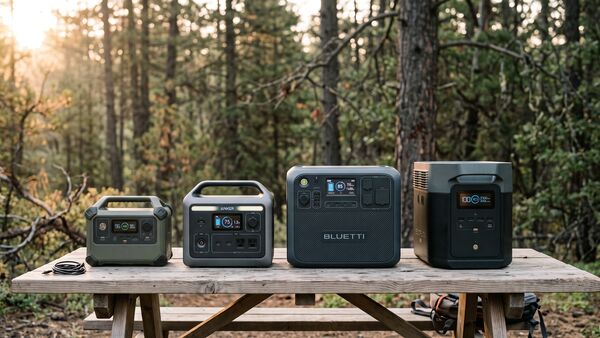
Up against the EcoFlow Delta Pro and the Bluetti AC200L
In the very-high-capacity segment, two references stand out as alternatives to the Explorer 3000 v2: the EcoFlow Delta Pro and the Bluetti AC200L.
| Criterion | Jackery Explorer 3000 v2 | EcoFlow Delta Pro | Bluetti AC200L |
|---|---|---|---|
| Capacity | 3072 Wh | 3600 Wh | 2048 Wh |
| Power | 3600 W (7200 W peak) | 3600 W | 2400 W |
| Weight | 27 kg | 45 kg | 28 kg |
| Expandable | No | Yes | Yes (up to 8192 Wh) |
Against the Delta Pro, the Explorer 3000 v2 stands out with a noticeably lower weight (27 kg versus 45 kg) and faster recharging, but offers a slightly lower base capacity and no expansion. The Bluetti AC200L stays lighter at a comparable, expandable capacity, but is noticeably less powerful in output.
Who it suits, and who it does not
It suits anyone looking for a large, mostly stationary energy reserve, with particularly fast mains recharging, and no need to expand capacity beyond the base 3072 Wh.
It does not suit anyone counting on built-in wheels to move it regularly (budget for the separate accessory, or carry the 27 kg by hand), nor anyone who wants to buy from a French general retailer rather than direct or through Amazon.