
Jackery Explorer 2000 Plus: our full review

The Explorer 2000 Plus remains, several years after launch, one of the most accomplished expandable stations in its category: efficiency measured among the best of those compared, 3000W held under heavy loads, generous solar input. Its real point of caution today is no longer technical but commercial: Jackery has pulled it from sale in France and the UK, while continuing to sell it new in Germany. A situation worth knowing before searching for one.

Our rating
4.3/5
Capacity and efficiency: 4.4 out of 5 (weighting 25%)Capacity4.4Delivered power: 4.5 out of 5 (weighting 25%)Power4.5Recharging: 4.3 out of 5 (weighting 15%)Recharging4.3Ports and control: 4.1 out of 5 (weighting 15%)Ports4.1Build and endurance: 3.9 out of 5 (weighting 12%)Build3.9

How is this rating calculated?

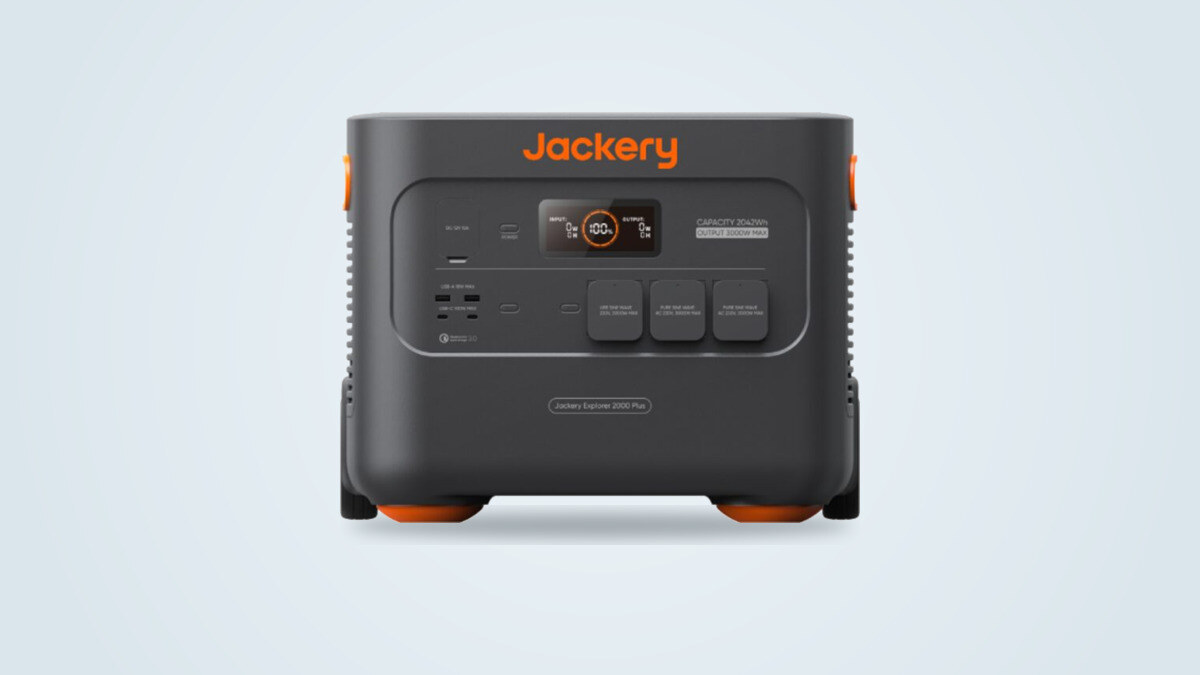
Jackery Explorer 2000 Plus power station on wheels, light background

The essentials

On the technical side, the Explorer 2000 Plus remains one of the most accomplished expandable stations Jackery has built: its full-cycle efficiency sits around 83 %, among the best seen in its category, its 3000W holds under real heavy loads (induction hob, angle grinder), and its 1400W solar input far exceeds that of its own successor. Its build has one clearly identified weak point: the wheels and telescopic handle, not very sturdy on uneven ground. The most important point to know today concerns availability: Jackery has pulled this model from sale in France and the UK (a definitive stock-out announced by the brand itself), while continuing to sell it new in the German market. In France, it therefore remains accessible only through leftover retailer stock. For anyone who finds one at a fair price, the technical qualities remain real; for a guaranteed new purchase, the market question comes before the technical one.

Strengths

  • Full-cycle efficiency measured around 83 %, a figure among the best seen in its category of expandable stations
  • 3000W continuous (6000W peak) confirmed under combined real heavy loads, without flinching
  • 1400W solar input, well above the 400W of its own non-expandable successor
  • Expandable up to 12 kWh per unit (5 add-on batteries), 24 kWh by pairing two stations
  • Mains recharging consistent from one reading to the next, at around 95 minutes for a full charge

Limitations

  • Pulled from new sale in France and the UK by Jackery itself, available only through leftover retailer stock
  • Wheels and telescopic handle not very sturdy on uneven ground
  • 27.9 kg, a real weight to reckon with despite the wheels
  • Its direct successor (Explorer 2000 v2) is not expandable, a real step back for anyone who valued that criterion
Jackery Explorer 2000 Plus: see the full details and price →

Efficiency among the best measured in its category

Over a full cycle (charge to 100 % then measured discharge), the Explorer 2000 Plus returns around 83 % of the energy drawn to recharge it, the best result among the stations compared at the time. This is a genuine strength, one that sets this station apart from several direct rivals where the gap between advertised capacity and genuinely usable energy runs wider.

3000 W
Continuous power
2042 Wh
Base capacity
12 kWh
Max expansion (1 unit)
27.9 kg
Weight

Power and solar input: a clear edge over the successor

The 3000W continuous rating (6000W peak) holds under combined real heavy loads, induction hob, angle grinder, fridge and lighting running at once, without flinching. Three devices plugged in simultaneously run without issue; a fourth trips the station into fault mode. The solar input, capped at 1400W across two DC inputs, far exceeds the 400W of the Explorer 2000 v2 that succeeds it: a clear step back for that successor on this specific point, worth knowing if solar use factors into the decision.

Expandability, the argument that sets it apart from its successor

Up to five add-on batteries take a single unit to 12 kWh, and pairing two Explorer 2000 Plus stations reaches 24 kWh at 6000W and 240V. This is the central argument of this lineup, and a real gap versus the Explorer 2000 v2 that replaces it commercially: the latter is not expandable, a step back acknowledged by Jackery itself, presenting it solely as “a 2 kWh solution”, with no mention of expandability.

Availability: pulled from sale in France, still sold in Germany

This is the most important point to know before searching for one. Jackery's French site displays an explicit message: this product is out of stock and will not be restocked, with a direct redirect to the Explorer 2000 v2 for “a 2 kWh solution”. The British site is even more categorical, describing a now discontinued model and a new, improved version announced for later. In France, the Explorer 2000 Plus can therefore only be bought new through leftover retailer stock, at the last price the brand displayed before withdrawing it, around €1,799.

The picture differs elsewhere, though: Jackery's official German store continues to sell this model new, with no mention of discontinuation, at a price observed around €1,049. A phase-out that therefore appears to be rolling out market by market rather than decided worldwide in one go.

Build: an identified weak point on the wheels

The plastic wheels and telescopic handle are not very sturdy, particularly on uneven ground: a real build point to know for regular use off flat surfaces. The screen also remains hard to read in direct sunlight. No recurring hardware fault (fan, screen, management electronics), however, has been identified beyond these design points.
The rating in detail

Our rating
4.3/5
Capacity and efficiency 4.4
Delivered power 4.5
Recharging 4.3
Ports and control 4.1
Build and endurance 3.9
Noise not measured
Jackery Explorer 2000 Plus: see the full details and price →

The product and its alternatives

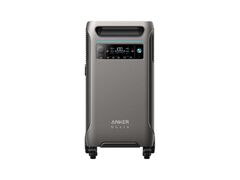
Anker SOLIX F3800

Anker SOLIX F3800

See price (11)

3840Wh, 6000W and up to 26.9kWh per unit with BP3800 batteries (53.8kWh combined): the Anker power station built to back up an entire home.

View product
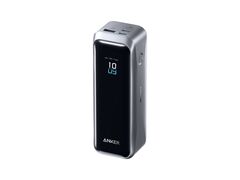
Anker Prime 20100 (220W)

Anker Prime 20100 (220W)

See price (15)

220W total output and 140W per USB-C port: the Anker Prime 20100 charges a MacBook Pro M4 to 50% in 28 minutes, and it stays flight-approved too.

View product

Need help choosing?

Frequently asked questions

Not directly from Jackery: the brand displays a definitive stock-out on its French site. It remains available through leftover stock at some retailers, at the last price displayed before withdrawal, around €1,799. It continues, however, to be sold new in Germany.

The v2 is lighter but not expandable, with power and solar input scaled back (400W versus 1400W solar). The Explorer 2000 Plus remains superior in power, solar input and especially expandability, up to 24 kWh by pairing two stations.

Full-cycle efficiency sits around 83 %, the best result among the stations compared at the time.

On mains power, a full charge takes around 95 minutes. On solar, a single 100W panel is not enough for real-world use, better to aim for at least 200W of panels.

Up to 12 kWh by adding five add-on batteries to a single unit, and up to 24 kWh by pairing two Explorer 2000 Plus stations, with output raised to 6000W and 240V.