
Anker SOLIX F3800: our full review

The SOLIX F3800 lists 3840 Wh and 6000W continuous, expandable up to 26.9 kWh per unit. Its output power lives up to its promise without flinching, confirmed under real heavy loads. Its real weak point lies elsewhere: conversion efficiency, measured well below the advertised capacity, particularly under light loads, a point the marketing pitch does not highlight.

Our rating
4.1/5
Capacity and efficiency: 3.7 out of 5 (weighting 25%)Capacity3.7Delivered power: 4.5 out of 5 (weighting 25%)Power4.5Recharging: 4.1 out of 5 (weighting 15%)Recharging4.1Ports and control: 4.3 out of 5 (weighting 15%)Ports4.3Build and endurance: 4.1 out of 5 (weighting 12%)Build4.1Noise: 4.1 out of 5 (weighting 8%)Noise4.1

How is this rating calculated?

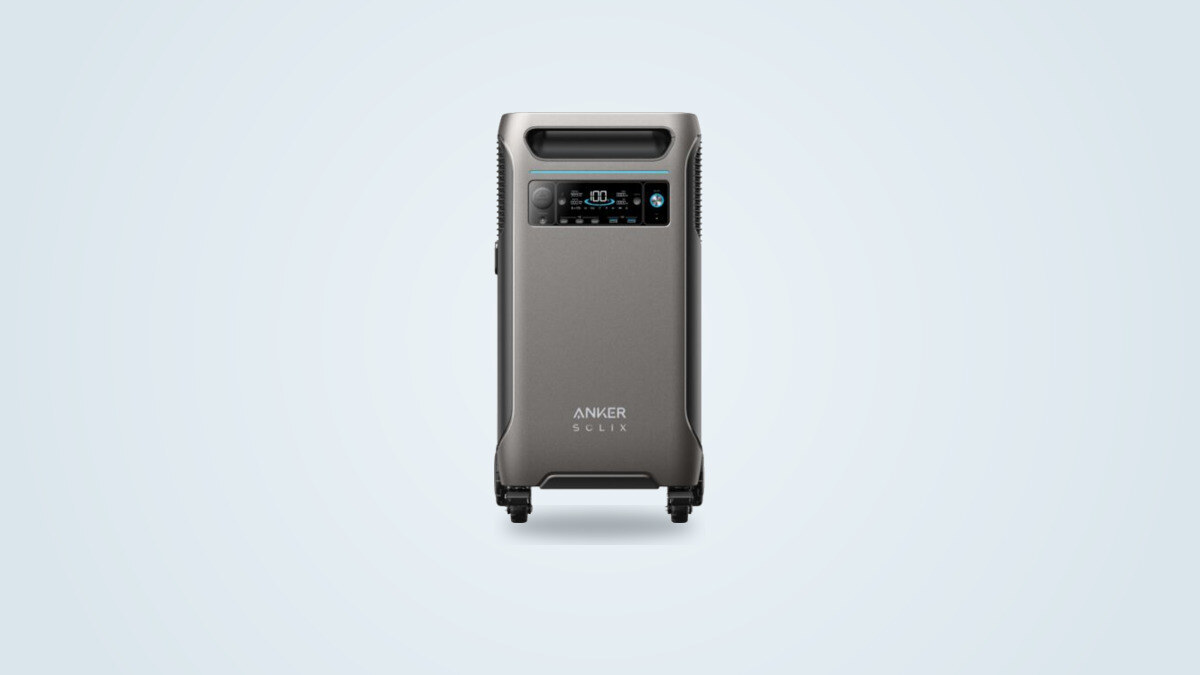
Anker SOLIX F3800 power station on wheels, light background

The essentials

The SOLIX F3800 delivers exactly where it matters most: its 6000W continuous output runs a drill, a vacuum cleaner, a toaster and a work light simultaneously without flinching, and its expandability up to 26.9 kWh per unit (53.8 kWh by pairing two stations) remains among the most generous on the market. The point worth knowing before buying concerns efficiency: over a full cycle, the energy actually usable comes to around 62 % of the electricity drawn to recharge it, and that efficiency drops noticeably under light loads, around 65 % at 200W versus over 85 % at 2000W. This is not a flaw unique to this particular station, the pattern shows up elsewhere in the category, but the gap measured here is more pronounced than on some direct rivals. At 60 kg, moving it into a car boot is a two-person job rather than a solo one. For a massive, expandable power reserve the F3800 remains solid; for mostly light-load use, efficiency deserves a place in the calculation.

Strengths

  • 6000W continuous confirmed under a variety of real loads (drill, vacuum cleaner, toaster, work light) without flinching
  • Expandable up to 26.9 kWh per unit via BP3800 batteries, and 53.8 kWh by pairing two F3800 stations
  • Fast mains recharging, a full charge in a little under two hours at full power
  • Reliable UPS function, no missed switchover found in the available data
  • No recurring structural fault or safety recall identified for this model

Limitations

  • Full-cycle efficiency measured at around 62 % of the electricity drawn converted into genuinely usable output
  • That efficiency drops noticeably under light loads: around 65 % at 200W versus over 85 % at 2000W, the opposite of what intuition would suggest
  • 60 kg to move, generally a two-person job to load it into a vehicle despite the wheels
  • No real-world solar input data was found measured for this exact model
  • No major independent testing lab (consumer-organization type) has published a full test of this model to date
Anker SOLIX F3800: see the full details and price →

6000W, power confirmed under real loads

The 6000W continuous rating (9000W peak) does not stay a spec-sheet number: a series of combined real loads, drill, vacuum cleaner, toaster and work light, runs without the station flinching: it is the strongest point of this station.

6000 W
Continuous power
3840 Wh
Base capacity
26.9 kWh
Max expansion (1 unit)
60 kg
Weight

Conversion efficiency, the real figure to know

Over a full cycle (charge to 100 % then measured discharge), the energy genuinely usable at the output represents around 62 % of the electricity drawn to recharge it from the mains. A separate measurement, at varying charge and discharge power, fills out the picture: charging efficiency improves at low power (up to around 95 % at 200W, versus 87.5 % at full power), but discharge efficiency follows the opposite trend and drops at low power (around 65 % at 200W, versus over 85 % at 2000W). In other words, the F3800 is built to be drawn on at high power: that is where it returns the most of what it has stored. This pattern of efficiency varying with load shows up elsewhere in the category of large expandable stations, so it is not an isolated flaw, but the gap measured here, especially at low power, is more pronounced than on some direct rivals in the same class.

Expandability, the lineup's central argument

This is where the F3800 truly stands out: up to six Anker SOLIX BP3800 batteries (3840 Wh each, hot-swappable) take a single unit to 26.9 kWh, and two paired F3800 stations reach 53.8 kWh at 12,000 W. This granularity in 3.84 kWh steps allows the investment to be precisely matched to actual needs, without buying a whole new station at every capacity tier.

Mains recharging and noise level

On mains power (up to 2990W in Europe, a mechanical limit tied to plug ratings, different on the North American market rated at 120V), a full charge takes a little under two hours. On solar input, the spec sheet claims up to 2400W across two MPPT trackers, but no independent real-world measurement was found to confirm this figure for this exact model. Noise level reaches around 42 dB at one metre under a sustained 3000W load, a reasonable level for a station of this power class.

Reliability and transport

No recurring structural fault or safety recall has been identified for this model. Rare cases of buzzing from a BP3800 expansion battery when a heavy load starts, caused by a vibrating internal part, remain isolated rather than a trend. At 60 kg, the station moves well on flat ground thanks to its wheels and telescopic handle, but loading it into a car boot generally takes two people. No major independent testing lab (consumer-organization type) has published a full test of this exact model to date.
The rating in detail

Our rating
4.1/5
Capacity and efficiency 3.7
Delivered power 4.5
Recharging 4.1
Ports and control 4.3
Build and endurance 4.1
Noise 4.1
Anker SOLIX F3800: see the full details and price →

The product and its alternatives

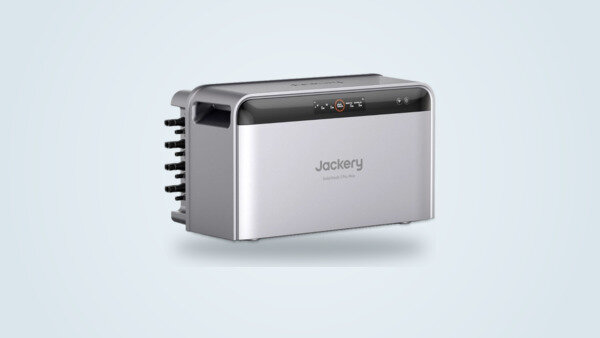
Jackery Explorer 2000 Plus

Jackery Explorer 2000 Plus

See price (8)

Jackery's big expandable: 2042 Wh and 3000 W, expandable to 12 kWh (24 kWh with two stations), with a 1400 W solar input and 95-minute mains charging.

View product
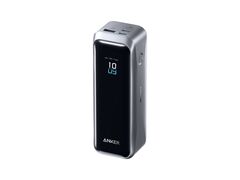
Anker Prime 20100 (220W)

Anker Prime 20100 (220W)

See price (15)

220W total output and 140W per USB-C port: the Anker Prime 20100 charges a MacBook Pro M4 to 50% in 28 minutes, and it stays flight-approved too.

View product

Need help choosing?

Frequently asked questions

Over a full charge-then-discharge cycle, the energy genuinely usable represents around 62 % of the electricity drawn to recharge it. This efficiency also varies with the power drawn: it drops notably on low-power discharges, around 65 % at 200W versus over 85 % at 2000W.

Yes. A series of combined real loads (drill, vacuum cleaner, toaster, work light) runs without the station flinching.

By adding up to six Anker SOLIX BP3800 batteries (3840 Wh each), a single unit reaches 26.9 kWh. By pairing two F3800 stations, capacity climbs to 53.8 kWh at 12,000 W.

On flat ground, the wheels and telescopic handle make it easy to move despite its 60 kg. To load it into a vehicle's boot, plan on being two people.

Yes, an F3800 Plus variant exists with solar input raised to 3200W and an extra RV port, different from the standard F3800 covered in this review. Do not confuse the two when comparing prices or specifications.