
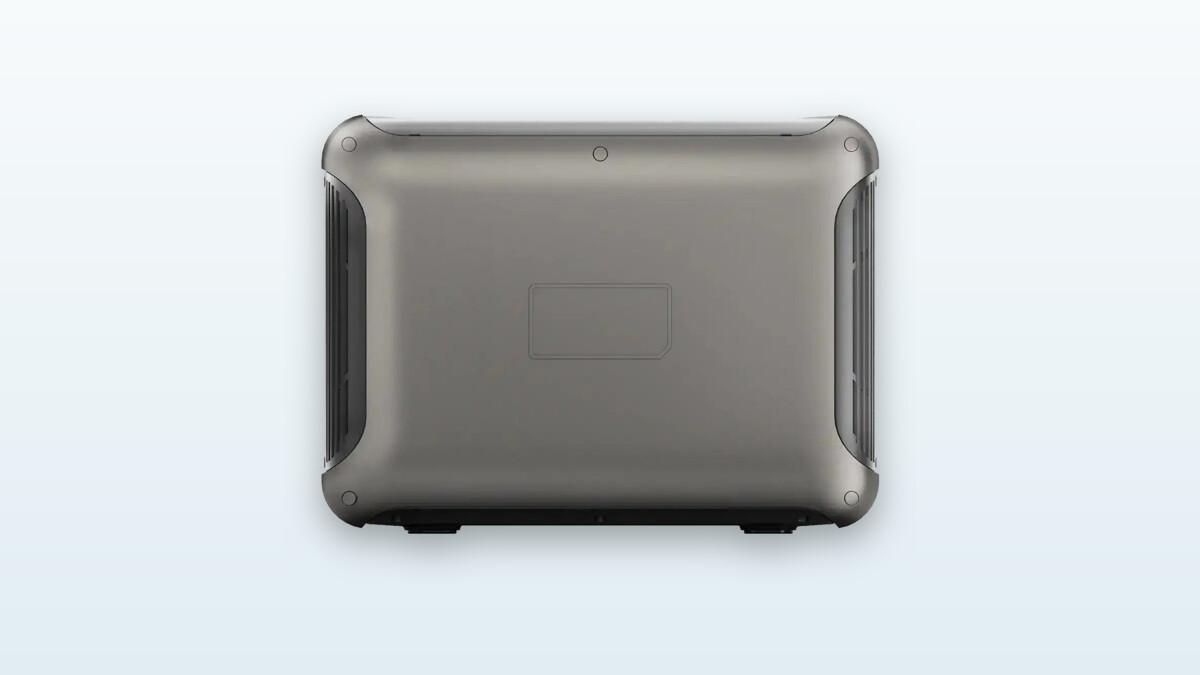
On paper: power and speed at the best price
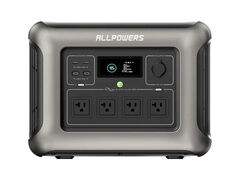
With 1152 Wh of LiFePO4 capacity, an output of 1800 W continuous (3000 W peak) and a price observed at 569 €, the Allpowers R1500 targets the power-to-price ratio. It combines four mains sockets, two USB-C ports up to 100 W, two USB-A ports and two built-in induction chargers. Mains charging reaches 80 % in the advertised 45 minutes, and capacity is expandable up to 4608 Wh with additional B1000 batteries.
The most serious issue: solar charging that degrades over time
A degradation of solar charging after several months of normal use affects units on two different markets: the charge drops sharply or stops on the solar side, with the panels otherwise verified to be working, while mains charging continues to operate normally on the same units. This is not a single case confined to one place, which makes it a genuine point of caution rather than a one-off incident, even though the exact scale of the phenomenon remains impossible to quantify precisely.
A protection that trips on certain devices
An overload protection trigger affects certain devices that draw heavy power during startup, such as a washing machine heating water. This behavior varies with mains voltage: it shows up more often around 240 V than around 220 V, a sensitivity consistent with a stricter protection margin at higher voltage. This is not a flaw that prevents everyday use, but a point worth knowing before plugging in a device with a high startup power demand.
The 5-year warranty: the same catch as the rest of the lineup
The 5-year warranty used as a marketing highlight does not apply automatically. The manufacturer's official documentation places the R1500 in the same extendable warranty category as the rest of the lineup: a no-action baseline of 24 months, extended to 60 months upon online product registration. Refurbished units sold by the manufacturer, meanwhile, only get 24 months with no option to extend. The B1000 expansion battery follows the same rule as the main unit.
The B1000 expansion: a calculation that still adds up
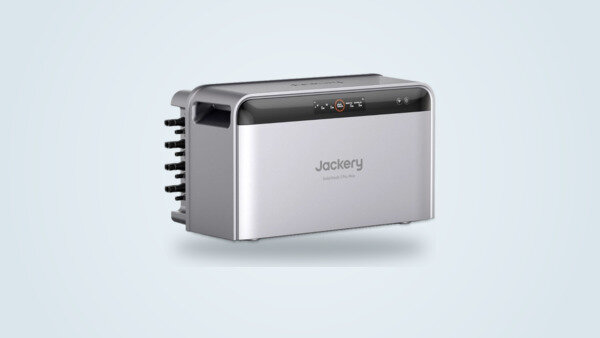
The B1000 expansion battery sells for around 499 € on its own, and the combined R1500 plus B1000 bundle saves around sixty euros compared with buying the two separately. The maximum capacity announced by the manufacturer reaches 4608 Wh with three additional blocks; an earlier version of the documentation capped this expansion at two blocks, a discrepancy that suggests a hardware or commercial update since launch rather than a figure to take at face value without checking at the time of purchase.
Charging: fast, with conditions to respect
The 80 % charge in 45 minutes is consistent with the claim. The 1500 W fast-charge mode, however, requires a dedicated electrical circuit able to sustain the current continuously, without going through a power strip or an extension cord, or the unit automatically switches to a slower charging mode. Past 80 %, input current drops noticeably for the final stretch of the charge, a behavior consistent with LiFePO4 chemistry rather than a flaw. The solar panel cable and the car cigarette lighter cable are not included when buying the unit on its own.
The UPS function: reliable, with a power ceiling worth knowing
The 15 ms backup switchover works reliably, with no erratic behavior noted. One point is worth knowing, however: past a certain power threshold drawn in UPS use, the mains and the battery power the connected device simultaneously until the battery drops to 5 %, rather than relying solely on the mains for as long as it is present. The official documentation recommends plugging in only one sensitive device in UPS use to avoid triggering the overload protection.
Noise and standby draw: two points worth qualifying
Noise level stays moderate under light use, around 40 to 45 dB, and climbs to 50 to 55 dB under full charge. Standby draw is not zero either: it sits between 10 and 15 W when the station stays plugged into the mains, with a fan that can kick in intermittently even with no charge in progress.
Connectivity: the clearest strength
With four mains sockets, two USB-C ports up to 100 W each, two USB-A ports and two built-in induction chargers, the R1500 covers a lot of ground. The mains sockets carry IP44 protection, unlike the USB ports, which have no equivalent protective cover.
The price actually charged
The official price observed is 569 €, against a list price of 1099 €, stable compared with previous readings. Other retailers charge a very similar rate, around 599 €.
Who it suits, and who it does not
It suits anyone looking for high power and fast charging on a tight budget, for van life, home backup or a job site, who charges mainly from the mains.
It does not suit anyone counting mainly on solar charging for extended off-grid autonomy, given the degradation on this specific point, nor anyone planning to plug in devices with a high startup power draw without checking their compatibility beforehand.