
An Xtar charger that doubles as a power bank
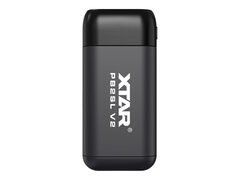
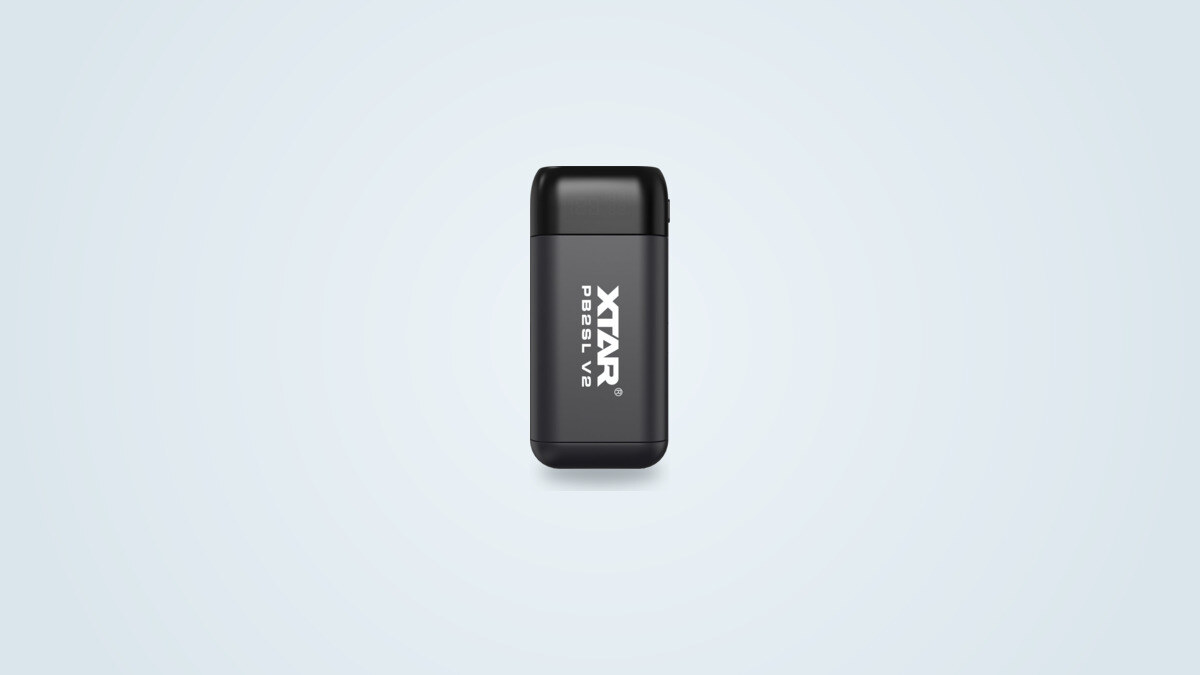
The PB2SL V2 fills a specific niche: charging cylindrical Li-ion cells while being able, once those same cells are charged, to send their energy back out to a smartphone or any other USB device. This V2 replaces the original PB2SL launched in 2023, with reworked electronics and screen.
Four Li-ion cell formats, no NiMH
The two bays accept cylindrical Li-ion/IMR/INR/ICR cells in 18650, 18700, 20700 and 21700 formats, both protected and unprotected. A removable spacer inside the compartment lets you switch between formats, and the two bays are independent: an 18650 and a 21700 can charge side by side without affecting each other. For power bank use, two identical cells remain preferable to a mismatched pair of capacities. This charger, however, covers no NiMH or NiCd chemistry at all: AA or AAA batteries stay out of its reach, unlike a more general-purpose unit.
2A per bay, under two real conditions
Charge current reaches 2A on a single occupied bay, with an end-of-charge voltage of 4.20V (within 0.05V) and a cut-off below 120mA, values in line with standard practice for Li-ion. As soon as both bays are occupied, the default current drops to 1A each: reaching 2A on both at once requires an adapter and cable rated above 18W, plus cells able to deliver at least 7A continuously, a requirement few consumer cells actually meet.
22.5W advertised, 18W shared once both outputs are used
The 22.5W maximum is only available on a single output at a time, over USB-C or USB-A, with a cable and device compatible with PD3.0, QC3.0 or SCP. As soon as both ports are used at the same time, the fast-charge protocols switch off and total power caps at 18W, shared dynamically between the two connected devices. The figure highlighted on the packaging therefore only holds for one use at a time.
What two 21700 cells actually deliver as a power bank
Power bank capacity depends entirely on the cells inserted, a deliberate choice rather than a constraint: worn cells get replaced instead of throwing the whole unit away. In practice, two 21700 cells at 5000mAh each are enough for one full charge of a recent smartphone, not much more. The front cover protecting the two bays is held on by simple magnets with no mechanical lock: it holds up well in everyday use but can pop open under a sudden jolt, for instance at the bottom of a bag.
Reviving a cell that has dropped to 0V
A micro-current activation function attempts to restart cells whose voltage has dropped well below the point where most chargers simply refuse to begin a charge. Once the voltage climbs back to a workable level, the unit resumes a normal charge. This function does not guarantee saving a cell badly damaged by prolonged deep discharge, but it offers an extra chance where a standard charger would give up immediately.
A screen that details each bay, not just an LED
The screen shows voltage, current and charge percentage, refreshing every 10 seconds, with a button to check each bay individually rather than a single combined view. It switches off automatically after 5 seconds when using USB-C or 38 seconds when using USB-A, to save the available energy. The percentage shown can, however, drift by more than 10% from the real charge level, most often reading lower rather than higher: a useful indication for a quick glance, not a precision measurement.
Standard protections, a V2 built to fix the previous one
The unit includes reverse-polarity protection and standard thermal management for this type of fast charging. The previous generation, the original PB2SL launched in 2023, went through cases of dead-on-arrival units, partially failed screen segments and noticeable overheating during two-bay fast charging. This V2 explicitly reworks the electronics and charging logic with that goal in mind, including smart balancing between the two bays. Independent, long-term feedback on this new version, however, remains limited so far.
Compact body, 2-year warranty, a cover worth watching
The PB2SL V2 weighs 85g for 125 x 58 x 28mm, a size that slips into a travel kit easily. The manufacturer warranty runs 2 years, between the IntelliCharger i2's one year and the Smart Charger+'s three years. The removable front cover, already mentioned above, remains the unit's physical weak point: handy for swapping cells, but with no lock, and it can pop open under a jolt.
Up against the other battery chargers in the selection
How does the PB2SL V2 compare with the other two battery and cell chargers already reviewed?
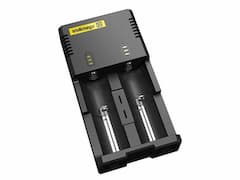
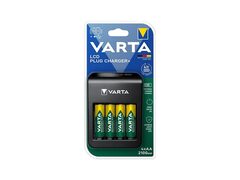
| Criterion | Xtar PB2SL V2 | Nitecore i2 | Varta Smart Charger+ |
|---|---|---|---|
| Formats | Li-ion 18650 to 21700 | Li-ion + NiMH/NiCd, AA to D | NiMH AA/AAA |
| Screen | LCD, voltage/current/% per bay | No (LED) | LCD, status and time left |
| Power bank | Yes, up to 22.5W | No | Backup USB-A output |
| Max current per bay | 2A | 1A alone / 0.5A with both | Not applicable (standard NiMH) |
| Warranty | 2 years | 1 year | 3 years |
The PB2SL V2 is the only one of the three that also works as a power bank and the only one showing voltage and current per bay. It pays for that versatility with narrower compatibility: no NiMH, and none of the smaller 10440/14500/16340 formats the i2 accepts. For mixed use that includes AA batteries, the i2 or the Smart Charger+ remain more relevant.
Who the PB2SL V2 is for
This charger targets a specific profile: already equipped with 18650 or 21700 cells for a torch, an e-cigarette or another device, and interested in the option of reusing them as a power bank while travelling. For a household that mostly recharges AA/AAA batteries, a model like the Nitecore i2 or the Varta Smart Charger+ remains more suitable. For anyone chiefly after high output power without caring about cell format, a standard power bank will go further.