
How we picked
Swapping a lead-acid battery (flooded, AGM or gel) for a 12V LiFePO4 lithium one is one of the most cost-effective upgrades for a van, a boat, a solar setup or a backup power system: same case size, roughly a third of the weight, and genuinely usable capacity that changes everything day to day. But it is not a straight like-for-like swap: charge voltage, cold-weather behaviour and the intended use, starting or deep-cycle, are not negotiable. Our selection criteria:
- Genuinely usable capacity: a lead-acid/AGM battery only tolerates around 50% discharge without damage, versus up to 100% for almost every modern LiFePO4. At equal rated Ah, lithium therefore delivers close to double the real-world energy.
- The BMS and its protections: low-voltage and overcurrent cutoffs, and ideally a low-temperature cutoff or built-in heater. This is what separates a reliable battery from a bare stack of cells.
- Compatibility with the existing setup: a charger or solar controller built for lead-acid does not necessarily deliver the right voltage profile for lithium, more on this below.
- Intended use: a deep-cycle house/leisure battery, or a starting battery that needs a brief, very high current. These are not the same product.
Four picks, from the compact format to the large expandable pack.
Why replace a lead-acid battery with LiFePO4 lithium?
Three numbers sum it up. First, weight: a 100Ah lead-acid battery typically weighs between 25 and 30 kg, against 10 to 13 kg for an equivalent LiFePO4, nearly three times less for comparable capacity. Second, lifespan: a lead-acid/AGM battery handles 300 to 500 charge/discharge cycles before losing usable capacity, while a properly used LiFePO4 handles 2,000 to over 4,000, depending on the depth of discharge chosen. Third, genuinely available energy: discharging a lead-acid battery beyond 50% sharply accelerates its ageing, whereas a LiFePO4 battery can be discharged, without damage, down to nearly all of its rated capacity. Two batteries with the same Ah rating therefore do not deliver the same real-world runtime.
On top of that, LiFePO4 adds very low self-discharge, a few percent per month, versus far more for lead-acid left sitting, and no maintenance: no electrolyte level to check, and no sulfation risk on a battery left partially discharged for weeks.
The "drop-in replacement" trap: what to check before buying
A 12V LiFePO4 battery, actually 12.8V or 13.2V nominal, physically fits the same space as a lead-acid battery of the same format, but it does not charge the same way. This is the part many buyers discover the hard way.
The charger needs to know it is lithium. A charger or solar controller set up for lead-acid often applies an equalisation or desulfation voltage, sometimes above 15V: a LiFePO4 battery needs none of that, and too high a voltage wears out its cells prematurely, or trips the BMS cutoff. Before swapping, check that the charger offers a dedicated lithium/LiFePO4 profile, or replace it.
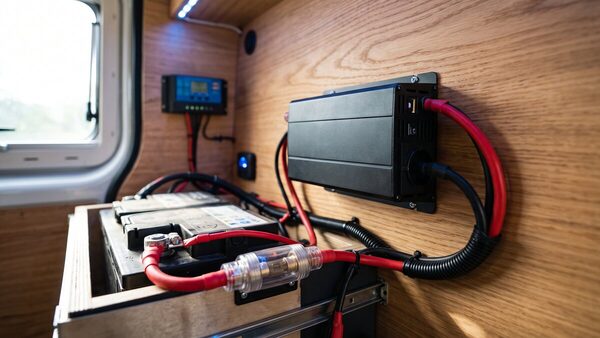
On a vehicle, the alternator alone usually is not enough. A standard alternator charges without any precise current limit: wired directly to a LiFePO4 battery, it can push far more current than a small alternator is built to sustain continuously, risking overheating. A dedicated DC-DC charger, which regulates the charge between the starter battery and the lithium battery, remains the recommended solution for a van or motorhome house-battery setup.
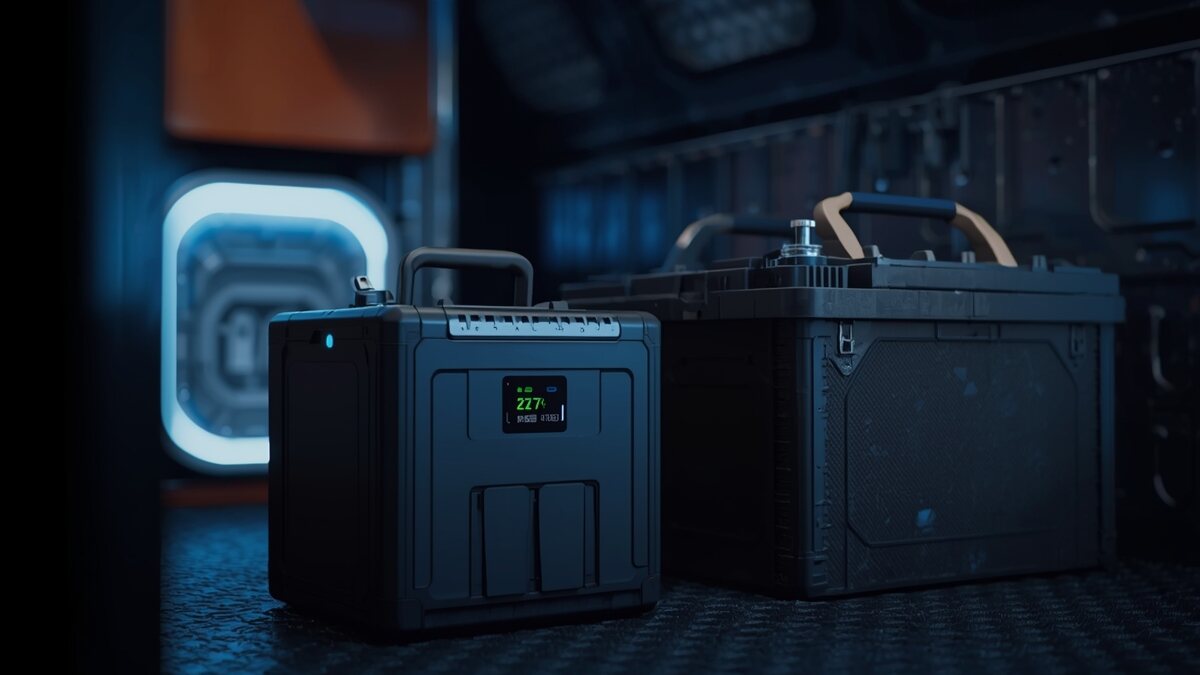
Starting or deep-cycle, not the same product. Most consumer LiFePO4 batteries are built for regular deep discharge, a house, leisure or solar battery, not for the brief, very high current an engine starter demands. On a starter battery, the BMS can cut out right at the moment of starting, leaving the vehicle stranded. It is best to reserve a lithium swap for the house or leisure battery, unless you choose a model explicitly designed and rated for engine starting, which is rarer and more expensive.
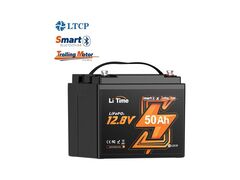
1. The versatile compact pick: LiTime 12V 50Ah Bluetooth
At 640Wh (12V 50Ah) and a size close to a small leisure lead-acid battery, the LiTime targets a direct swap on a boat, a light van or a small solar kit. Its built-in BMS includes low-temperature protection, and the Bluetooth 5.0 app lets you track voltage and state of charge in real time, a genuine help for catching an issue before it gets worse. IP65-rated, it tolerates water splashes in outdoor use.
Rated for 4,000 cycles at 100% discharge, it delivers noticeably more real-world runtime than a comparable lead-acid battery, for a weight just over 6 kg. The logical pick for a first replacement, without an outsized budget.
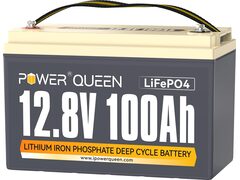
2. The best capacity-to-price ratio: Power Queen 12V 100Ah
With 1,280Wh and a 100A BMS rated for 4,000 to 15,000 cycles depending on usage conditions, the Power Queen targets buyers who want genuine replacement capacity, the equivalent of a good 200Ah lead-acid battery in real usable energy, without paying premium-brand prices. Its dimensions stay close to common lead-acid formats, which simplifies fitting it into an existing compartment.
A solid middle ground for replacing a motorhome house battery or a home solar bank battery, with a comfortable cycle margin to spread the cost over several years.
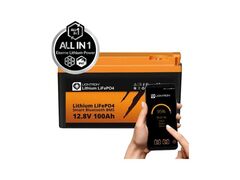
3. The most cold- and water-resistant: Liontron 100Ah LXArctic Marine IP67
The only pick in this lineup with a built-in heater, the Liontron keeps charging down to -30 °C (-22 °F) without any user intervention, exactly the situation where a standard LiFePO4 battery's BMS would cut off charging, see above. Its IP67 rating, with immersion detection, and water resistance make it a natural fit for a boat, outdoor winter storage, or any installation exposed to the elements.
Up to four units can be connected in parallel, with Bluetooth 4.0 monitoring included, to scale up capacity for a bigger setup. Its price, notably higher than the other three picks here, is justified by this rare all-weather versatility on the consumer segment.
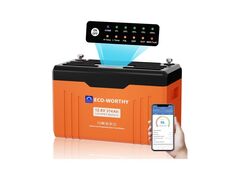
4. The large expandable capacity pick: Eco-Worthy EnergyTrek 314Ah
With 314Ah and over 4,000Wh in a single case, the EnergyTrek targets replacing a whole bank of lead-acid batteries, for a fixed solar installation, a heavy camper conversion, or a home backup system. Its 200A BMS and fire-resistant casing follow the same safety standards as the other picks here, with the added benefit of expanding up to 32kWh by combining several units, in a 4P2S or 2P4S configuration.
At 27.4 kg, it stays far lighter than an equivalent bank of lead-acid batteries, which is often several times heavier for the same usable energy. A pick for replacing several lead-acid batteries at once rather than just one.
Installing your lithium replacement safely
Beyond choosing the right battery, three things determine whether the swap goes well.
Set the charger to the right profile. LiFePO4 makers generally recommend an absorption voltage around 14.2 to 14.6V and a float voltage around 13.3 to 13.6V, with equalisation and desulfation turned off. A modern multi-chemistry charger offers this profile in its settings; an older lead-acid-only charger should be replaced instead.
Protect the circuit with a properly sized fuse. As with any battery, a fuse sized to the circuit's current demand, placed as close as possible to the positive terminal, protects both cables and equipment in the event of a short circuit.
Check the BMS before the first winter. If the setup stays exposed to cold, an uninsulated van, a boat, an outdoor shelter, make sure the chosen battery actually cuts off charging below 0 °C (32 °F), or includes a heater like the Liontron above, rather than finding out the hard way during the first frost. For more on winterising a nomadic solar setup, see our guide to sizing a nomadic solar setup.